
In the year 316, in the city of Sabaria, which today lies in Hungary, a boy named Martin was born. His father was an officer in the Roman army, and his mother was a simple woman. The family was not Christian: they were pagans. But little Martin had something special in his heart. From childhood he was gentle, generous and kind, he loved to help the poor, and something inside him longed to know God.
The Boy Who Wanted to Be a Christian
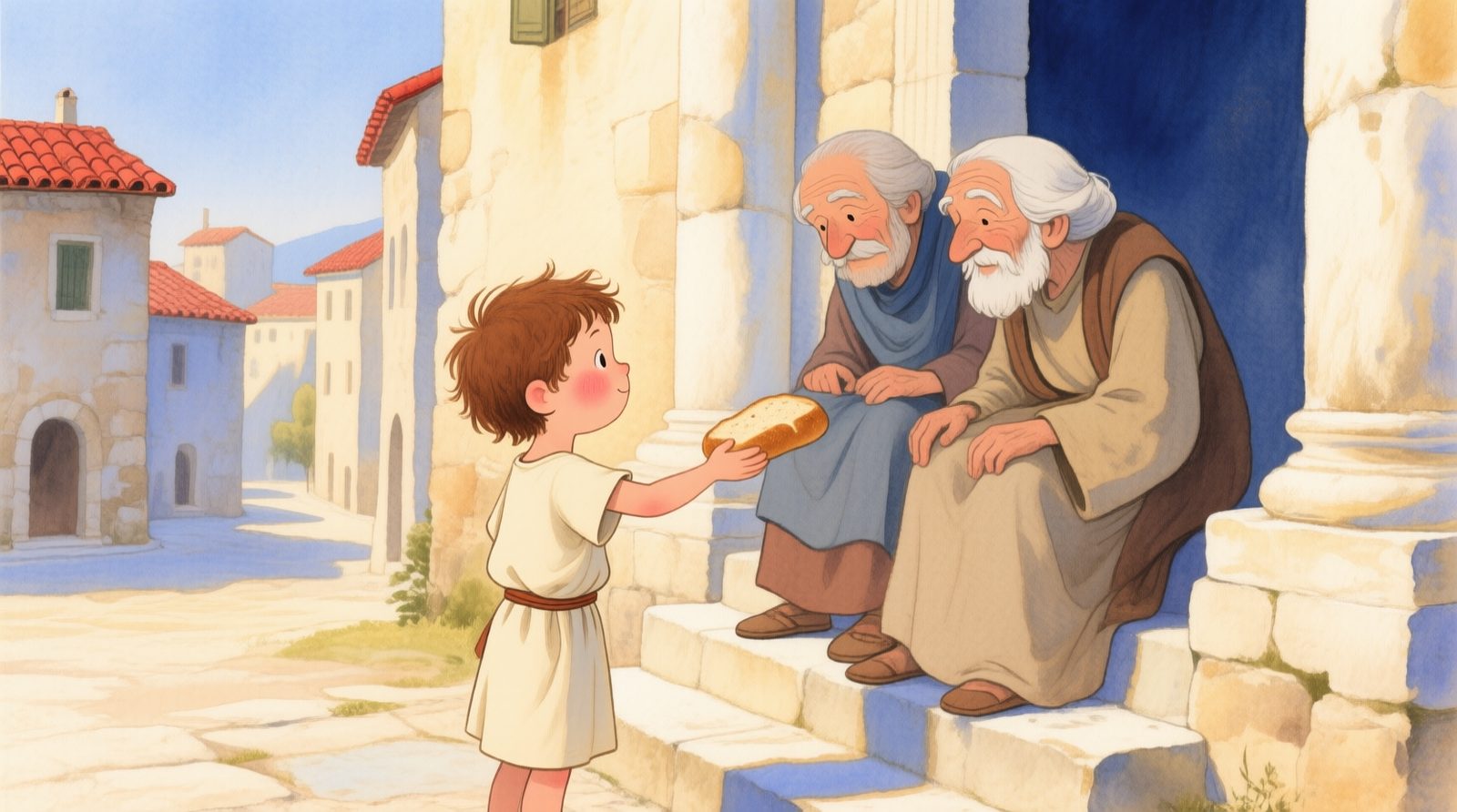
When Martin was ten years old, something special happened: he heard about Jesus. He heard about a God who loved everyone, who died on the cross, who rose again and forgave sins. Martin's heart filled with joy, and he decided right then and there: he wanted to follow Jesus, he wanted to be a Christian.
Martin went to a church and asked the priest to baptize him, to make him a disciple of Jesus. The priest was glad, but explained that he needed his parents' permission, and that he needed to study and prepare first. Martin was sad. His parents were not Christians, and they would not allow it.
A Soldier Against His Will
When Martin was fifteen, his father made him join the army, because in those days the sons of soldiers had to become soldiers too. Martin did not want to: he wanted to serve God, not Rome. But he had no choice. He was recruited, given armor, a sword and a horse, and became a soldier of the Roman cavalry.
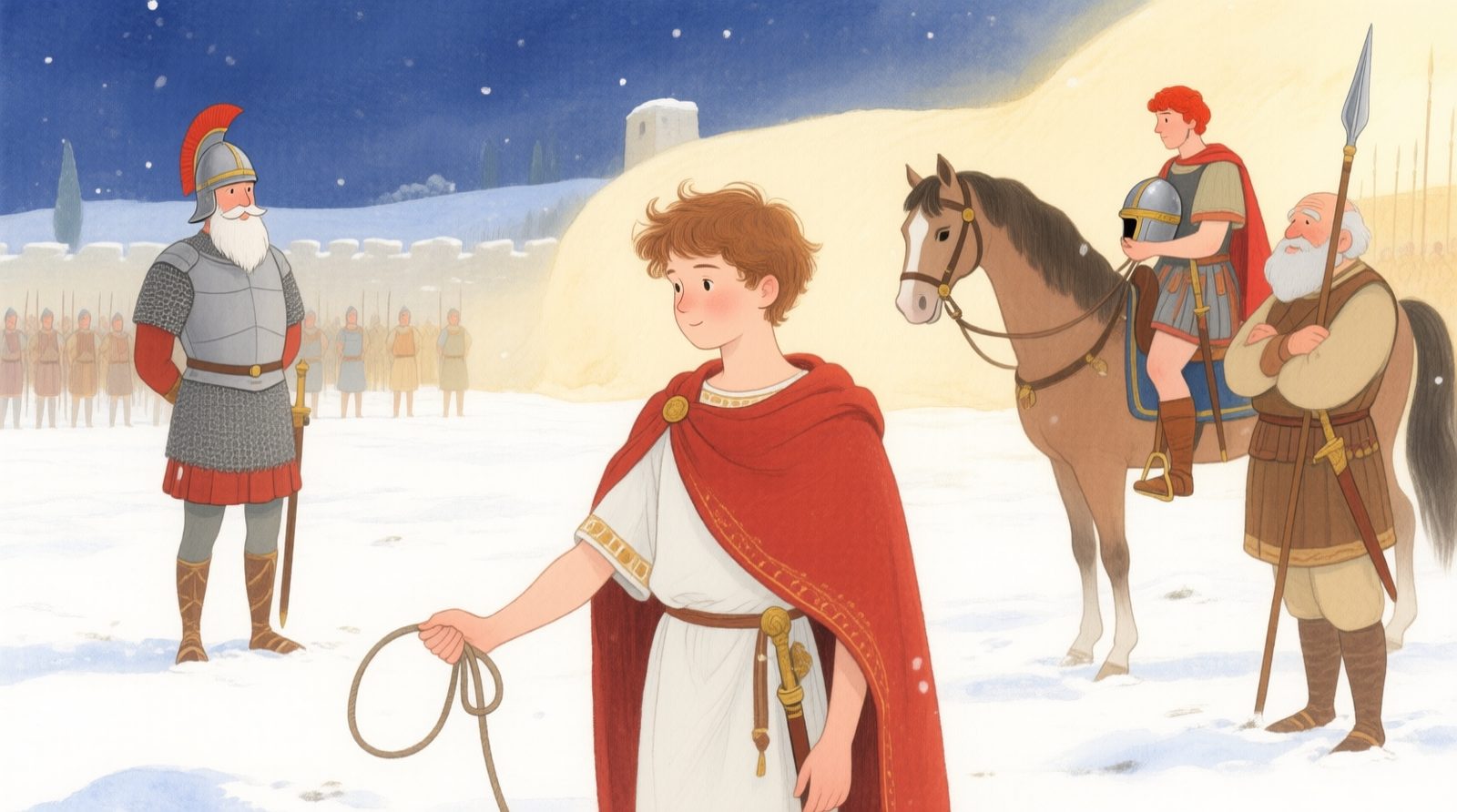
But Martin was different from the other soldiers. Many of them were rough and violent; Martin was gentle and kind. They mocked the weak; Martin helped them. They took from the poor; Martin gave to the poor. And everyone noticed: this soldier was not like the others.
The Terrible Winter
Martin was sent to the region of Amiens, in Gaul, which today is France. And a terrible winter came. Snow fell, the wind cut like a knife, and the cold ached. People suffered, especially the poor, who had no warm clothes. That winter, there were people who froze to death in the streets. It was very sad.
The Meeting at the Gate
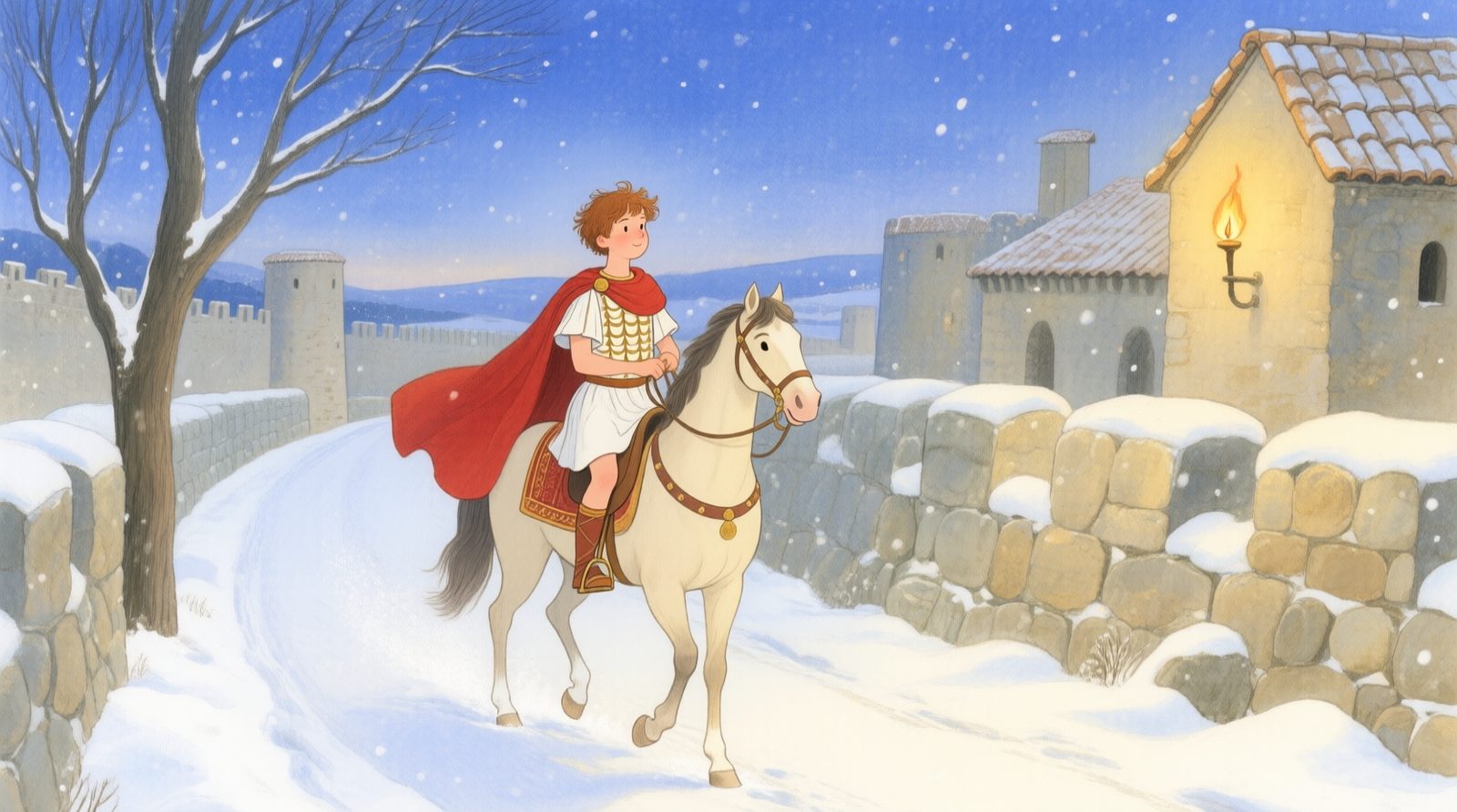
One day, Martin, who was eighteen by then, was riding near the city gate. He wore his red military cloak to keep out the cold — a special officer's cloak, beautiful and warm. Suddenly, he saw something that broke his heart.
The Beggar in the Cold
Near the gate, sitting on the frozen ground, there was a beggar. He was an old man in rags, shivering with cold, wearing only torn scraps that barely covered his body. His skin had turned blue from the cold. He held out his hand, asking for help, but people walked straight past. No one stopped. No one cared.
Martin stopped his horse. He looked at the beggar, then looked at himself. He had a warm cloak, and that man was freezing. He had to help. But Martin had already given all his money to other poor people, and he had nothing left to give. All he had was... his cloak.
The Extraordinary Gesture
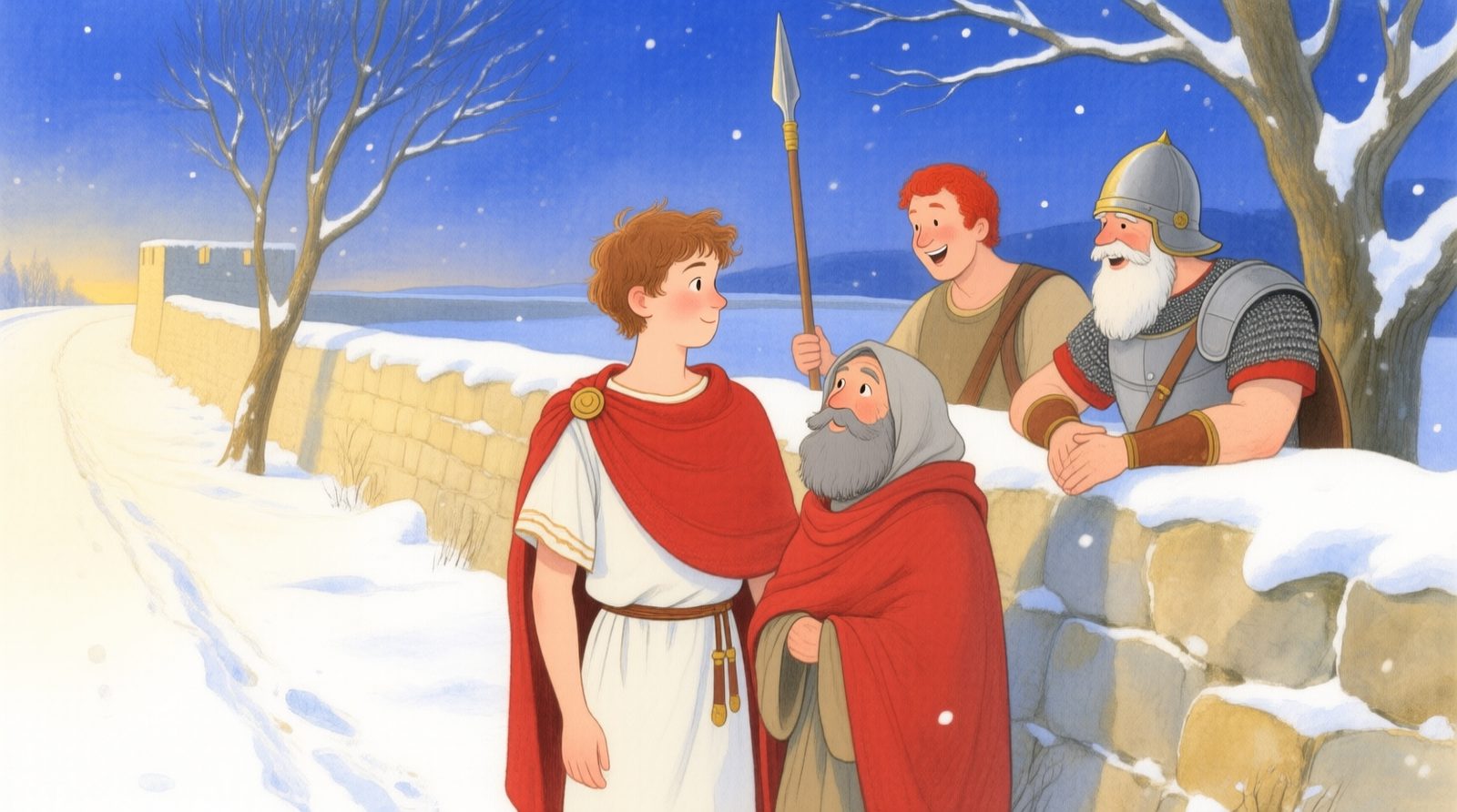
Then Martin had an idea. He got down from his horse, took off his military cloak, drew his sword and cut the cloak in half. One half he laid over the beggar's shoulders.
"Here. This will keep you warm."
The other half, he put on himself.
The other soldiers laughed and laughed.
"Look at Martin in half a cloak! How ridiculous!"
"Why not give the whole cloak, if you were going to give it away?"
But Martin did not care. He knew the cloak belonged to the Roman army: only half was his, and the other half was not his to give. So he gave what was his. And the beggar, warm at last, smiled with gratitude.
The Wonderful Dream
That night, Martin slept and had an extraordinary dream. He saw heaven, full of angels and light. And in the middle of heaven stood Jesus Christ, shining, glorious, King of kings. And do you know what Jesus was wearing? The half cloak that Martin had given to the beggar.
Jesus looked at the angels and said:
"See: Martin, who is not even baptized yet, has clothed me with this cloak."
Then Martin understood. The beggar was Jesus. Jesus had come to meet him hidden in a poor man, and Martin, without knowing it, had wrapped his cloak around God Himself.
The Baptism
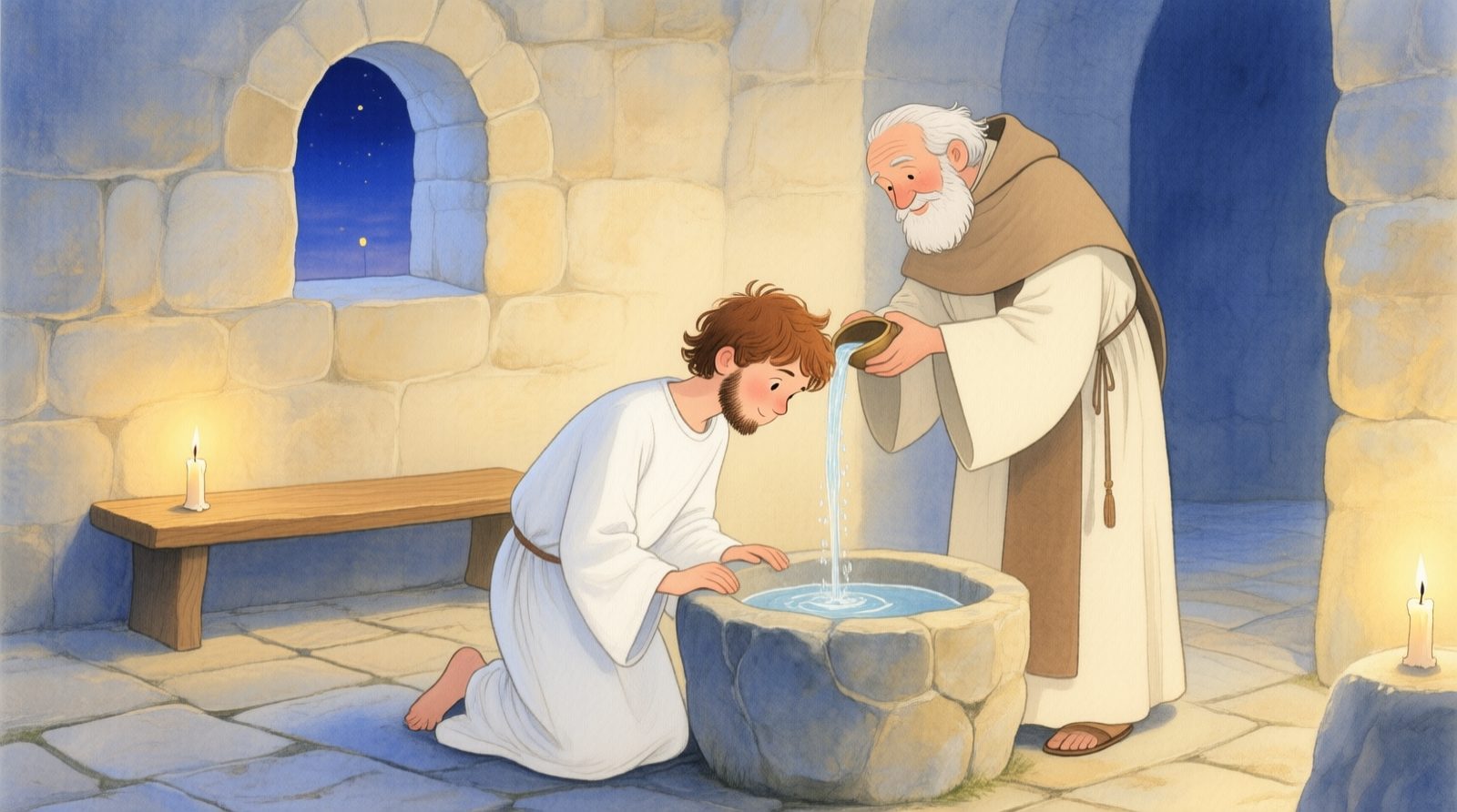
Martin woke up deeply moved. He had to be baptized, he had to become a true Christian. He was eighteen now and no longer needed his parents' permission. He sought out a bishop, studied, learned, prepared himself — and was baptized. He became a Christian, as he had dreamed since he was a boy. What a joyful day that was.
Leaving the Army
Martin stayed in the army a few more years, but his heart was not in it. He wanted to serve God, not Rome. When he was about twenty-two, a battle was drawing near, and the emperor gathered his troops. Martin stepped forward and said:
"Emperor, until now I have served you. Now I wish to serve Christ. I am a soldier of Christ: I can no longer fight."
The emperor was furious and called him a coward, saying he was afraid to fight. Martin answered calmly:
"Tomorrow I will go to the front of the battle, unarmed, with only the sign of the cross. If I am a coward, let them kill me. But I will kill no one, because I am a Christian."
What courage: to face an army without weapons, trusting only in God. But the next day, the enemy asked for peace. There was no battle at all, and Martin was released from the army.
Disciple of Saint Hilary
Martin then traveled to Poitiers, where he met Saint Hilary, a holy bishop. Hilary welcomed him and taught him about God, about the Bible, about the faith. Martin became his disciple and, later, was ordained a deacon and then a priest. His desire was to live as a monk: simple, poor, devoted to God.
The Hermit
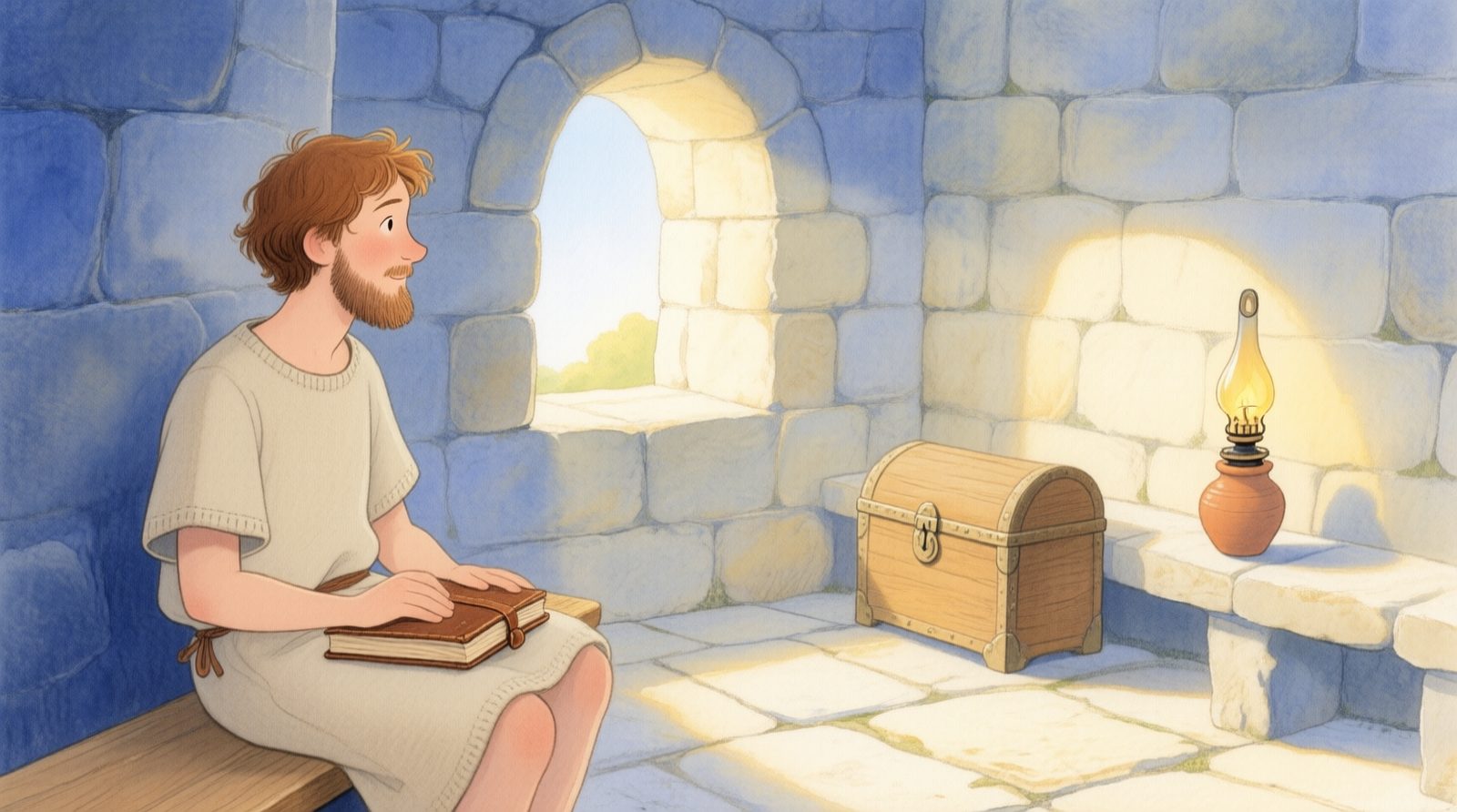
Martin founded a monastery at Ligugé — the first monastery in Gaul. There he lived in poverty, prayer and fasting. And many miracles happened: Martin healed the sick, drove out demons and, tradition tells us, even brought three people back to life. His fame as a holy man spread throughout Gaul.
Bishop of Tours
In 371, the bishop of the city of Tours died, and the people wanted Martin as their new bishop. But Martin did not want it: he felt unworthy and preferred to stay in his monastery. So the people used a trick. They sent word that someone was sick and needed him. Martin went at once, because he never refused to help the sick. But when he arrived in Tours, the people surrounded him, chanting that he would be their bishop.
The Poor Bishop
Martin was bishop for twenty-six years, but he was a different kind of bishop. Other bishops lived in palaces; Martin lived in a hut. Others wore rich robes; Martin wore simple clothes. Others had servants; Martin served the poor.
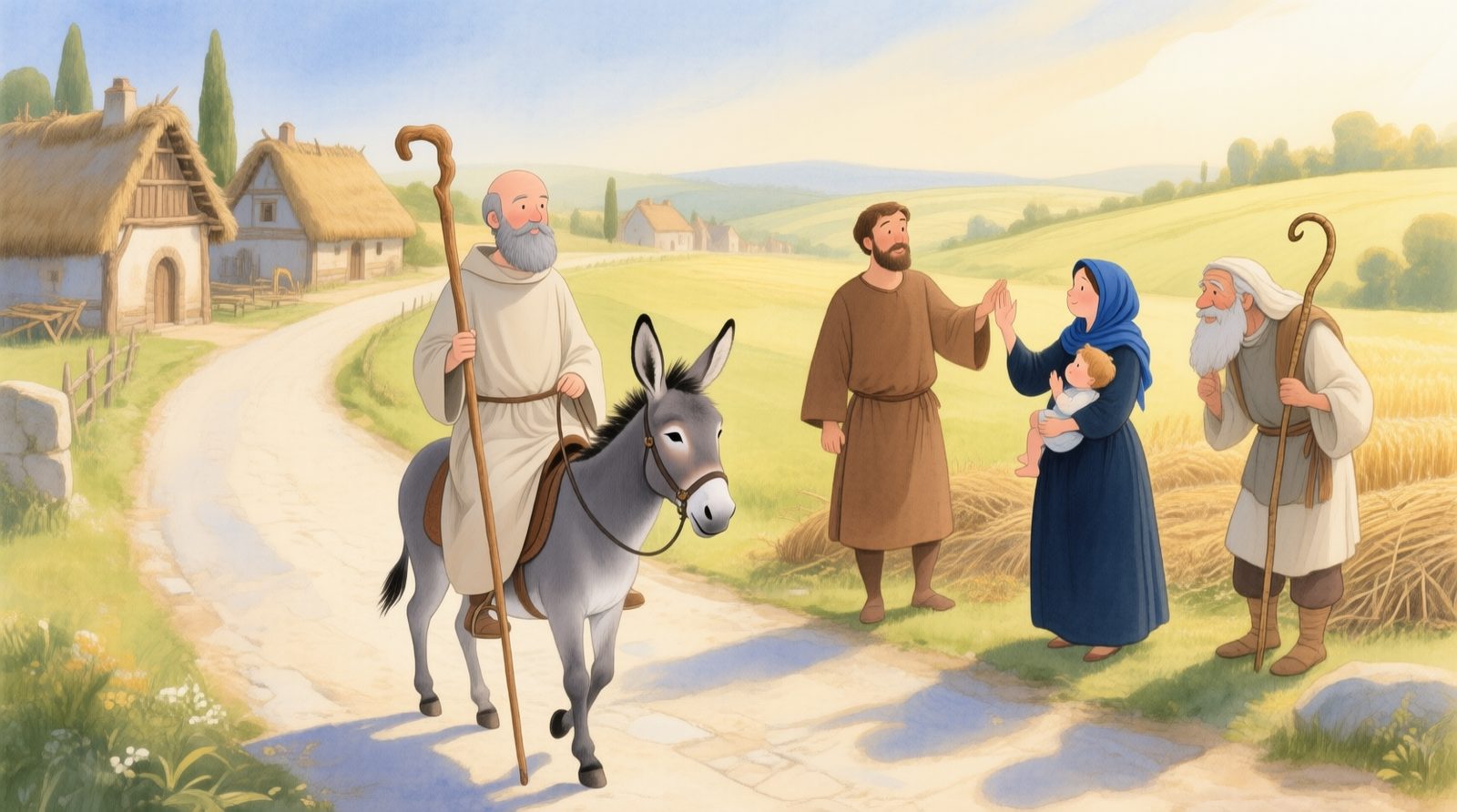
Martin traveled across his whole diocese, on foot or riding a donkey. He visited the villages, preached, baptized, founded parishes and carried the faith to places where no one knew Jesus. He healed the sick and comforted the sorrowful. He was a missionary bishop, active and zealous, and everyone loved him.
November 8, 397: The Death
Martin was eighty-one years old when he went to visit a parish in Candes. There, he fell gravely ill and felt that he was going to die. His disciples wept around him, begging him not to leave them. Martin prayed slowly:
"Lord, if I am still needed, I do not refuse the work. But if You wish to take me, may Your will be done."
Martin died on November 8, 397, lying on ashes, like a poor man, with prayers on his lips to the very end. Everyone wept for the holy bishop. His body was carried to Tours, and thousands of people followed the funeral. He was buried with honor and, over his tomb, a great basilica was later built.
Devotion and Veneration
Saint Martin became one of the most popular saints in Europe. Thousands of churches were dedicated to him, in France, in Germany, in Italy and everywhere. Kings honored him and the poor called on him. His feast is celebrated on November 11 — it used to be on the 8th, the day of his death, but it moved to the 11th, the day of his funeral.
The Cloak of Saint Martin
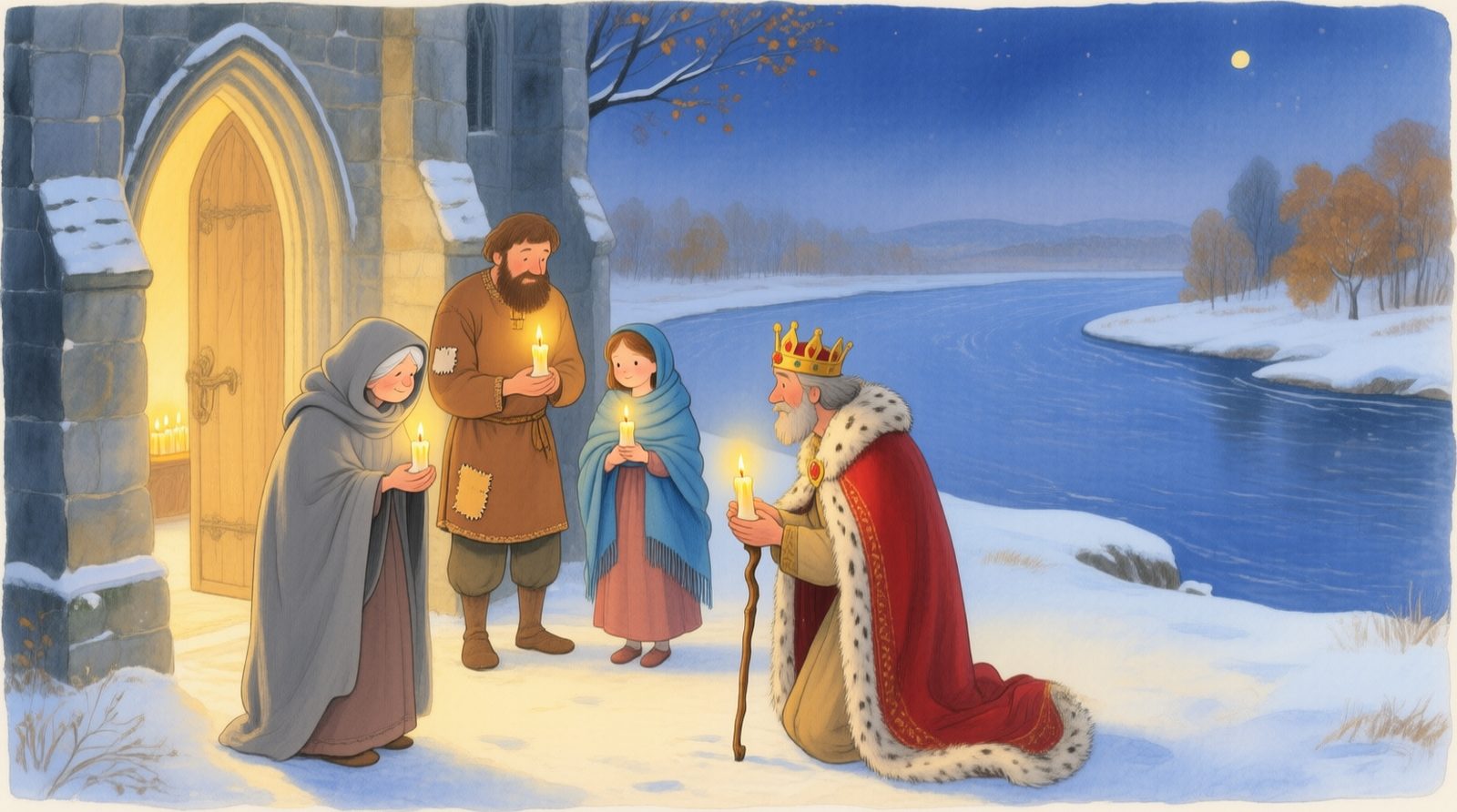
And do you remember the cloak Martin divided? It became a sacred relic. The kings of France guarded it with great care, and the place where they kept it was called the "capella," which means little cloak. That is why today we call small churches chapels — and the priests who care for them chaplains. All because of Saint Martin's cloak.
Patron of Many Causes
Saint Martin is the patron of soldiers, because he was a soldier; of the poor and of beggars, because he served and clothed them; of tailors, because he cut the cloak; of horsemen, because he rode; and of France, because he evangelized Gaul. Many cities also have him as their patron, such as Tours and Buenos Aires. His feast is on November 11.
Saint Martin's Summer
In Europe there is a curious phenomenon: in early November, near Saint Martin's day, the weather often grows a little warmer, with a few mild days in the middle of autumn. People call it "Saint Martin's Summer." It is as if God warmed the world to celebrate the saint who warmed the beggar. Lovely, isn't it?
Moral of the Story


