
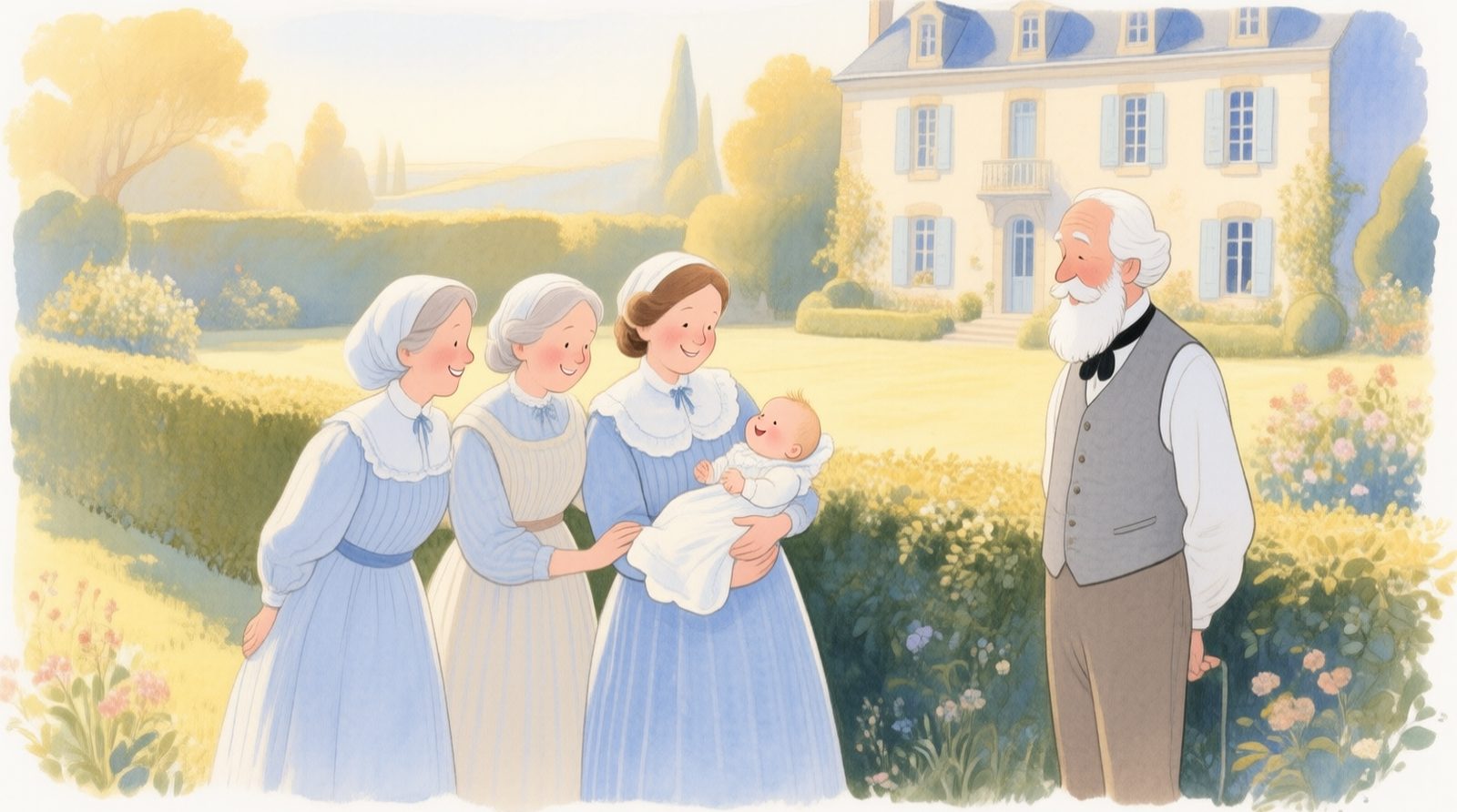
On January 2, 1873, in the town of Alençon, in France, a long-awaited baby girl was born. She was the last of nine children — four had already died very young. Her parents, Louis and Zélie Martin, named her Marie-Françoise-Thérèse, but everyone would know her simply as Thérèse.
The Martin family was deeply Catholic. Every day they prayed together, went to Mass, and cared for the poor. Thérèse grew up surrounded by love: her parents adored her, and her four older sisters — Marie, Pauline, Léonie, and Céline — played with her and spoiled her. Thérèse was cheerful and affectionate, but also very sensitive. She cried easily, was afraid of many things, and loved being the center of attention.
When Thérèse was only four, something very sad happened. Her mother, Zélie, fell ill. It was cancer, and in those days there was no cure. Little Thérèse watched her mother grow weaker and paler by the day.
In August 1877, Zélie Martin died. Thérèse was four and a half. Her world crumbled slowly, in silence. At the funeral, the little girl looked at the coffin and called softly: "Mamma... Mamma...". But her mother did not answer. She never would again.
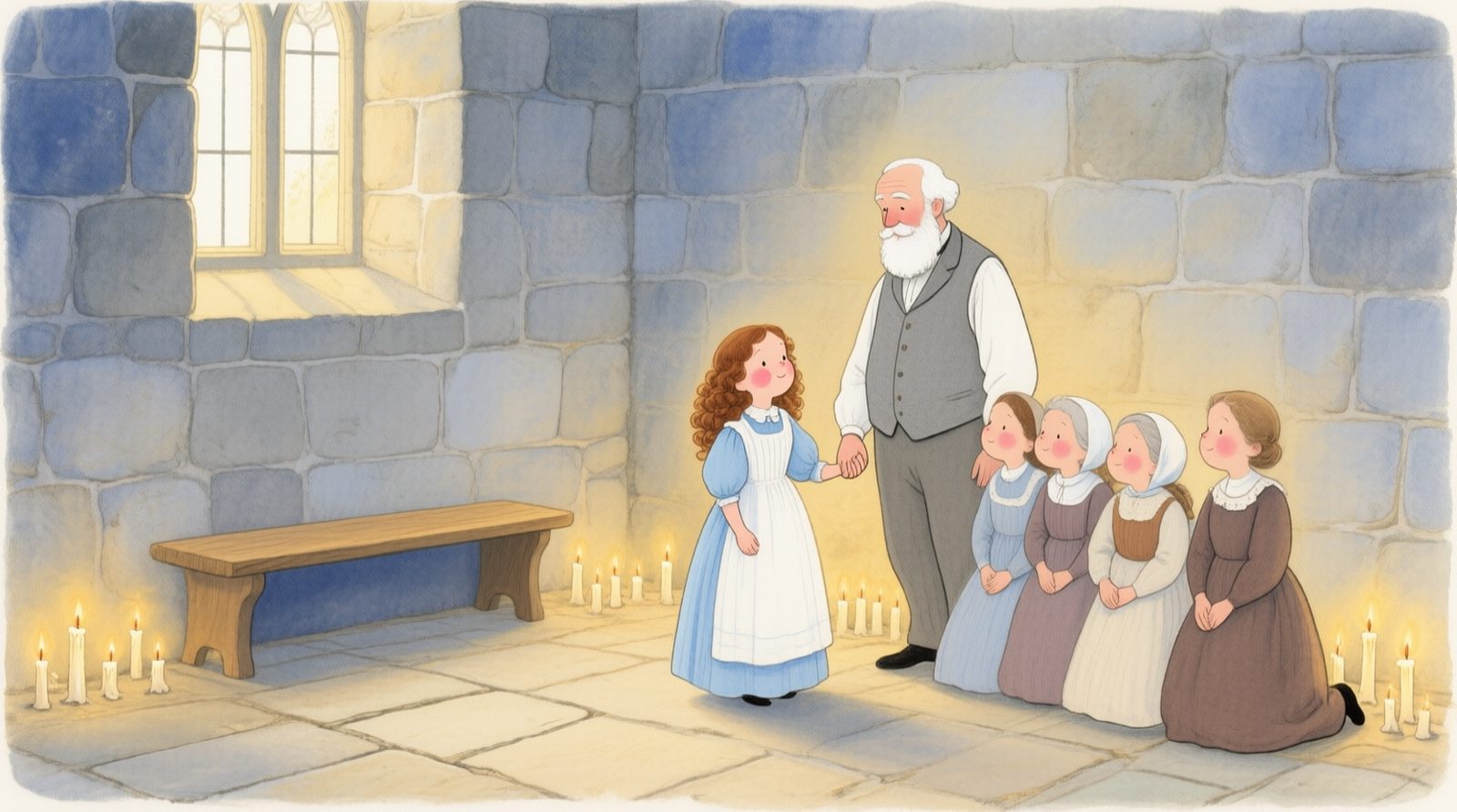
After Zélie's death, Louis Martin decided to move with his daughters to Lisieux, another French town, where relatives lived who could help. And Thérèse, who had been cheerful and outgoing, changed completely. She became shy and far too sensitive, and she cried over everything. If someone looked at her the wrong way, she cried. If someone corrected her, she cried. And then, as she herself would later say with a smile, she cried for having cried. It was hard. But Thérèse had something very special: a deep love for Jesus.
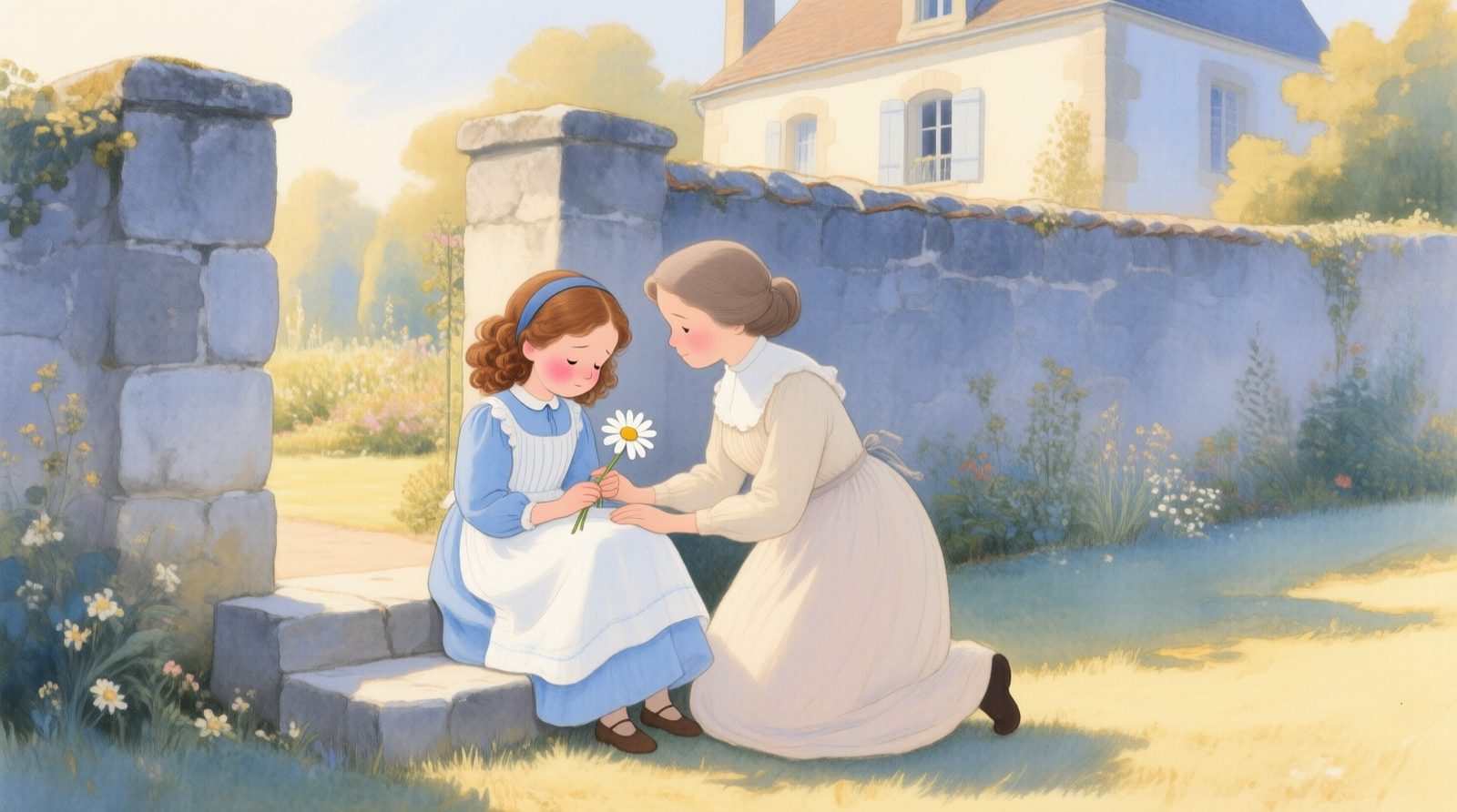
Thérèse chose her sister Pauline as her "second mother". Pauline took care of her, played with her, and above all told her about Jesus.
"Thérèse, Jesus loves you very much," Pauline would say. "You are His little flower."
"A little flower?" Thérèse would ask, her eyes shining.
"Yes. The big, beautiful flowers in the garden catch everyone's eye. But Jesus also loves the small flowers hidden in the grass: the simple daisies, the shy violets. You are Jesus' little flower."
Thérèse kept that idea in her heart: she would be Jesus' "little flower". Together, she and Pauline prayed, decorated their room with pictures of Jesus and Mary, and offered God little sacrifices.
When Thérèse was nine, another sorrow came. Pauline announced that she was entering Carmel, a convent of contemplative nuns who live in enclosure, devoted entirely to prayer. For Thérèse, it was like losing her mother a second time.
"Pauline, no. Don't leave me," she wept.
But Pauline had her calling. She loved Thérèse, but she loved Jesus even more, and Jesus was calling her to Carmel. When Pauline entered the convent, Thérèse was heartbroken and cried every day. Then she fell gravely ill, with strange tremors and frightening visions. The doctors could not say what it was.
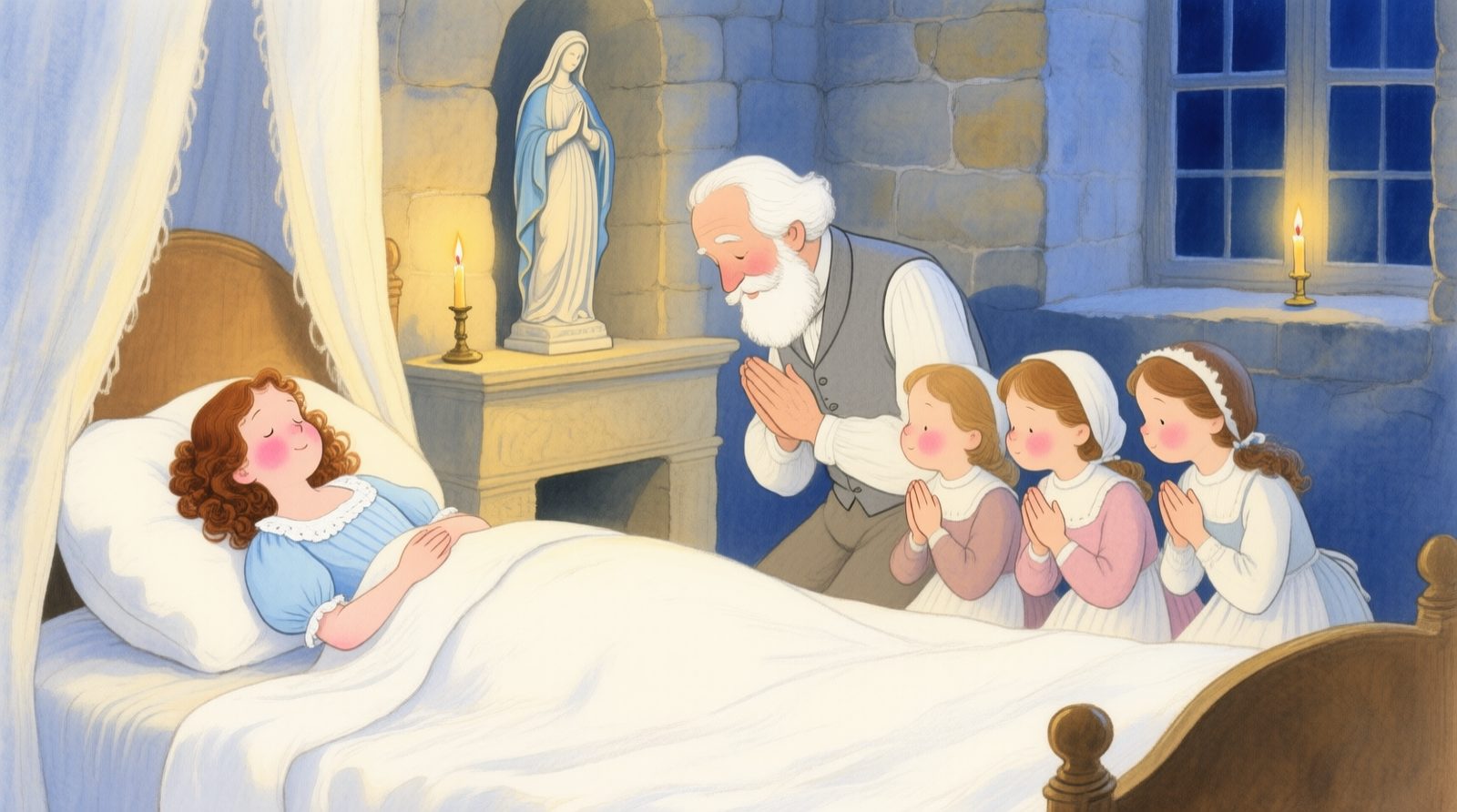
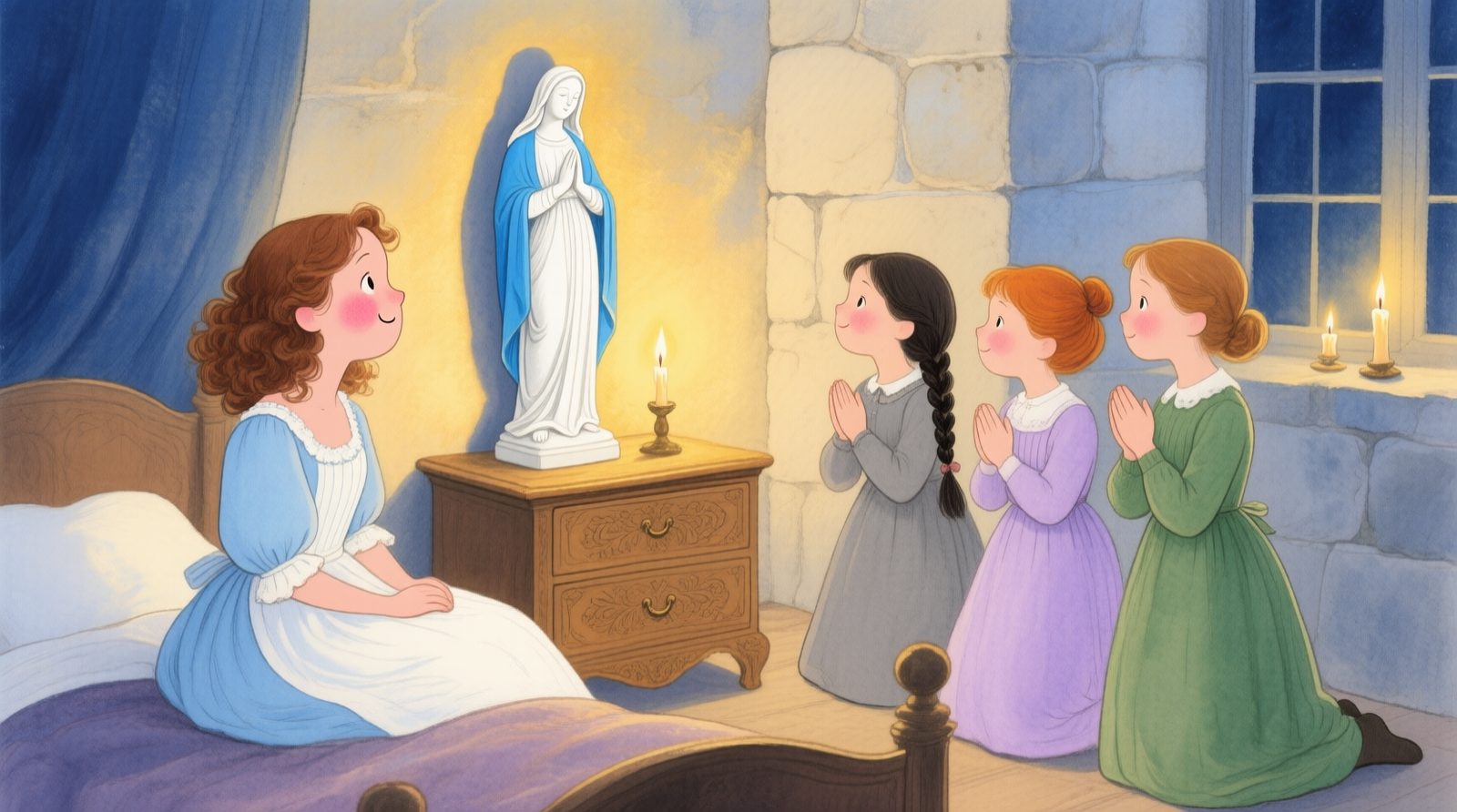
Thérèse was so ill that her family thought she might die. Louis Martin and her sisters prayed without ceasing, asking Our Lady's intercession. In Thérèse's room there was a statue of the Virgin. One day, her sisters knelt before it, weeping:
"Mother in Heaven, save our Thérèse."
And then something extraordinary happened. Thérèse looked at the statue, and the statue of Our Lady smiled at her — a beautiful, heavenly smile, full of love. In that very instant, Thérèse was healed. The tremors stopped, and the illness left her for good.
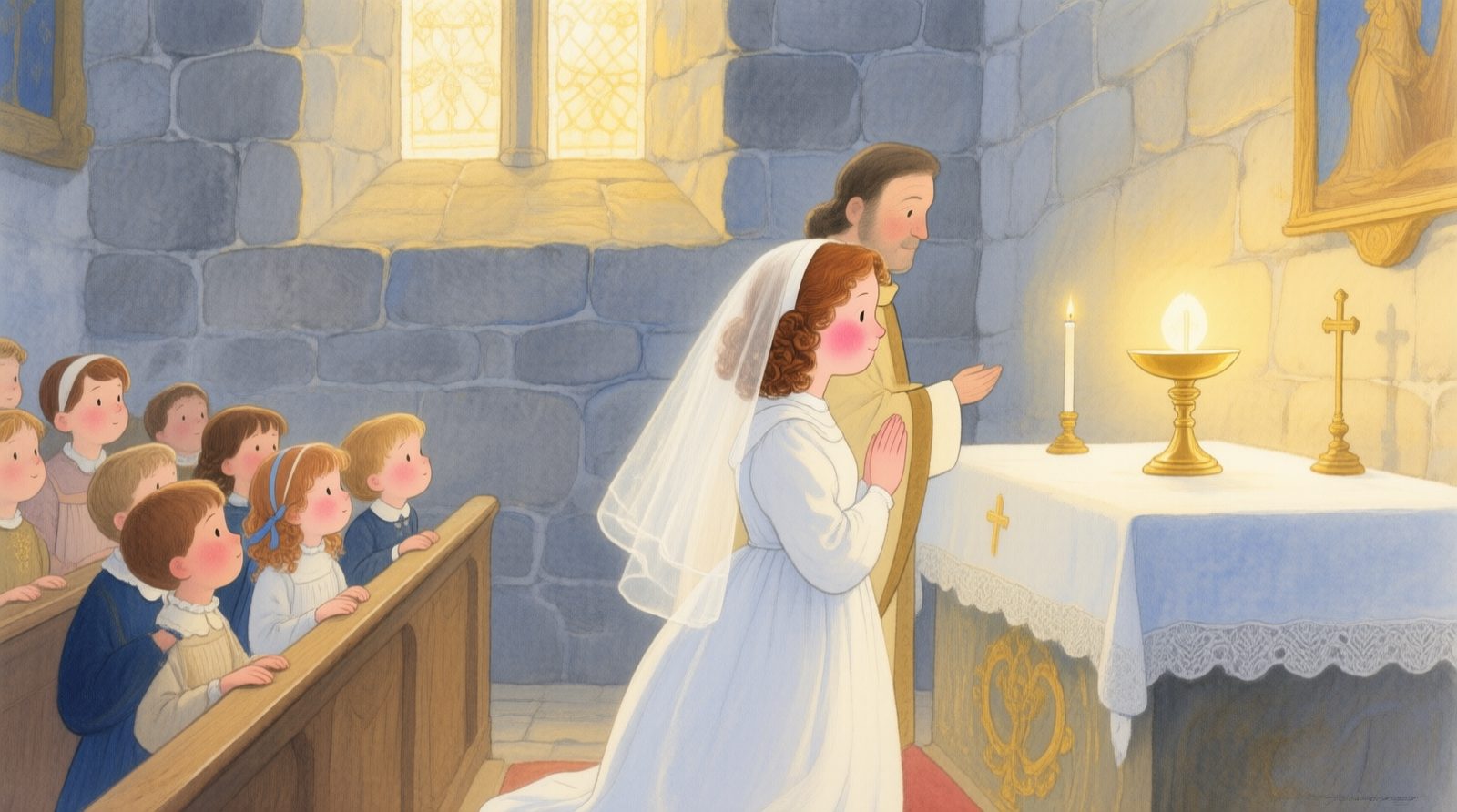
At eleven, Thérèse made her First Communion, one of the happiest days of her life. She prepared for it with great care: she prayed much, read spiritual books, made little sacrifices. On the great day, she felt united to Jesus in a deep way.
"Jesus, I love You," she prayed. "I want to be all Yours."
That day, Jesus planted a seed in Thérèse's heart: the seed of a vocation. She began to feel that she too wanted to be a Carmelite, to give herself entirely to Jesus, like Pauline.
But there was a problem: Thérèse was far too young, and still far too tearful. Then, when she was thirteen, came what she herself would call her "conversion".
It was Christmas Eve, 1886. The Martin family had a custom: the children left their shoes by the fireplace, and their father filled them with presents. Thérèse, at thirteen, still took part in that little children's tradition. As she climbed the stairs to put away her hat, she heard her father remark below, tired:
"Thank goodness this is the last year we'll have to do this."
In other times, Thérèse would have cried, would have felt wounded, would have made a scene. But something changed inside her that night.
Thérèse came down the stairs smiling. She opened her presents with joy, thanked her father warmly, and behaved like a mature young woman, not a spoiled child. Later she would write that on that Christmas night the Child Jesus gave her His strength and transformed her heart. From then on, Thérèse stopped crying over everything. She became strong, brave, mature. She was thirteen and a half, and she was absolutely certain: she wanted to be a Carmelite.
"Papa," she said, "I want to enter Carmel. I want to be a contemplative nun like Pauline and Marie."
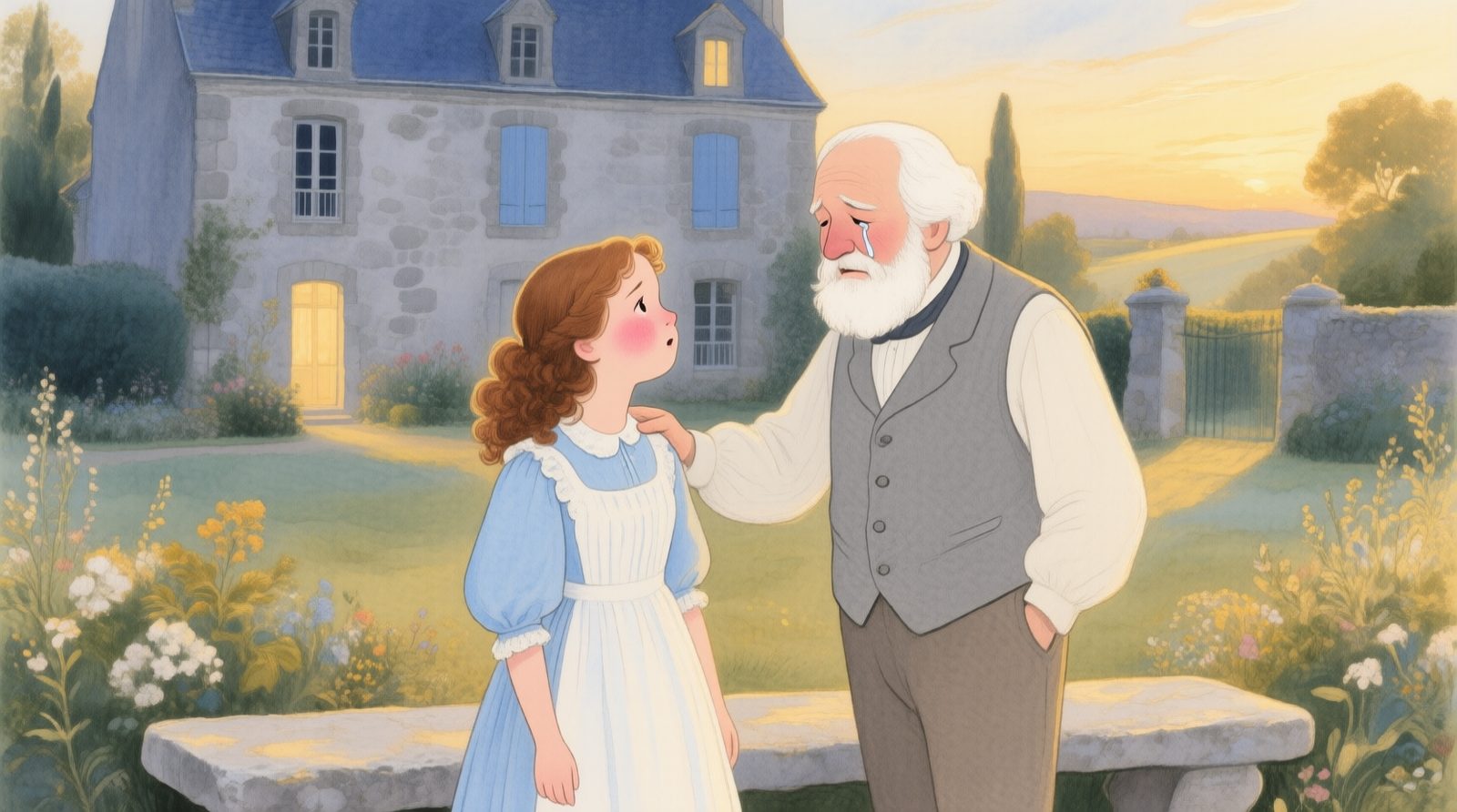
Marie, another of the sisters, had entered as well. Louis Martin was stunned: his youngest daughter, his "little queen", only thirteen years old. But seeing the determination in her eyes, he wept and agreed.
"You are a little flower that God wants for Himself," he said. "I will not stop Him from picking it."
Thérèse went to the bishop to ask permission, and he said she was too young. She went to the superior of Carmel, and he told her to wait a few years. But Thérèse did not give up.
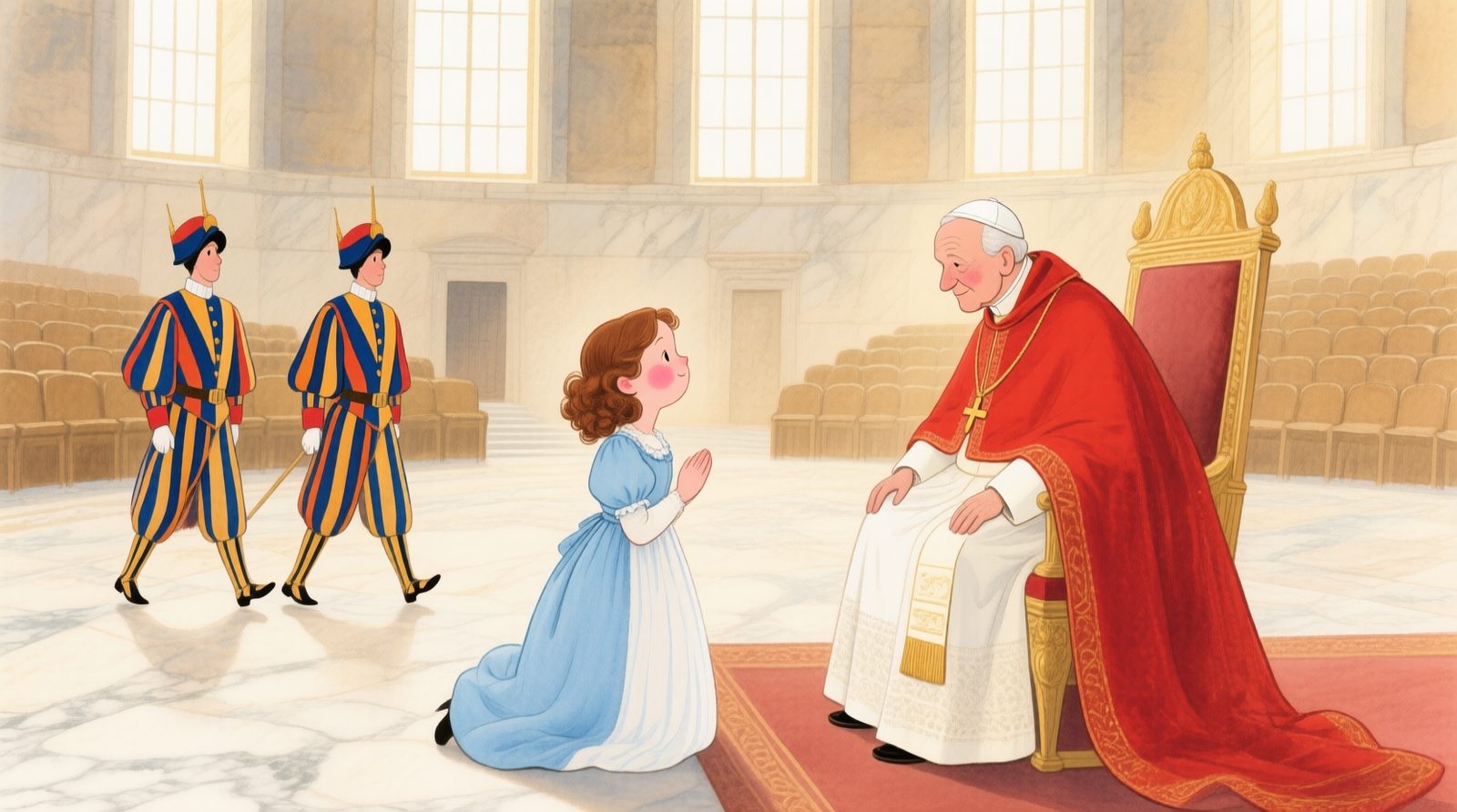
In November 1887, her father took her on a pilgrimage to Rome, which included an audience with Pope Leo XIII. It was Thérèse's great chance. Hundreds of people filed quickly past the Pope, with orders not to speak to him. But when her turn came, Thérèse knelt down and said:
"Holy Father, in honor of your Jubilee, allow me to enter Carmel at fifteen!"
The guards were alarmed and tried to move her along, calling for silence. But Thérèse held firmly to the Pope's robes and looked him in the eyes, with tears. Pope Leo XIII, touched, answered kindly:
"Go, go, my child. If God wills it, you will enter."
Thérèse went home and waited. And waited, and waited. Finally, in January 1888, permission came — though she still had to wait until after Easter. On April 9, 1888, Thérèse Martin, just fifteen years old, entered the Carmel of Lisieux. She was radiant: her dream was coming true.
"I am so happy," she said. "I have come to Carmel to save souls and to pray for priests."
Thérèse did not enter the convent to run away from the world. She entered to fight for it, through prayer and sacrifice. She would be a hidden warrior, a little flower offered to God. And she loved to repeat, with a burning heart: "I choose all. I want to be a saint. I want to love Jesus as He has never been loved."
Her journey was only beginning.
Moral of the Story


