
Thérèse had finally entered Carmel. At fifteen, she was living her dream of becoming a bride of Christ. But life in Carmel was not what many people imagined. There were no heavenly visions every day, no constant ecstasies, no angels appearing. There was routine, work, silence, prayer. And Thérèse loved it, because she understood something deep: holiness does not come from extraordinary things, but from doing ordinary things with extraordinary love.
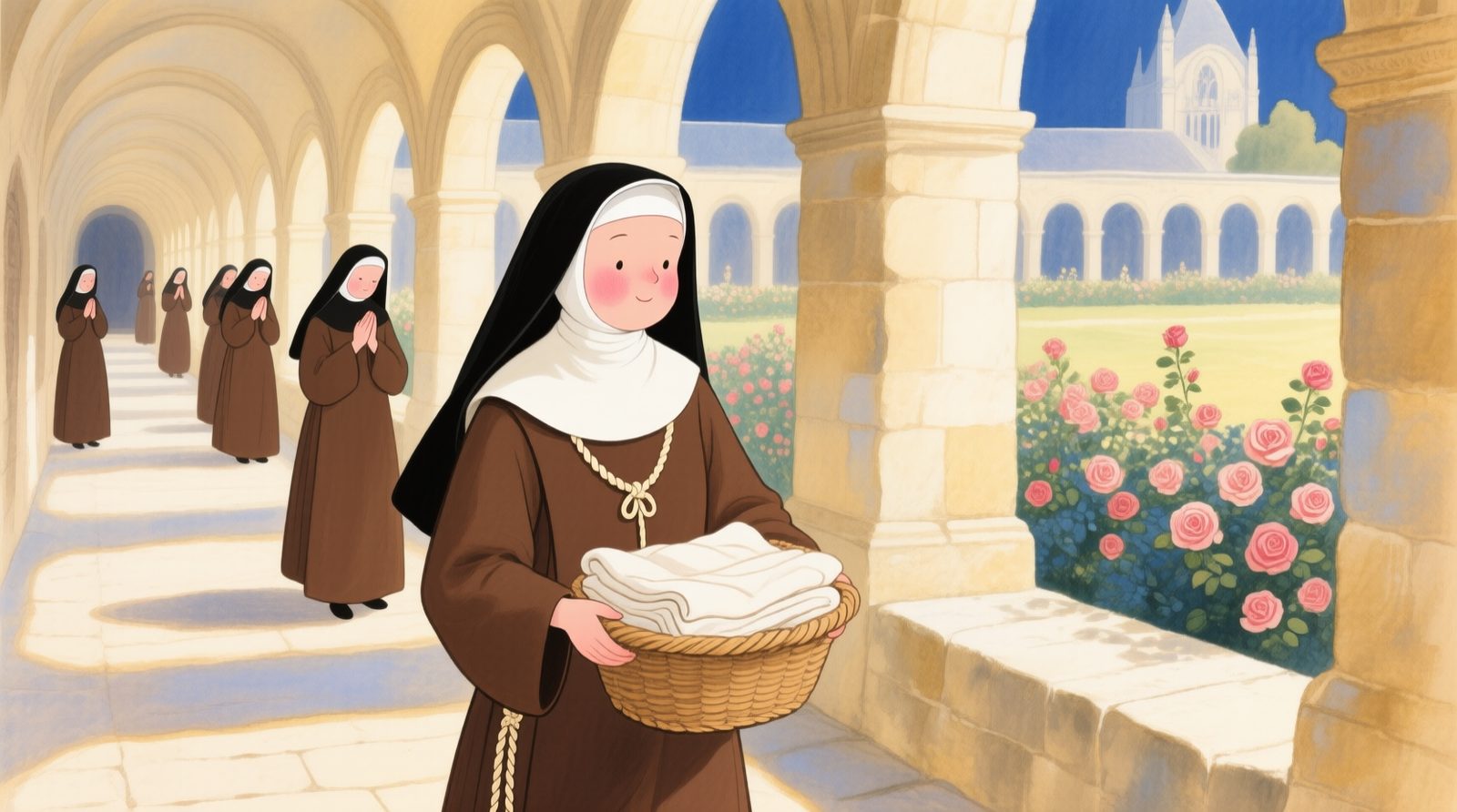
In Carmel, Thérèse learned that being a saint did not depend on great deeds. She could not be a missionary in China, because she lived in enclosure. She could not preach to crowds, because she kept silence most of the day. She could not found hospitals or schools, because she lived hidden from the world. What could she do, then? How would she become a saint?
That was when Thérèse discovered her "Little Way", a path to holiness within everyone's reach.
"I will make my life one continuous prayer of love," she decided. "I will offer Jesus every little act, every little sacrifice."
Living this little way, however, was not easy. There was an elderly nun in the convent who irritated Thérèse deeply: she made strange noises during prayer, had tiresome habits, and was always criticizing. Thérèse could have complained, could have avoided that sister, could have been cold to her. Instead, she decided to treat her with such kindness that the nun would come to think Thérèse adored her. She smiled at her, helped her, was patient with her ways. One day, the elderly nun asked her, deeply moved:
"You are so good to me. What have I done to deserve so much love?"
Thérèse said nothing, but inside she smiled. Love had won over irritation.
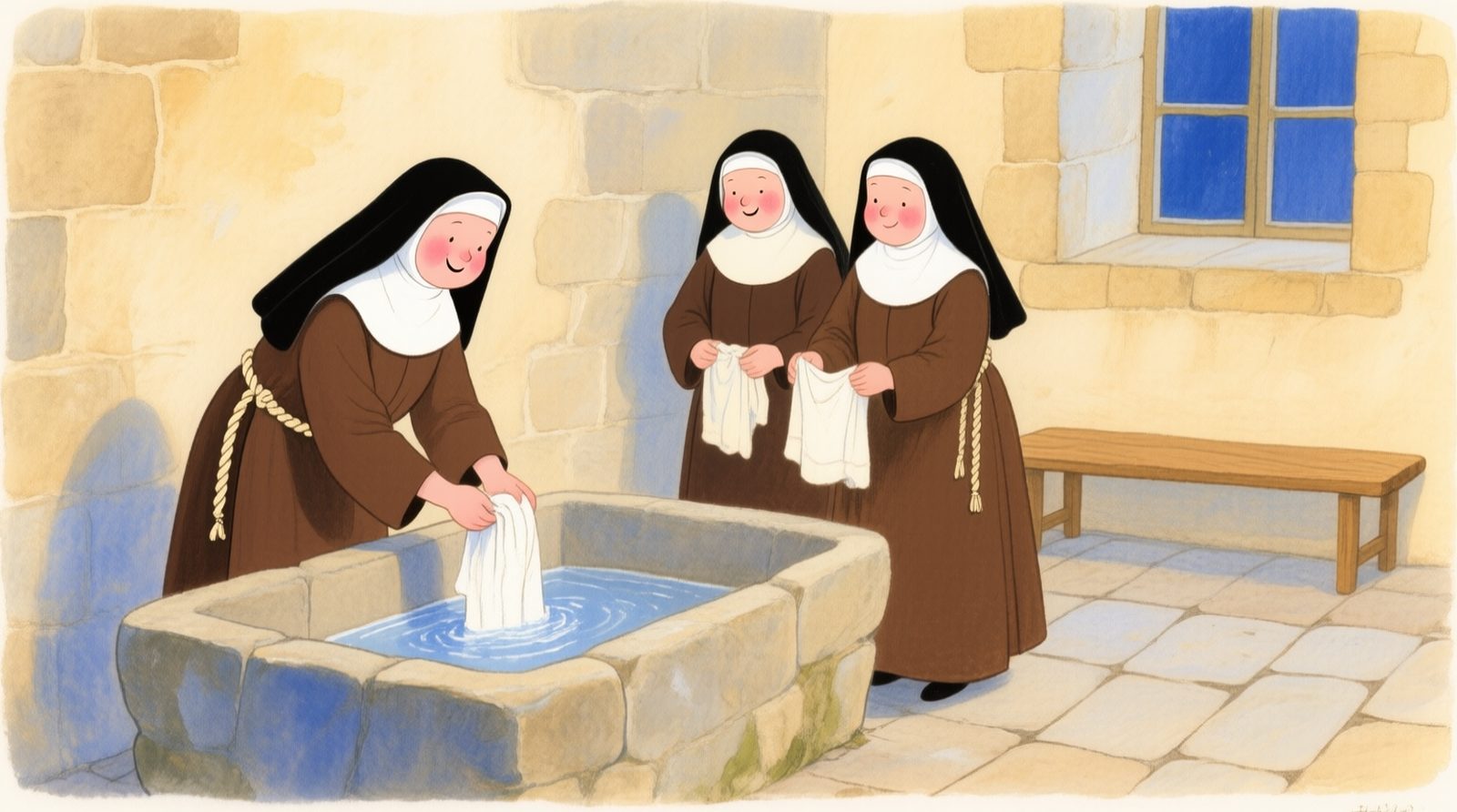
Another example: in the laundry, one sister worked in a noisy, clumsy way, and the noise bothered Thérèse very much. She could have asked to change places. Instead, she turned the irritating noise into "music" that she offered to Jesus.
"This is my concert for You, Jesus," she prayed in her thoughts, smiling.
She turned what bothered her into prayer. As she herself said, we cannot always do great things, but we can do small things with great love. And she promised Jesus, in her girlish way, that she would scatter flowers, never letting a single small chance to make an act of love slip by.
Thérèse also came to know the "dark night of the soul", a time when she no longer felt God's presence. Many saints go through this: they pray, and God seems absent, silent, far away. Thérèse lived this darkness especially in her last years, and she was even tempted to doubt that Heaven existed. Those thoughts tormented her. But even feeling nothing, even in total darkness, she went on loving and trusting, like Job in the Bible. She teaches us that true love does not depend on feelings: love is a choice, and we choose to love even when it is hard.
In 1895, on the feast of the Holy Trinity, Thérèse received an inspiration from the Holy Spirit. She felt a burning desire in her heart: to offer herself as a victim of love to God's Merciful Love. What did that mean? That she wanted God to consume her with His love, the way fire consumes wood. She was not offering sufferings to ask for punishment, as some people did in those days. She was offering herself to Love.
"Jesus," she prayed, "burn me with Your love. Use me, consume me. I want Your love to overflow through me to save souls."
It was a moment that transformed her life.
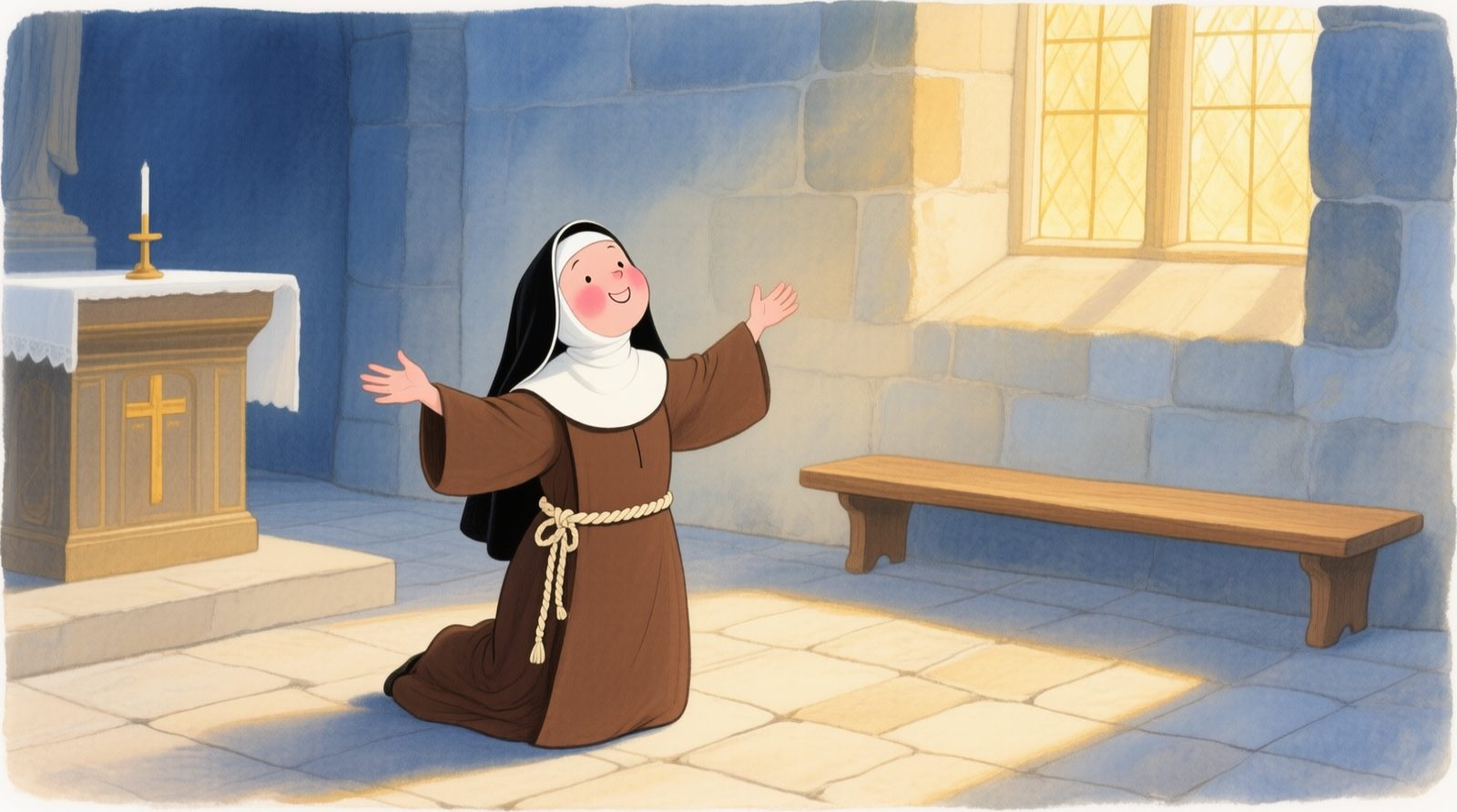
Thérèse had a special mission in Carmel: to pray for priests and missionaries. She could never be a priest or a missionary herself, but she could help them through prayer and sacrifice. She was even given two "spiritual brothers", missionaries for whom she prayed in a special way and to whom she wrote letters of encouragement. One was in China, the other in Africa, evangelizing far away; and Thérèse, hidden in Carmel, sustained them.
"We are like partners," she wrote. "You preach, I pray. Together we save souls."
Thérèse understood something profound: in the Church, everyone has a role. Some are visible, others hidden, but all are important.
In January 1896, the superior asked something unusual of Thérèse: that she write the story of her own life. Thérèse obeyed. She wrote at night, after a full day's work in the convent, in simple notebooks. She told of her childhood, her mother, the discovery of the Little Way, her love for Jesus. She had no idea that this manuscript would become one of the most beloved spiritual books of all time: "The Story of a Soul".
But while she was writing, Thérèse began to cough. She coughed a great deal, and she coughed blood. It was tuberculosis, the illness that killed more people than any other in those days. There was no cure.
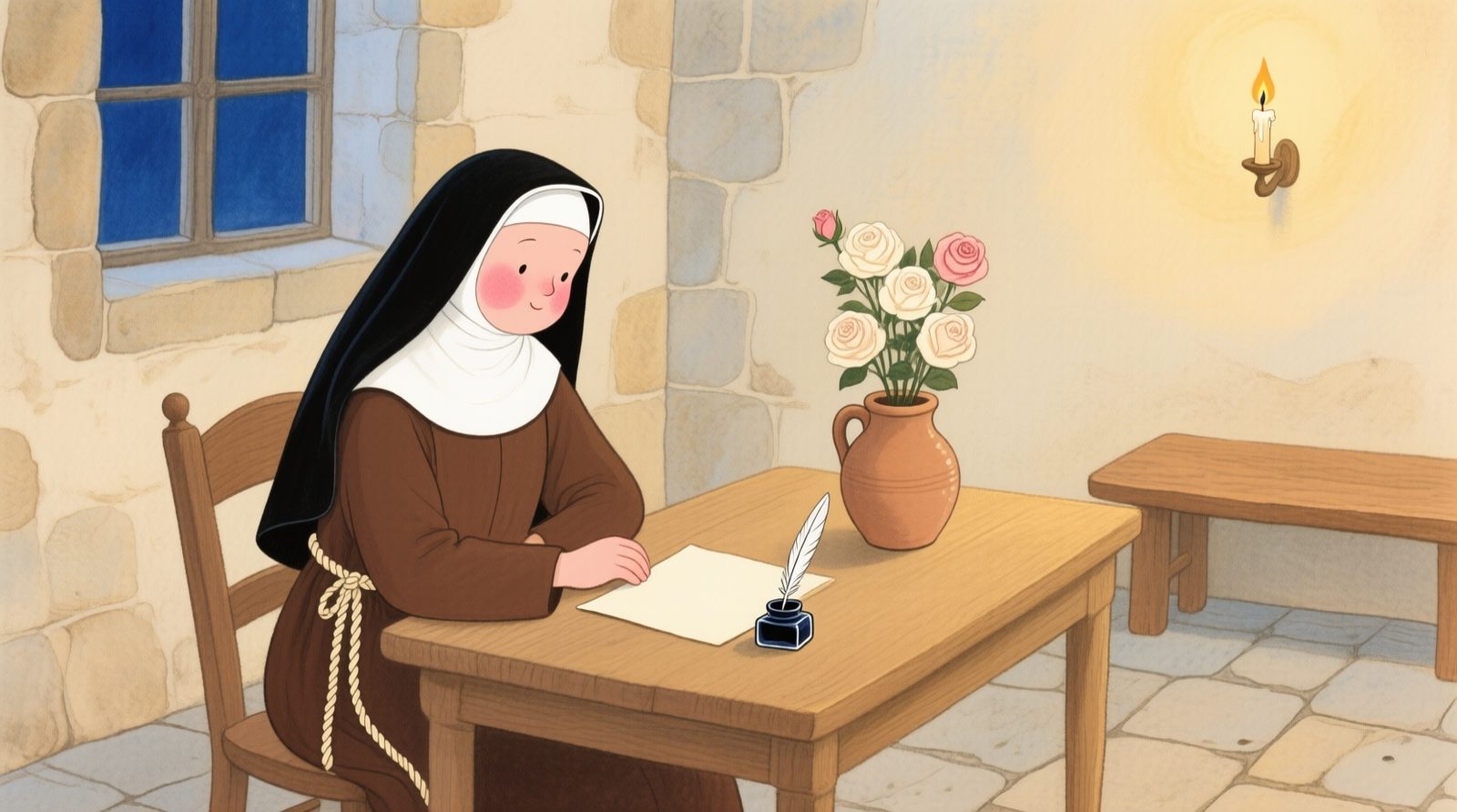
The tuberculosis advanced slowly. Thérèse coughed without stopping, lost weight, grew weak, sweated through the night, and could hardly breathe. The pain was great, and inside her there was still that darkness in which God seemed absent. Even so, Thérèse did not complain. She smiled, cheered the other sisters, worked as long as she could.
"I am not afraid of death," she said serenely. "I am not dying. I am entering into Life."
For her, death was a door opening; on the other side, Jesus was waiting. And she said something that sounded like prophecy:
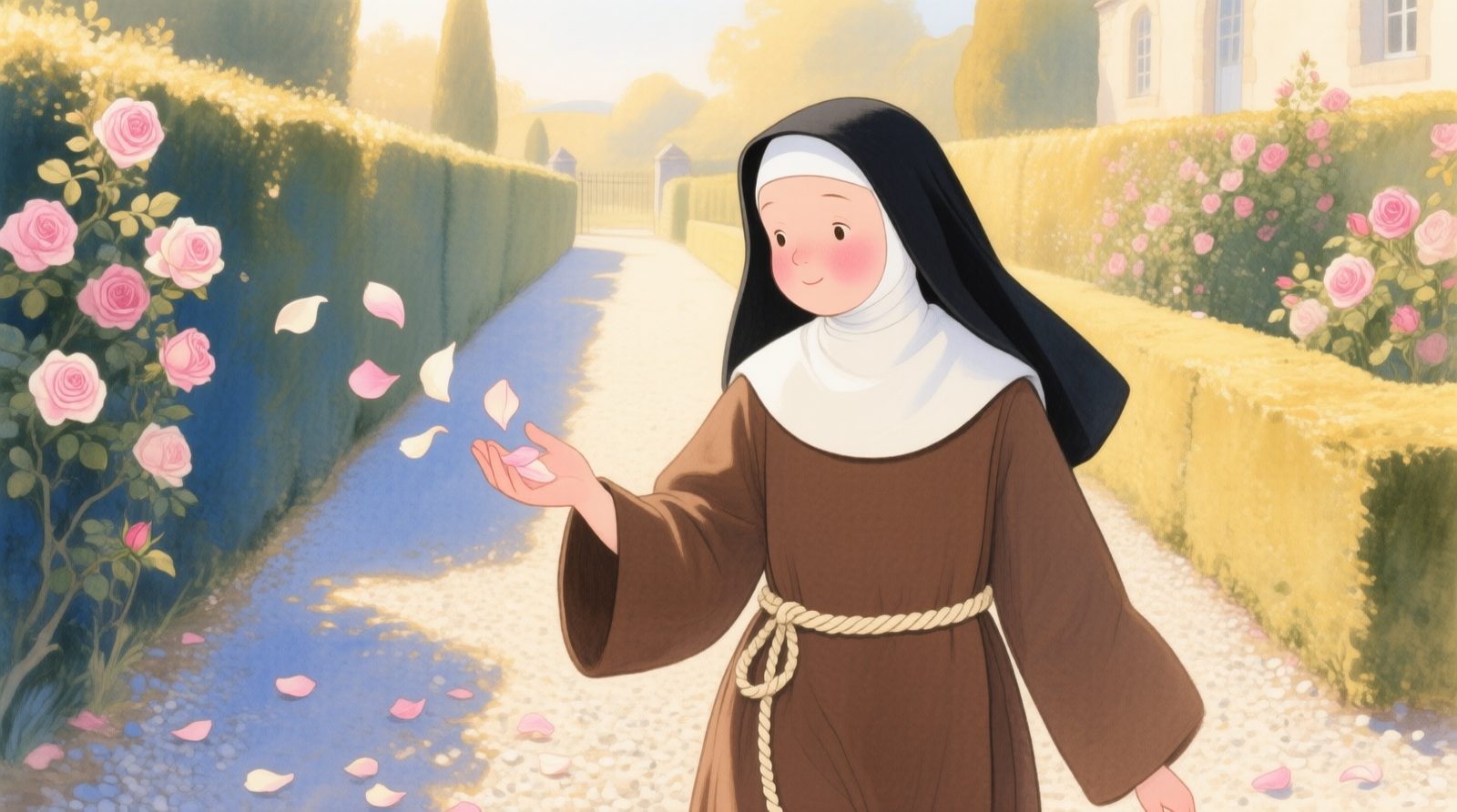
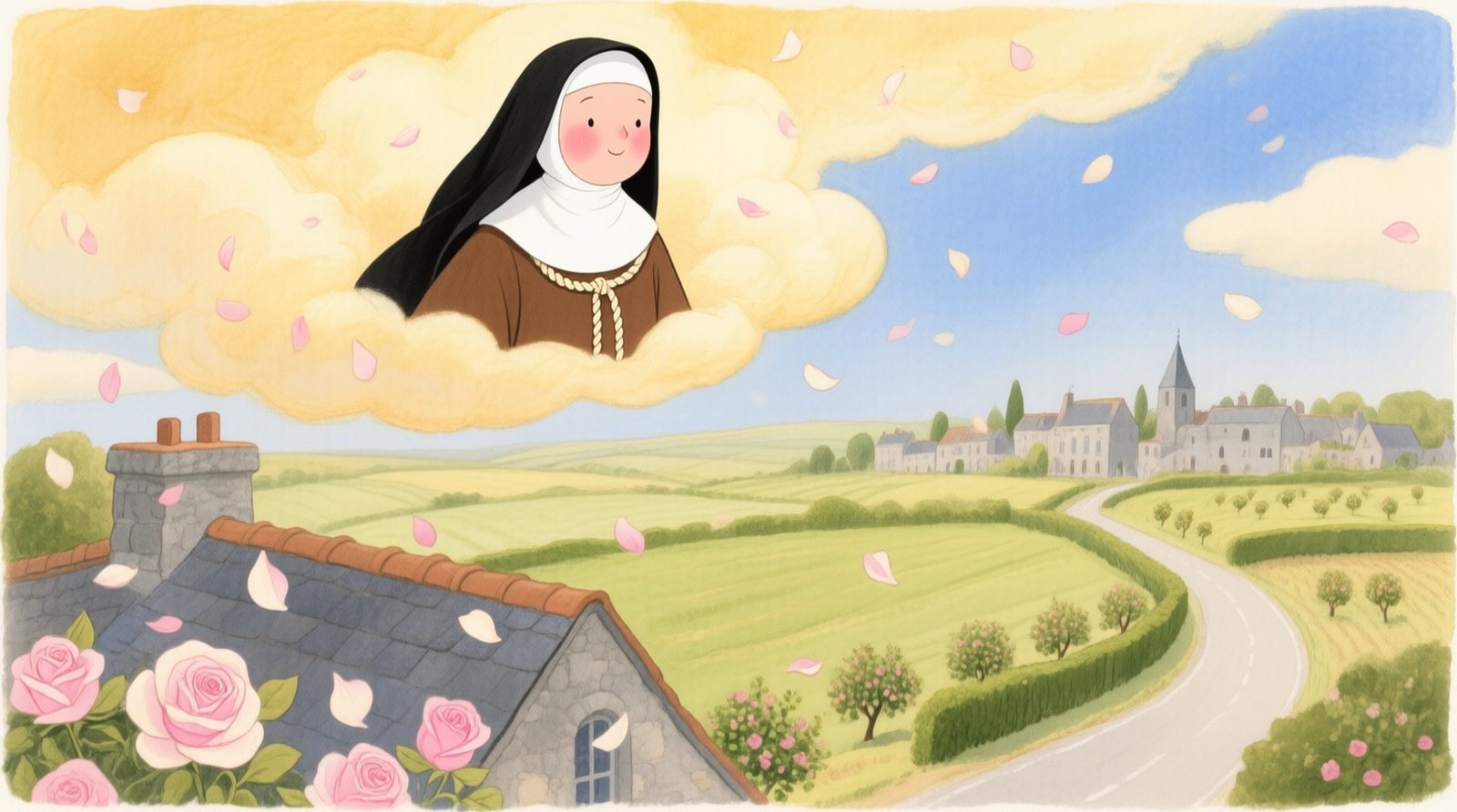
"I will spend my Heaven doing good on Earth. I will let fall a shower of roses."
She meant that after she died, she would go on helping people from Heaven, sending down graces like rose petals falling.
In her last months, the suffering was very great. Every breath cost her. But Thérèse offered it all to Jesus, for souls, and kept repeating, trustingly, that everything is grace — even suffering, even pain, everything could be a gift from God.
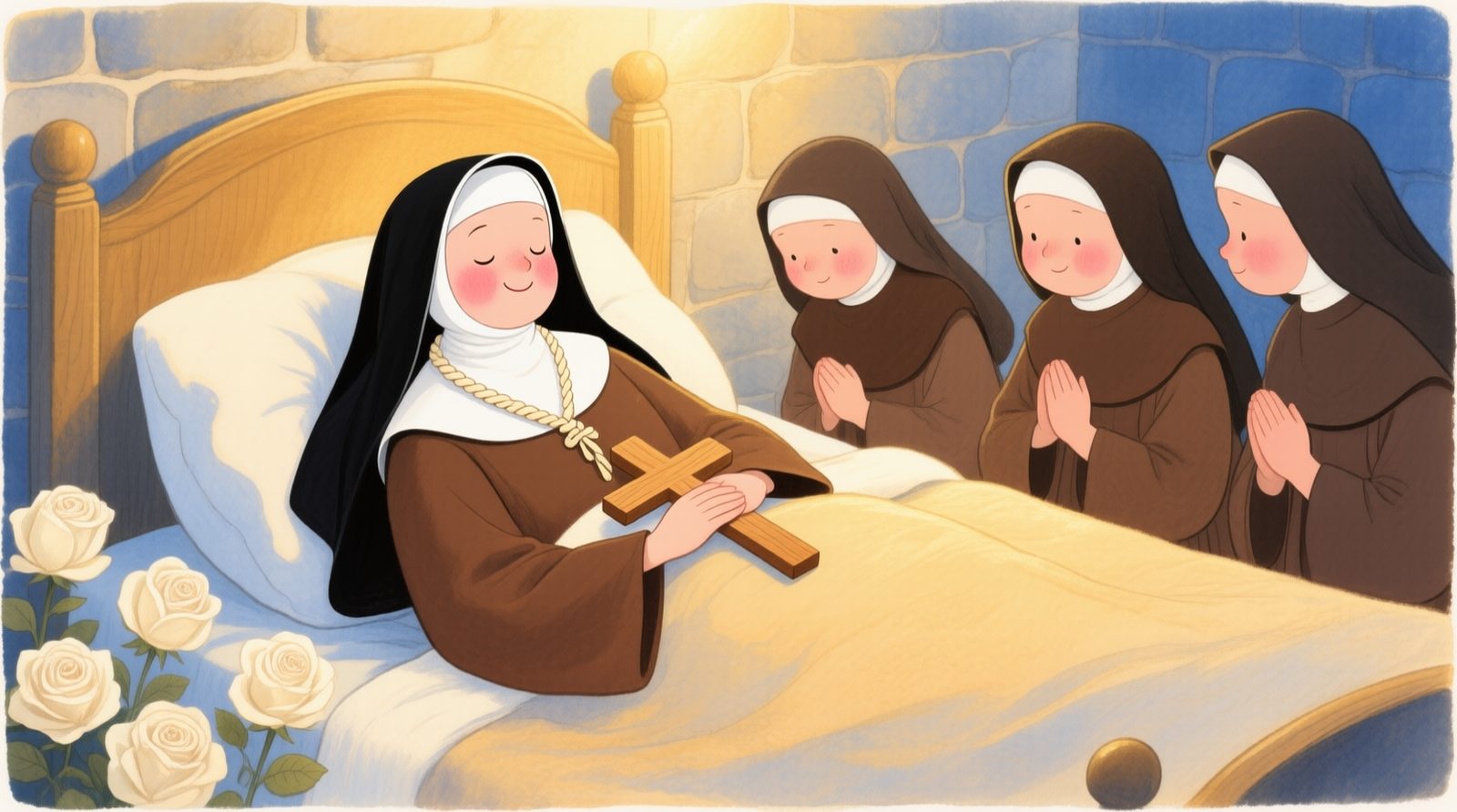
On September 30, 1897, Thérèse was at the end. The nuns gathered around her bed in silence. She looked long at the crucifix and spoke her last words, slowly:
"My God... I love You."
And then, with a smile on her face, Thérèse died. She was only twenty-four years old.
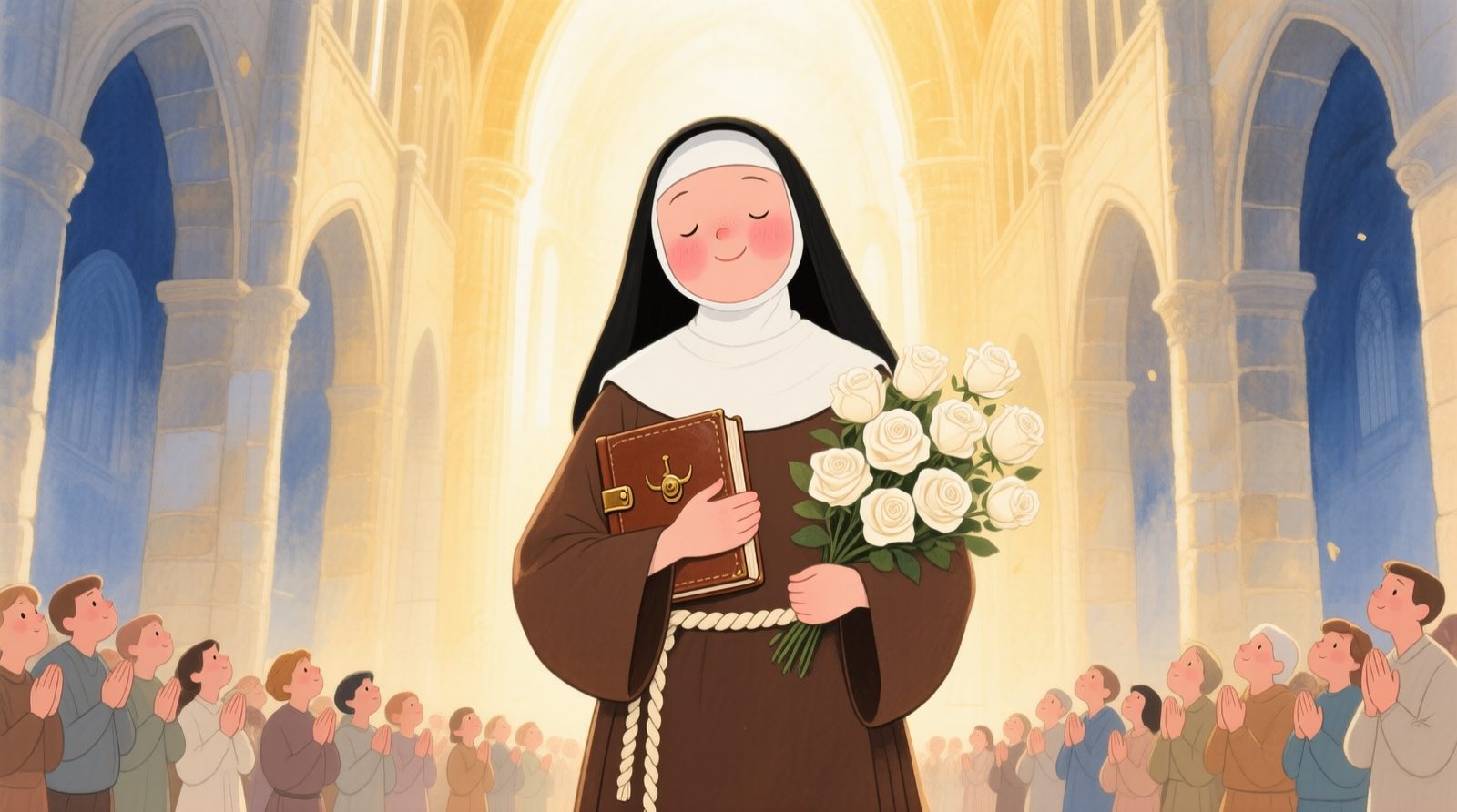
The nuns thought that poor Thérèse, dead so young, would never be known. They were completely wrong. The superior published "The Story of a Soul" and sent copies to other convents. And the book spread like fire. People all over the world read it and fell in love with Thérèse's little way. Miracles began to happen: people who prayed for her intercession were heard. Soldiers in the First World War carried her picture in their pockets, missionaries called on her, ordinary people prayed with her. The little flower who had lived hidden was now known throughout the world.
In 1925, only twenty-eight years after her death, Thérèse was canonized, in one of the fastest processes in history. Pope Pius XI called her "the greatest saint of modern times". And there was more: in 1997, Pope John Paul II declared Saint Thérèse a Doctor of the Church, one of the greatest honors there is. In two thousand years, the Church has proclaimed only thirty-seven Doctors, and just four women — Thérèse is one of them, because her Little Way changed the way we understand holiness.
What, in the end, is Saint Thérèse's teaching? That holiness does not demand extraordinary feats, but ordinary acts done with extraordinary love. That we should trust God the way a child trusts her father, totally and without fear. That love is not a feeling but a choice we make even when it is hard. That little sacrifices — a smile when we are sad, patience when we are irritated, silence when we are hurt — are worth a great deal in God's eyes. And that everything is grace, even the suffering that purifies us and draws us closer to Him. As she wrote: "Let no one fear loving the good God too much. We will never be deceived if we trust in Him."
Saint Thérèse is the patroness of missionaries, though she never left her convent; of aviators; of France and of Russia — and of so many others. She is one of the most beloved saints of all time, and millions of people pray with her every day. Her prophecy came true: she really does spend her Heaven doing good on Earth, and countless graces are attributed to her intercession. Her shower of roses keeps falling on the world.
What does Saint Thérèse teach us today? That you do not need to be famous to be a saint, or work miracles to please God, or be perfect to be loved. It is enough to do small things with great love: smile at someone who is sad, be patient, help without complaining, pray with faith, offer your troubles to God. These are the flowers Thérèse scattered — and each of us can scatter them too. She summed it up like this: "My little way is the way of trust and love. I do not understand souls who are afraid of so tender a Friend."
Moral of the Story


