
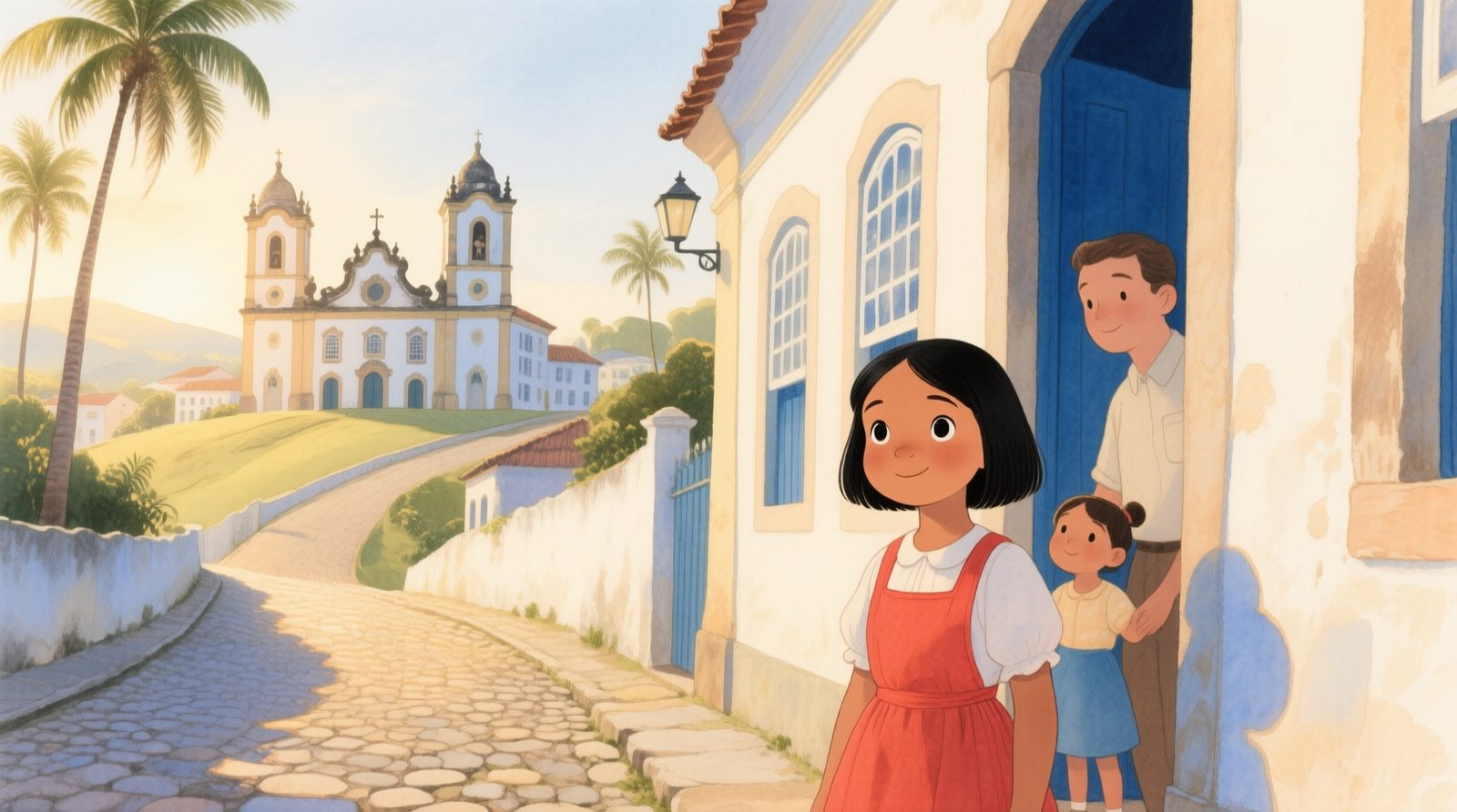
On May 26, 1914, in Salvador, in the Brazilian state of Bahia, a girl was born named Maria Rita de Souza Brito Lopes Pontes. Quite an enormous name, isn't it? But soon everyone would call her simply Dulce.
Her family was middle class. Her father, Augusto, was a dentist and a teacher; her mother, who was also named Dulce, cared for the home and the children. Maria Rita had five brothers and sisters, in a cheerful, Catholic family. But that little girl's heart, from the time she was tiny, was different.
The Girl with the Big Heart
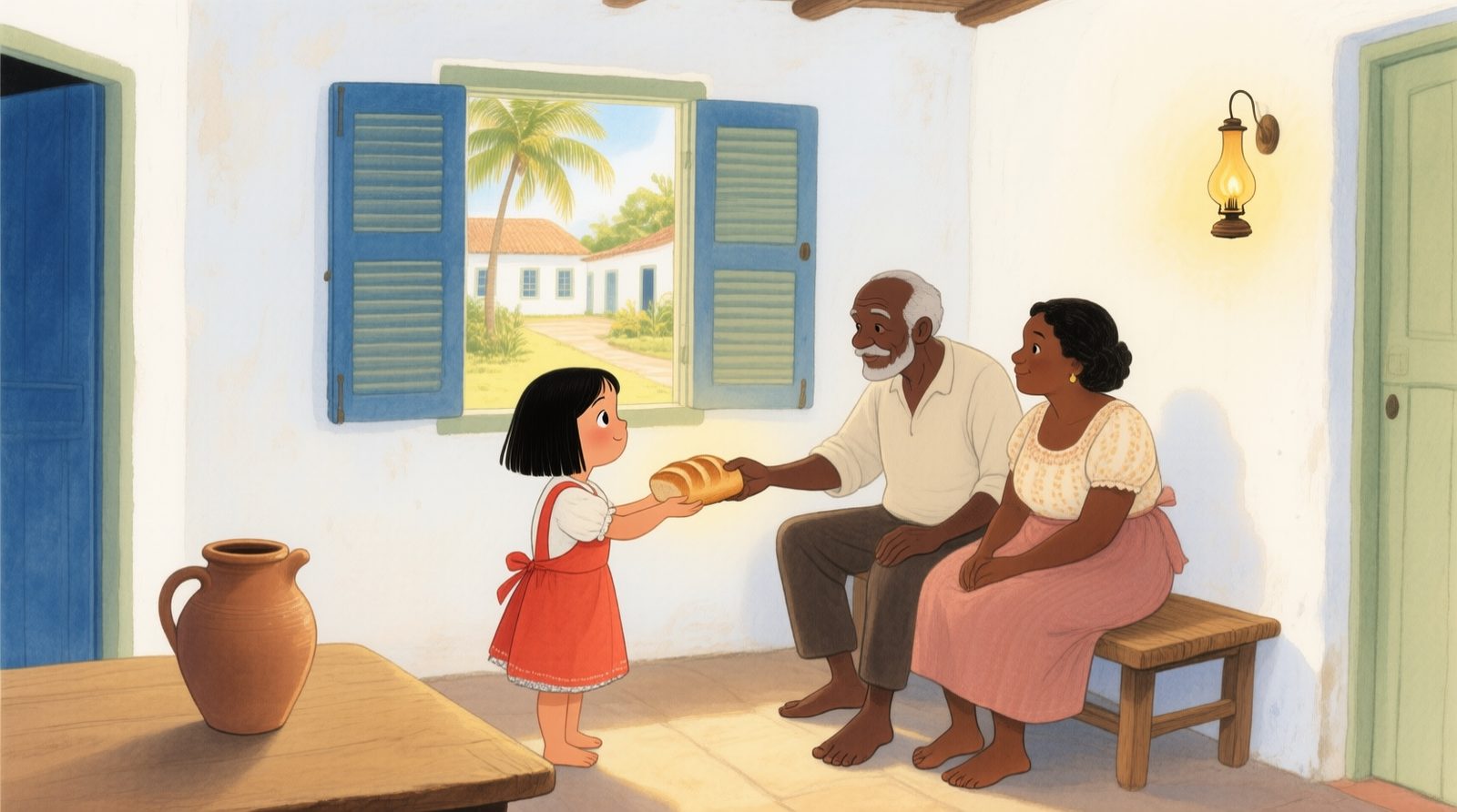
From very early on, Maria Rita could not bear to see anyone suffer. When she met beggars in the street, her eyes filled with tears and she wanted to help however she could. At six years old, she began doing something that astonished her family: she brought poor and sick people home, in secret. She settled them in the back room, gave them food, and cared for them with all the tenderness a child can have.
When her mother found out, she grew worried.
"Maria Rita, you can't bring strangers into the house."
"But, Mother," the girl would answer, "they have nowhere to stay. Jesus asks us to help."
Losing Her Mother
When Maria Rita was only seven years old, her mother fell ill with cancer and died. It was an immense sorrow, because Maria Rita loved her deeply. Before she passed away, Dona Dulce called her daughter close and asked her, softly, to always care for the poor and to always be kind.
Those words were engraved forever on the girl's heart. Maria Rita promised she would devote her life to the poor. And, as we shall see, she kept that promise to the very end.
First Communion
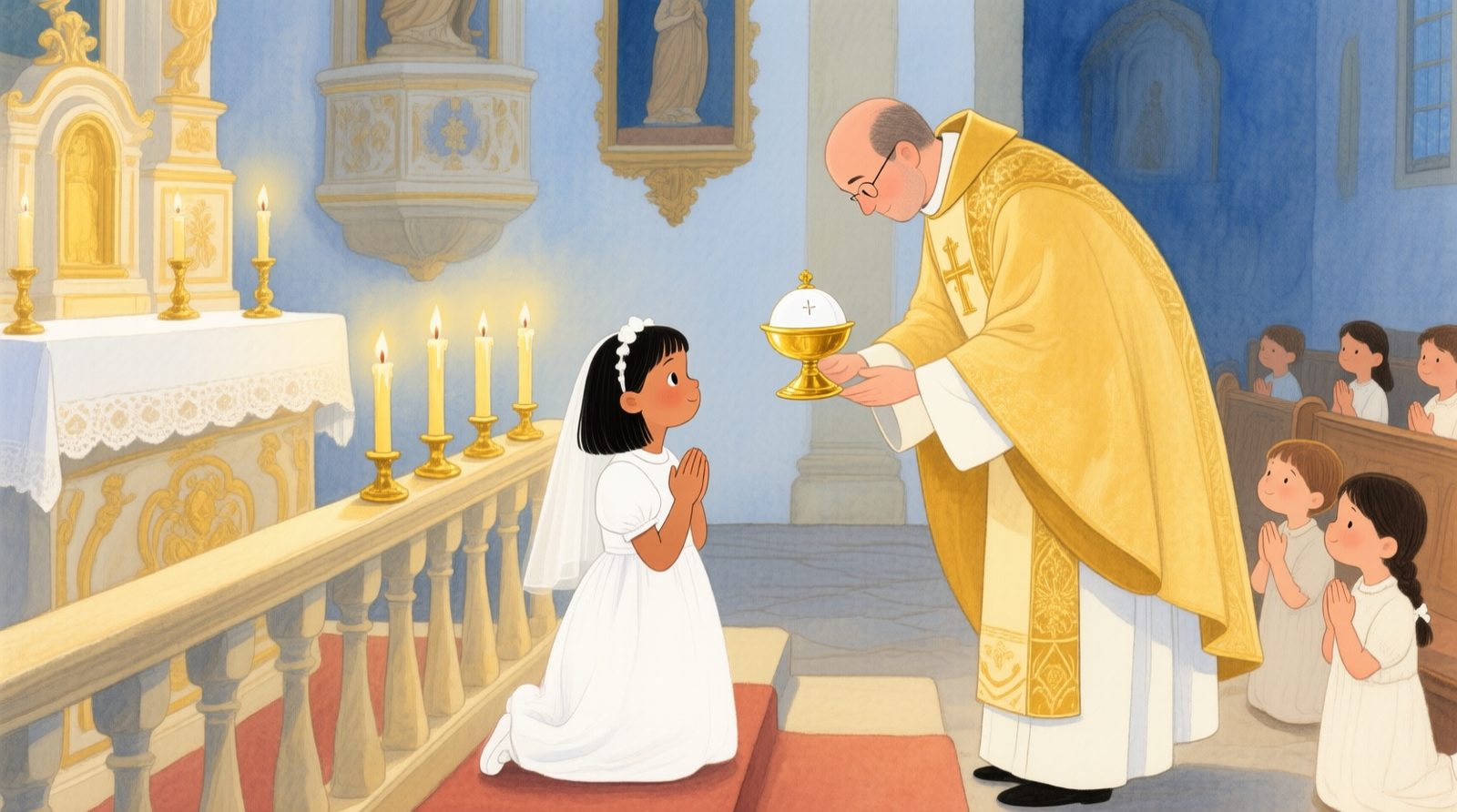
At eight years old, Maria Rita made her First Communion. It was a special day, and she looked lovely in her little white dress. But the most beautiful thing happened on the inside. When she received Jesus in the Eucharist for the first time, Maria Rita felt that He was alive within her, and that He loved the poor. So she would love them too. From that day on, her life had a clear purpose: to serve Jesus in the poor.
A Religious Calling
At thirteen, Maria Rita already knew what she wanted: to become a nun, to give herself entirely to God and to the poor. Her father, however, thought she was too young and asked her to wait. Maria Rita obeyed. She waited, but she did not stop helping. She visited the poorest neighborhoods, brought food, cared for the sick, and taught catechism to the children.
At eighteen, at last, she received her father's permission.
Entering the Convent
In 1933, Maria Rita entered the Congregation of the Missionary Sisters of the Immaculate Conception of the Mother of God. Another long name, but with a simple mission: to serve the poor and the sick.
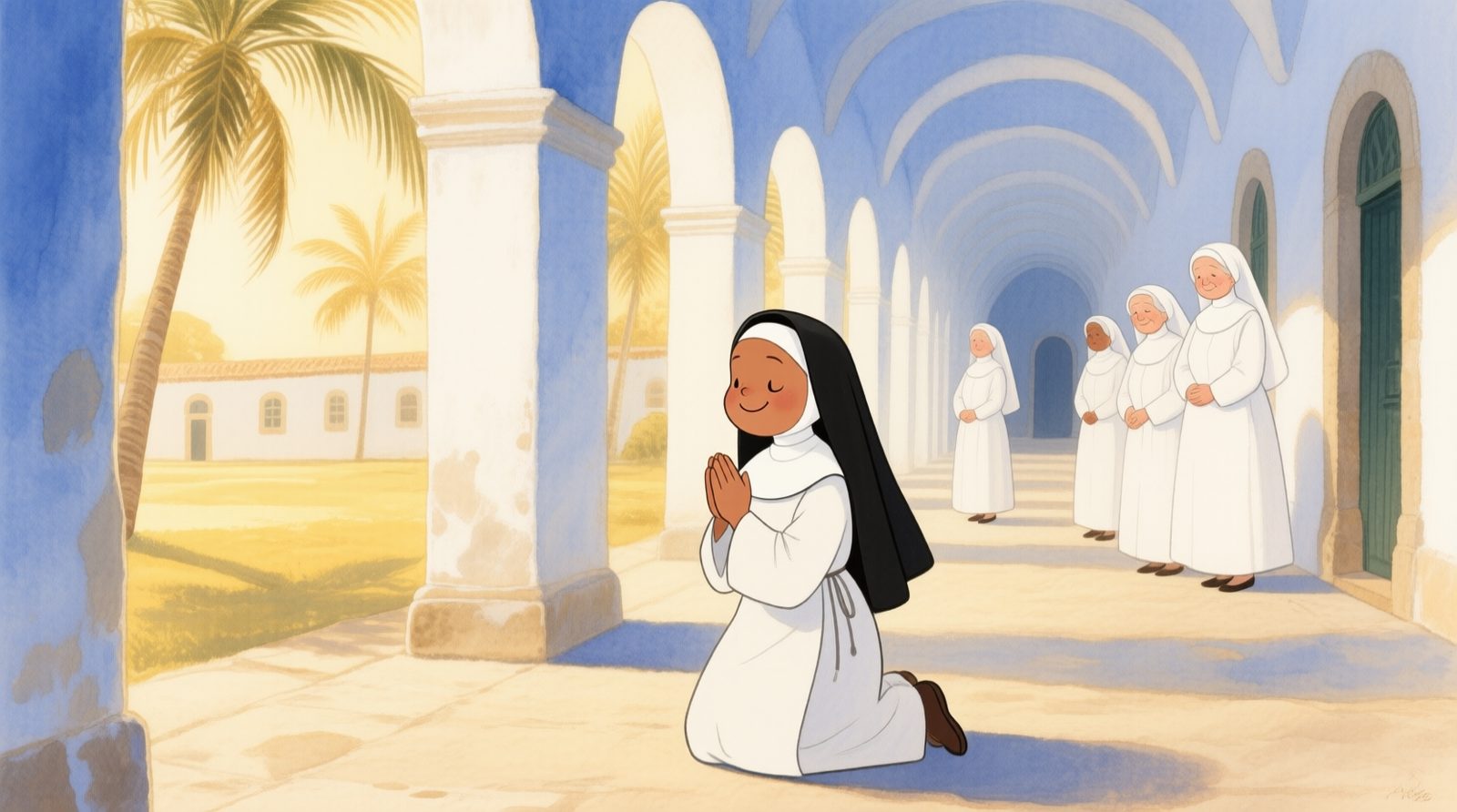
When she became a religious sister, Maria Rita received a new name: Sister Dulce. She chose it in honor of her mother, as if to say she would carry on the mission her mother had left her. As a novice, Sister Dulce was pure joy. She prayed hard, worked hard, and, whenever she could, hurried off to help the poor.
Teacher and Nurse
After her religious vows, Sister Dulce was sent to teach in the congregation's schools. She was a beloved teacher who adored the children and taught with patience. At the same time, she studied nursing, because she wanted to care for the sick even better.
She rose early, prayed, taught classes, studied, and still visited the poor at night. She hardly slept, but she was always cheerful.
"I have no time to be tired," she would say, smiling. "Jesus needs me."
The Night Rounds
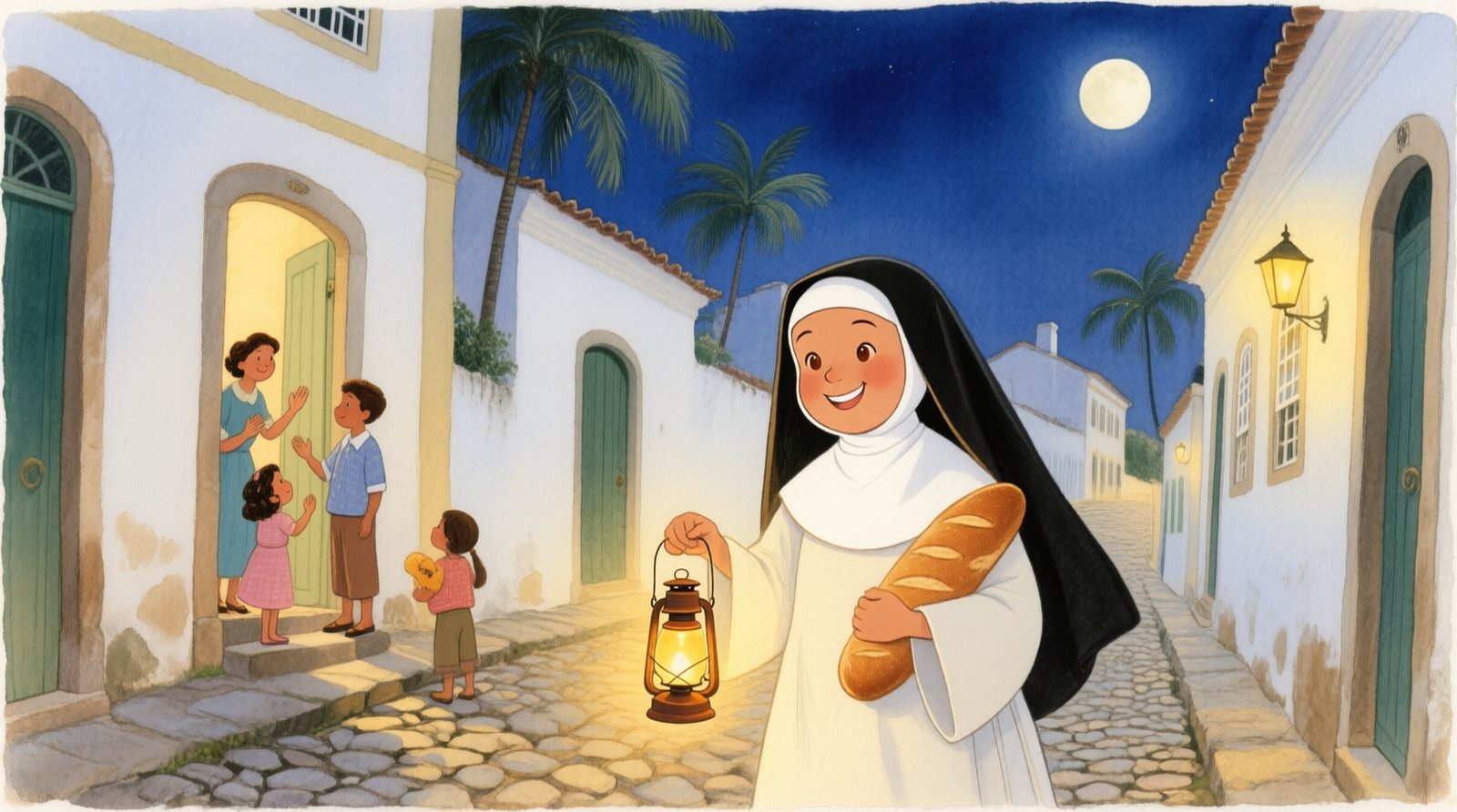
At night, after everyone was asleep, Sister Dulce would slip out quietly. She went to the streets of Salvador, to the poorest neighborhoods, carrying food, medicine, and clothing, visiting the sickest people. She returned in the small hours and, since the convent gate was already locked, she climbed over the wall and stole back in.
The other sisters knew, but pretended not to see, admiring her courage. Her superiors sometimes worried and told her she needed to rest, that she would make herself ill. Sister Dulce only smiled and answered that if Jesus never rested, she wasn't going to rest either.
The Saint Francis Workers' Union
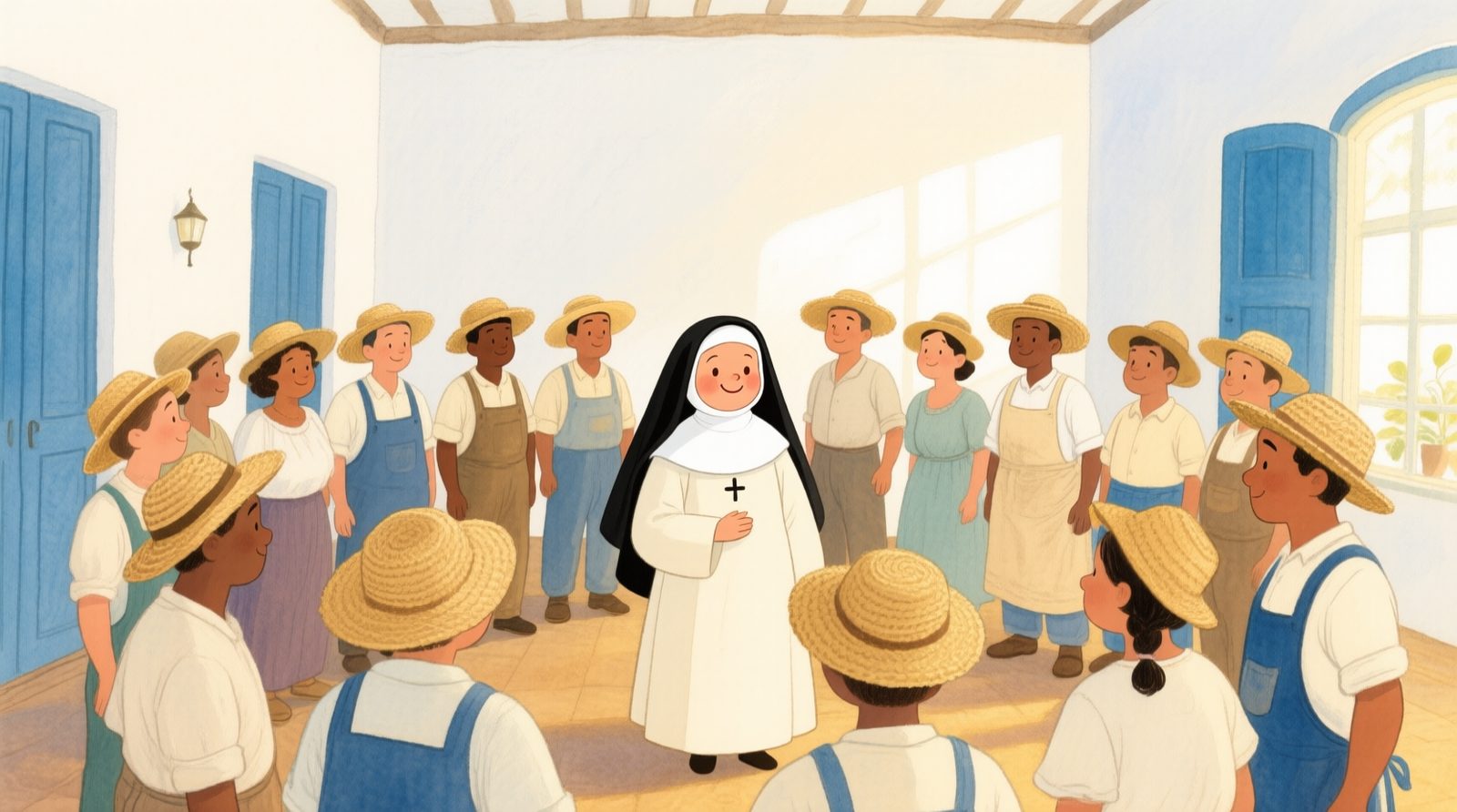
In 1935, Sister Dulce founded the Saint Francis Workers' Union, an association of poor workers. They gathered to pray, but also to help one another. If someone fell ill and could not work, the others looked after his family. If someone needed medicine, they all pitched in.
Sister Dulce organized everything; she was the soul of the movement. Hundreds of workers joined, and that was the small seed of something much greater still to come.
The Sick in the Streets
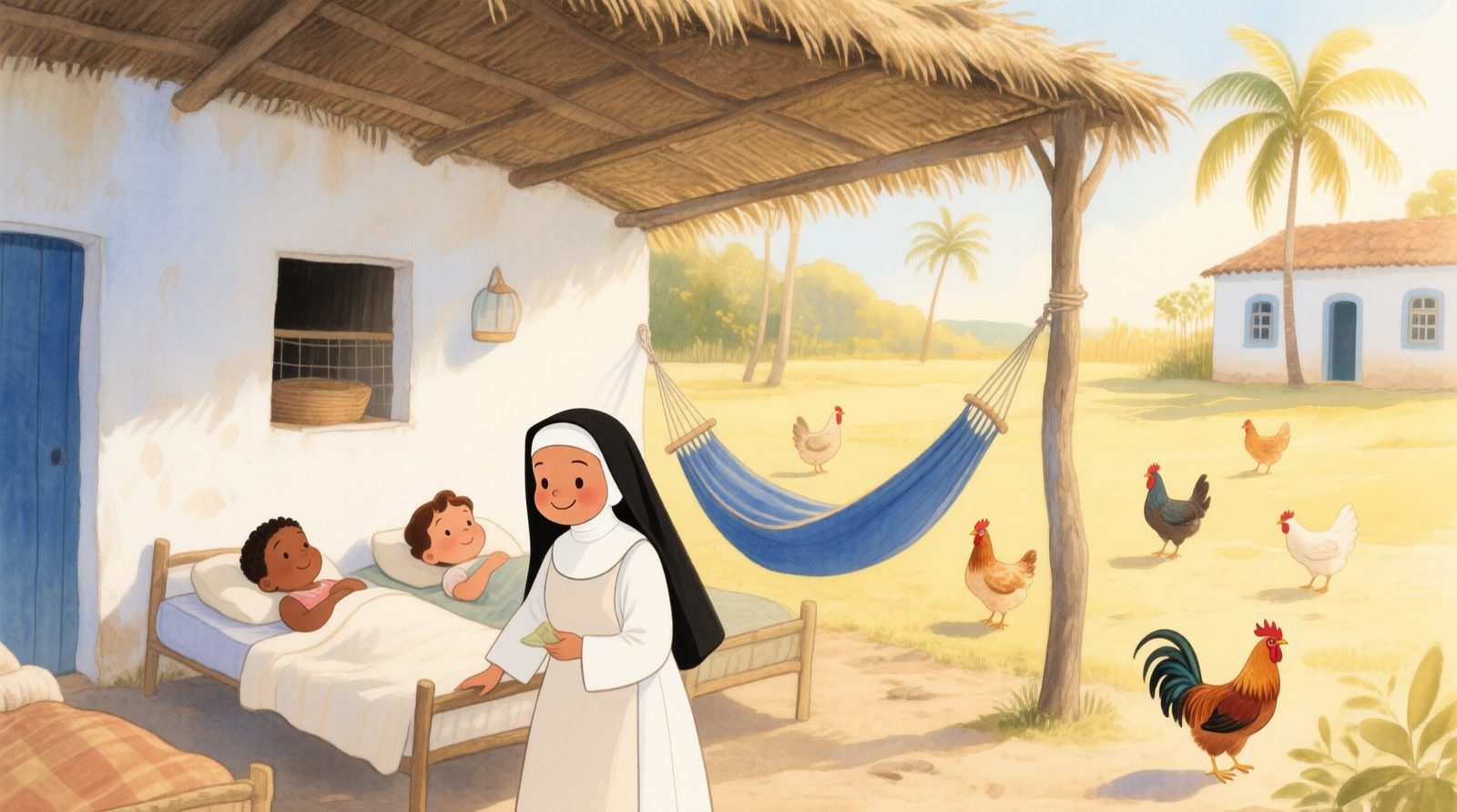
But the problem was enormous. Many sick people had nowhere to stay. The hospitals would not take them in, because they were poor, and many died in the streets. Sister Dulce could not bear to see it, and she decided she had to do something.
In 1939, she took a bold step: she rented an old abandoned market. It was a dirty place, falling to pieces, but it was a roof. She cleaned everything, laid mattresses on the floor, and began sheltering the sick. Soon seventy people were living there. They slept on the floor, it's true, but at least they were no longer in the street.
The Miraculous Chicken Coop
One day, though, the rent money ran out, and the owner wanted his market back. Where could she take seventy sick people? Sister Dulce had an idea nobody expected: she moved them all into the convent's chicken coop. That's right, the chicken coop, where the hens slept.
The other sisters were speechless.
"Sister Dulce, you can't do that!"
"Jesus was born in a stable," she answered calmly. "The sick can stay in a chicken coop."
She cleaned out the coop, improvised beds, and settled everyone in. The hens lost their home, but the sick had a roof.
Begging for Help
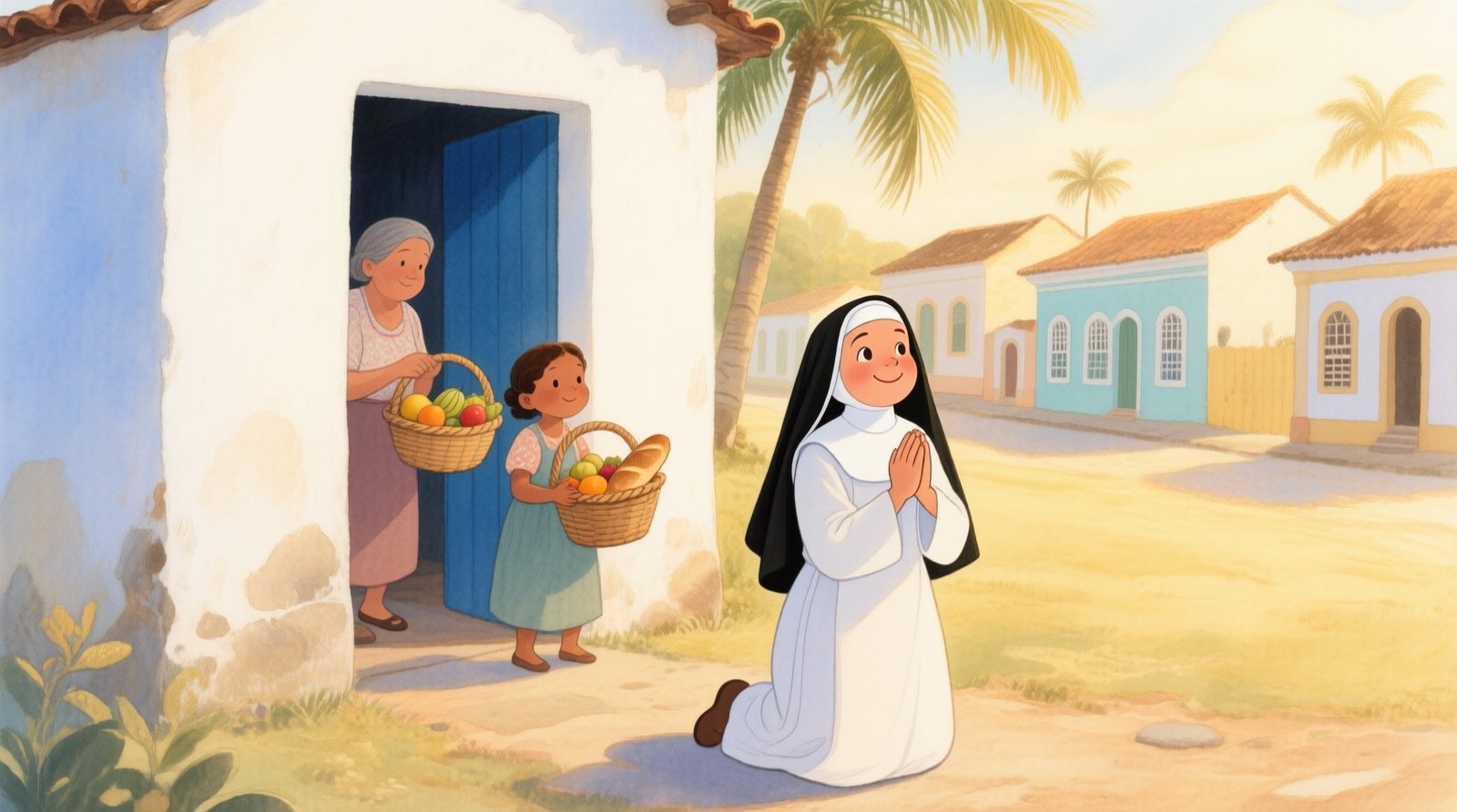
Sister Dulce had no money. How could she feed seventy people? How could she buy medicine? She did what she would do for the rest of her life: she went out to beg. She knocked on door after door, asking for help for the poor of Jesus. She went to the market to ask for food, to the pharmacies to ask for medicine, to the shops to ask for clothes.
At first, many people refused, and some even thought the little nun was mad. But Sister Dulce persisted, with a smile on her face.
"It's for Jesus. You wouldn't refuse Jesus anything, would you?"
And people ended up giving. Who could say no to that tiny nun with eyes full of love?
Everyday Miracles
Many times, the food ran out, and the sick went to bed hungry. Then Sister Dulce would pray, reminding Jesus that He had fed five thousand people with five loaves, and asking Him to feed her poor as well. And, one way or another, someone would show up with a donation, at just the right moment. Other times an urgent medicine was missing; she prayed, and the medicine arrived.
The sick said Sister Dulce worked miracles. She answered, humbly, that it was not her, it was Jesus. She was only the instrument.
Her Fame Begins to Spread
Soon, all of Salvador knew Sister Dulce. Whoever was sick and had no money went looking for Sister Dulce. Whoever was hungry went to Sister Dulce's chicken coop. Whoever had lost hope knew she would help. She became known as the Good Angel of Bahia.
Politicians began to visit her; journalists wrote about her. But Sister Dulce did not want fame. She always said the glory belonged to Jesus, and that she only did what He asked.
Reflection


