
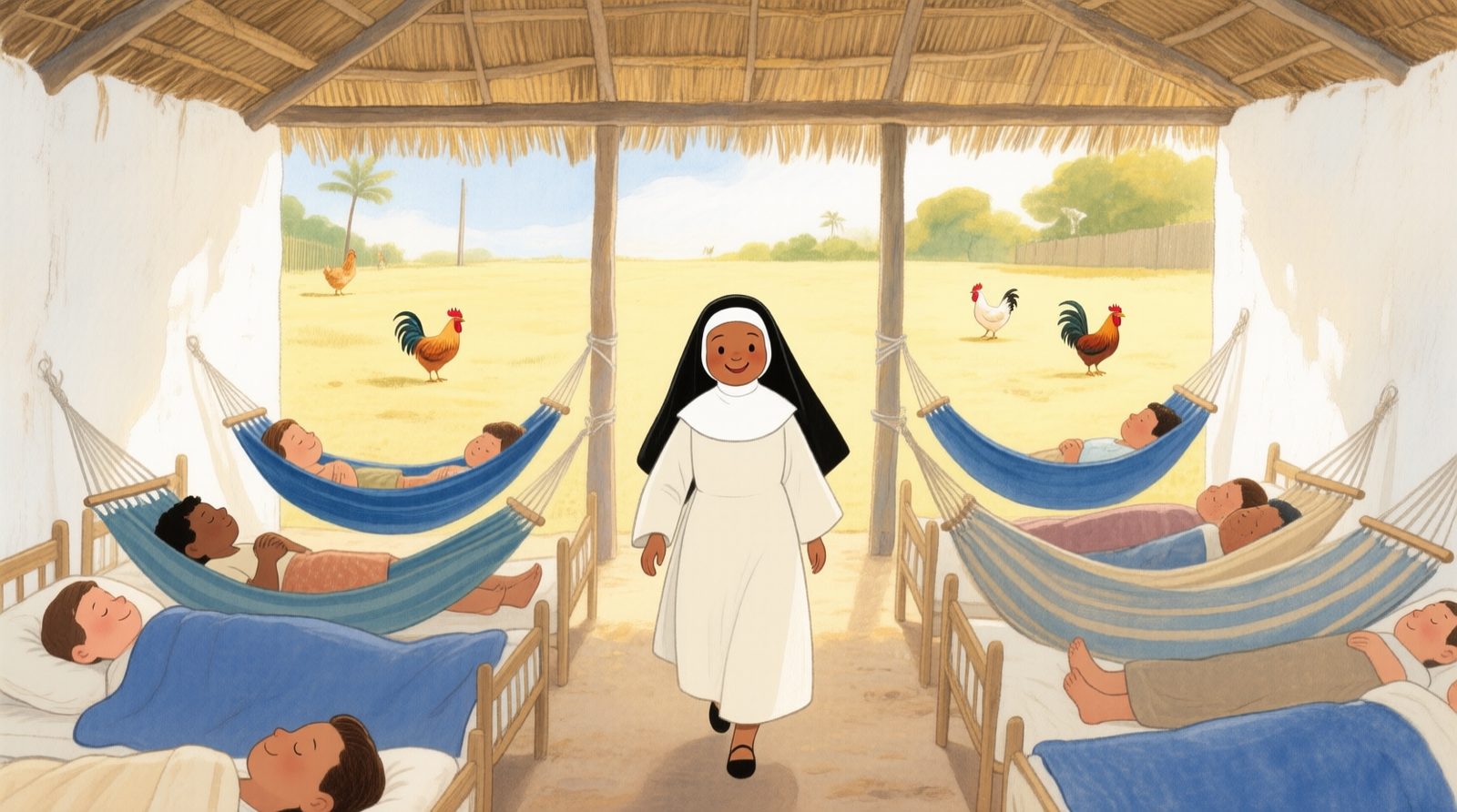
The chicken coop was far too full: seventy people in a tiny space. Sister Dulce knew she needed to grow, but how, with no money? She did what she always did: she prayed and trusted God. And, little by little, things began to happen.
Building the Shelter
In 1949, with donations that had begun to arrive, Sister Dulce built the first real building. It was small and simple, but it was a start. They called it the Santo Antônio Shelter, in honor of Saint Anthony, the saint of the poor. Now they could take in more people, with an infirmary, a kitchen, and bathrooms.
Sister Dulce worked day and night: she cared for the sick, managed everything, asked for donations, cleaned, cooked.
"Sister Dulce, you'll wear yourself out with all this work," people said.
"I'll die doing what Jesus asks," she answered with a smile. "What a beautiful death that would be."
The Hospital Grows
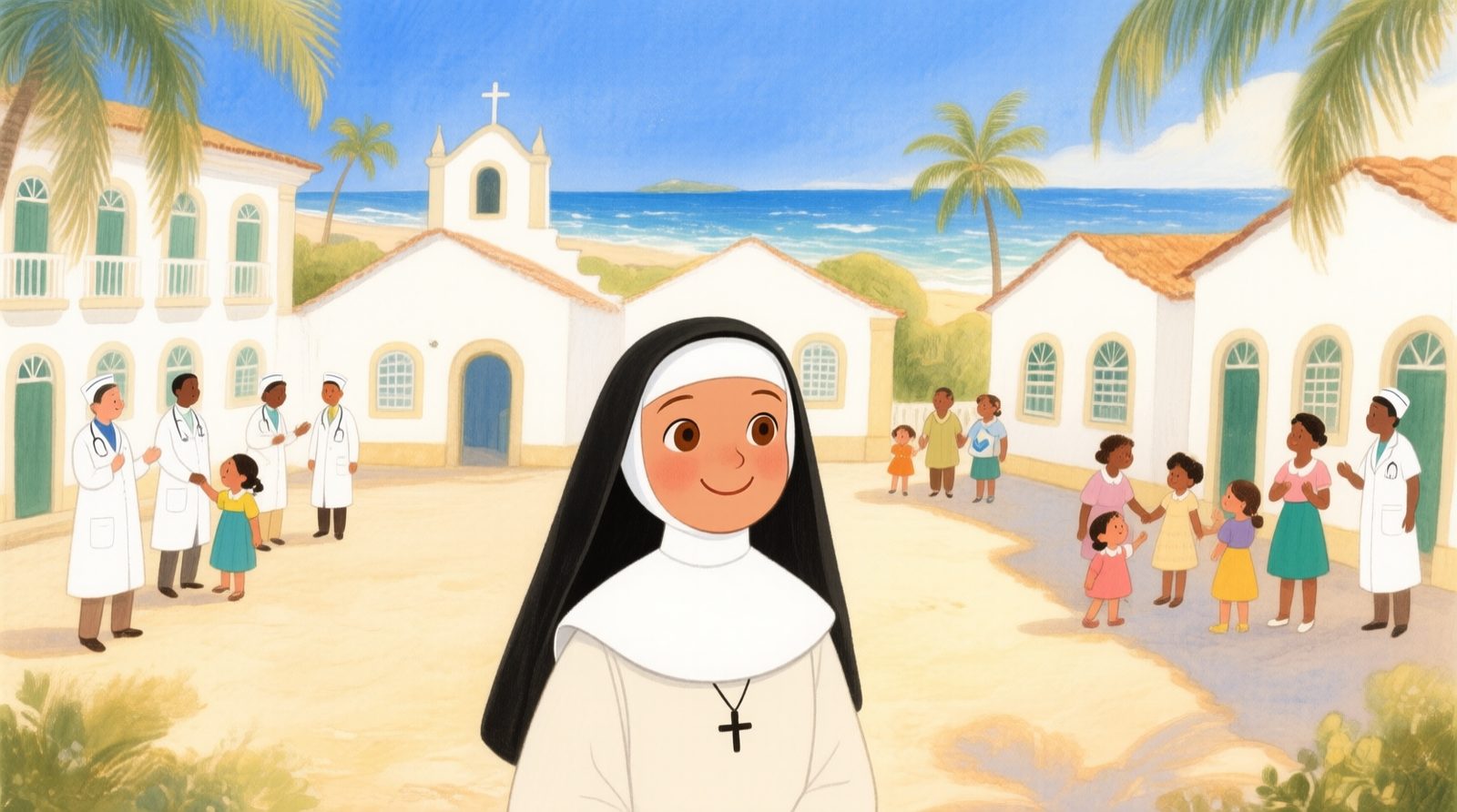
But the shelter grew too small as well, because more and more sick people kept arriving. Sister Dulce kept asking, building, expanding, and in the 1950s the shelter became a hospital. New wards came, then equipment, doctors, and nurses.
Sister Dulce, however, had one rule that never changed: no one would be turned away for lack of money. Rich or poor, black or white, Catholic or not, everyone was welcome. Jesus did not pick and choose, and neither would she.
The Social Works Grow
And Sister Dulce did not stop at the hospital. She saw that people needed more, and she went on founding new works, one after another: a school so poor children could learn to read and write, a daycare where working mothers could leave their little ones, an orphanage for abandoned children, a home for the elderly without families, and job training courses for young people. All free of charge, all with love, all for the glory of God.
Recognition Begins
Sister Dulce's fame spread throughout Brazil. Newspapers wrote about her; radio and television interviewed her; politicians came to visit; business owners donated money. But Sister Dulce remained the same: humble, simple, devoted. She wore the same old, mended habit, ate little, slept even less. All the money that came in went to the poor. For herself, she kept nothing.
Meeting the Pope
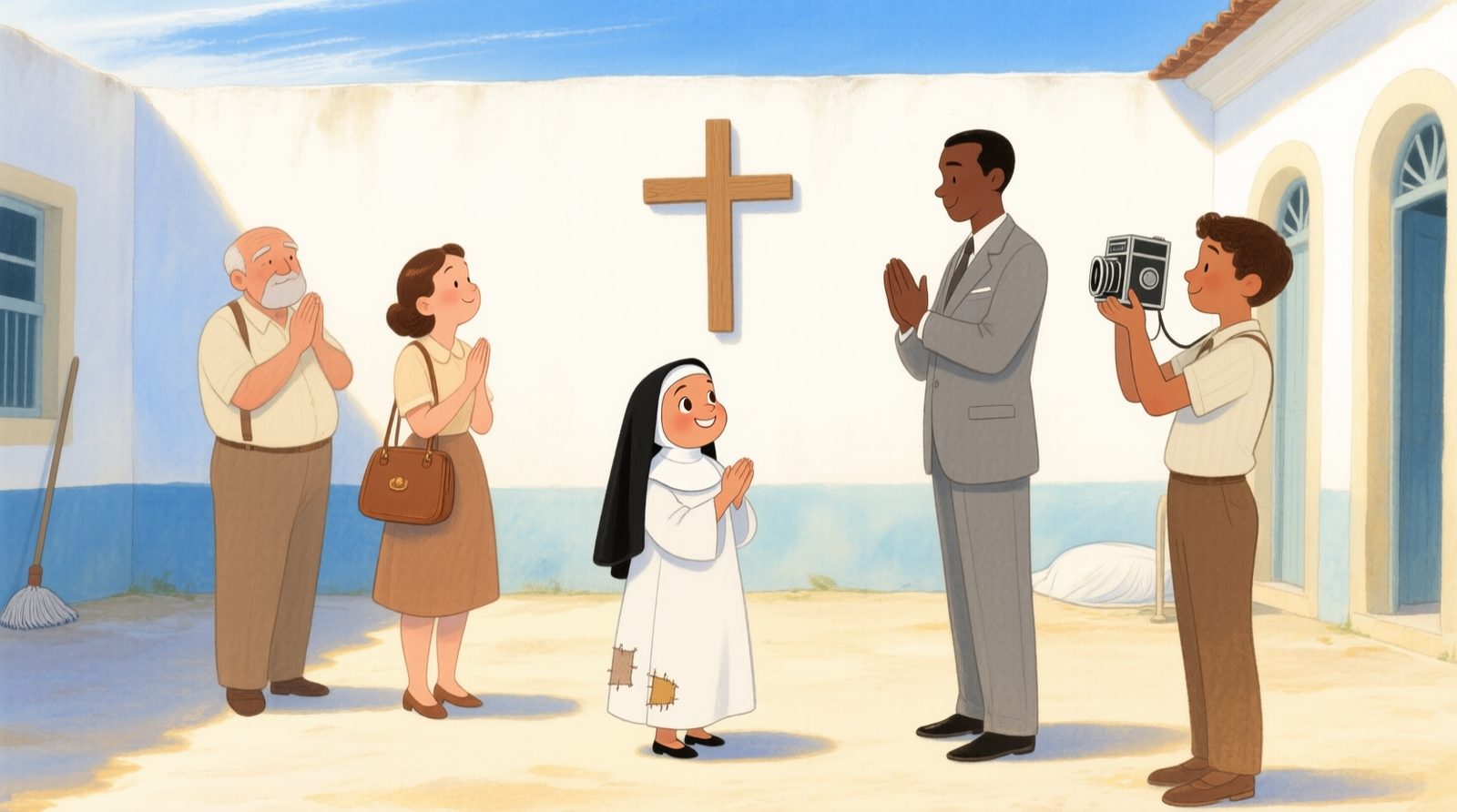
In 1980, something extraordinary happened: Pope John Paul II visited Brazil and, passing through Salvador, met Sister Dulce. She was 66 years old and already ill, but she went to meet him with a heart full of joy.
The Pope received her warmly, for he knew her work. He blessed her and encouraged her to carry on her mission among the poor. Sister Dulce wept with emotion: receiving the Pope's blessing was a dream come true. Years later, in 1991, John Paul II returned to Brazil and made a point of visiting her again. After that first meeting, she would say, full of energy:
"The Pope blessed me! I have to work even harder."
Awards and Honors
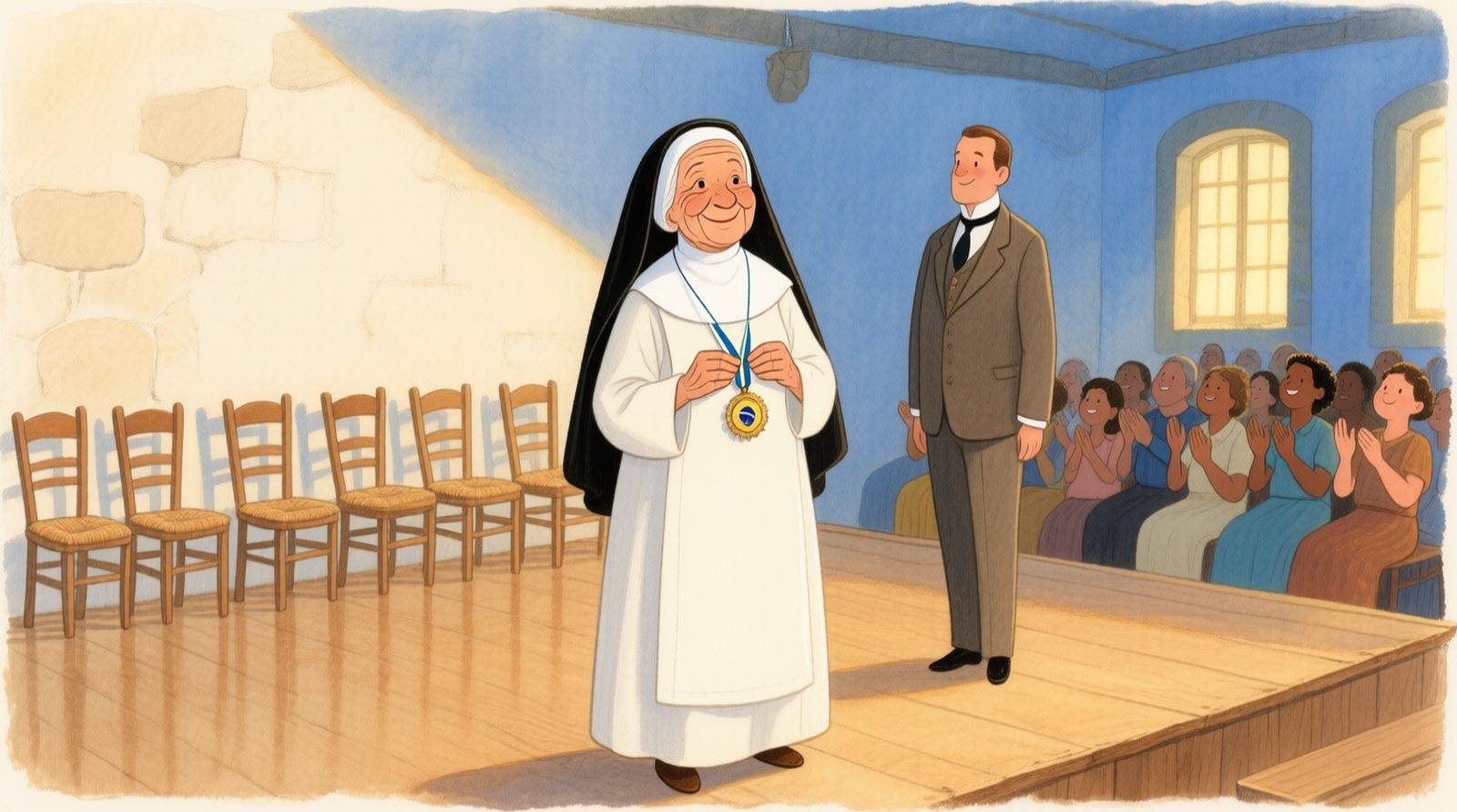
Sister Dulce received many important honors. In 1988, she was nominated for the Nobel Peace Prize. She received decorations from the Brazilian government and honorary titles from universities. But she did not care about awards for their own sake. She said awards were good because they drew attention to the work, and then more people would help. She used her fame to gather more donations for her poor.
Sister Dulce's Illness
For decades, Sister Dulce worked almost without stopping. She slept two or three hours a night, ate poorly, carried heavy loads, climbed up and down stairs. Little by little, her body began to cry for help. She developed serious breathing problems, suffered repeated bouts of pneumonia, and grew weaker and weaker, until she needed oxygen.
Even ill, she kept working. She would say, serenely, that as long as she could breathe, she would serve.
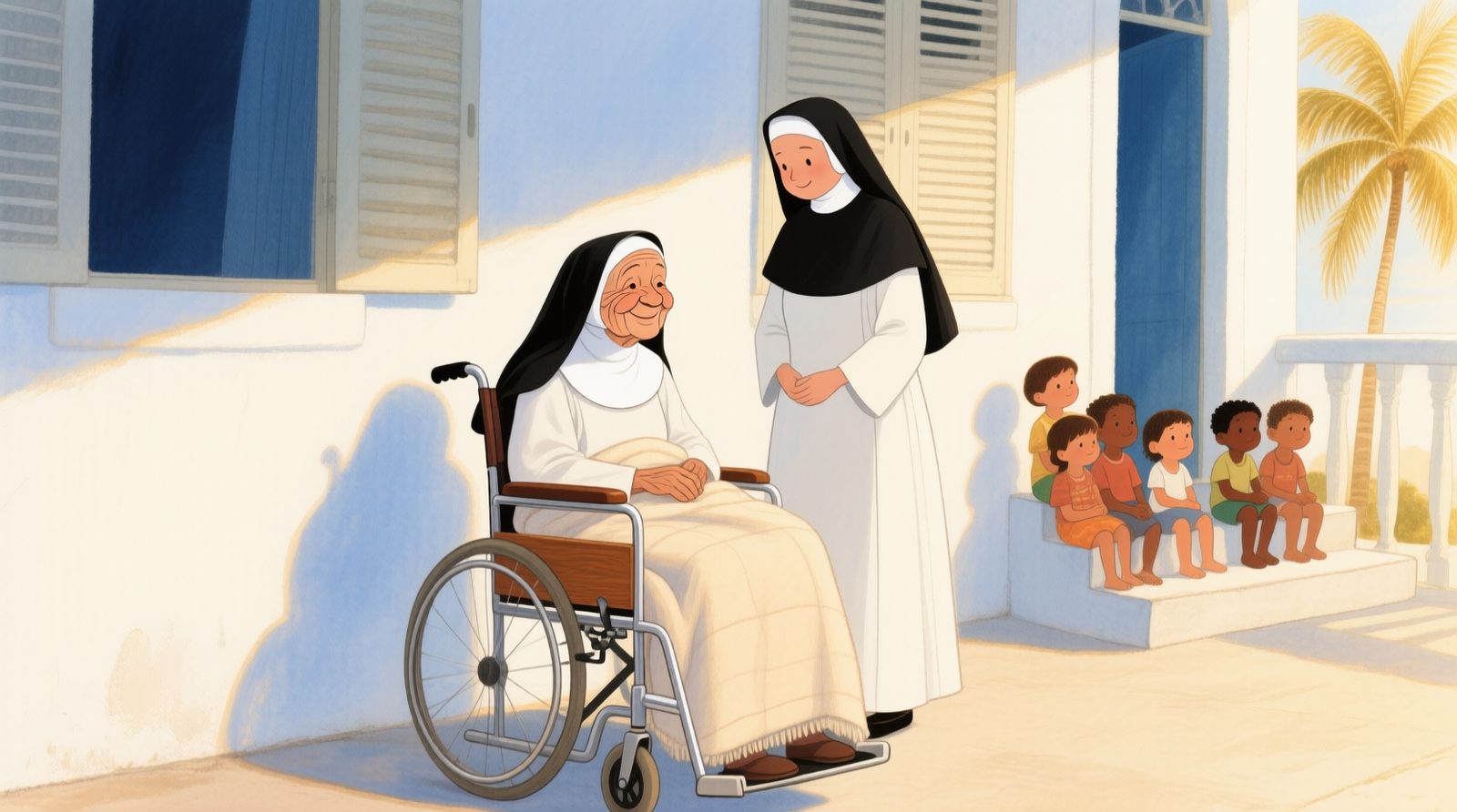
In her final years, Sister Dulce became very frail. She needed a wheelchair and oxygen all the time. Even so, she kept guiding, organizing, planning. From her bed, she watched over her great army of love. The doctors marveled that she was still alive, with so little health and so much work. But Sister Dulce had a mission to finish, and she was not going to give it up.
March 13, 1992: The Farewell
In the early hours of March 13, 1992, Sister Dulce was gravely ill. She was 77 years old and surrounded by her religious sisters. At 6:45 in the morning, she died in peace. Her last words were a loving request: that everyone be happy, always happy.
The news spread quickly, and Salvador came to a standstill. Thousands of people came to say goodbye, in enormous lines. They wept and gave thanks, each one remembering what she had done: a life saved, a mother cared for, children fed.
The Funeral
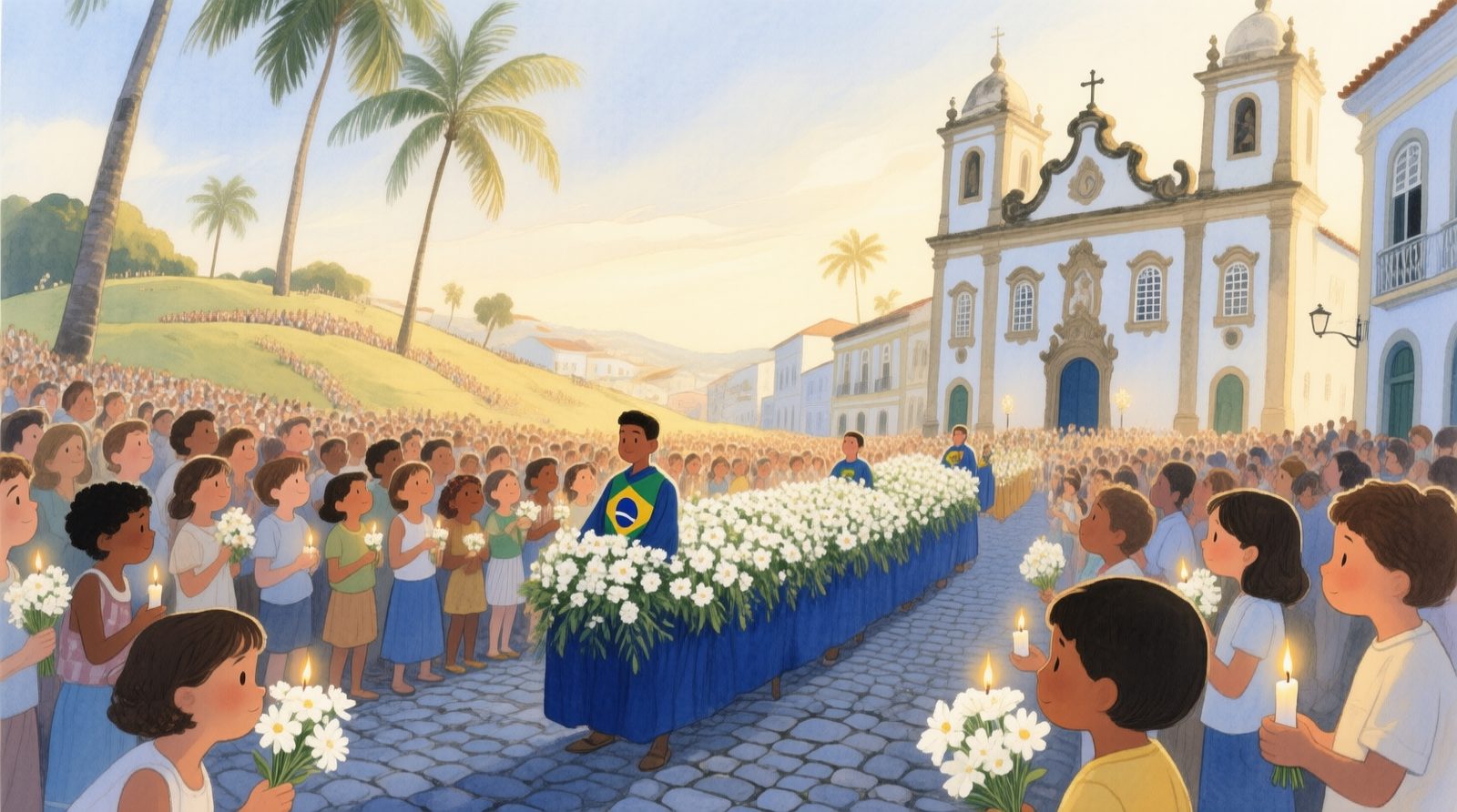
Sister Dulce's funeral was one of the largest Bahia had ever seen. Many thousands of people followed the procession: politicians, business leaders, but above all the poor, who wept, saying they had lost their mother and asking who would care for them now.
But Sister Dulce's work did not die with her. The Social Works carried on and kept growing. Today, the Sister Dulce Social Works care for thousands of people every single day.
The Road to Canonization
Soon after her death, the process of beatification began. The Archdiocese of Salvador gathered testimonies, investigated miracles, studied her life. In 2000, Pope John Paul II declared her Venerable. In 2011, Pope Benedict XVI beatified her, and she became Blessed Dulce of the Poor. And finally, on October 13, 2019, Pope Francis canonized her: Saint Dulce of the Poor, the first woman born in Brazil to become a saint.
The Miracles
To declare someone a saint, the Church must recognize miracles. The miracle for her beatification was the healing of a woman from Bahia who suffered a severe hemorrhage after childbirth: the doctors had lost hope, her family prayed for Sister Dulce's intercession, and she survived, with no scientific explanation.
For the canonization, another miracle was recognized: a man named José Maurício, who had been blind for years, recovered his sight after praying for Sister Dulce's help. Both cases were investigated with great rigor, and the doctors confirmed there was no natural explanation.
Devotion Today
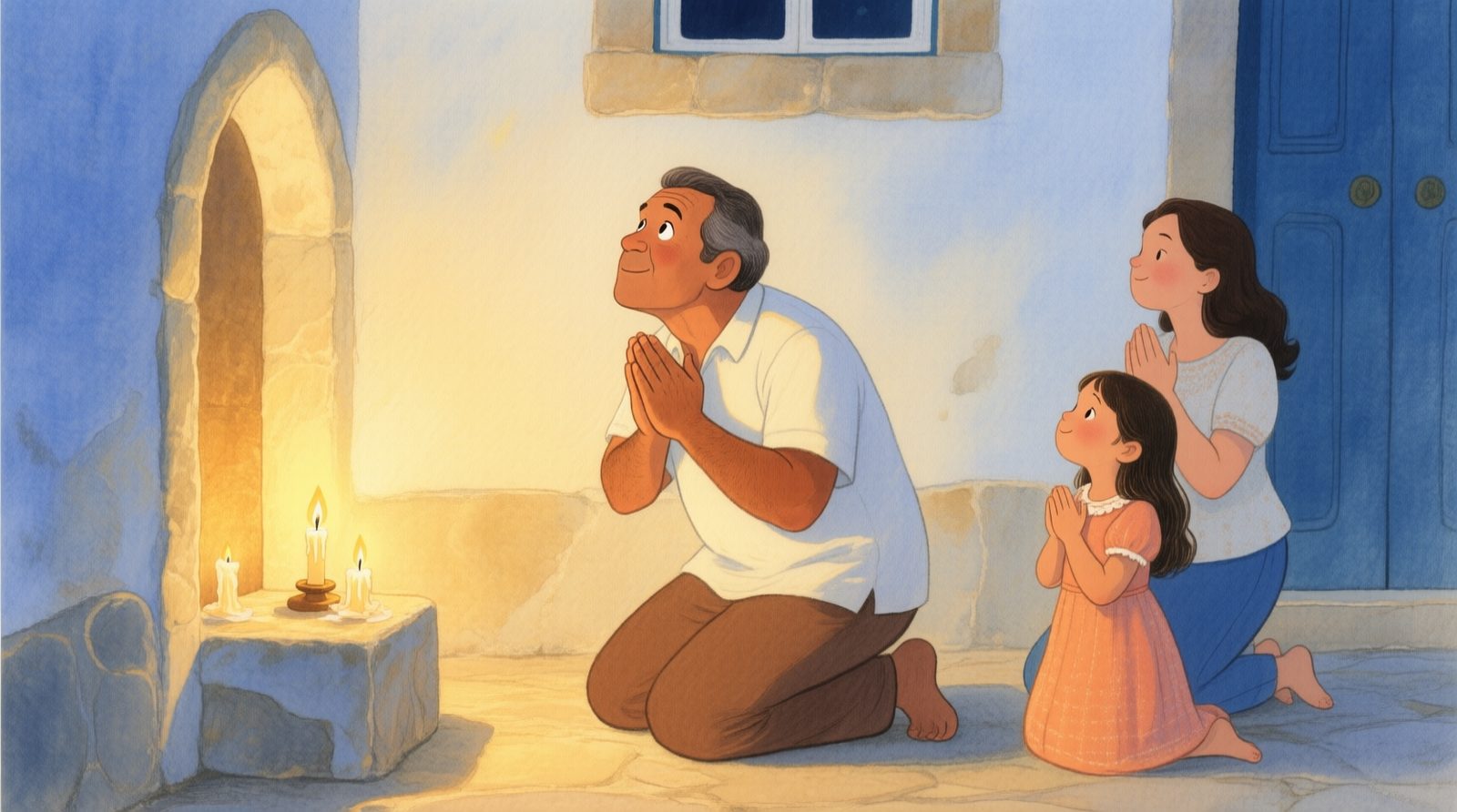
Today, Saint Dulce is loved throughout Brazil and in many countries. Thousands of people visit her shrine in Salvador, ask for her intercession, and give thanks for graces received. Churches are dedicated to her, and many little girls are given her name.
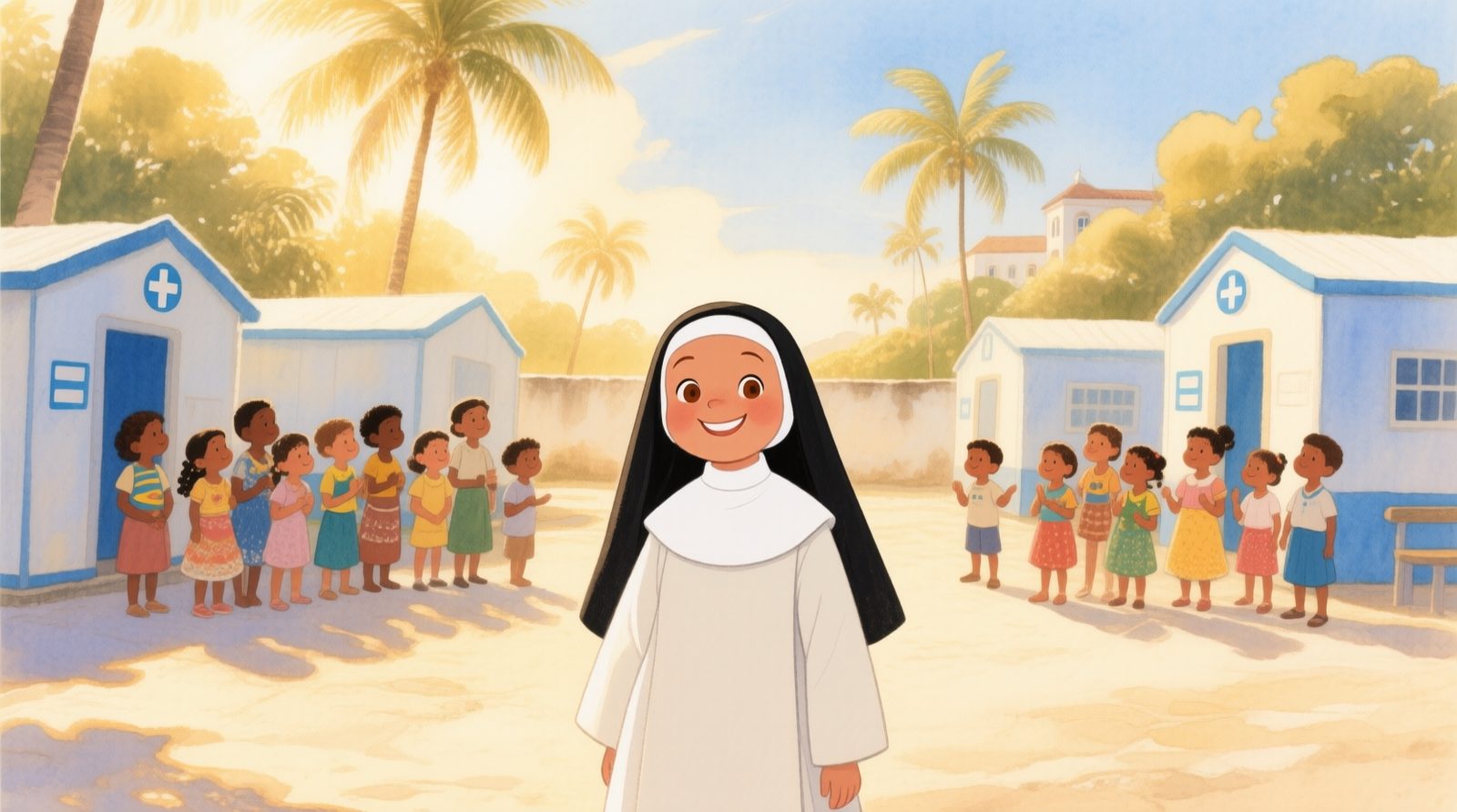
The Sister Dulce Social Works carry on what she began: the Santo Antônio Hospital, one of the largest in Bahia, along with schools, a daycare, care for the elderly, and a job training center. The seed planted in the chicken coop became an immense tree.
The Legacy of Saint Dulce
From the chicken coop to the hospital. From seventy sick people to thousands cared for every day. From an unknown nun to a saint of the Church. Saint Dulce showed that love can change the world. She did not wait to have much: she started with almost nothing. She did not seek fame: she worked in silence for decades. She simply loved, with heroic charity, deep humility, and total trust in God. And that love transformed Salvador, Brazil, and the hearts of millions.
Reflection


