
On January 8, 1894, in a small village in Poland, a boy was born named Rajmund Kolbe. Rajmund means Raymond in Polish. Those were hard times: Poland was occupied by foreign powers and had neither freedom nor independence.
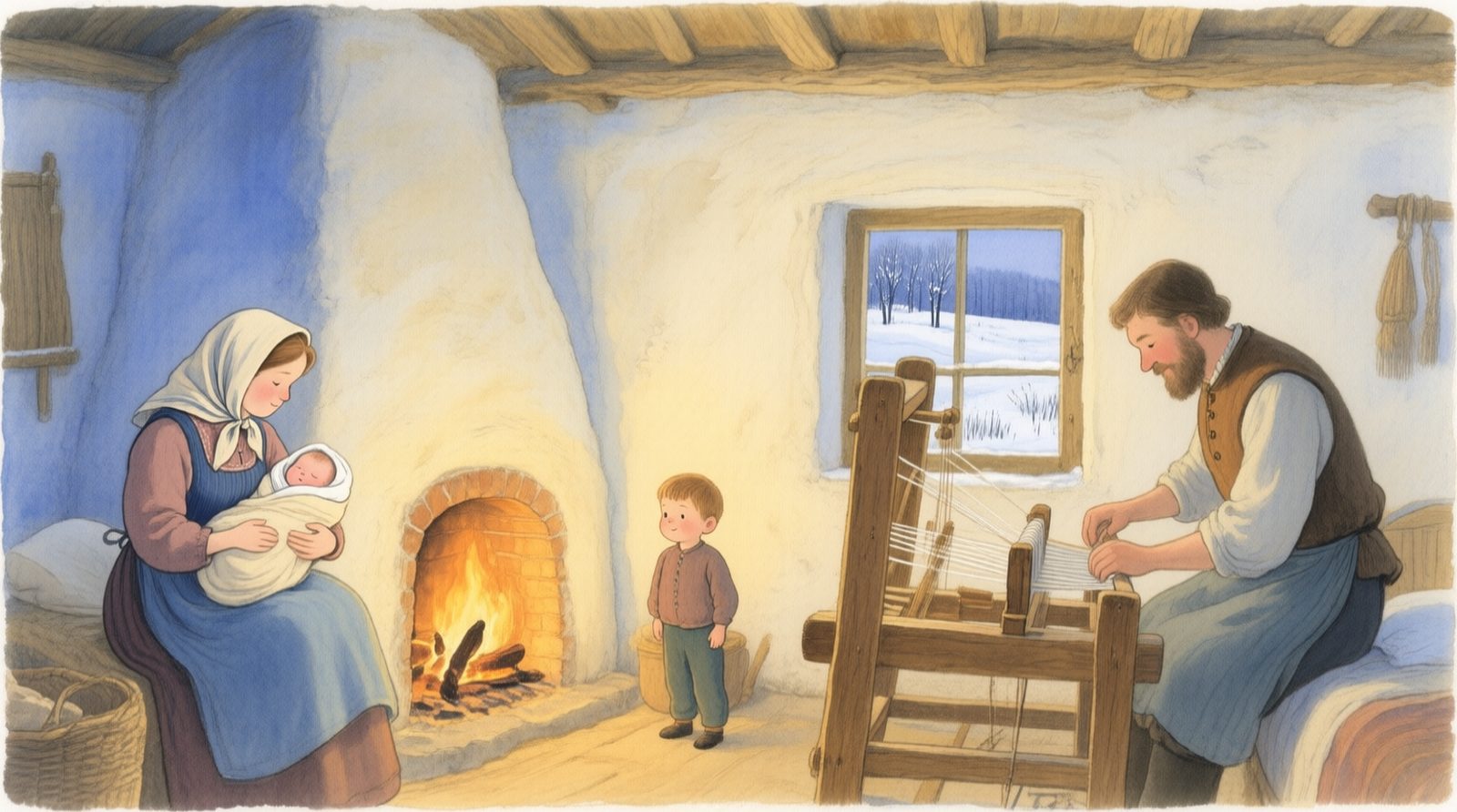
Rajmund's family was very poor and very Catholic. His father was a weaver, his mother helped support the home, and the children grew up between work and prayer. They lived with hardship, but they lived with faith.
The Mischievous Boy
Rajmund was quite a boy: he ran, jumped, got into mischief and into trouble. He was bright, but he had so much energy that his mother sometimes did not know what to do with him.
"Rajmund, what will become of you?" she would sigh, worried.
It seemed that boy was going to be a handful. But God had extraordinary plans for him.
The Vision of Our Lady
One day, when Rajmund was ten years old, his mother scolded him for some prank and repeated that question: what would become of him? The boy was so struck by it that he went to the church, knelt before the image of Our Lady, and prayed through his tears:
"Mother of Heaven, what will become of me?"
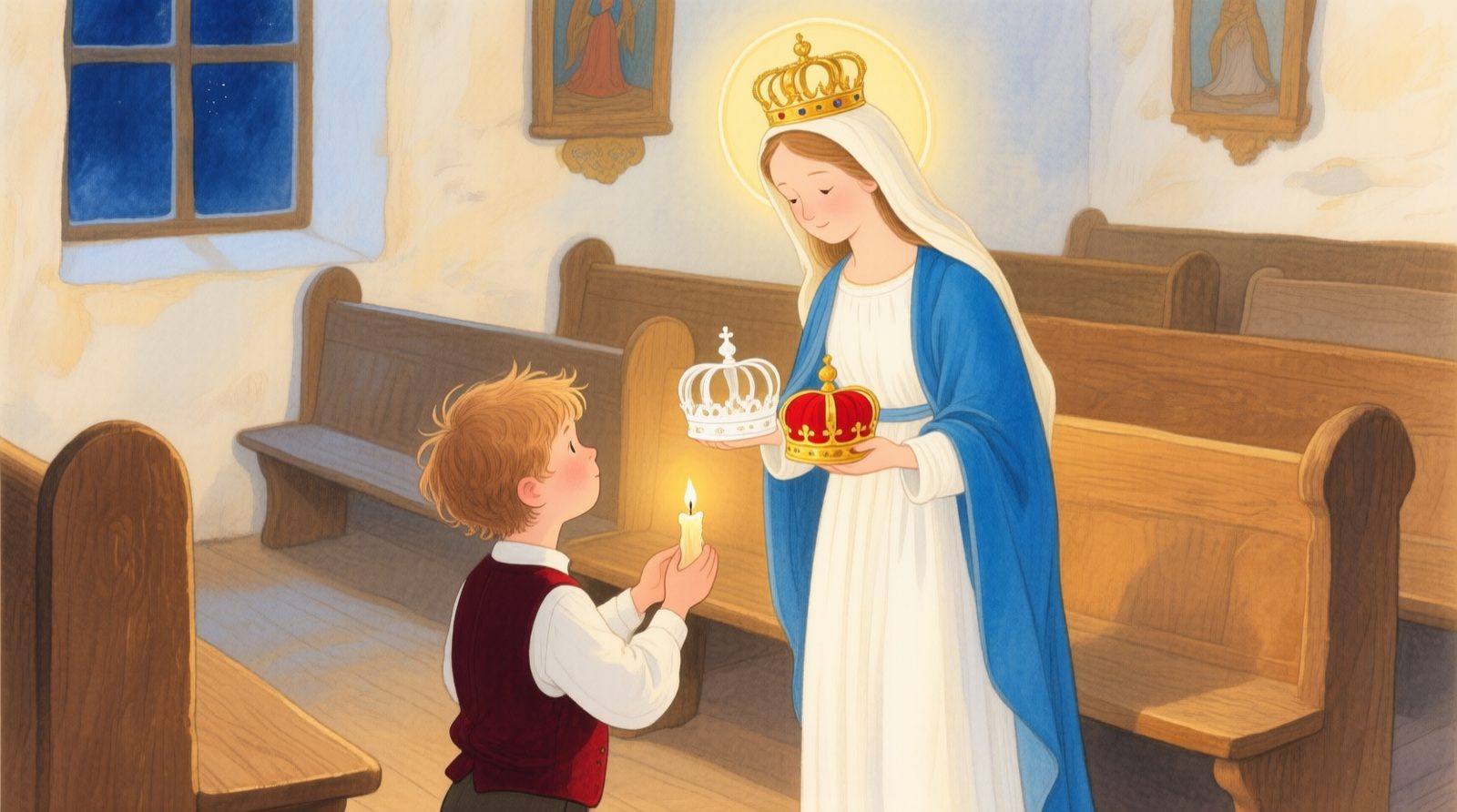
And then something happened that he would carry for the rest of his life: Our Lady appeared to him, full of light, holding two crowns. One was white, and it stood for purity. The other was red, and it stood for martyrdom, that is, giving one's life for Christ.
Our Lady asked which of the two he chose. Rajmund did not hesitate:
"I choose them both!"
Our Lady smiled, accepted his answer, and disappeared.
Rajmund came home transformed. At the time, he told no one, but he changed completely: the mischievous boy became serious, devout, obedient. He prayed for hours, studied, helped at home. His mother wondered, amazed, what could have happened to him.
Only years later would he tell of the vision. And then everyone would understand: Our Lady had called him to be pure and to be a martyr. And he would be both.
Entering the Convent
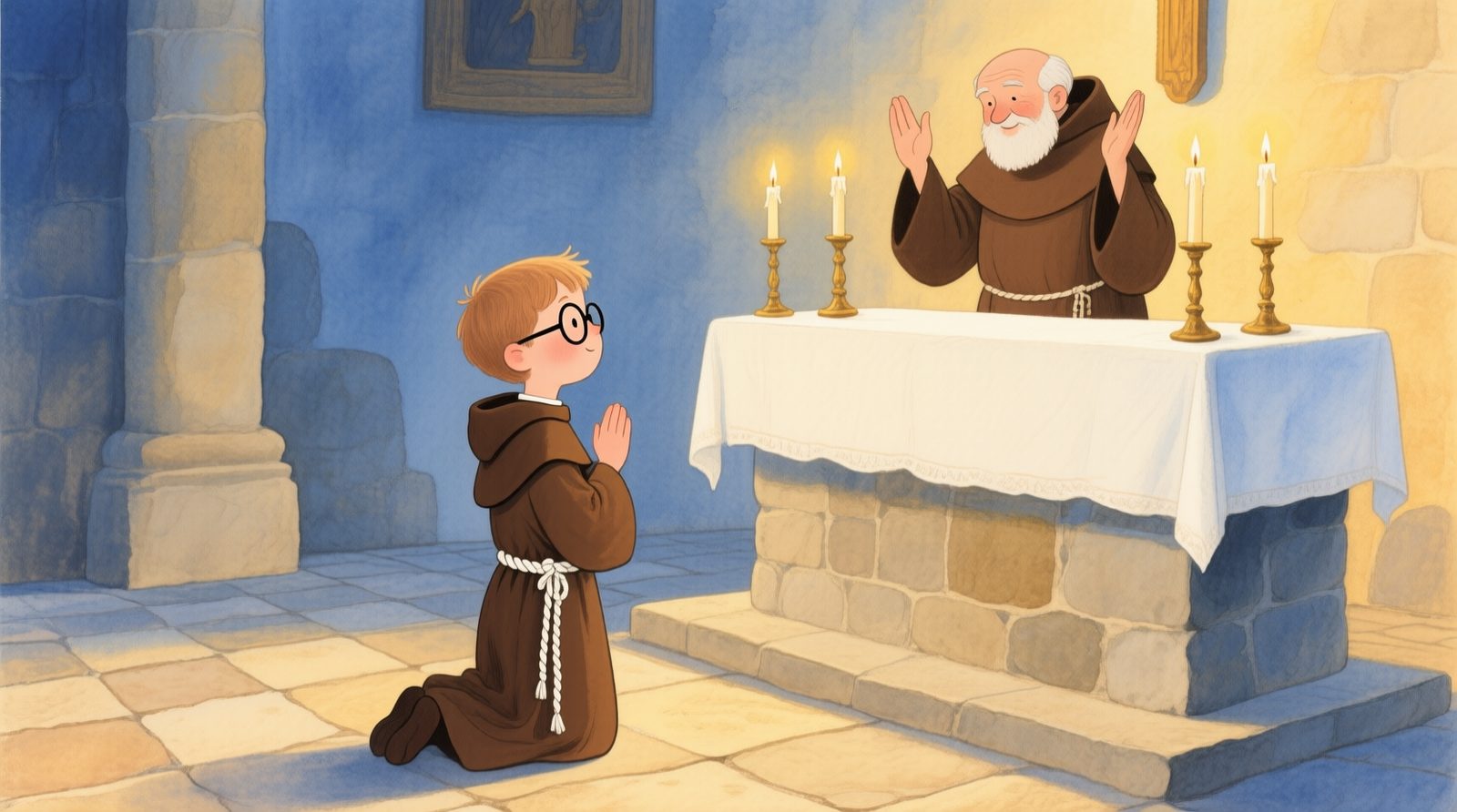
At thirteen, Rajmund and his brother Francis decided to become friars and entered the seminary of the Conventual Franciscans. Rajmund was an excellent student, hardworking, in love with mathematics, physics, and science. But what he loved most was prayer, especially to Our Lady.
At sixteen, he made his religious vows and received a new name: Friar Maximilian Maria Kolbe. Maximilian, out of devotion to an ancient martyr saint; Maria, out of love for Our Lady; Kolbe, his family name. From then on, he would be known as Friar Maximilian.
Studies in Rome
His superiors soon noticed Friar Maximilian's intelligence and sent him to study in Rome, Italy. There he studied philosophy and theology, earned the highest marks, and received doctorates in both fields. But he never grew proud of it. He remained humble and liked to repeat that everything came from God, and that he himself was nothing.
A Day That Changed Everything
In 1917, in Rome, Friar Maximilian saw something that marked him deeply. Members of the Freemasons, a society of that time opposed to the Church, held a large public demonstration, with banners mocking the faith and shouts against the Church and against the Pope.
Friar Maximilian was deeply saddened by what he saw. How could they attack Our Lady and the Church like that? He felt he had to do something — not with anger, but with love and prayer.
October 16, 1917: The Militia of the Immaculata
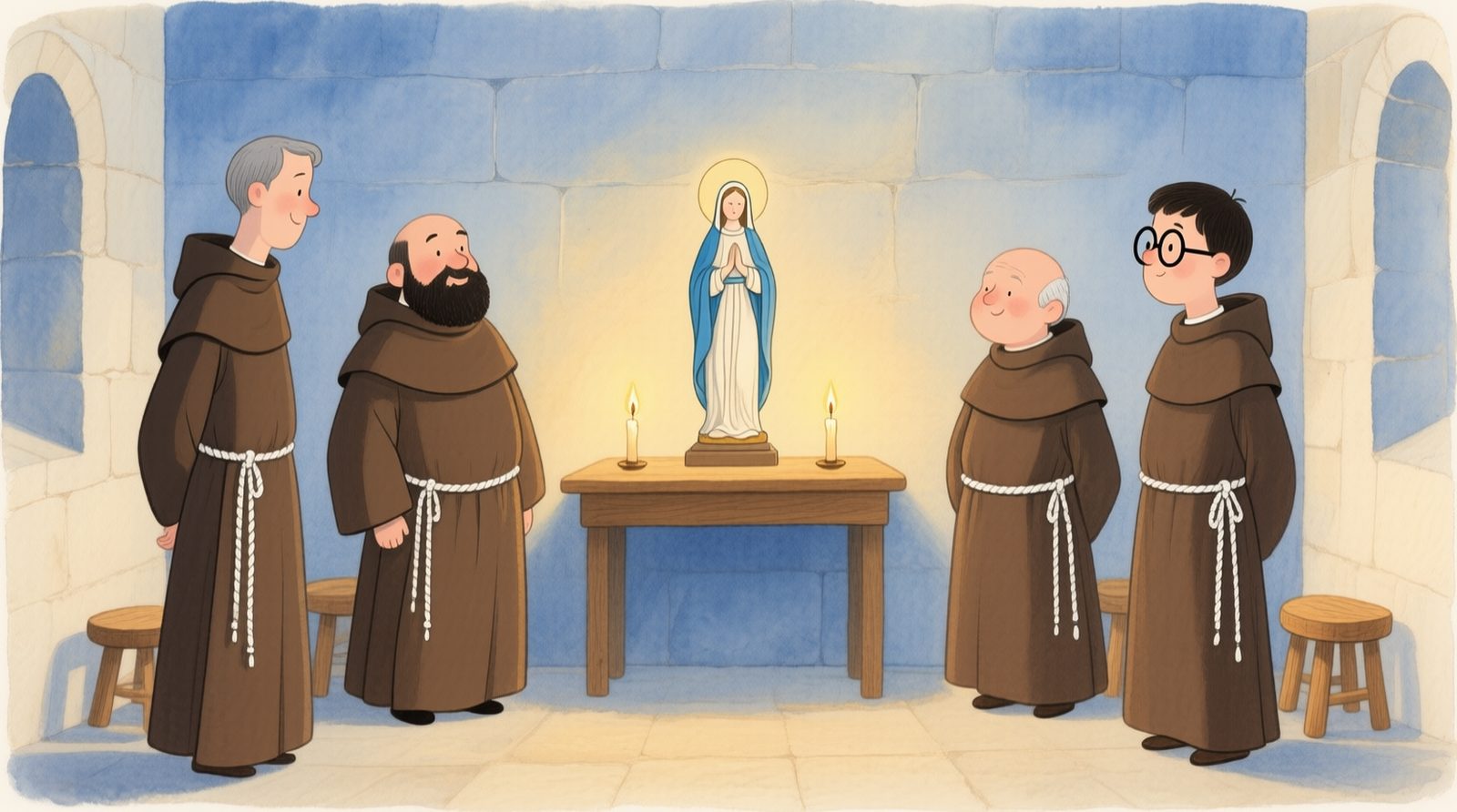
Shortly afterward, Friar Maximilian gathered six fellow seminarians. They prayed, talked, and made a decision: they founded the Militia of the Immaculata, in Latin, Militia Immaculatae. It was a movement of total consecration to Our Lady, with a clear goal: to lead all people to Jesus through the hands of Mary — including those who attacked the Church.
Their motto was to win the whole world for the Immaculata, so that through her, everyone might return to Jesus. Members consecrated themselves to Mary, wore the Miraculous Medal, prayed every day, and, above all, evangelized. Within a few years, the Militia grew astonishingly, reaching millions of members around the world.
1918: Priestly Ordination
On April 28, 1918, Friar Maximilian was ordained a priest and celebrated his first Mass with immense joy. But he was already ill: he had tuberculosis, a serious disease of the lungs, which brought him coughing, fever, and weakness. The doctors believed he would not live long.
Father Maximilian, however, trusted in Mary. He would say, serenely, that if the Immaculata wanted him working, he would live; and that God's will be done.
1919: Return to Poland
The following year, Father Maximilian returned to Poland. The country had finally regained its independence after more than a hundred years of occupation, but it lay in ruins after the First World War. There was poverty, hunger, and discouragement, and many people had drifted away from the faith.
Father Maximilian looked around and understood: here, the Militia of the Immaculata was urgently needed.
1922: The "Knight of the Immaculata" Magazine
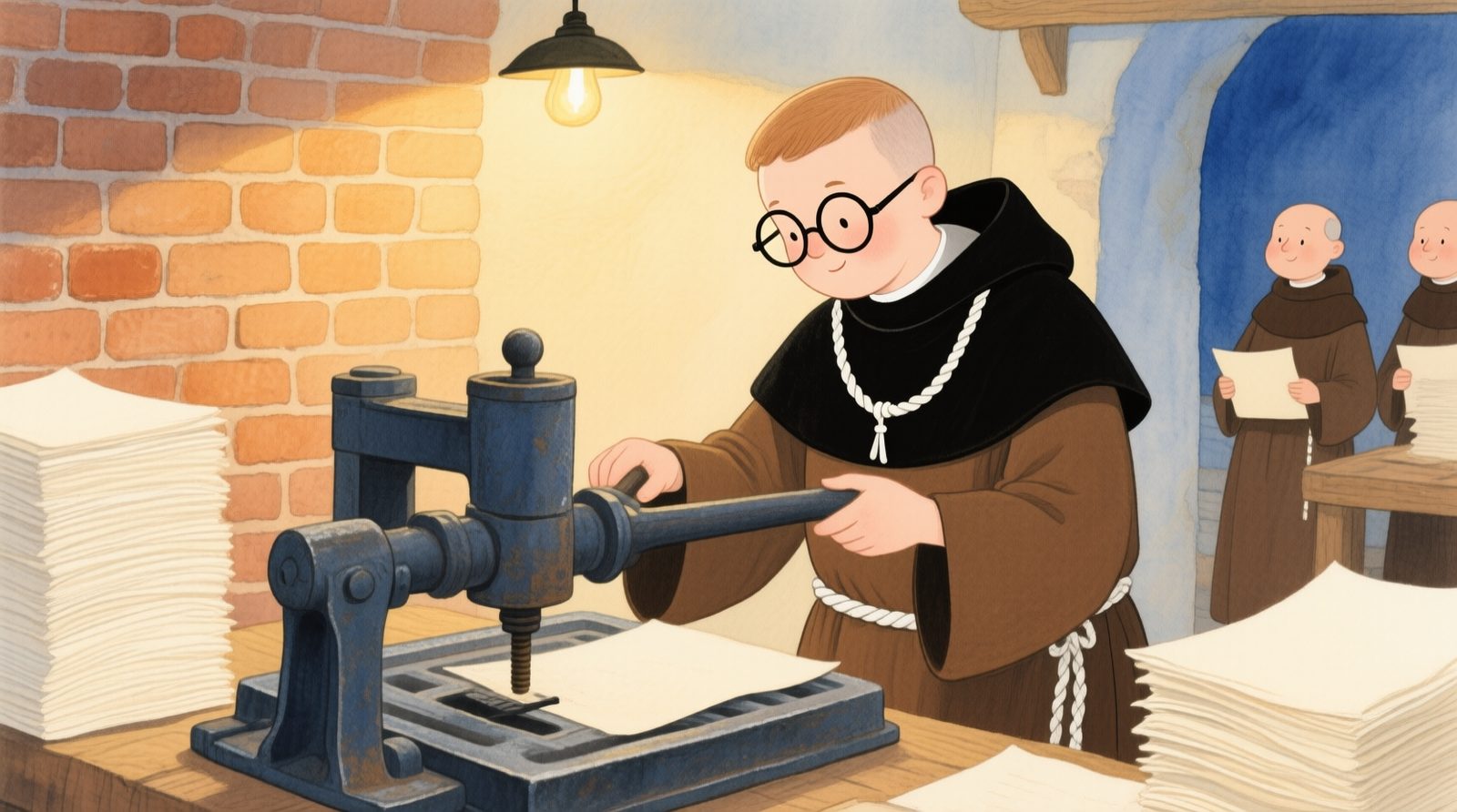
Then he had an idea. He needed to evangelize, but how could he reach millions of people? Through the press. Father Maximilian founded a magazine called the "Knight of the Immaculata," to spread devotion to Mary and teach the Catholic faith. He began with practically no money at all, trusting in Mary.
The first issue had five thousand copies, and every one was given out. Then came ten thousand, twenty thousand, and the magazine kept growing. Within a few years, it was printing a million copies a month and had become one of the largest Catholic magazines in the world. And everything was given away free or for a donation. As he used to say, Mary provided everything.
1927: Niepokalanów, the City of the Immaculata
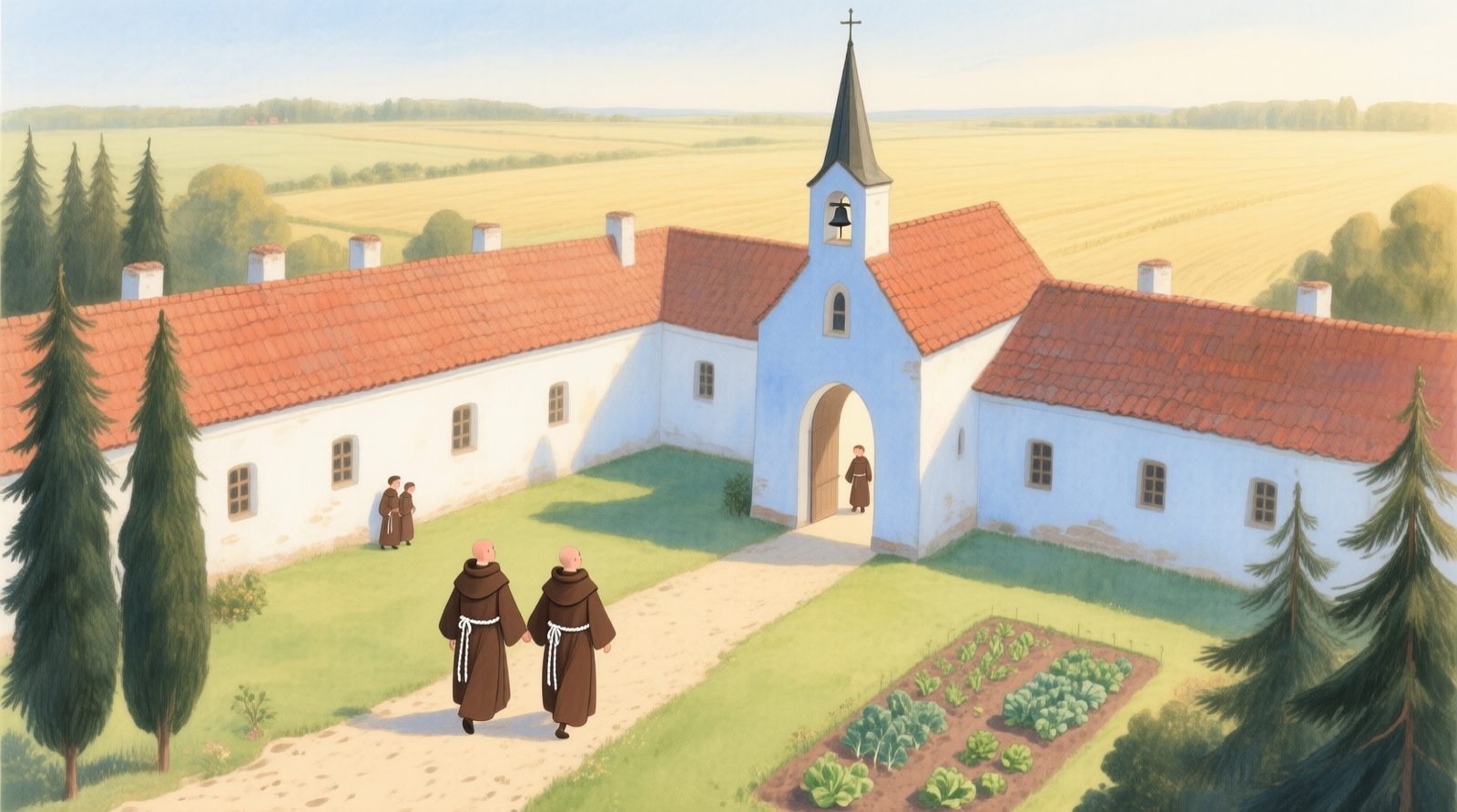
The work grew so much that they ran out of room. Father Maximilian then dreamed of something greater: an entire city dedicated to Mary, to be called Niepokalanów, the City of the Immaculata. It would be a friary, a printing house, and a center of evangelization, all in one. But there was no money, and no land.
Once again, he trusted. A Polish prince donated a large piece of land near Warsaw, and the friars began building with almost nothing, working and praying. Within a few years, Niepokalanów became the largest religious house in the world, with more than seven hundred friars, a modern printing house publishing magazines, newspapers, and books, and even a radio station. Father Maximilian was not afraid of technology: he used every means to speak of God.
1930: Mission to Japan
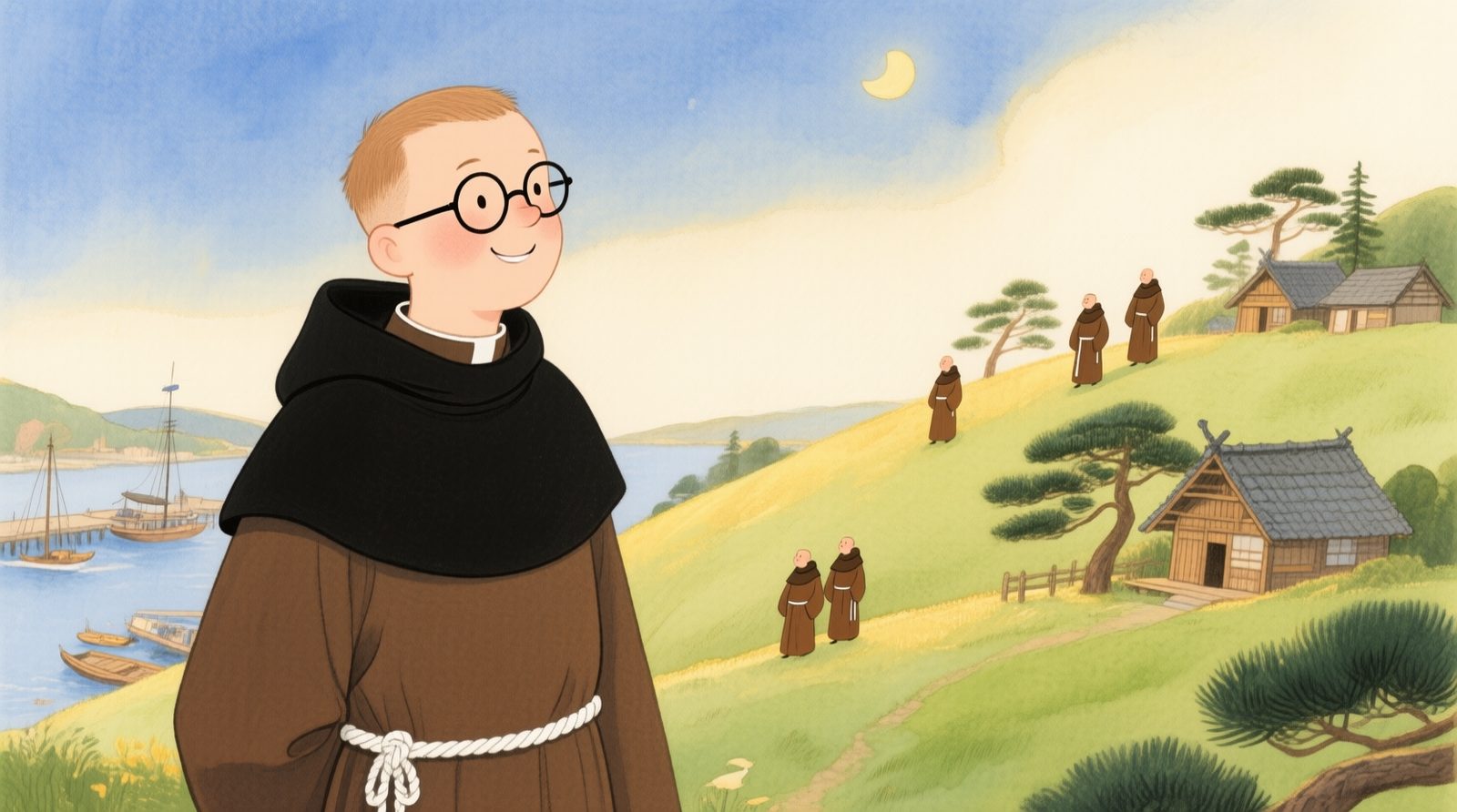
In 1930, Father Maximilian had another bold idea: to bring the work to Japan, a country with another language, another culture, where there were hardly any Catholics. Many thought it was madness and predicted failure. He set out anyway, with four friars, without knowing Japanese, without money, and without knowing a soul.
The difficulties were immense, but he did not lose heart. One month after arriving, he was already publishing the first Japanese edition of the magazine, "Seibo no Kishi." In six years, he founded the "Garden of the Immaculata," a Japanese Niepokalanów, published thousands of magazines, and formed Japanese friars. The local bishop marveled at all that this sick missionary had managed to do in so little time. The work in Japan exists to this day.
1936: Return to Poland
In 1936, Father Maximilian's health grew much worse, and the tuberculosis returned. He left the Japanese mission in good hands and went back to Niepokalanów in Poland, where he again became superior. The work kept growing, with the magazines, the radio, the evangelization.
But dark clouds were gathering over Europe.
1939: The Second World War
On September 1, 1939, Hitler's army invaded Poland, and the Second World War began. The Nazis hated the Church and persecuted priests, especially Polish ones. Niepokalanów was in danger, but Father Maximilian decided not to flee. He would stay with his friars, trusting in the Immaculata.
On September 19, 1939, the Nazis arrived at Niepokalanów and arrested Father Maximilian along with dozens of friars, taking them all to a prison camp. There they suffered hunger, cold, and humiliation. Even so, Father Maximilian kept up his companions' spirits, reminding them all that Mary had not abandoned them. They prayed in secret and held on to their faith.
After nearly three months, they were released and returned to Niepokalanów. They found everything looted and destroyed, but Father Maximilian did not give in. He turned the friary into a hospital and a refuge, sheltering around three thousand people persecuted by the Nazis, among them some two thousand Jews. Hiding Jews was a crime punished by death, and he knew it. He risked his own life to save them.
February 17, 1941: The Final Arrest
On February 17, 1941, the Gestapo, the Nazi secret police, returned to Niepokalanów and arrested Father Maximilian once more. This time, there would be no release. He was taken to a prison in Warsaw, where he suffered interrogations and mistreatment, precisely because he was a priest. The guards mocked his faith, but he remained firm, gentle, and in prayer. He would not deny Jesus or Mary for anything in this world.
In May 1941, the Nazis transferred him to one of the most terrible places that has ever existed: Auschwitz, a concentration camp where more than a million people would die. There, Father Maximilian would face his final trial. There, the red crown Our Lady had shown him at the age of ten was waiting for him.
Reflection


