
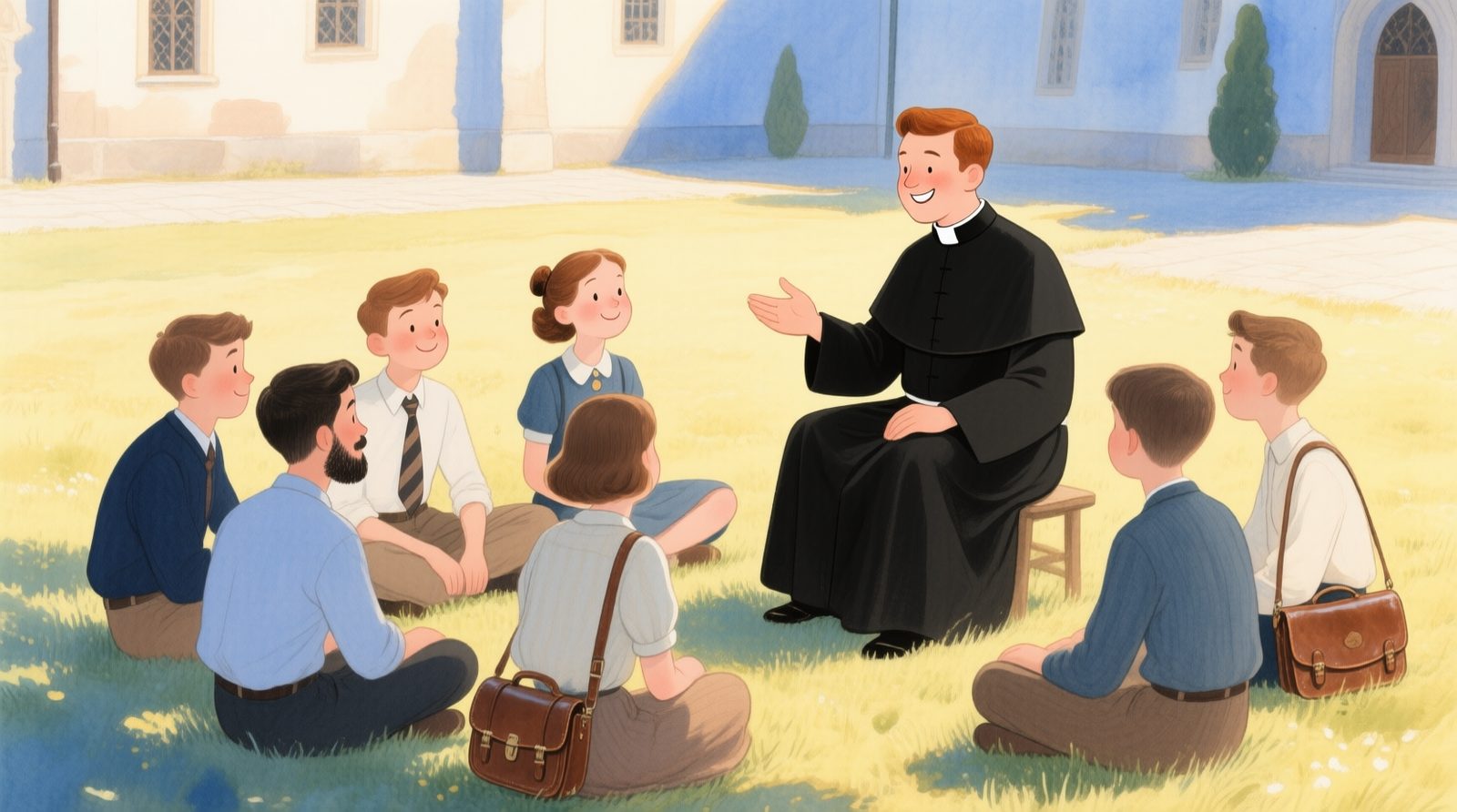
Father Karol Wojtyla was no ordinary priest. He was only twenty-eight when he arrived at Saint Florian's Parish in Krakow in 1949, and there he began an extraordinary work with young people. The university students were captivated by this young priest — intelligent, athletic, and full of joy. Father Karol understood them and spoke their language, but he also challenged them to seek holiness. And so, quietly, a movement was born that would one day help change Poland.
The Priest of the Mountains
Father Karol had his own way of sharing the faith: adventure. He took young people camping in the Tatra Mountains, skiing down the slopes, paddling kayaks across the lakes. They called their circle of friends Środowisko, "the Milieu," bound together by faith and by the trails they walked. Father Karol hiked with them for hours, talking about philosophy, theology, life, love, and vocation. He celebrated Mass in the open air, with the mountains for a cathedral, and at night they all sat around the campfire to sing and pray the rosary.
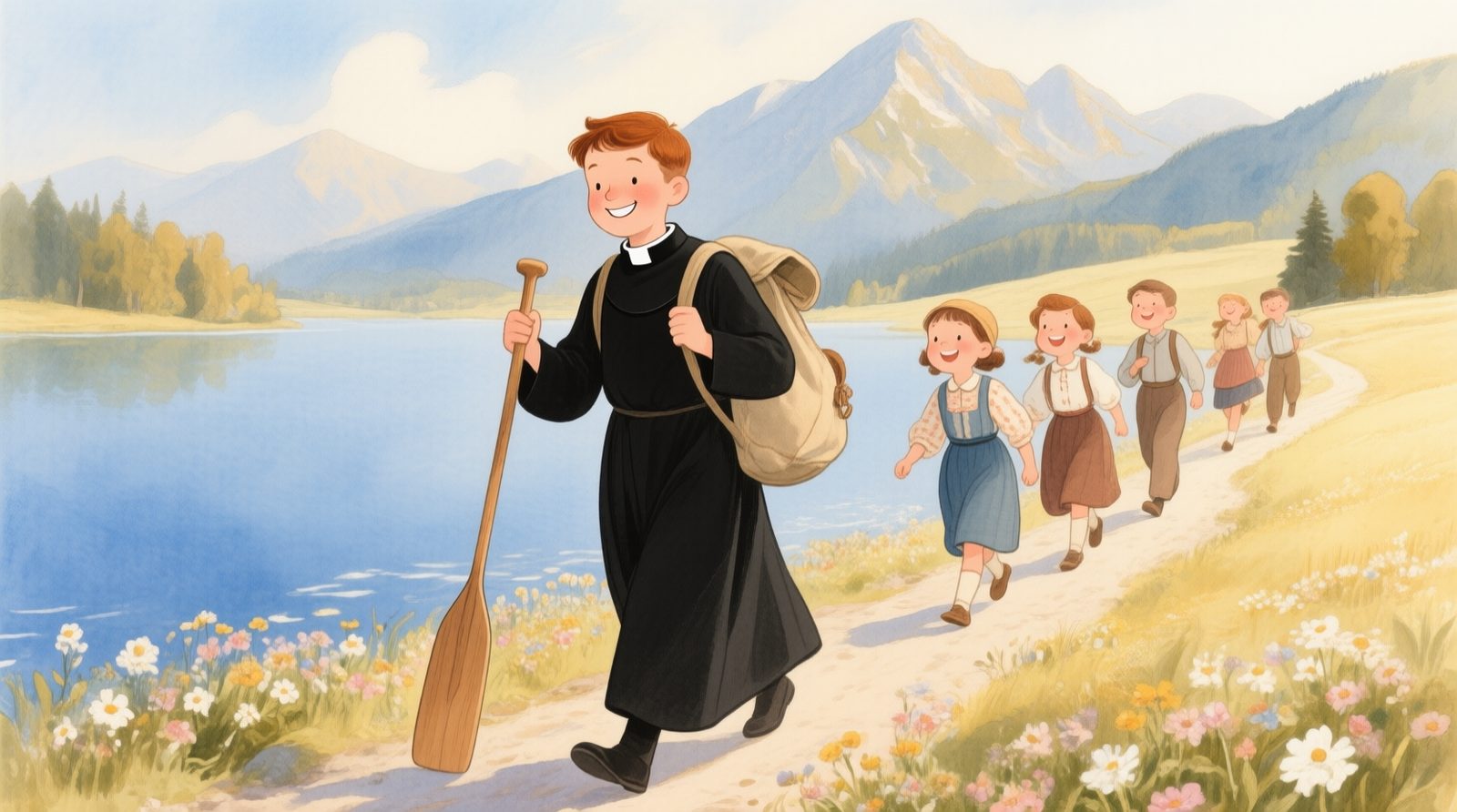
The young people loved him, but he was not after popularity — he was after their holiness. Father Karol expected much of them, calling them to purity, daily prayer, and frequent confession.
"You were not made for mediocrity," he would tell them. "You were made for greatness."
Many of those young people became priests, religious sisters, or mothers and fathers deeply devoted to God. Years later they would say that Father Karol had changed their lives, showing them that holiness is possible — and joyful.
The University Professor
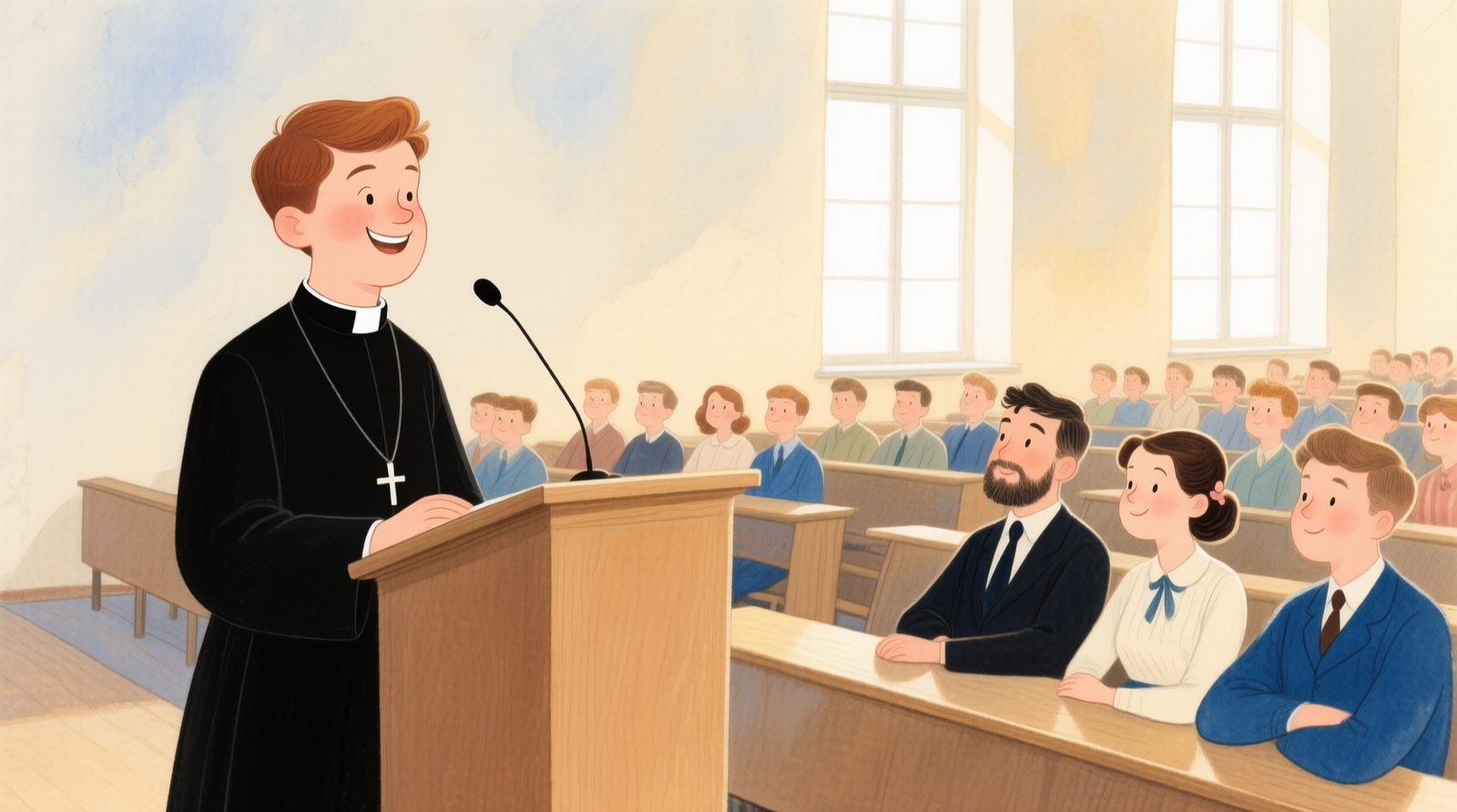
While serving as a priest, Karol never stopped studying. He earned a second doctorate, this time in philosophy, with a thesis on ethics. In 1954, at thirty-four, he began teaching ethics at the Catholic University of Lublin. Professor Wojtyla's lectures were always packed, because he did not teach only philosophy: he taught how to live, how to love, how to be fully human. He wrote books and articles and took part in conferences in many countries.
The Youngest Bishop
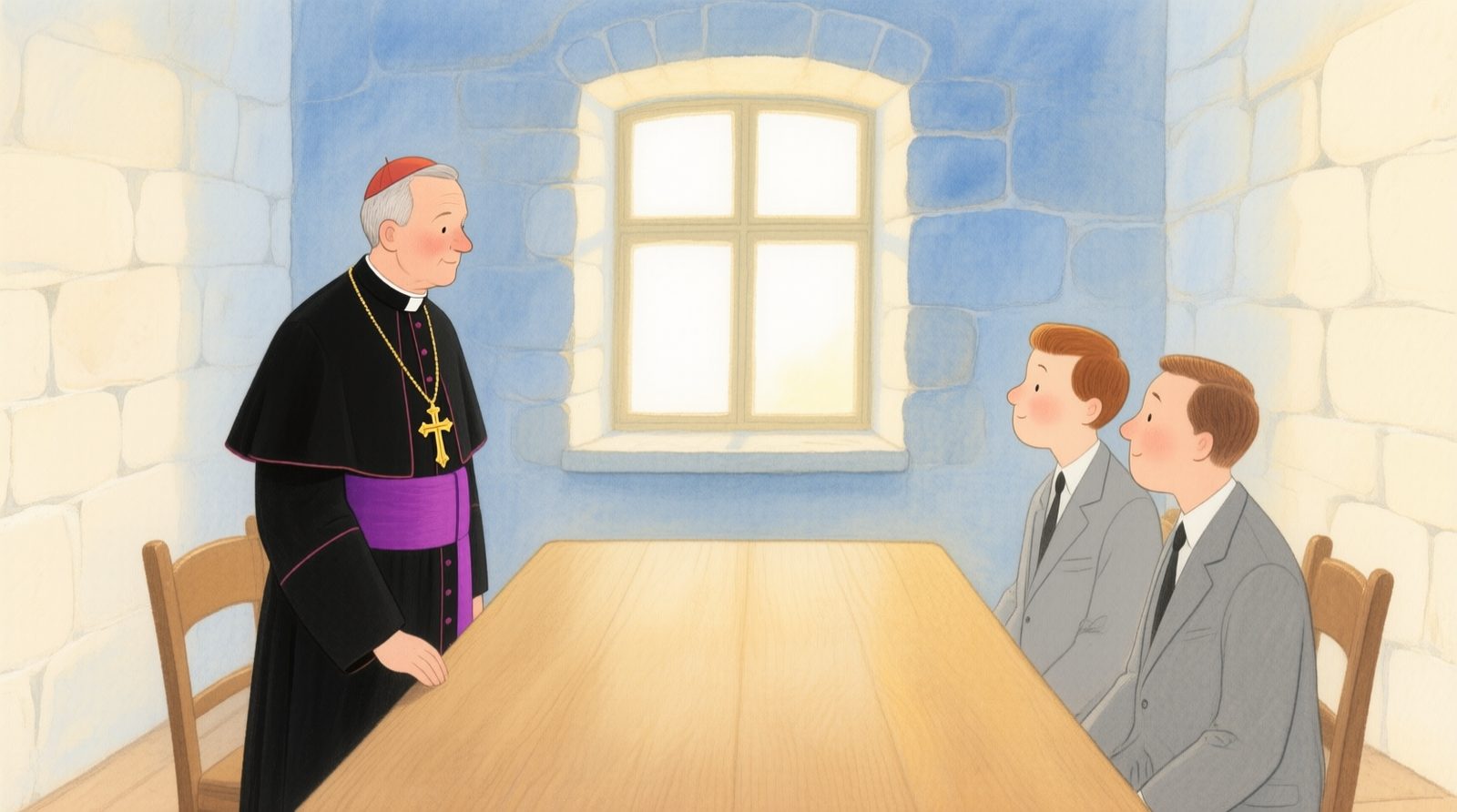
In 1958, Pope Pius XII named Karol Wojtyla Auxiliary Bishop of Krakow. Karol was only thirty-eight, the youngest bishop in Poland. Many people were surprised and wondered who this young professor could be. But those who knew him understood: Karol was holy and brilliant, exactly what the Church needed in communist Poland.
Karol was consecrated bishop on September 28, 1958, in Wawel Cathedral. For his episcopal motto he chose the words Totus Tuus, meaning "Totally Yours," a complete gift of himself to Our Lady.
As a bishop, Karol did not change. He remained simple, approachable, close to his people. He visited far-off parishes, confirmed children, ordained priests, and comforted the sorrowful. But he also stood up to the communist regime, which tried to smother the Church by closing churches, arresting priests, and banning catechism classes. Bishop Karol fought back with different weapons: truth, courage, and love. To the powerful he would calmly repeat that they could persecute the Church, but they could never destroy the truth.
The Second Vatican Council
In 1962, Pope John XXIII convened the Second Vatican Council, the greatest gathering of bishops of that century. Bishop Karol took part in all four sessions, from 1962 to 1965, and made a special contribution to the document on the Church in the modern world, Gaudium et Spes. He believed the Church should speak with the world without losing her own identity: proclaiming the Gospel clearly, but with love and respect. The other bishops came away impressed by the intelligence and holiness of this Pole.
Archbishop and Cardinal
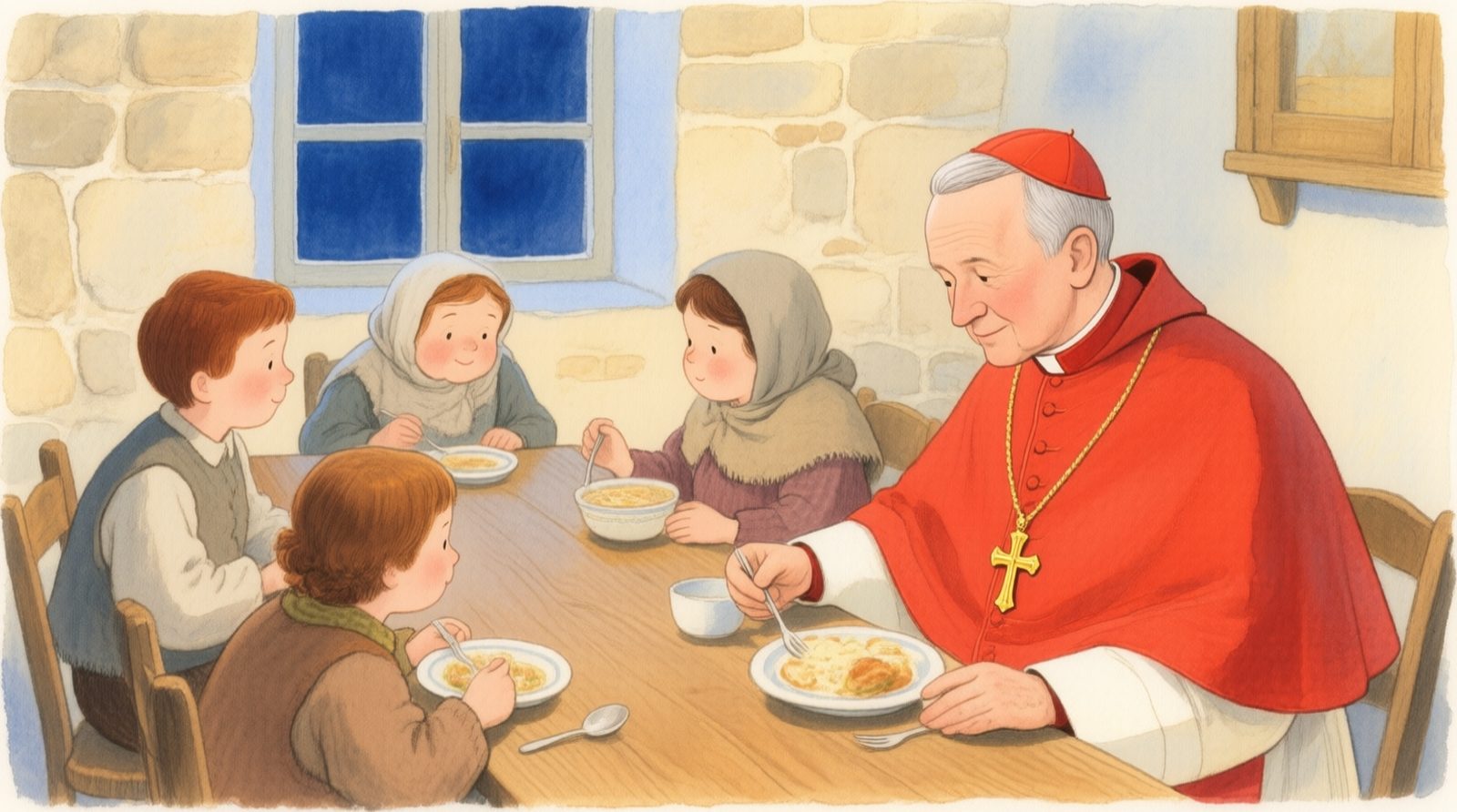
In 1964, Karol was named Archbishop of Krakow, leader of the Church in Poland's second-largest city. He took office with humility and with determination: he wanted Krakow to be an example of living faith. Three years later, in 1967, Pope Paul VI made him a Cardinal. Now Wojtyla was one of the leaders of the worldwide Church, taking part in important decisions and traveling often to Rome. Yet he remained simple: he lived modestly, sat at table with the poor, and prayed for hours each day.
The Fight for the Church in Poland
As Archbishop, Cardinal Wojtyla fought for permission to build new churches, something the communist government forbade. The officials would answer that the people did not need churches, only factories. But Karol was persistent: he argued, negotiated, and would not let the matter rest.
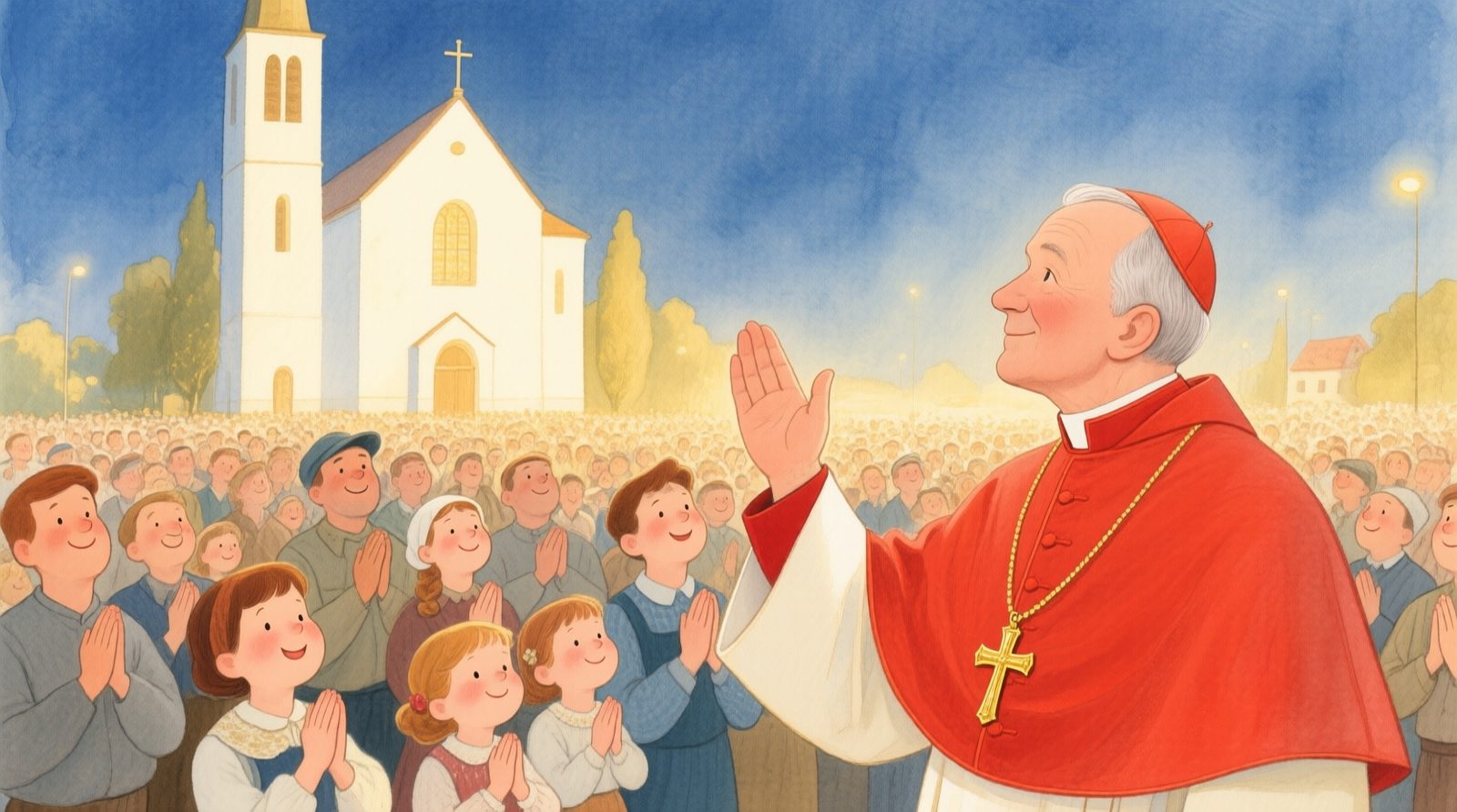
His most famous battle was for the Ark of the Lord Church in Nowa Huta, a workers' city built without a single church. For years Karol celebrated Mass in the open air on that spot, faced down the hostility of the authorities, and never gave up. At last, in 1977, the church was finished, and the Cardinal himself consecrated it before a crowd that wept for joy.
1978: The Year of Three Popes
In August 1978, Pope Paul VI died after fifteen years as Pope. The Conclave elected Cardinal Albino Luciani, who took the name John Paul I. The world quickly grew fond of the new Pope — simple, cheerful, and humble. But only thirty-three days later, John Paul I died of a heart attack. It was a shock to the whole world: two Popes gone in two months. The Cardinals had to gather once more in Conclave.
The October Conclave
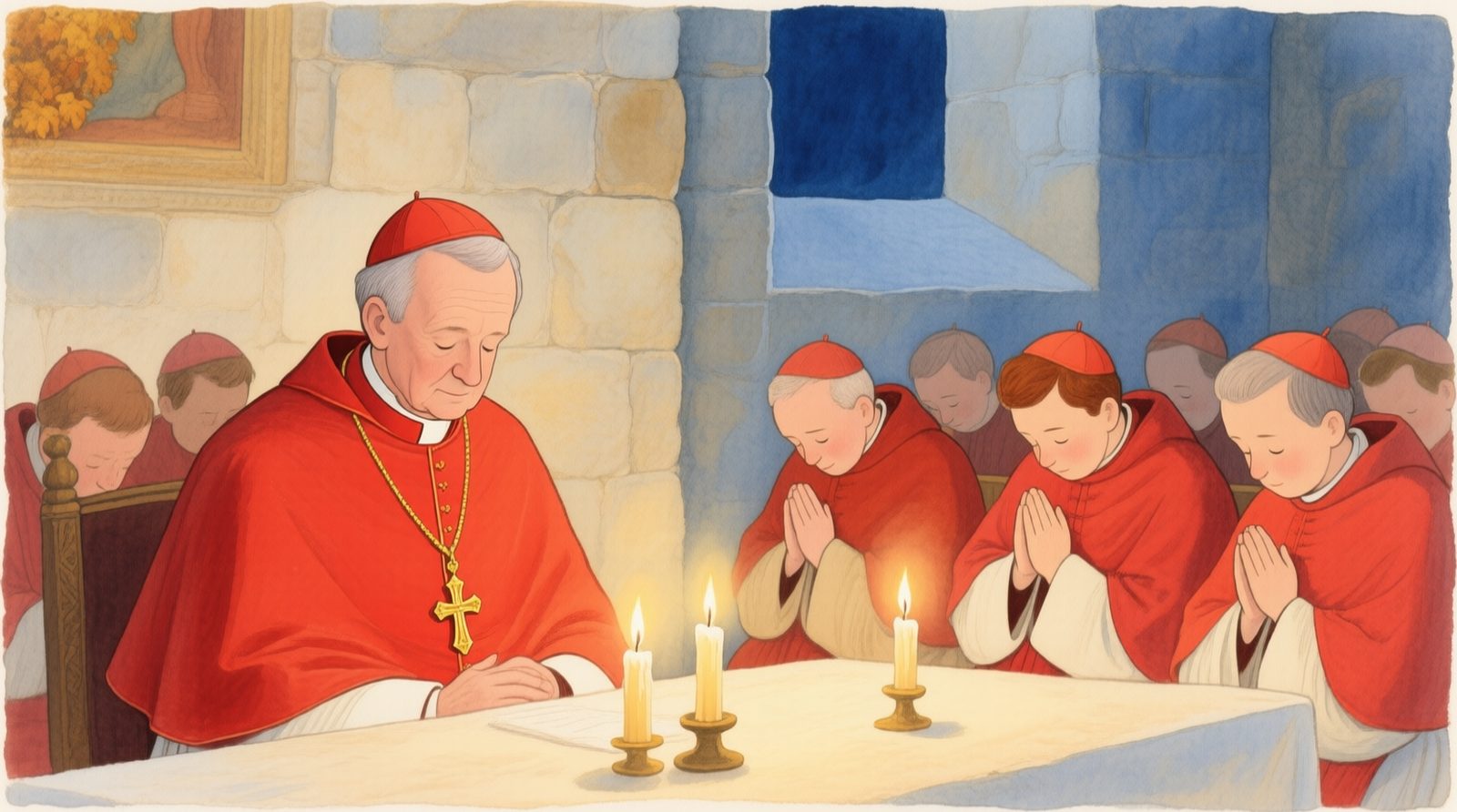
On October 14, 1978, one hundred and eleven Cardinals entered the Sistine Chapel with one mission: to elect the 264th Pope. Cardinal Wojtyla was among them, but he did not expect to be chosen. He was young, only fifty-eight, and he was Polish — and for four hundred and fifty-five years, every Pope had been Italian. No one imagined a foreign Pope.
The voting began. On the first day, no name reached a majority. On the second day, the votes slowly gathered around an unexpected name: Karol Wojtyla. The Cardinals had come to see that this holy, brilliant, courageous man was what the Church needed.
"Habemus Papam"
On October 16, 1978, in the middle of the afternoon, white smoke rose from the chimney of the Sistine Chapel. There was a new Pope. In Saint Peter's Square, two hundred thousand people were waiting, and the crowd erupted in joy. Then Cardinal Pericle Felici stepped onto the balcony and announced, in Latin:
"Annuntio vobis gaudium magnum: Habemus Papam! Carolum Cardinalem Wojtyla, qui sibi nomen imposuit Joannem Paulum Secundum."
Which means: "I announce to you a great joy: we have a Pope. Cardinal Karol Wojtyla, who has taken the name John Paul II."
In the square there was a moment of confusion. Wojtyla? Who was that? A Pole — the first non-Italian Pope in nearly five hundred years. But when John Paul II appeared on the balcony, everyone sensed that this man was different.
The First Words
John Paul II took the microphone. He was moved, but also glowing. He spoke in Italian, still with his Polish accent:
"Praised be Jesus Christ. The most eminent Cardinals have called me from a faraway country... far away, yet always so close through our communion in the faith and in the Christian tradition. I was afraid to receive this nomination, but I accepted it in a spirit of obedience to Our Lord and with total trust in his Mother, the Most Holy Virgin."
Then he added, with a smile:
"I do not know whether I can express myself well in your... in our Italian language. If I make a mistake, you will correct me!"
The crowd answered with laughter and applause. This Pope was human, warm, joyful. And he went on:
"And so I present myself to you all, to confess our common faith, our hope, our trust in the Mother of Christ and of the Church, and also to begin anew on this road of history and of the Church."
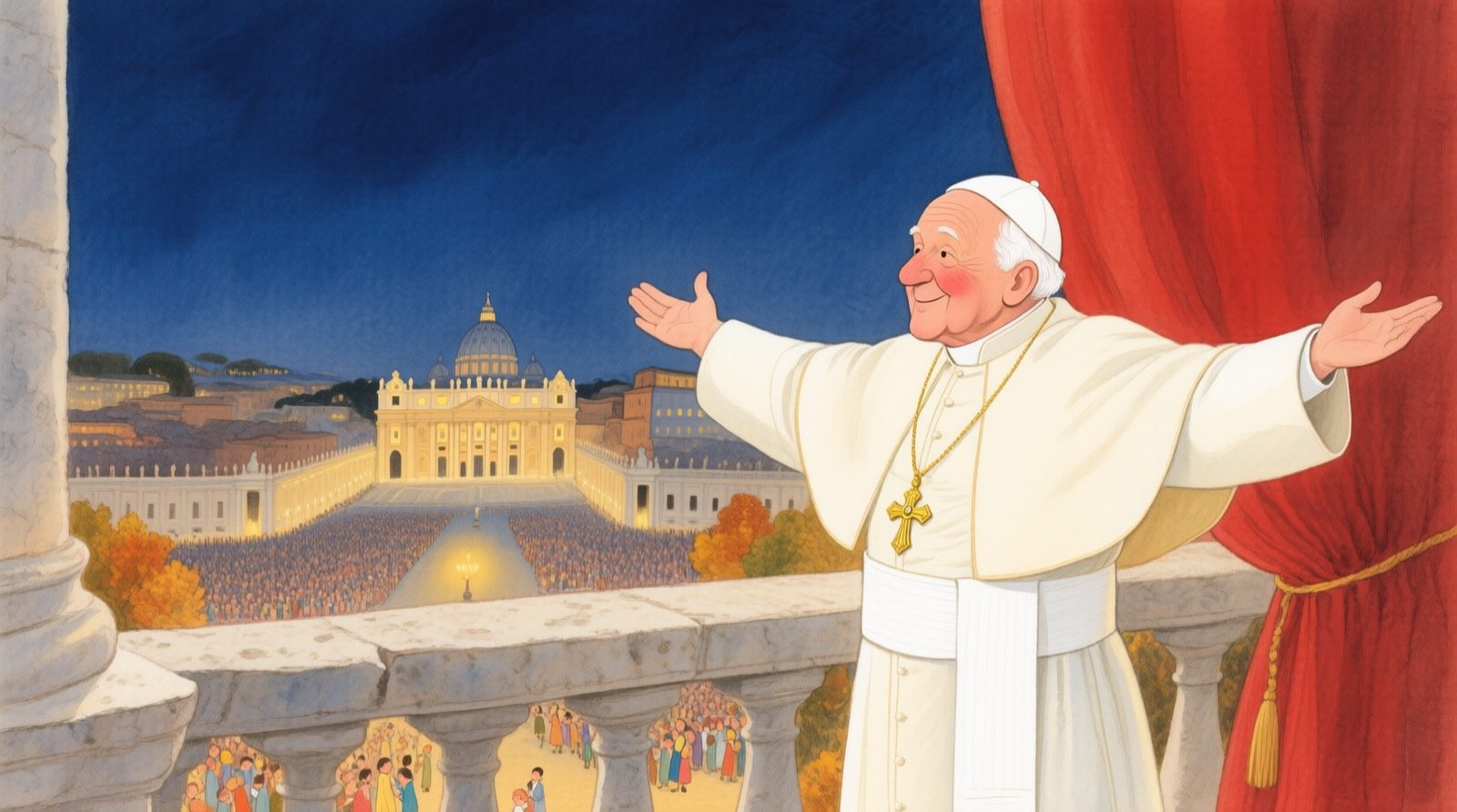
The people were delighted. They said to one another that this Pope spoke from the heart, that you could see from far away how much he loved people. In Poland, the joy was beyond words, and millions wept with happiness: a Polish Pope, raised under a communist regime, was very nearly a miracle.
Karol Wojtyla — the orphaned boy from Wadowice, the quarry worker, the student of the secret seminary — was now John Paul II, the 264th Pope of the Catholic Church. And the world would never be the same.
Moral of the Story


