
In May 1941, Father Maximilian Kolbe arrived at one of the most terrible places history has ever known: Auschwitz, a Nazi concentration camp in Poland. There, the Nazis would kill more than a million people, mostly Jews, but also Poles, Roma, political prisoners, and priests.
Father Maximilian knew that few people came out of that place alive. But he did not let fear take hold of him. He trusted in Mary.
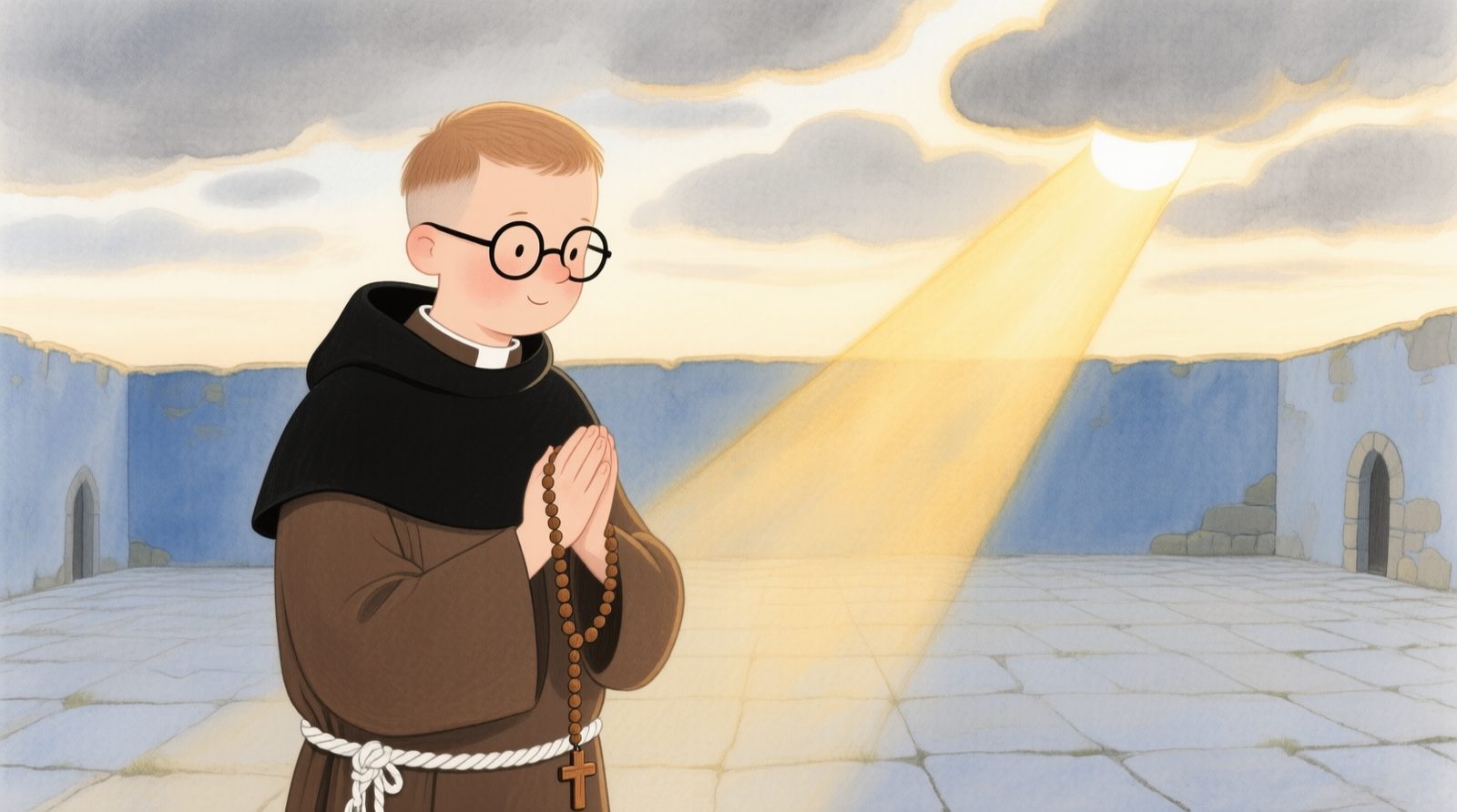
Prisoner 16670
At the entrance to Auschwitz, they took everything from Father Maximilian. They took his Franciscan habit and gave him a striped prisoner's uniform, marked with a number: 16670. From then on, to the guards, he was no longer Father Maximilian. He was only 16670. The Nazis wanted to destroy each prisoner's identity, dignity, and humanity.
But the number did not change that man's heart. He was still a priest, a son of Mary, a servant of God. He was still Maximilian Maria Kolbe, the Knight of the Immaculata.
Life in the Camp
Life in Auschwitz was cruel. The prisoners woke before dawn and worked from sunrise until night, hauling huge stones, building, digging. Anyone who paused for a moment was beaten. The food was a small bowl of watery soup and a piece of hard bread. The prisoners lived starving, exhausted, sick.
The guards were especially cruel to priests and to Jews. When they discovered that a prisoner was a priest, they mocked him, gave him the heaviest work, beat him harder. They wanted the priests to renounce their faith.
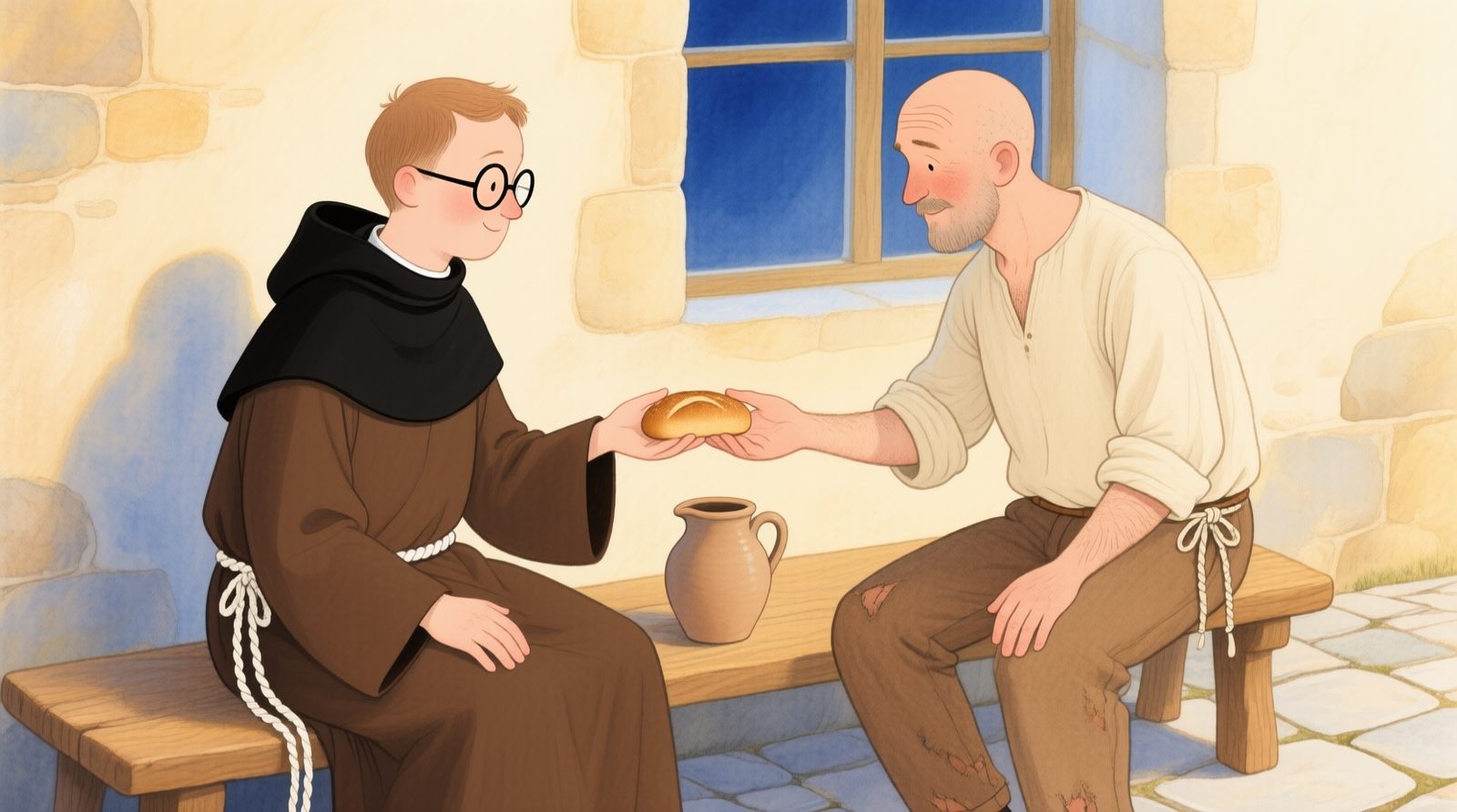
A Priest Among the Prisoners
But Father Maximilian would not be broken. Even without his habit, even reduced to a number, he was still a priest. He comforted the other prisoners, shared his tiny ration with the weakest, even though he himself was starving. He heard confessions in secret, prayed with his companions, gave them courage and hope.
Those who survived later told what it was like to be near him. They said it was like having an angel in the middle of that horror. That hope came back. That he shared his own bread, never complained, was always calm, always praying. That he spoke of Mary, of Jesus, and of Heaven, and for a few moments, everyone forgot the hell around them.
Late July 1941: The Escape
At the end of July 1941, something happened that would change everything. A prisoner managed to escape from Block 14, the barracks where Father Maximilian lived. And the Nazis had a brutal rule to discourage escapes: if anyone fled, ten prisoners from the same block would be condemned to death. It was total injustice, punishment falling on the innocent. But the Nazis had no mercy.
The Selection for Death
The guards ordered all the men of Block 14 to line up in the yard. Hundreds of prisoners stood in silence, knowing what was coming. Commander Karl Fritzsch walked slowly along the line, studying each face, choosing who would die.
"You. You. You," he went on pointing.
Ten men. Ten innocents, condemned to serve as a warning.
"My Poor Wife! My Poor Children!"
Among those chosen was Franciszek Gajowniczek, a Polish sergeant, a prisoner of war. When he realized he had been pointed out, he could not contain himself and cried out in despair:
"My poor wife! My poor children!"
He knew he would never see them again. His family would be left without a husband and a father.
"I Am a Catholic Priest"
Then something happened that no one expected. A prisoner stepped out of line. Stepping out of line, in Auschwitz, could mean being shot on the spot. But that man walked calmly toward the commander, and the astonished guards did not fire.
It was Father Maximilian Kolbe, prisoner 16670. He stopped in front of Fritzsch.
"What do you want?" the commander demanded, furious.
Father Maximilian pointed to Gajowniczek.
"I want to take his place. He has a wife and children. I have no one. I am a Catholic priest."
There was total silence. No one breathed. Never, in Auschwitz, had anyone offered to die in another's place.
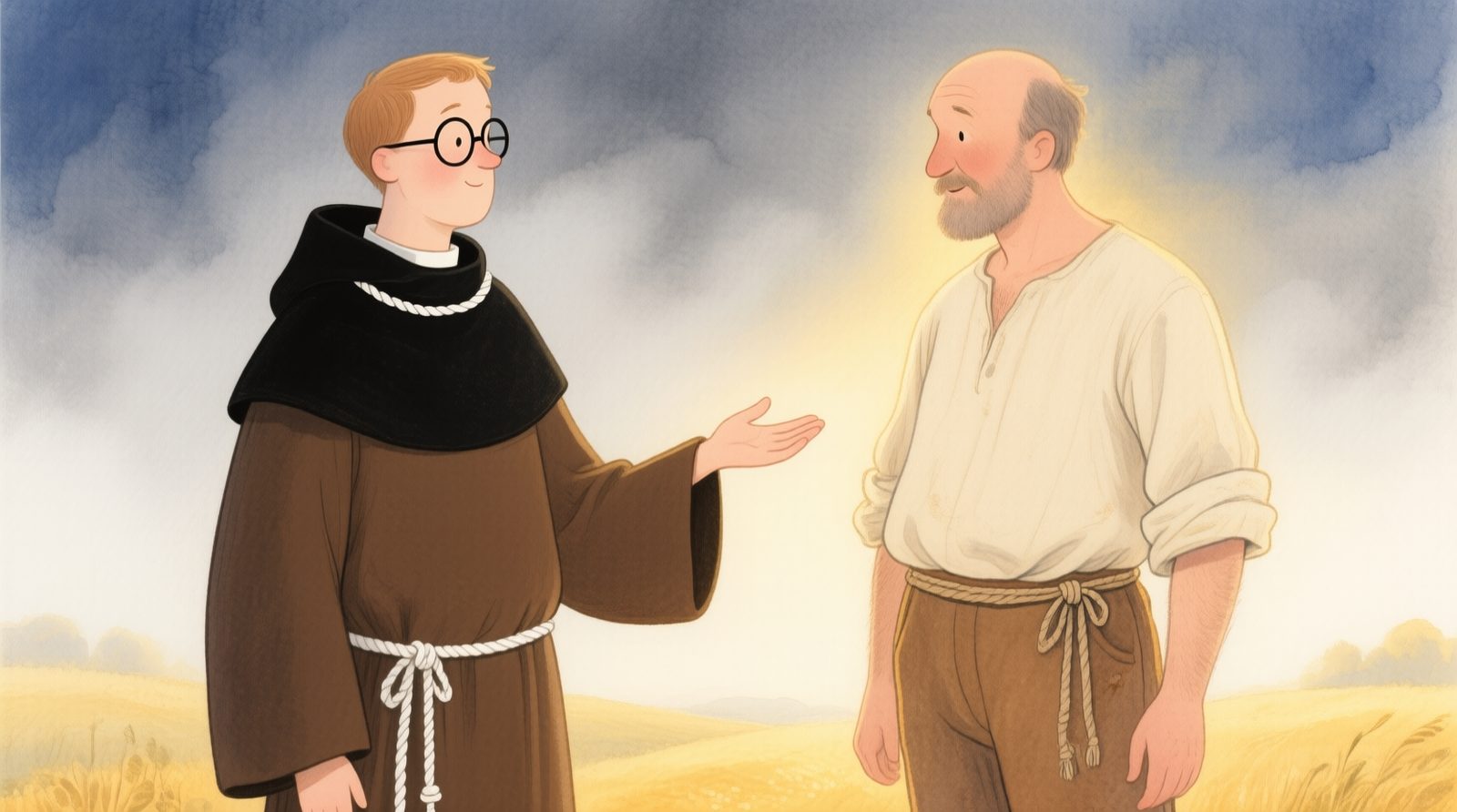
Fritzsch looked at that thin, sick man of 47, and then at Gajowniczek, strong and a good worker. He made his calculation coldly and decided: he would accept the exchange. Maximilian would take the condemned man's place, and Gajowniczek would return to the line.
Gajowniczek never forgot that moment. Decades later, he still told of it: their eyes met, and in the priest's eyes there was only peace, calm, and love. He smiled faintly, as if to say that everything was all right, that there was no need to worry. Gajowniczek said he would never fully understand why that man did it for him. But he knew he owed him his life, and his whole family.
The Starvation Bunker
The ten condemned men, now with Father Maximilian among them, were taken down to the basement of Block 11, the so-called starvation bunker. They were dark cells, without windows, where prisoners were locked away without food or water, until they died. It was a slow, terrible death that usually dragged on for weeks, amid screams and despair.
But this time, something different happened. Instead of screams, the guards began to hear, rising from the basement... singing. It was the ten prisoners, praying and singing hymns to Mary. Father Maximilian was leading them in prayer.
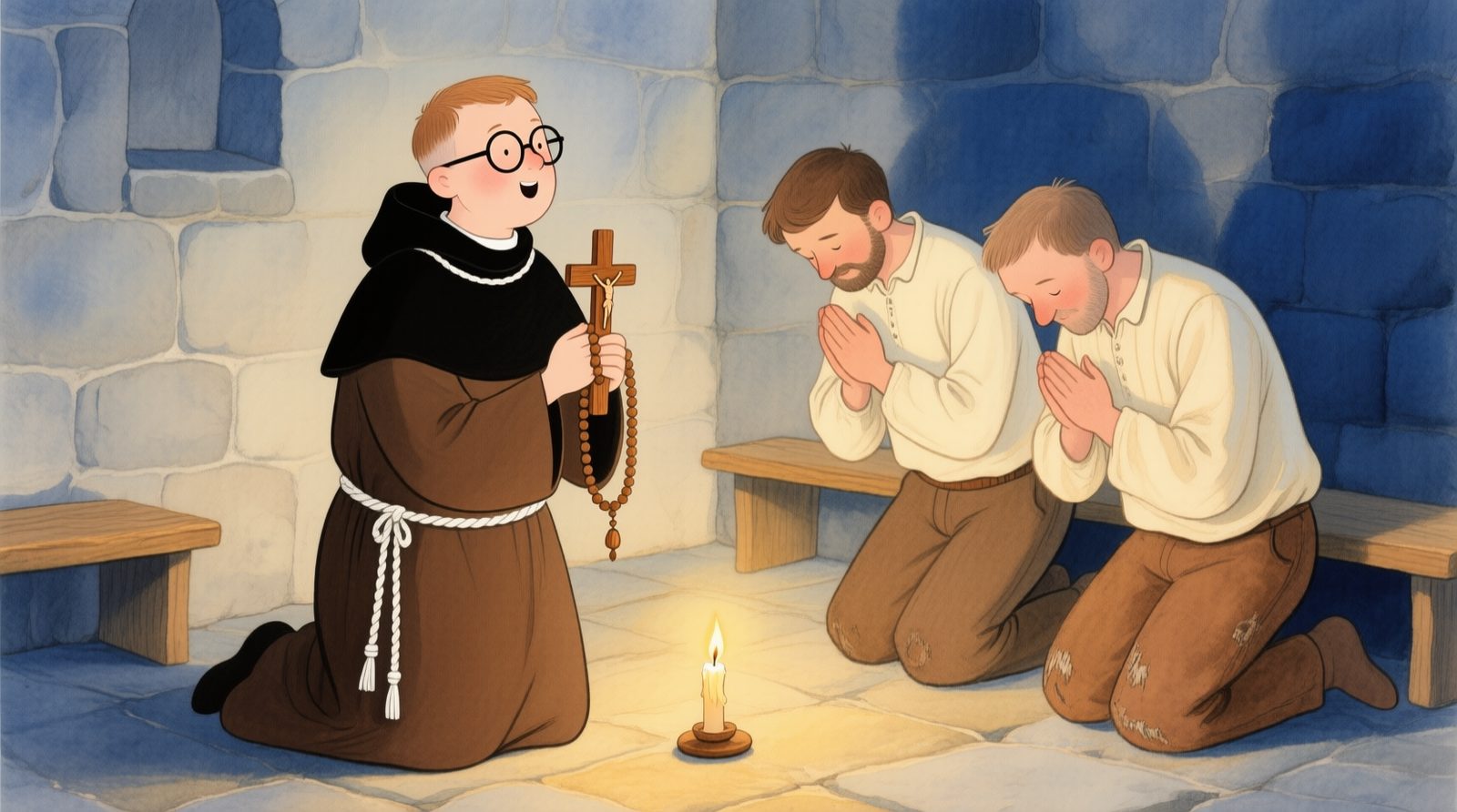
Bruno Borgowiec, a prisoner who worked in that basement, witnessed it all. He said it was something extraordinary: instead of despair, there was peace. One could hear the rosary, the hymns, the prayers. Father Maximilian prepared his companions for death, one by one, and turned that cell of despair into a chapel of prayer. Borgowiec said he had never seen anything like it.
The days went by, and the prisoners died one by one, of hunger, of thirst, of exhaustion. Father Maximilian heard their last confessions, gave absolution, comforted each one, telling them softly not to be afraid, that God was with them, that they were going to Heaven, to Jesus and to Mary. Each day, the voices grew fewer. But Father Maximilian's voice was still there, praying and singing.
August 14, 1941
After two weeks, on August 14, the eve of the feast of the Assumption of Mary, only four men were still alive. Among them, Father Maximilian. Even after so many days without food or water, he was still conscious, weak, terribly thin, but praying.
The Nazis wanted the cell empty and decided to end it. They ordered a lethal injection of poison for the survivors. The man in charge entered the basement and injected the first three, who died soon after. Finally, he approached Father Maximilian.
The priest was sitting, leaning against the wall, serene, his gaze lifted upward. Without being told, he stretched out his own arm, as if to say he was ready. He was not afraid. He received the injection and went on praying. Witnesses say his lips were murmuring the name of Mary. And so, in peace, Father Maximilian died. It was August 14, 1941. He was 47 years old.
Bruno Borgowiec, who was present, later said that the priest's face was serene, almost radiant, with a peace he had never seen. Father Maximilian did not die like a desperate victim. He died like a saint going to meet God.
The Memory That Remained
The Nazis cremated Father Maximilian's body, as they did with everyone at Auschwitz. Physically, nothing remained. But his memory, his example, and his testimony — those no one could burn. Gajowniczek survived, and so did other prisoners who saw everything. And the world came to know of that sacrifice.
Franciszek Gajowniczek, the Man Who Was Saved
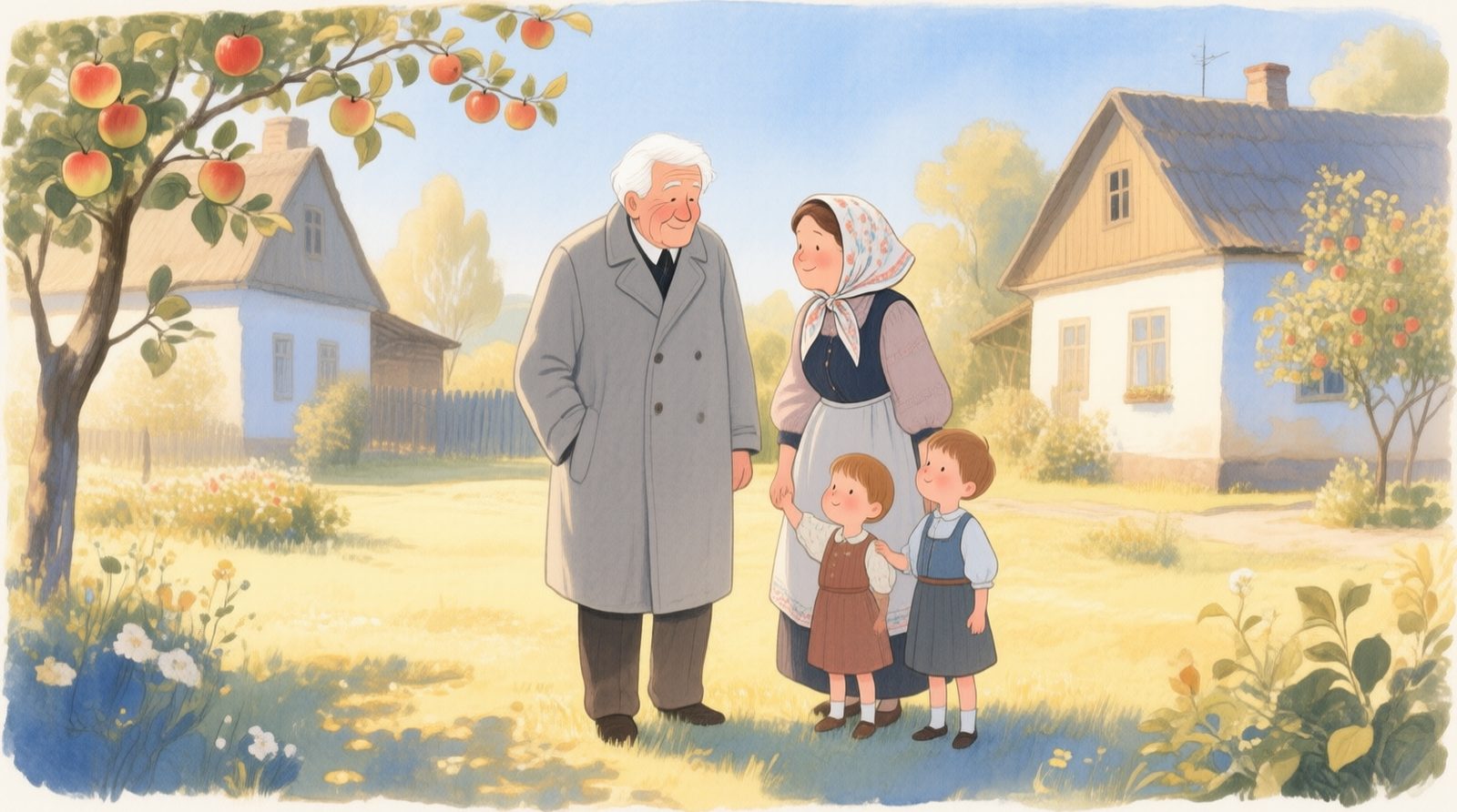
Gajowniczek survived Auschwitz and was freed in 1945. He returned home and was reunited with his wife, exactly what Father Maximilian had wanted to save. He lived until 1995, reaching the age of 93. He had decades of life; he watched the years pass, and came to know grandchildren.
And he spent the rest of his life bearing witness. He told the story thousands of times: that Father Maximilian had saved him, not only physically but spiritually too; that he had shown him that love can conquer hatred, and good can conquer evil. Gajowniczek was present at both the beatification and the canonization of the man who died in his place.
Beatification and Canonization
On October 17, 1971, thirty years after his martyrdom, Pope Paul VI beatified Father Maximilian. At that time, he was declared blessed as a confessor, that is, for his heroic charity, since, technically, he had died by taking another prisoner's place.
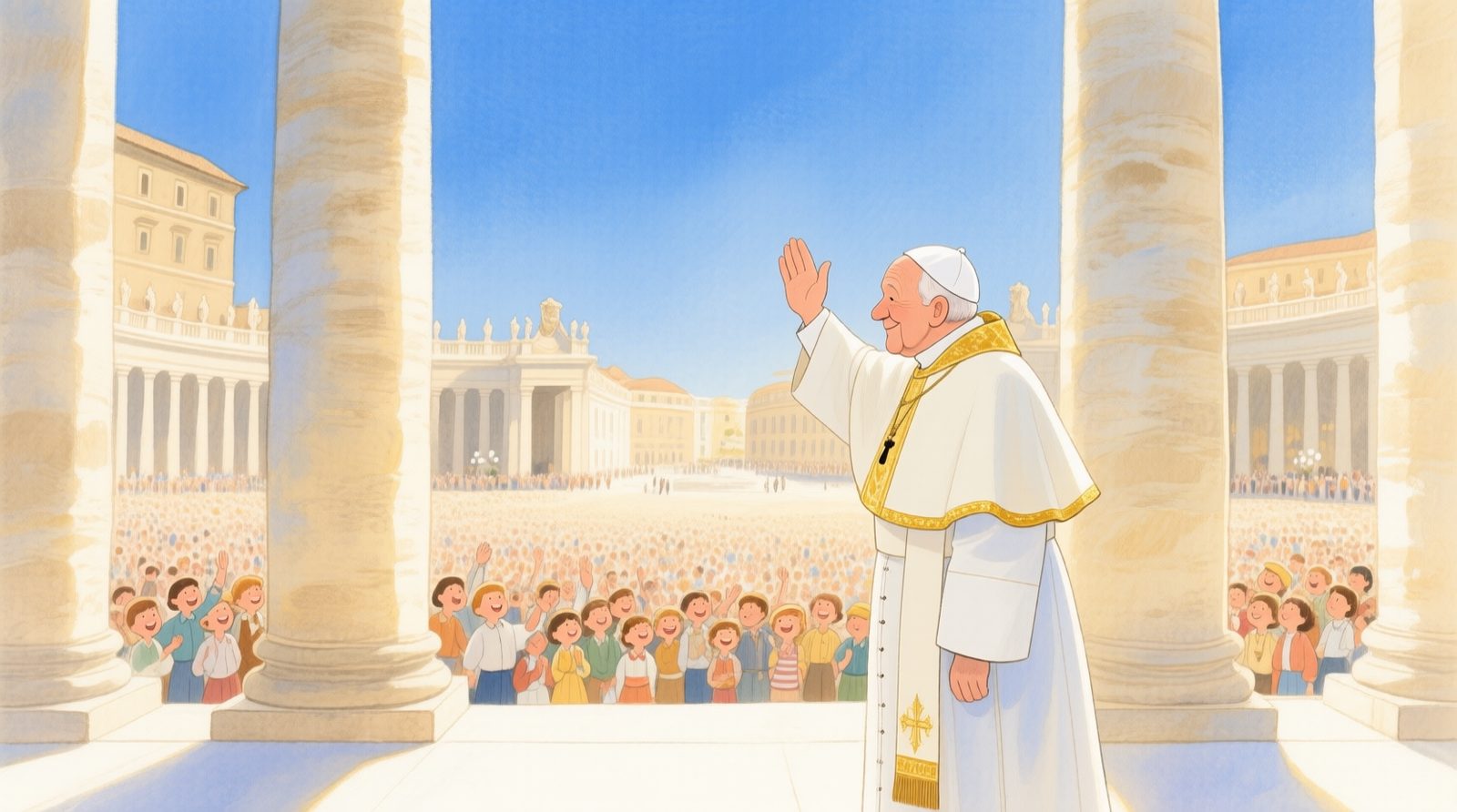
In 1982, however, Pope John Paul II, a Pole like Maximilian, studied the case deeply and recognized that he had indeed been a martyr: the Nazis persecuted him for being a priest, and he gave his life out of love, the greatest act of faith. And so, on October 10, 1982, before a great crowd in Saint Peter's Square, John Paul II canonized him as a martyr: Saint Maximilian Maria Kolbe, martyr of charity.
Gajowniczek was there, 81 years old, weeping with joy as the man who had saved him was declared a saint. The Pope spoke words that history has kept: Saint Maximilian did not simply die; he gave his life, freely, for a brother. And that is love in its highest form.
Auschwitz Today
Today, Auschwitz is a museum, a place of memory and silence. In the cell of Block 11 where Father Maximilian died, there is a memorial, with candles and flowers. Millions of people visit every year. There, they learn about the horror of the Holocaust, so that it may never happen again. And they also learn about a man who showed that, even in the midst of the worst evil, goodness can shine.
The Two Crowns
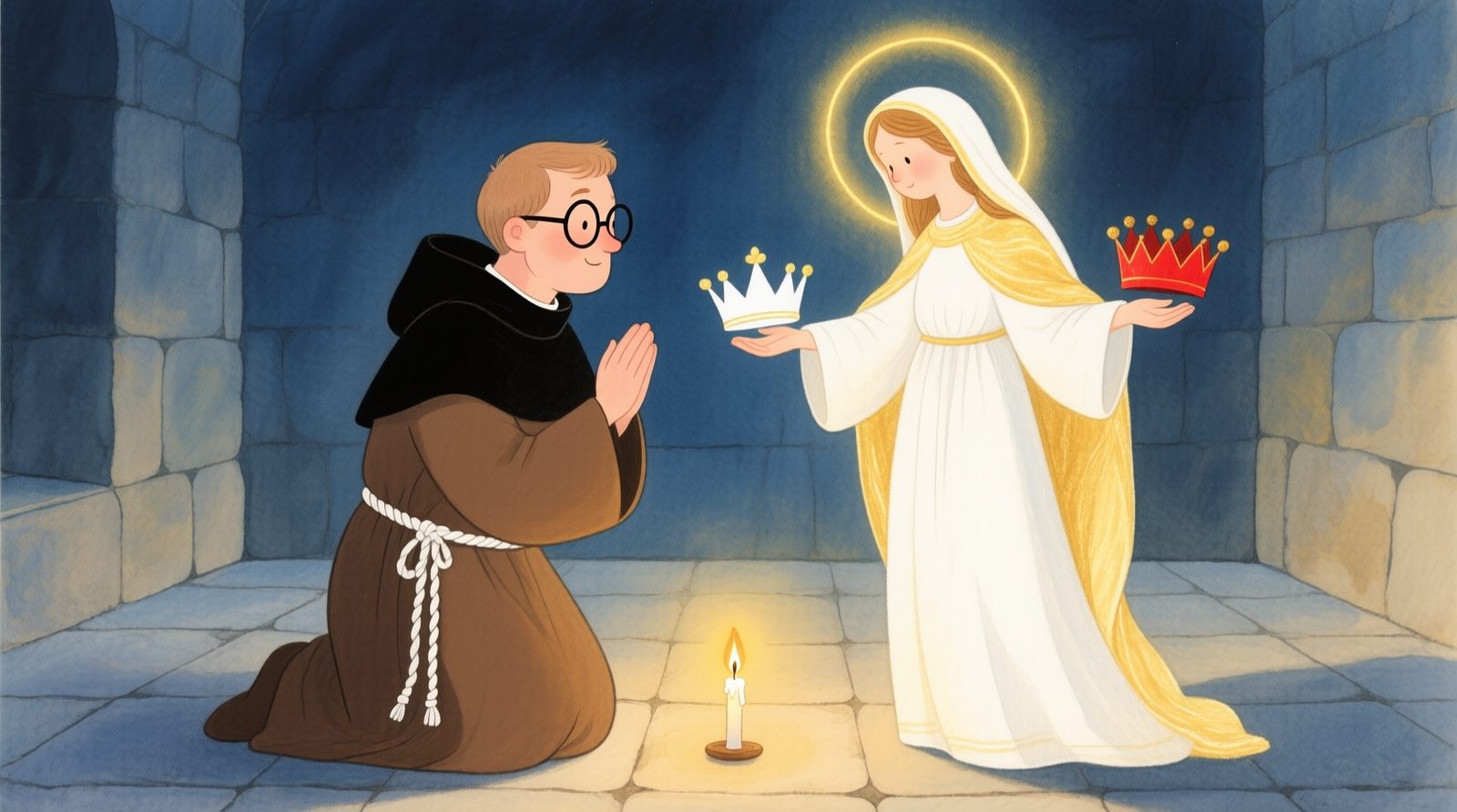
Do you remember the vision Maximilian had at the age of ten, when Our Lady showed him two crowns, one white and one red? He chose them both. The white crown, of purity, he lived out in a whole life consecrated to God and to Mary. The red crown, of martyrdom, he received at Auschwitz, when he gave his life for a brother. Our Lady knew from the beginning, and she prepared him from boyhood. And he answered her call to the very end.
Today, Saint Maximilian is one of the most beloved saints in the world, especially in Poland. The Militia of the Immaculata still gathers millions of members, Niepokalanów still exists and still publishes, and churches, schools, and missions carry his name.
Reflection


