
On May 25, 1887, in a small Italian village called Pietrelcina, a boy was born, and his parents baptized him Francesco Forgione. Later, the whole world would come to know him as Padre Pio. The family was very poor and very Catholic. His papa, Grazio, worked in the fields, and his mama, Giuseppa, prayed a great deal. And Francesco, from the time he was tiny, showed that he was different.
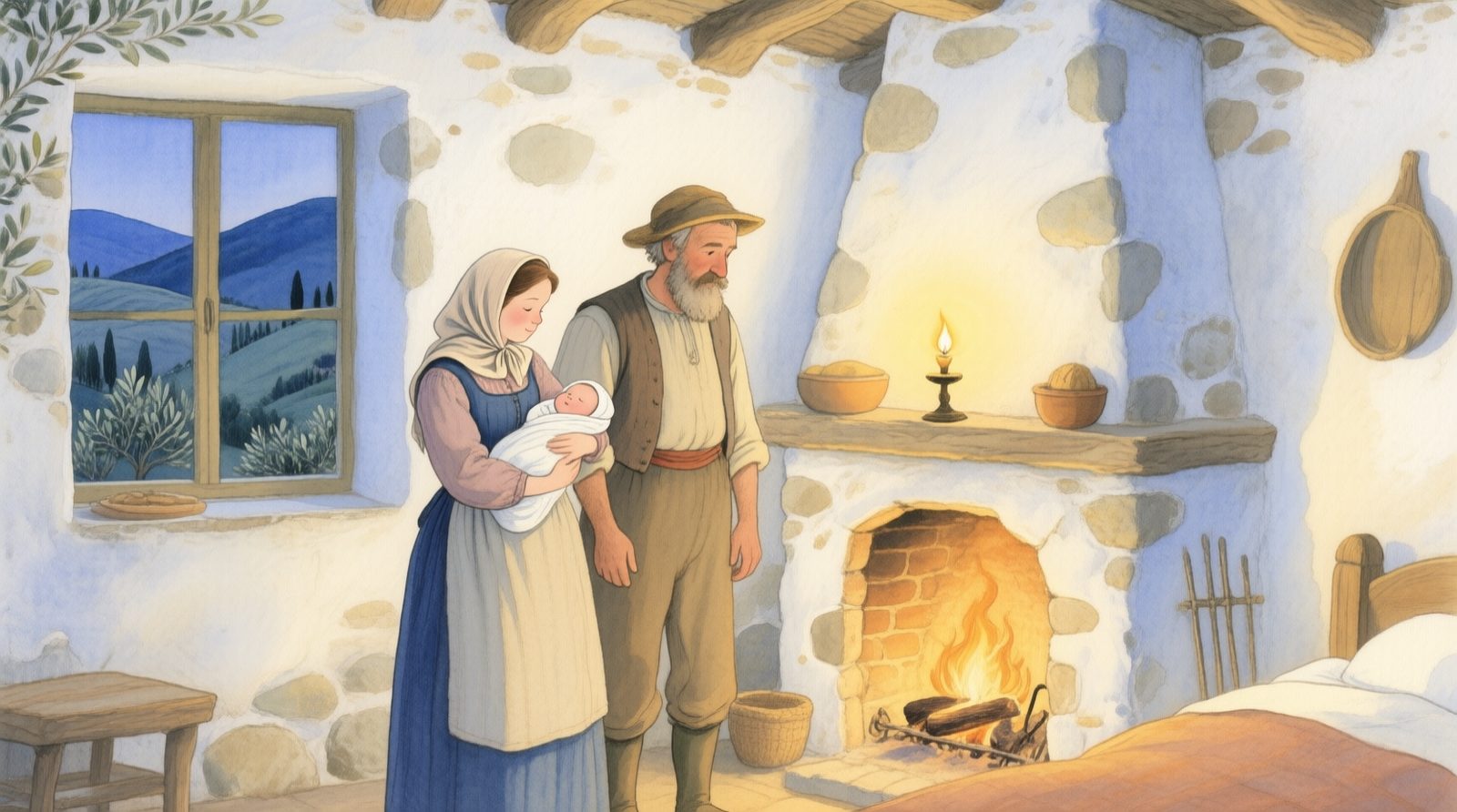
The Boy Who Saw Angels
From the time he was very small, Francesco saw things that other people could not see. He talked with his guardian angel the way you talk with a friend.
"Mom, my angel told me it's going to rain today," he would say.
And it would rain.
"Papa, my angel told me you were about to come home."
And his father would walk in at that very moment. The family smiled and thought it was just a child's imagination. But it was not imagination: Francesco really did see and hear his angel.
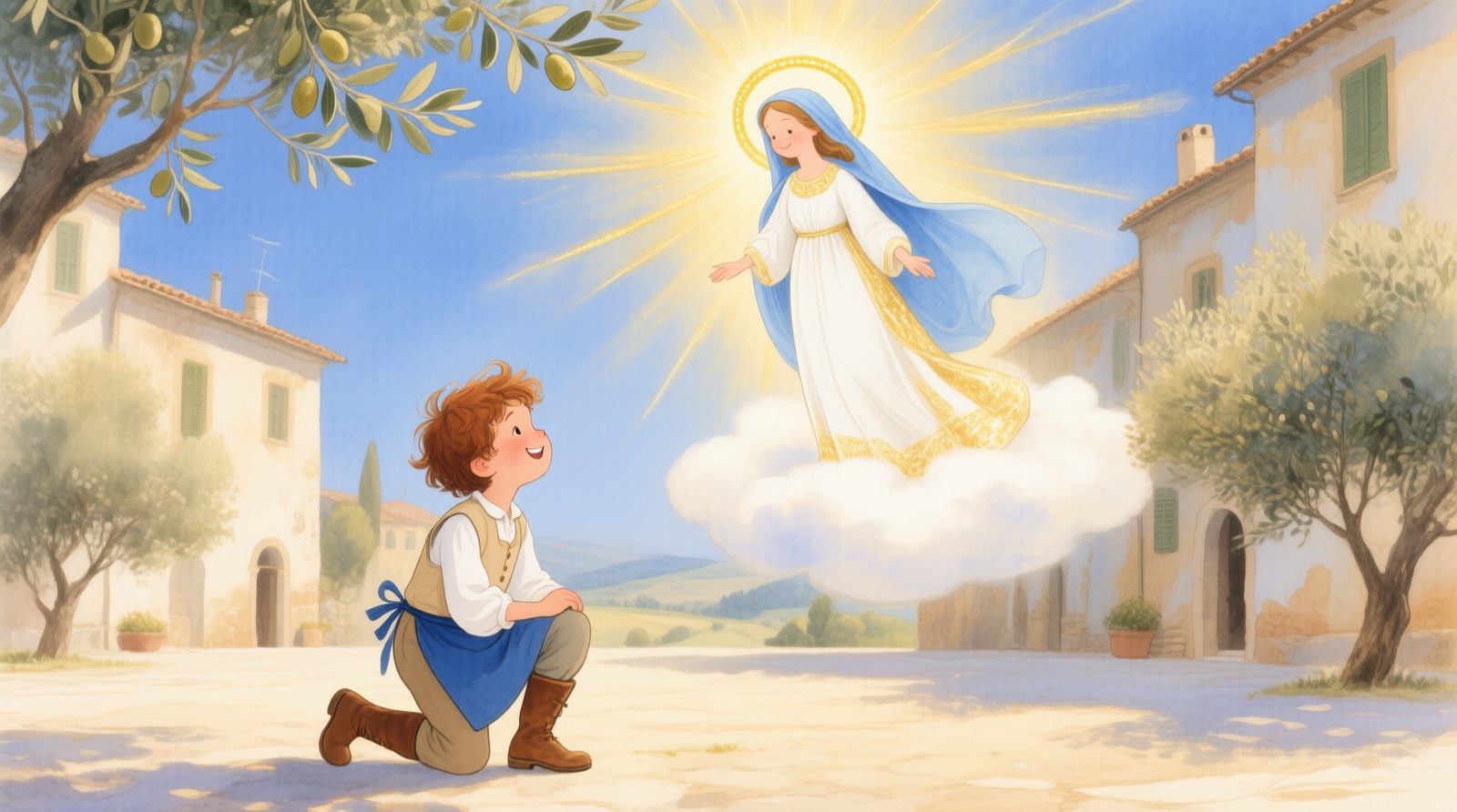
And it was not only the angel. Francesco also saw Jesus and Our Lady. Sometimes, in the middle of a game, he would stop and gaze at a spot where nobody else could see anything at all.
"Francesco, what are you looking at?" they would ask.
"La Madonnina," he would answer with a smile — which is how you say Our Lady in Italian.
"And what does she say?"
"That she loves me. That she is with me always."
Other times he saw Jesus and talked with Him as naturally as anything. To Francesco this was so ordinary that he thought everyone saw the same things.
The Battle Against the Devil
But from childhood Francesco also faced something frightening: the devil attacked him. At night he heard strange noises in his room, dark shapes appeared, and horrible voices told him he would never be a saint and that he should give up. Francesco felt afraid, and sometimes he cried. But then he prayed, calling on Jesus, on Mary, on his angel. And they came, protected the boy, and drove the evil away.
Those attacks went on all his life. Years later, Padre Pio would tell how the devil tormented him almost every night, appearing in frightening shapes, making noises, breaking things, shoving him. But he never gave up. He prayed more, fasted, and offered everything to God. And with the help of Jesus and Mary, he always won.
The Vocation
From the age of five, Francesco knew what he wanted to be: a priest. He had no doubt at all. Whenever he saw a priest walking down the street, he watched him with wonder.
"Mom, I'm going to be a priest. Jesus told me."
His mother would smile and answer softly:
"If God wills it, my son."
But there was a problem. The family was very poor, and studying to become a priest cost money. What could they do?
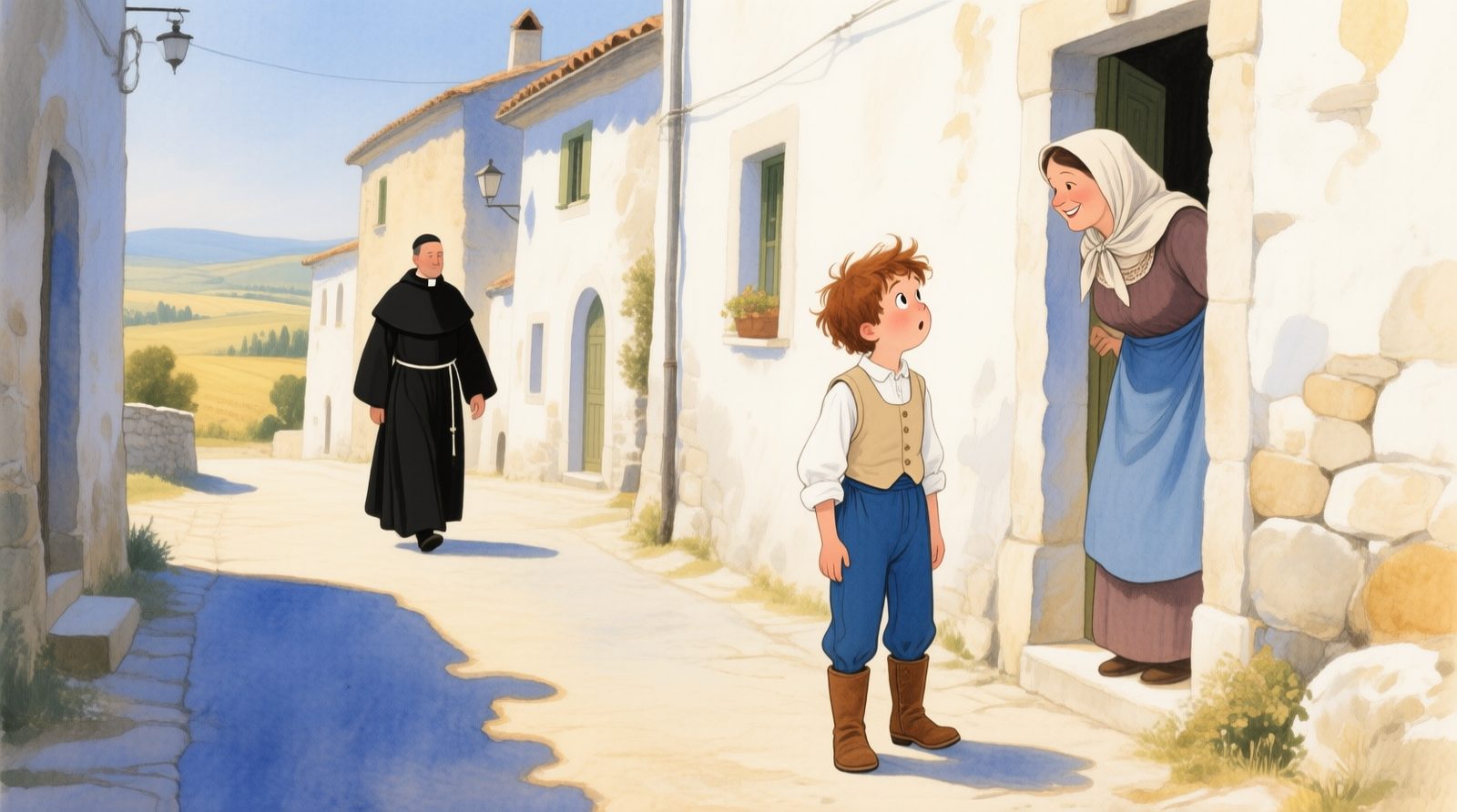
His father Grazio made a brave decision: he would emigrate to America to work in the United States. There he would earn money and send it home, and Francesco could study. It was an enormous sacrifice, to be away from his family for years. But Grazio loved his son and wanted him to follow his calling. He went, worked hard, and sent the money. And Francesco was able to begin his studies.
Entering the Friary
At fifteen, in 1903, Francesco entered the friary of the Capuchin Friars. The Capuchins are Franciscans who live in great poverty and simplicity: they wear a brown habit with a hood, long beards, and sandals. Francesco loved that life, because it was exactly what he wanted. When he entered, he received a new name: Friar Pio of Pietrelcina. Pio means pious, devoted.
Life in the friary was hard. The friars rose in the small hours of the night to pray, fasted often, slept on beds of wooden boards, and worked heavily. Friar Pio never complained about any of it. Quite the opposite: he asked for more penances and more sacrifices, because he wanted to suffer for Jesus and to imitate Jesus in everything.
Constant Illnesses
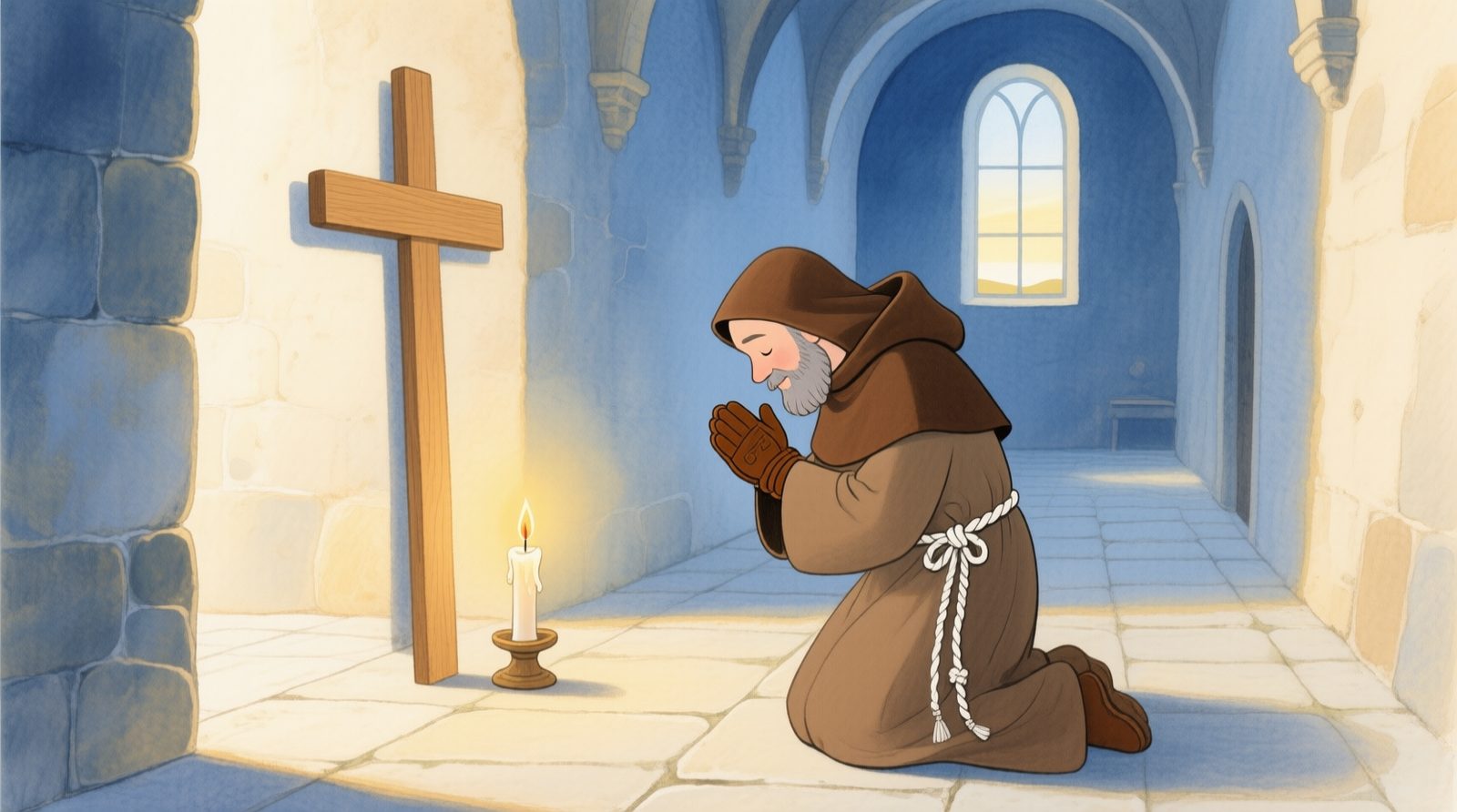
There was, however, a difficulty: Friar Pio was always ill. He had constant fevers, coughed blood, and fainted. The doctors ran their tests and found no explanation. It is said that his fever once measured 48 degrees Celsius, a temperature at which ordinary thermometers would even break. His superiors feared he would die and sent him home to the country air to recover. But he did not want to go. He wanted to stay in the friary, close to Jesus in the Tabernacle.
In time, people came to understand that those fevers were unlike ordinary sickness. When Friar Pio entered into ecstasy — a deep union with God in prayer — his body grew hot, as if divine love were a fire burning inside him. The same thing had happened to other saints, such as Saint Philip Neri. The doctors could only confirm what they saw: it was no illness they knew.
The Ordination
On August 10, 1910, at the age of twenty-three, Friar Pio was ordained a priest: Padre Pio of Pietrelcina. It was one of the happiest days of his life. He celebrated his first Mass in his little home village, with his whole family present — his father had come back from America especially for that day. When Padre Pio raised the Host for the first time, he entered into ecstasy. He stood motionless, radiant, because he saw Jesus there, in the Host.
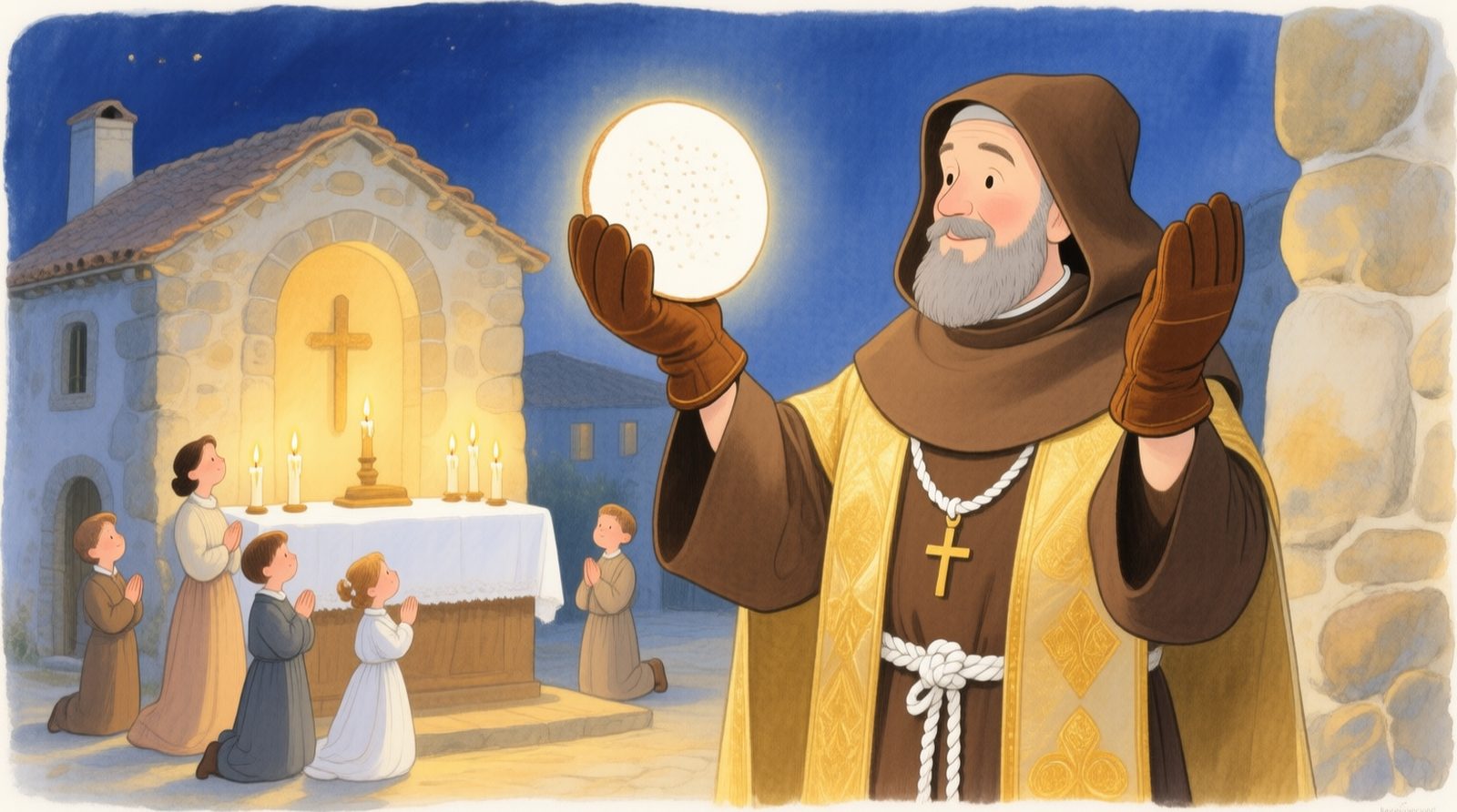
From that day on, every one of Padre Pio's Masses was like that. It lasted a long time, sometimes more than an hour, because he did not merely pray: he saw and lived what he was celebrating. At the Consecration he lived the Passion of Christ; he wept, he trembled, he suffered together with Jesus. People who attended came away deeply moved, telling one another that this priest could see something no one else could see.
The First Mystical Gifts
In the years that followed, Padre Pio began to experience more and more extraordinary things. He had frequent visions of Jesus and Mary and spoke with them as with friends. His guardian angel remained always at his side. Sometimes, when letters arrived in Greek or in other languages Padre Pio did not know, his angel would explain to him what they said.
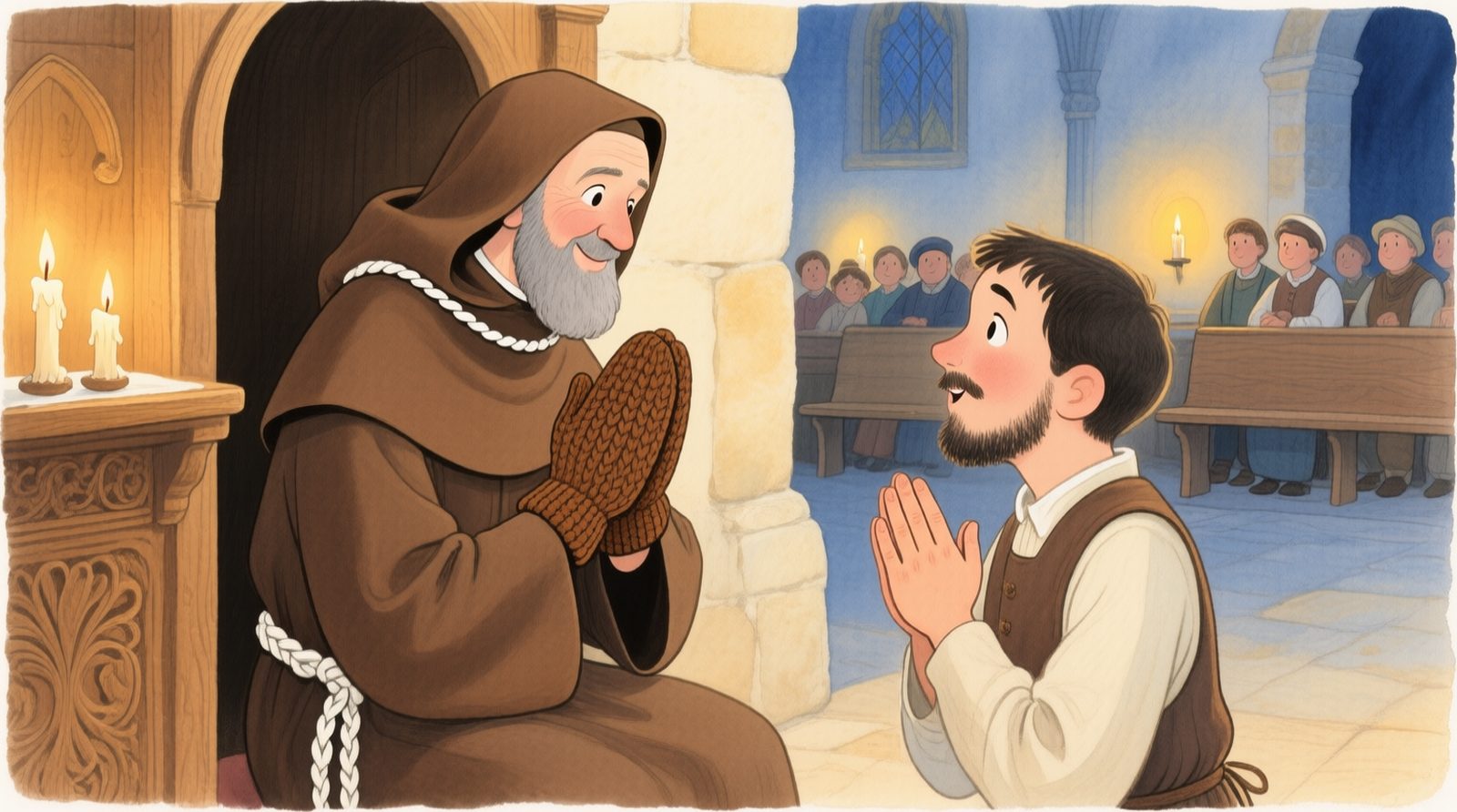
Padre Pio also began to read hearts. He knew what people were thinking and feeling, and he knew their sins even before they confessed them. Once, a man came to confession hiding a serious sin. Padre Pio looked at him and asked:
"And that sin? Aren't you going to tell me?"
The man was astonished and confessed everything. This happened all the time. No one could deceive Padre Pio.
The Invisible Wounds
In September 1910, only a month after his ordination, something terrible and wonderful happened at the same time. Padre Pio was praying alone in the church when he saw Jesus crucified. Jesus looked at him with immense love, and from His wounds came rays of light. The rays struck Padre Pio's hands, his feet, and his side. He felt an overwhelming pain, as if he were being pierced through, and he fainted.
When he came to, he looked at his hands, his feet, his side. There was no wound to be seen, but the pain was real, constant, and very great. They were invisible wounds. Padre Pio prayed like this:
"Jesus, thank You for this grace. But I ask You: let the pain stay with me, and hide the marks, so that no one will know."
And Jesus granted it. For eight years, Padre Pio carried the wounds without anyone seeing a thing.
San Giovanni Rotondo
In 1916, Padre Pio was sent to the friary of San Giovanni Rotondo, a small village in the mountains of southern Italy — poor, isolated, forgotten. He arrived sick, feverish, suffering. No one imagined that this frail priest would transform that place, or that San Giovanni Rotondo would one day become one of the most visited shrines in the world.
The Visible Wounds
On September 20, 1918, came the most extraordinary moment of all. Padre Pio was praying alone before the crucifix in the choir of the church when he saw the crucified Jesus come down to him. Jesus embraced him, and from the embrace came shining rays, which pierced his hands, his feet, and his side. Padre Pio cried out in pain and fell to the floor. When he came to himself and looked at his hands, he saw open wounds, bleeding, pierced right through.
He looked at his feet: the same. He touched his side: it was bleeding. They were the stigmata, the wounds of Christ. Padre Pio tried to hide them, covering his hands with fingerless gloves, but he could not keep the secret for long. The other friars soon found out, frightened and amazed all at once. The news ran from mouth to mouth: Padre Pio bore the wounds of Christ.
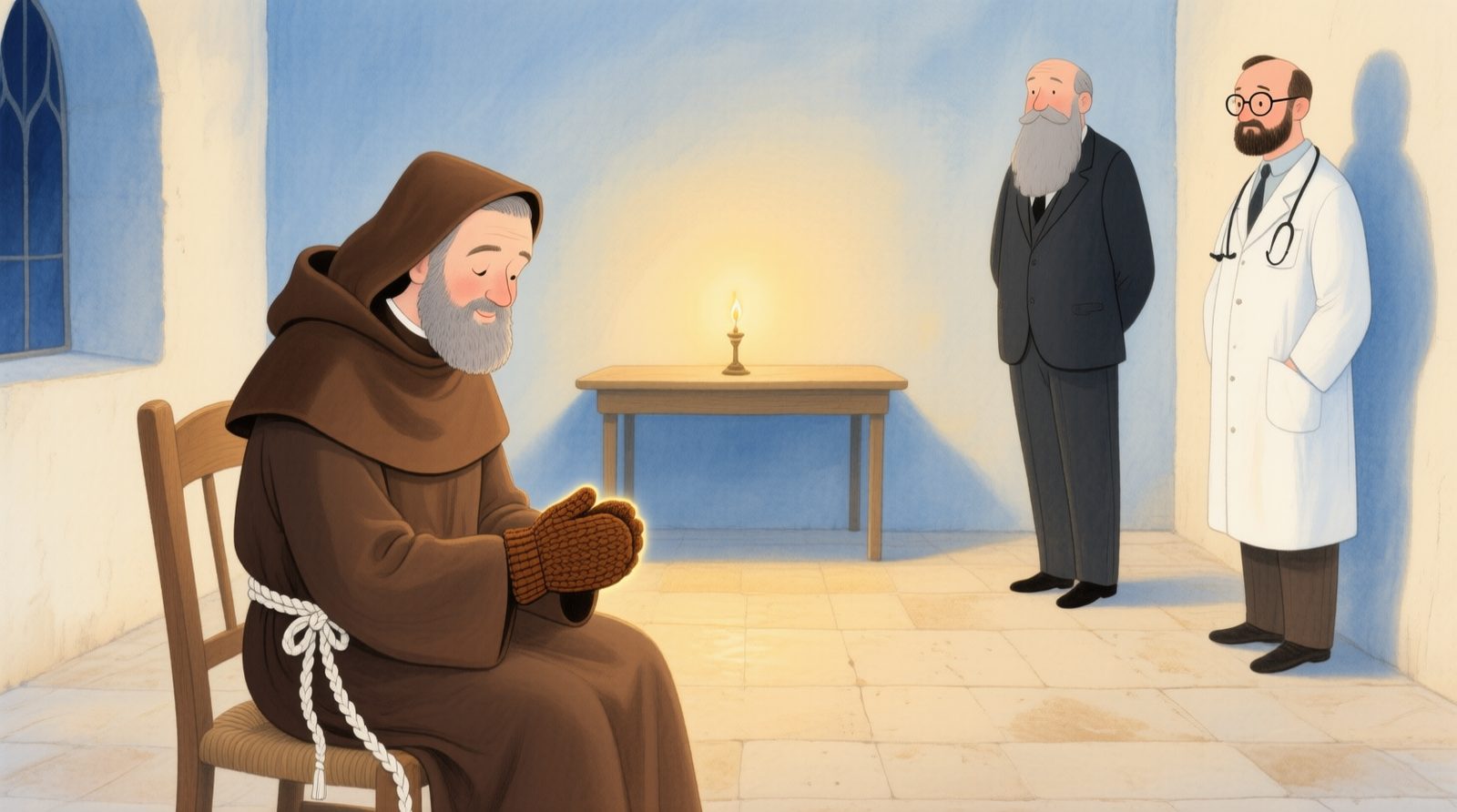
Doctors came to examine Padre Pio, and they confirmed it: the wounds were real, deep, and bleeding constantly. Yet they never became infected and never smelled bad — on the contrary, they gave off a perfume of flowers. They did not heal, but they did not worsen either. It was something medicine could not explain. The stigmata would remain with Padre Pio until his death, fifty years later.
Fame Begins
News of the stigmata spread quickly. Newspapers and magazines told of a priest in Italy who bore the wounds of Christ, and thousands of people began traveling to San Giovanni Rotondo. They wanted to see Padre Pio, to touch him, to receive his blessing. He was embarrassed by it all, because he wanted no attention, but there was no stopping it. The people simply came.
And they did not come only out of curiosity. They came because miracles were happening. The sick were healed, sinners were converted, people without faith began to believe again. Padre Pio prayed for them all, blessed them, heard their confessions, and God worked wonders. San Giovanni Rotondo, the forgotten village, became a place of pilgrimage. And this was only the beginning.
Moral of the Story


