
Lucia dos Santos was the oldest of the three shepherd children: she was ten years old at the time of the apparitions of 1917. It was she who spoke with Our Lady, she who asked the questions, she who guided Francisco and Jacinta. But unlike her cousins, who died young, Lucia lived a long life of ninety-seven years. God had a special mission for her: to guard the message of Fatima and spread it throughout the whole world. And that is what she did, day after day, her whole life long.

Lucia's Loneliness
After Francisco died in 1919 and Jacinta in 1920, Lucia was left alone. It was a hard time. Her best friends were gone, and the only people who truly understood what she had lived through were now in Heaven. And the questions never stopped: what had Our Lady said, why would she not reveal the secrets. Some believed her, others doubted, and some even persecuted her. But Lucia held on to her faith. She kept praying, kept making sacrifices, kept loving God.
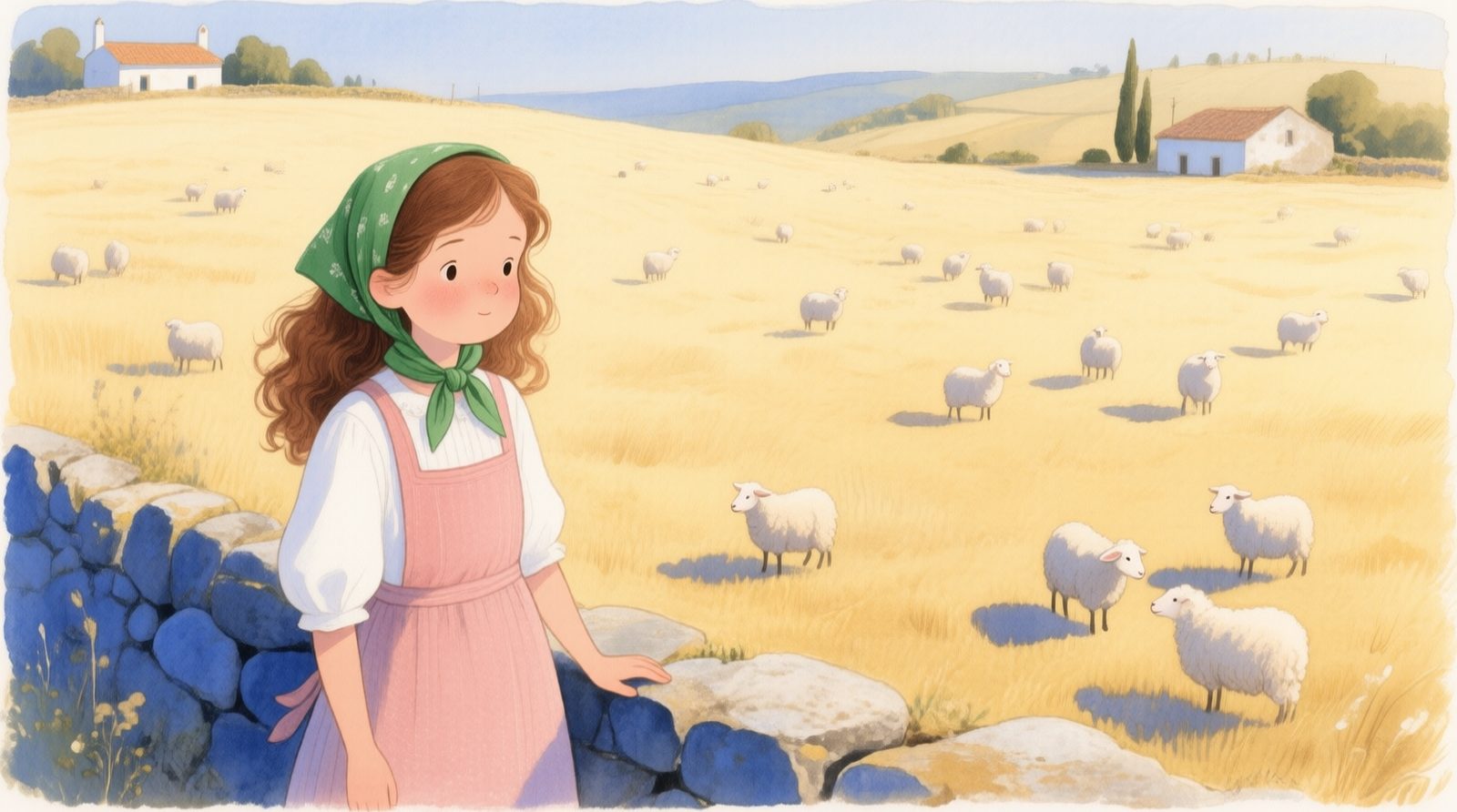
In 1921, when Lucia was fourteen, the bishop decided it would be best for her to leave Aljustrel. There was simply too much attention: crowds came to see her, and the girl had no peace in which to grow up. Lucia was sent to a boarding school in Vilar, run by the Dorothean Sisters. It hurt to leave her family and her village, but she obeyed. At the school, she told no one who she was. She lived as an ordinary student, without drawing attention: she studied, worked, and prayed, in a simple, hidden life.
The Religious Vocation
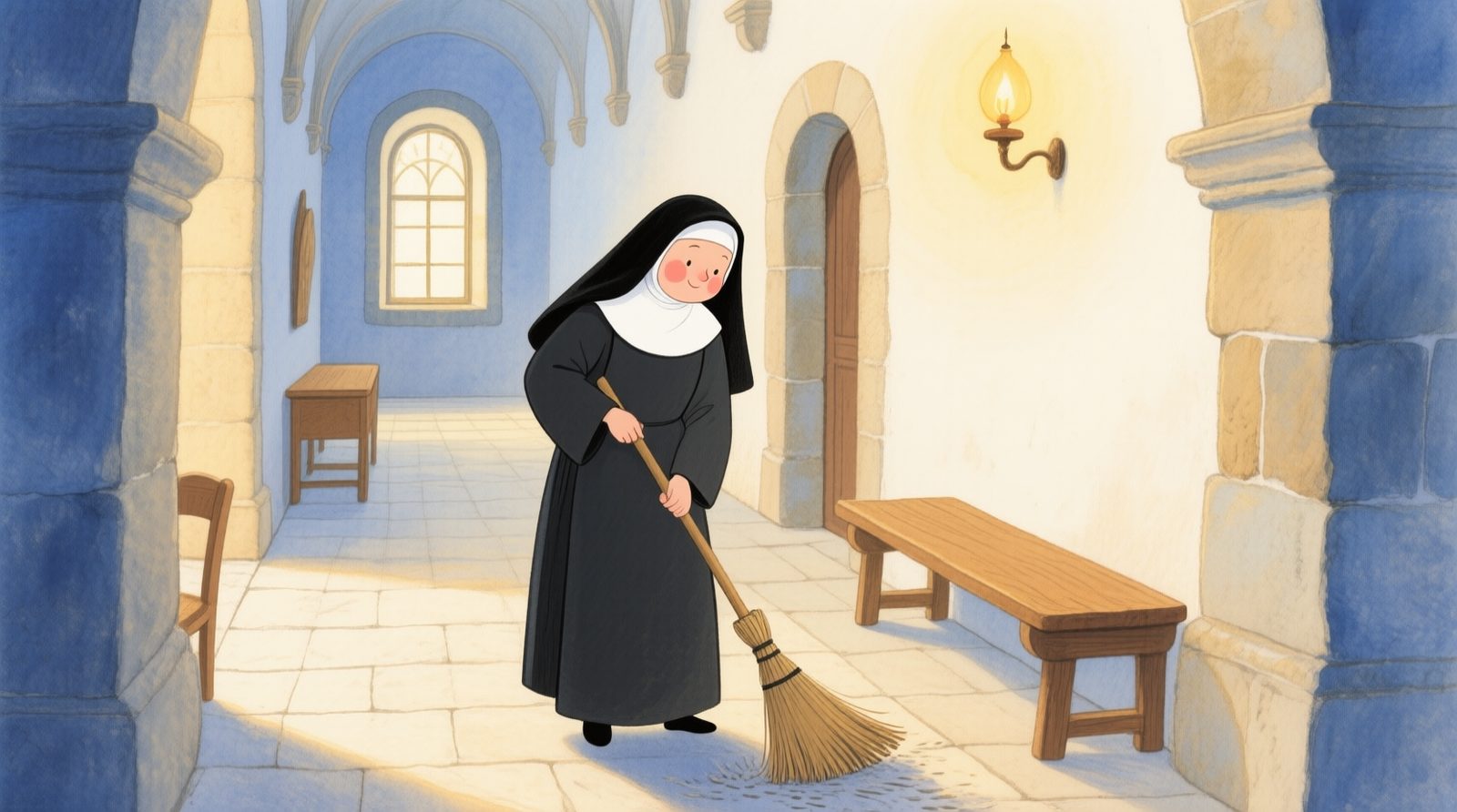
In 1925, at eighteen, Lucia entered the Congregation of the Dorothean Sisters and received the name Sister Maria das Dores — Mary of the Sorrows. Even in the convent, at first, she did not reveal who she was. She lived as an ordinary nun, working, praying, serving. When her superiors finally learned that this quiet sister was the seer of Fatima, Lucia answered simply that she was only a servant doing what God asked.
The Apparitions Continue
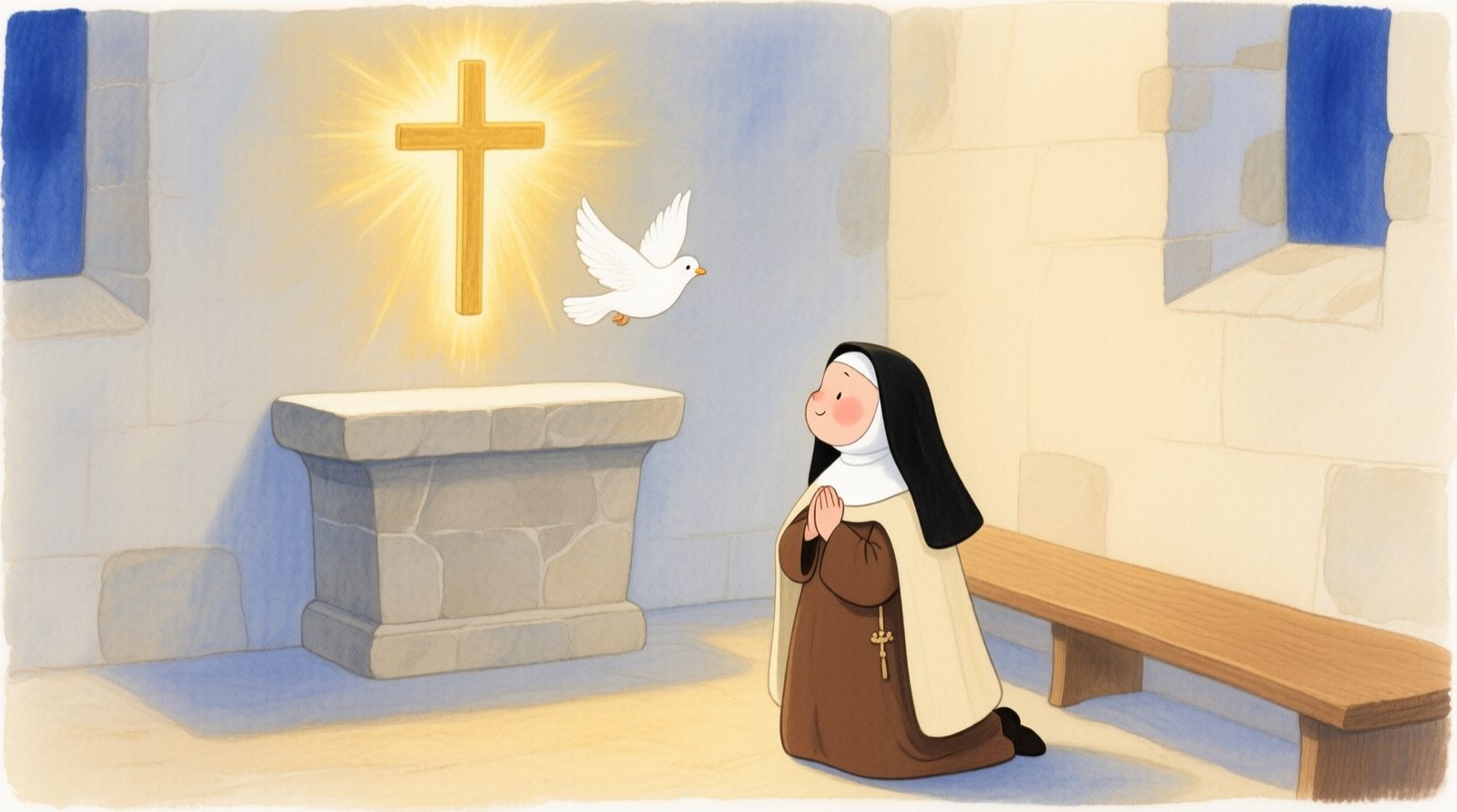
During her life in the convent, Our Lady went on appearing to Lucia. On December 10, 1925, she appeared with the Child Jesus and showed her heart surrounded by thorns. And she said:
This was the beginning of the devotion of the Five First Saturdays.
In 1929, Lucia had an extraordinary vision of the Most Holy Trinity: the Father, the Son, and the Holy Spirit, in a profound mystical experience. During this vision, Our Lady repeated the request of Fatima: the moment had come to ask the Holy Father for the consecration of Russia to her Immaculate Heart. From then on, Lucia wrote letters to the Popes, passing on this request with persistence and respect.
Writing Down the Message
At the command of her superiors and the bishops, Lucia began to write her memoirs. She told in detail about the apparitions, the secrets, and the lives of Francisco and Jacinta. These writings became fundamental documents: without them, many details of Fatima would have been lost. Lucia also wrote down the third secret on a sealed sheet of paper, which ended up guarded in the archives of the Vatican. For decades, the whole world wanted to know what that paper said; it was revealed only in the year 2000, by Pope John Paul II.
In the Carmel
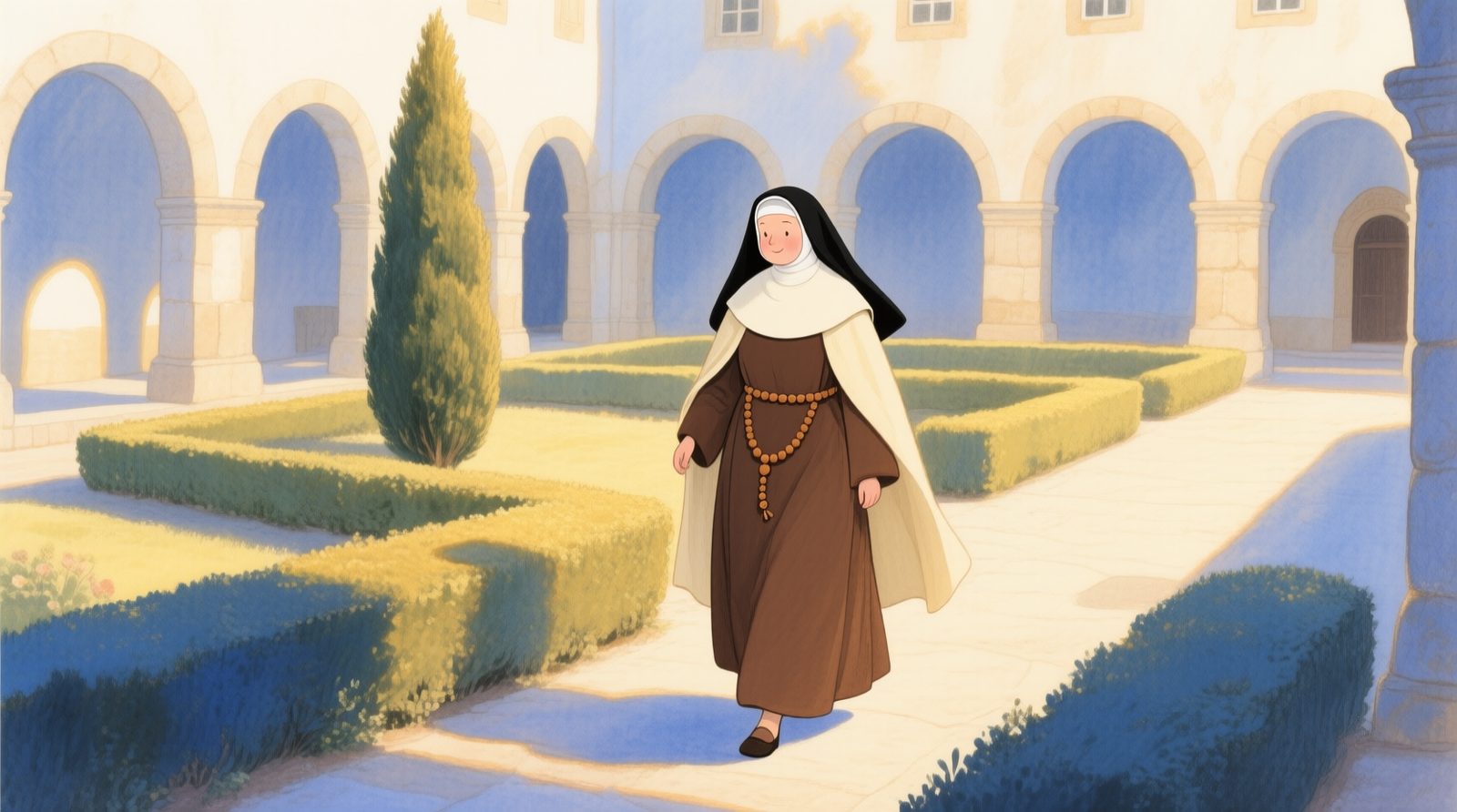
In 1948, Lucia transferred to the Carmel of Coimbra — the same order as Saint Therese of Lisieux — and took the name Sister Maria Lucia of Jesus and of the Immaculate Heart. In the Carmel she lived in strict enclosure: she was rarely seen and rarely spoke with visitors. She lived hidden from the world, given entirely to prayer and contemplation. But from her silent cell, her prayers reached the whole world.
Meetings with Popes
Several Popes cared deeply about what Lucia had to say. To Pope Pius XII she wrote a number of letters about Fatima. Pope Paul VI visited Fatima in 1967 and spoke with her in person. And Pope John Paul II, who had a special devotion to Fatima, went there three times and spoke at length with Lucia about the message. He credited Our Lady of Fatima with his survival of the assassination attempt of 1981, and it was he who, in 1984, made the consecration of Russia to the Immaculate Heart, at last answering the request. Lucia confirmed that Our Lady's request had been fulfilled.
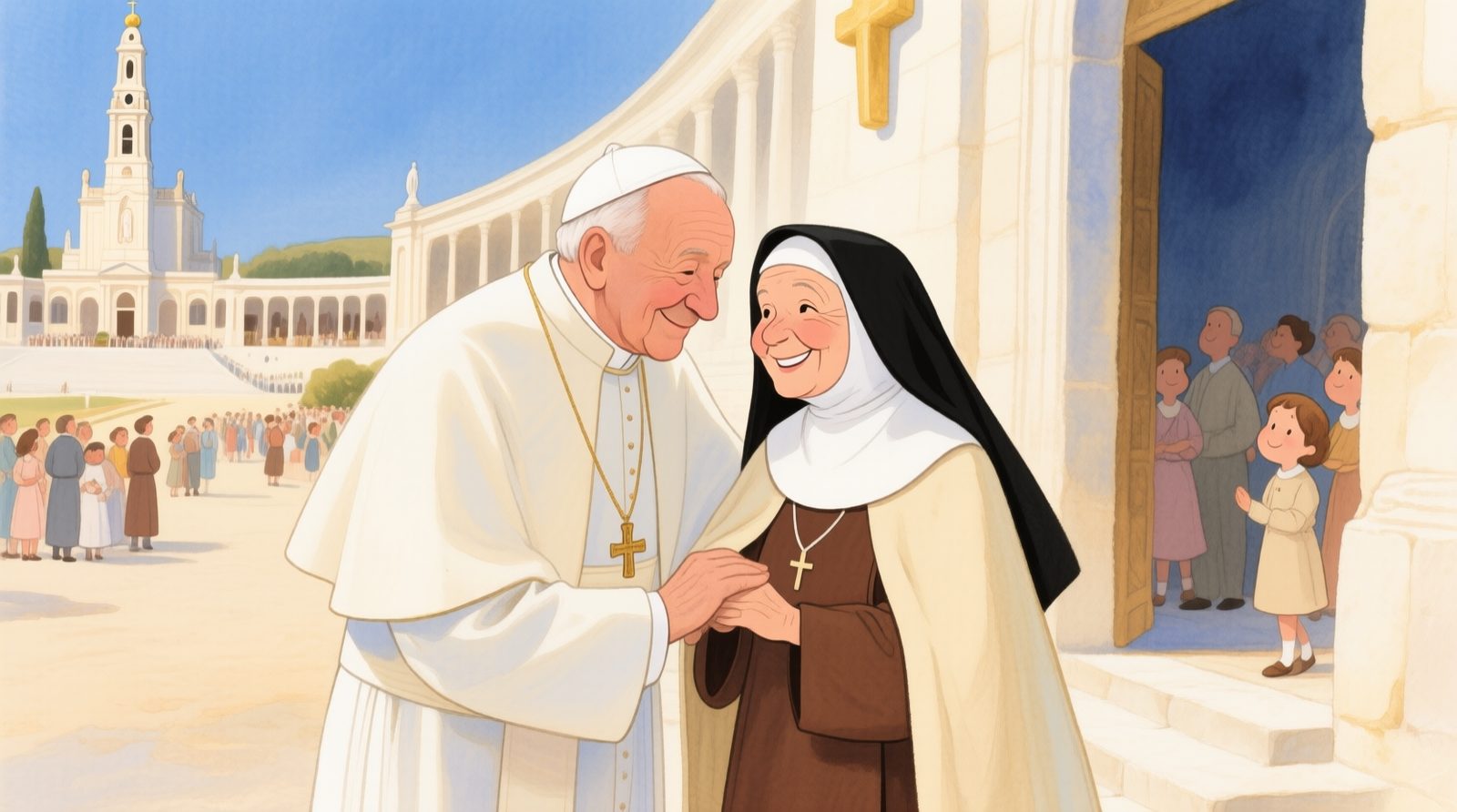
Over the course of that long life, Lucia saw things happen that Our Lady had announced when she was a girl: two world wars, the rise and fall of communism, the consecration of Russia, the beatification of Francisco and Jacinta, the revelation of the third secret. Pope Benedict XVI, who as a cardinal had presented the third secret to the world, also visited Fatima as Pope, in 2010, to honor Our Lady and the shepherd children.
A Life of Prayer
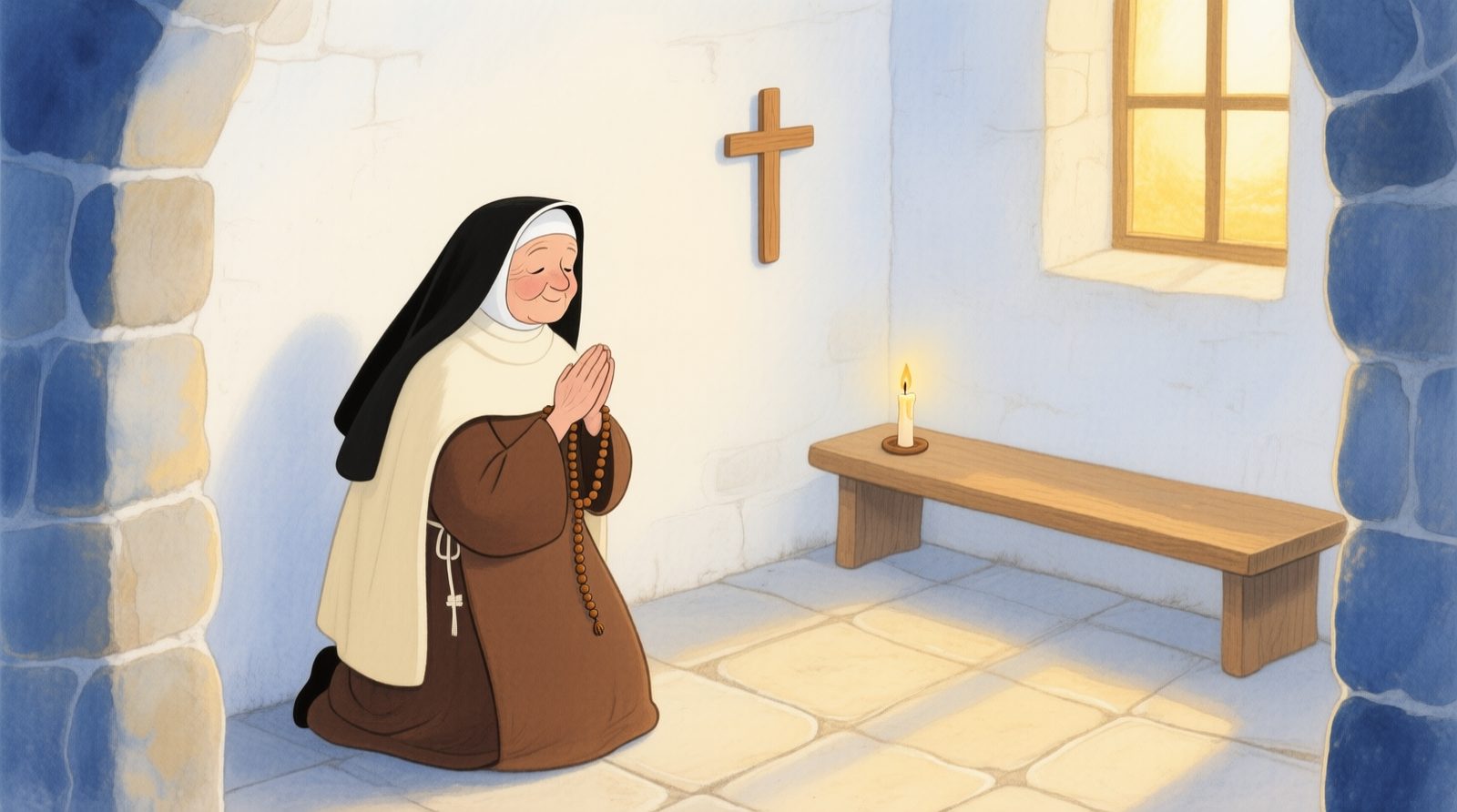
In her fifty-seven years in the Carmel, Lucia lived a life of intense prayer. She rose at five in the morning, prayed the Liturgy of the Hours, attended Mass every day, and prayed the Rosary, often more than once a day. She fasted, made sacrifices, and offered everything for the conversion of sinners and the triumph of the Immaculate Heart of Mary. She spoke little and lived in deep silence — but it was a silence full of prayer. She used to say that prayer and sacrifice were the means Our Lady had given us, and that we ought to use them.
The Death of Lucia
Lucia lived to a very great age. In her last years she grew frail, but she kept her clear mind and went on praying to the end. On February 13, 2005, at ninety-seven years of age, Sister Lucia died in peace in the Carmel of Coimbra. Her mission was complete.
Her funeral gathered thousands of people: cardinals, bishops, and faithful from all over the world came to say goodbye. Lucia was buried beside Francisco and Jacinta, at the Shrine of Fatima. The three shepherd children were together again at last.
The Legacy of Lucia
Lucia was the last living witness of the apparitions. When she died, no one remained who had seen Our Lady at the Cova da Iria. But thanks to her, the message was preserved in full. Lucia's life teaches obedience, because she always did what the Church asked of her, even when it was costly. It teaches humility, because the best-known seer of the century chose to live hidden, never seeking attention. And it teaches faithfulness, because from 1917 to 2005 she guarded and spread the message without ever giving up, with prayer at the center of everything and a great love for the Immaculate Heart of Mary.

The Message Goes On
Today, more than a hundred years after the apparitions, the message of Fatima is still alive. Thanks to Lucia's patient work, we know the secrets, the devotion of the Five First Saturdays, the consecration to the Immaculate Heart, and the importance of the daily Rosary. Millions of pilgrims visit Fatima every year, and the message has traveled around the world. And all because a ten-year-old shepherd girl said "yes" to Our Lady — and kept on saying "yes" for ninety-seven years.
Moral of the Story


