
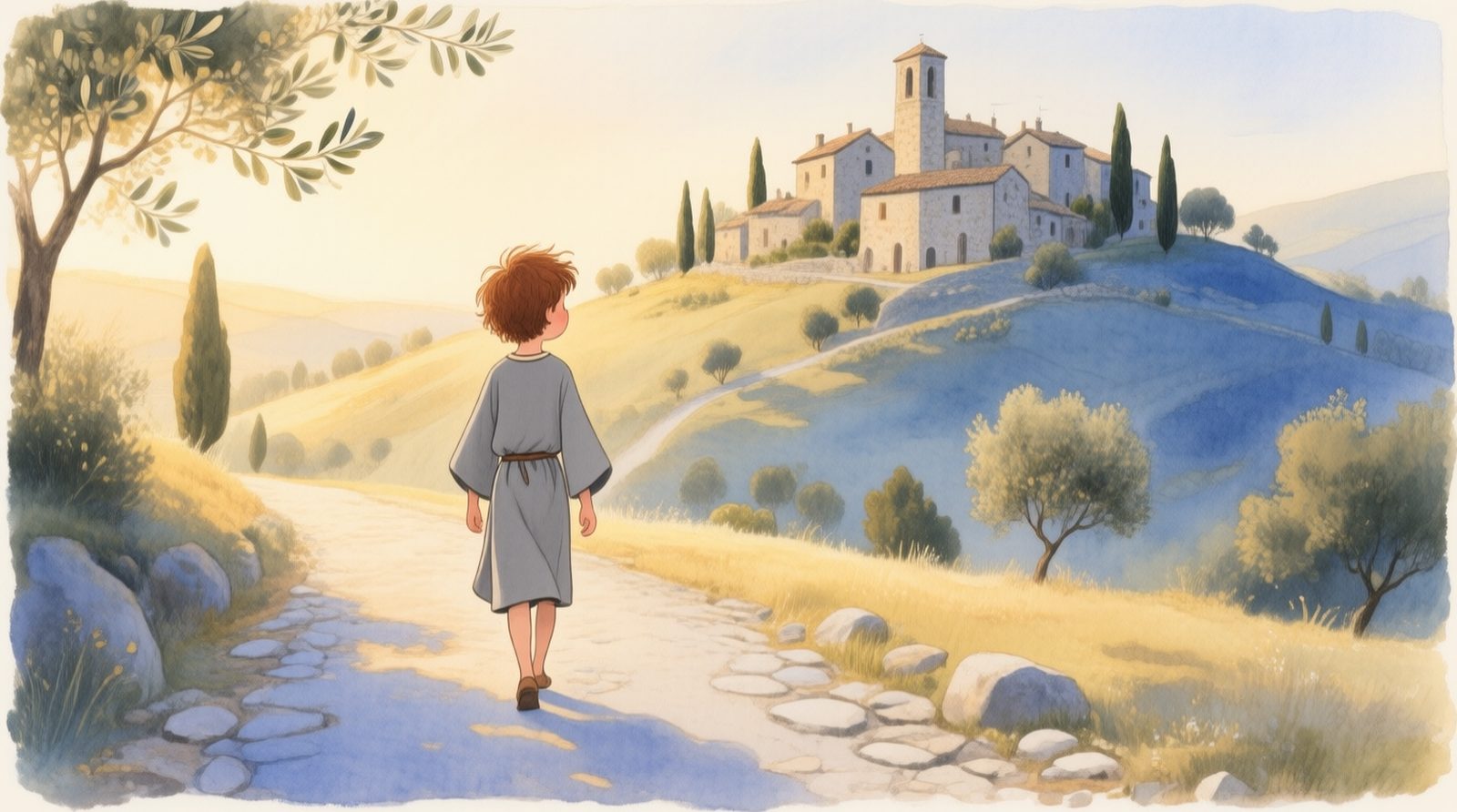
Around the year 480, in Nursia, a small town in the mountains of Italy, a boy named Benedict was born. His family was noble and wealthy, and he had a twin sister named Scholastica. His parents wanted Benedict to have the finest education possible, so, while he was still quite young, they sent him to study in Rome, the greatest city of that world. Benedict set out full of enthusiasm, ready to learn rhetoric, philosophy, and law. But what he found in Rome shook him deeply.
Decadent Rome
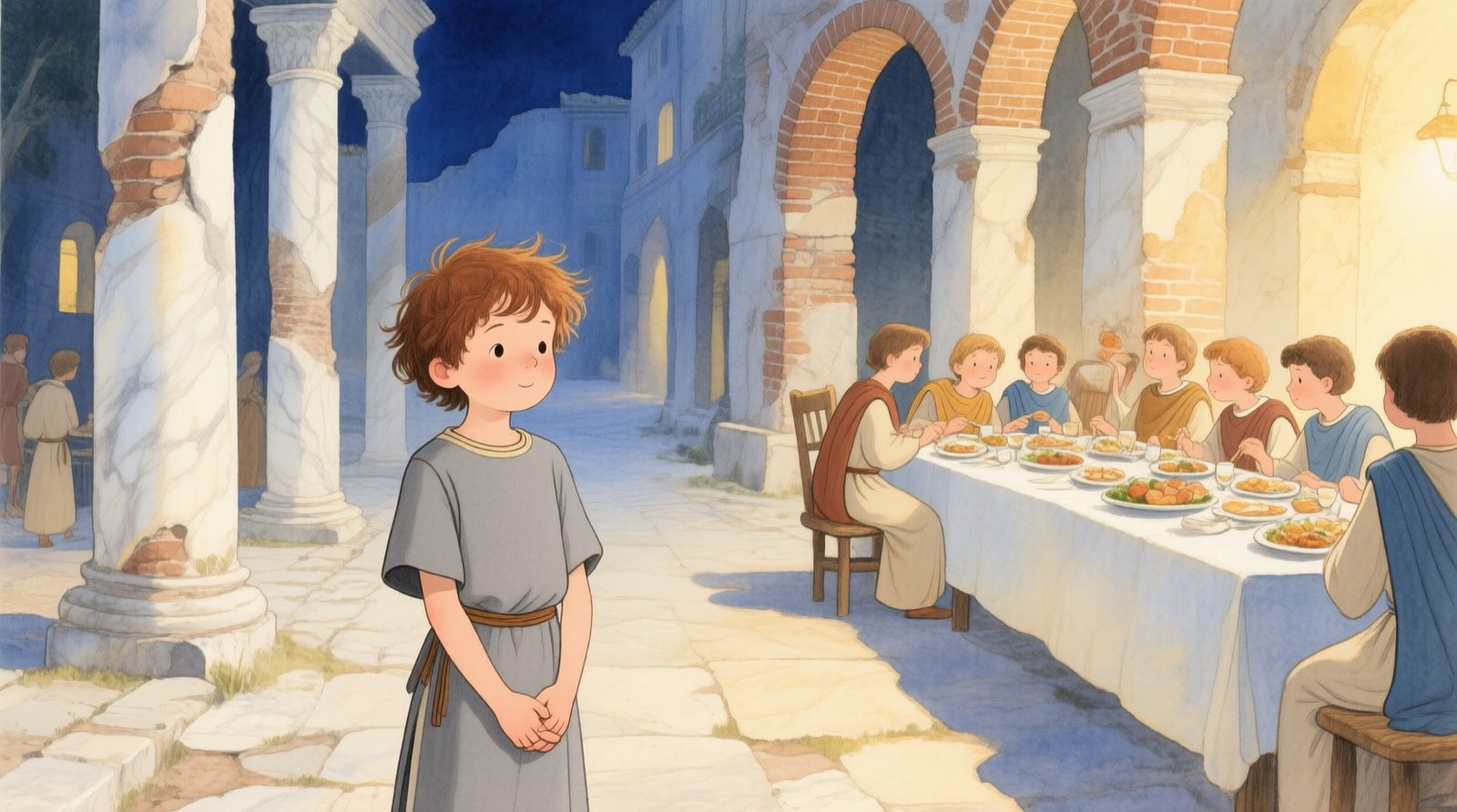
The Rome of the fifth century was no longer the great empire of old. The city was sunk in moral and spiritual decay: the students spent their days in feasts and drinking, and even many of the teachers thought only of making money. Benedict looked at all this with sorrow. He had come in search of wisdom, and everything around him seemed like foolishness. He prayed that God would not let him lose himself in that city, and would show him what to do.
The Great Decision
One day, the moment of decision came. His classmates kept inviting him to their parties, laughing at him for being so serious, telling him to enjoy life. And Benedict felt in his heart that if he stayed, he would end up losing his soul. So, while still a teenager, he did something radical: he abandoned his studies and left Rome behind — without telling his parents, without a diploma, without any plan at all, carrying only the desire to find God. Only an elderly housekeeper named Cyrilla went with him.
Enfide and the First Miracle
Benedict and Cyrilla settled in Enfide, a small village in the mountains, where they lived simply and prayed much. One day, Cyrilla borrowed a clay sieve from the neighbors to clean the grain. By accident, she dropped it, and it broke in two. The poor woman wept, not knowing what she would tell the owners, for they had no money to pay for another. Benedict saw her distress and was moved with compassion. He took the two pieces, knelt down, and prayed with his whole heart.

When he finished his prayer and looked down, the sieve was whole again, without a single mark where it had broken. Cyrilla was amazed, and news of the miracle ran through the whole village. People began seeking Benedict out, asking for prayers and advice. But he wanted no fame or attention. He felt he had to flee once more — this time, to be alone with God.
The Cave at Subiaco
Benedict set out for the wild mountains near Subiaco. There he met a hermit monk named Romanus, who quickly understood what this young man longed for: to live for God alone, hidden from the world. Romanus led him to a steep, isolated cave — a dark, cold grotto, hard to reach, perfect for someone who wished to disappear. And he promised to help him in secret.
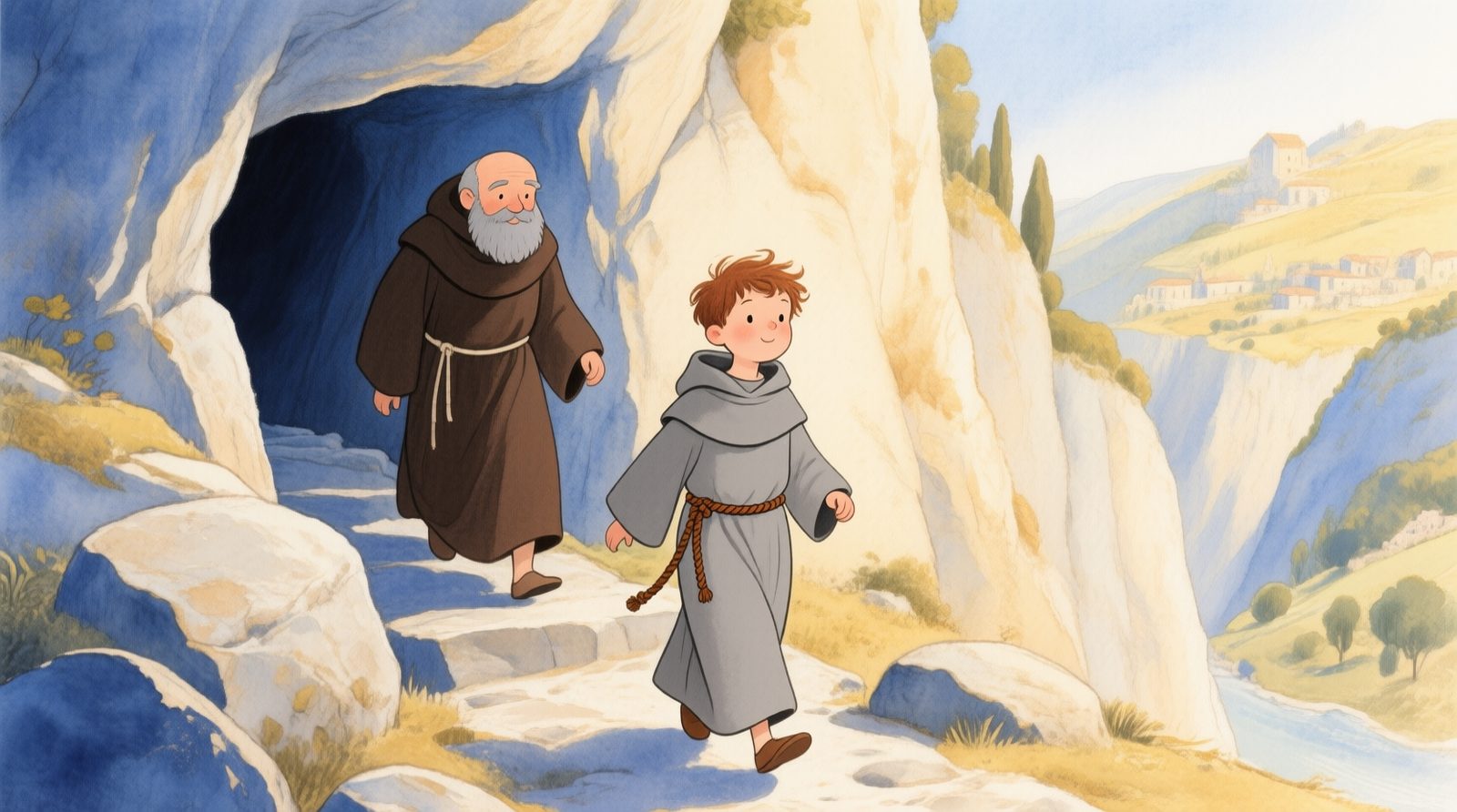
Benedict entered that cave and stayed there for three years, completely alone, with God alone. Every day, Romanus came down with a basket of bread tied to a rope and rang a little bell to signal that the food had arrived. Beyond that, Benedict saw no one and spoke with no one. He spent his days praying, meditating on the Scriptures, and fasting, and in that silence he came to know God more and more closely.
The Terrible Temptations
But living alone was far from easy, and the devil attacked Benedict with terrible temptations. The worst of them was a memory: before leaving Rome, Benedict had once seen a very beautiful woman, and now, in his solitude, that image kept returning to his mind. The temptation grew so strong that he nearly gave up everything. He thought of returning to Rome, of marrying, of abandoning the struggle. He was on the point of leaving the cave.
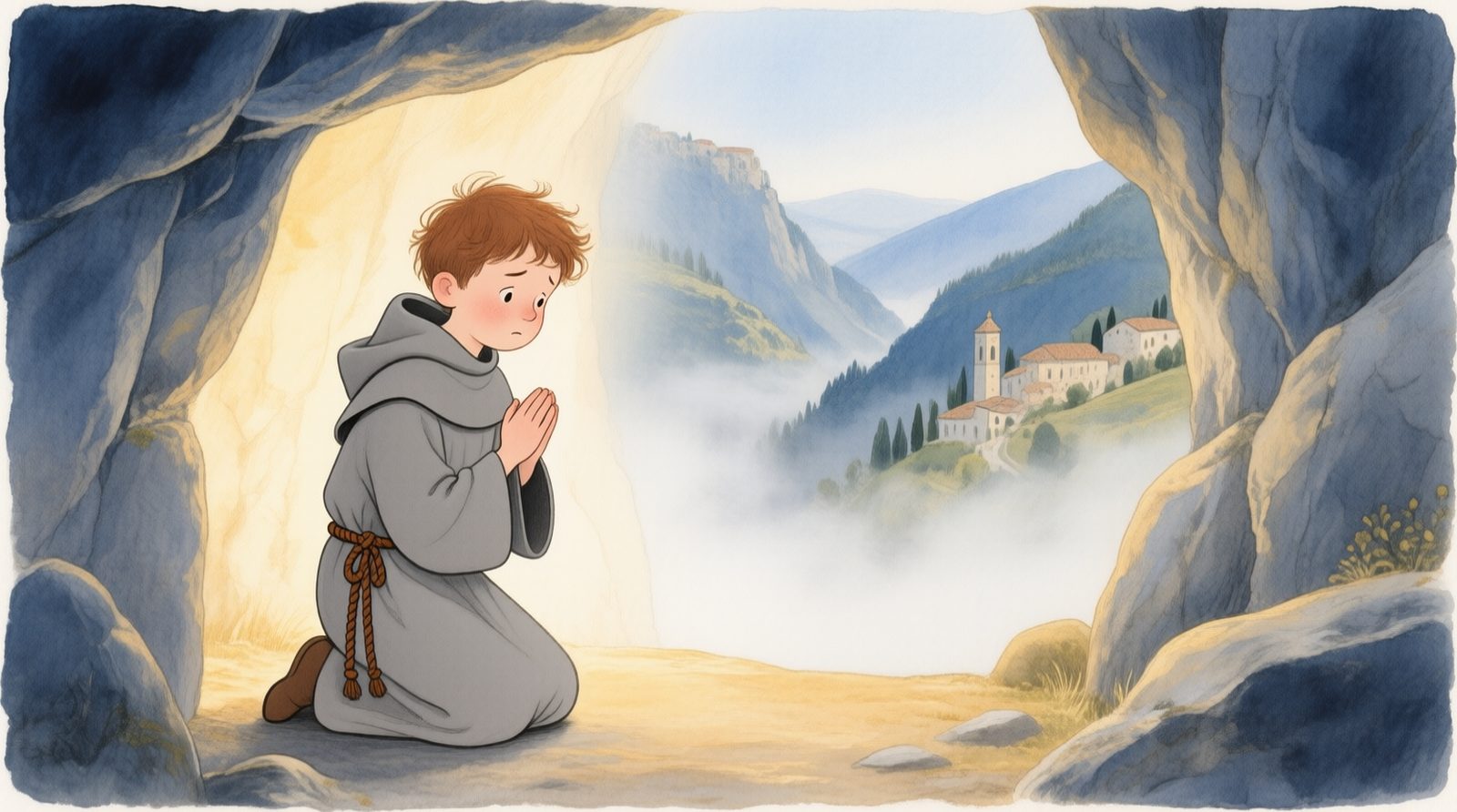
At that moment, however, the grace of God touched him. Benedict saw nearby a bush full of thorns and nettles and, in a radical decision, took off his garment and rolled in the thorns. His body was scratched all over and aching, but the pain put out the temptation, and he understood that he would rather suffer in his body than sin in his soul. Saint Gregory tells us that from that day on, Benedict was never tempted in that way again. He had won — by God's grace and by his own determination.
His Fame Grows
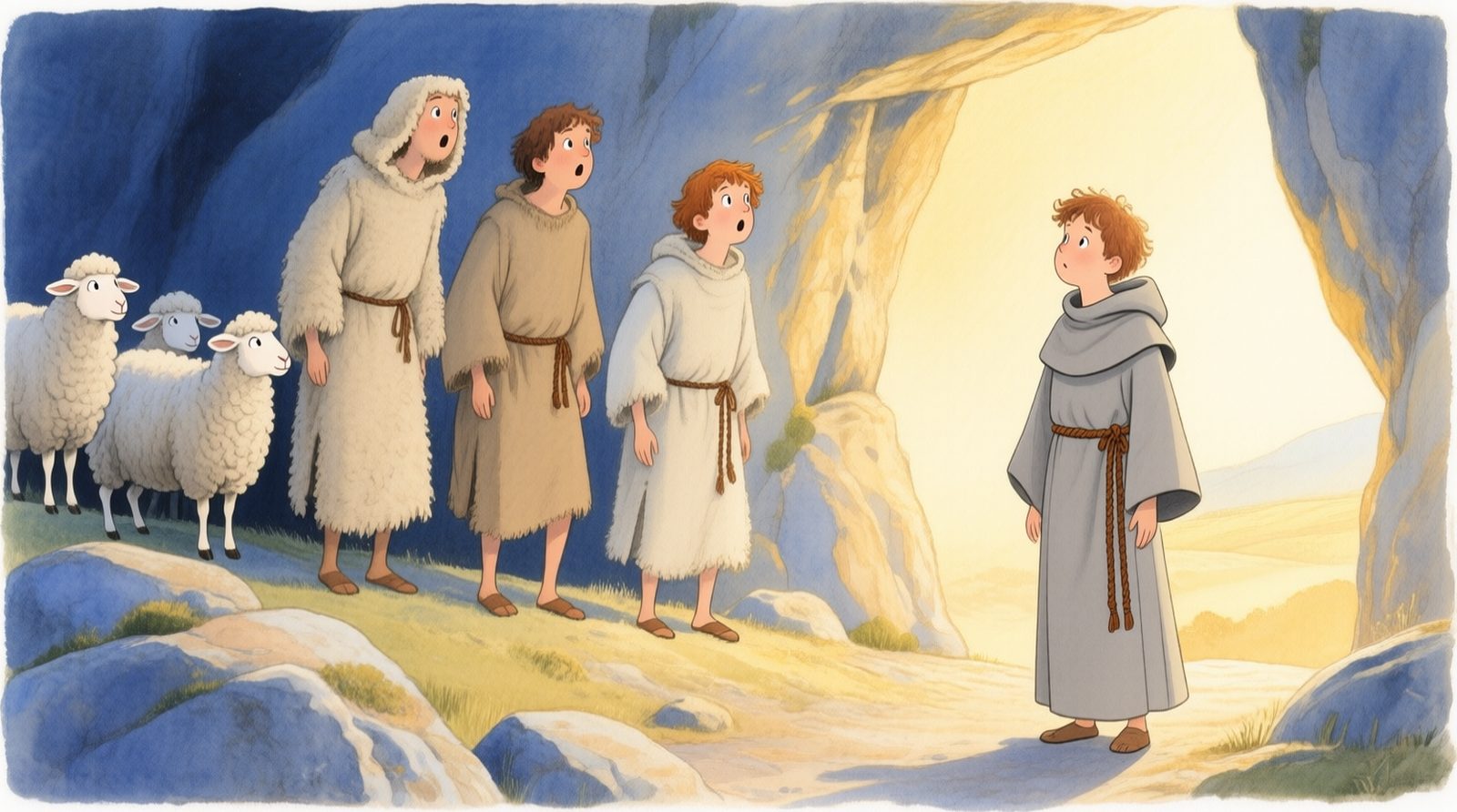
After three years, some shepherds discovered Benedict in his cave. At first they almost mistook him for a wild animal: his hair and beard had grown long, his body was thin, and his clothes were made of skins. But when he spoke, they realized they stood before a holy man. The news spread through the region, and people began climbing the mountain to ask for prayers and advice. Benedict sought none of it, but he welcomed everyone with humility.
The Monks' Invitation
Not far away there was a monastery, and when its abbot — the leader of the monks — died, the monks came to Benedict and asked him to be their new abbot. Benedict hesitated; he knew that community's reputation, and he warned them that his way of life would not suit theirs. The monks insisted, promising to obey. And Benedict, always attentive to God's will, accepted. He left his beloved cave and went to lead them.
Discipline Rejected
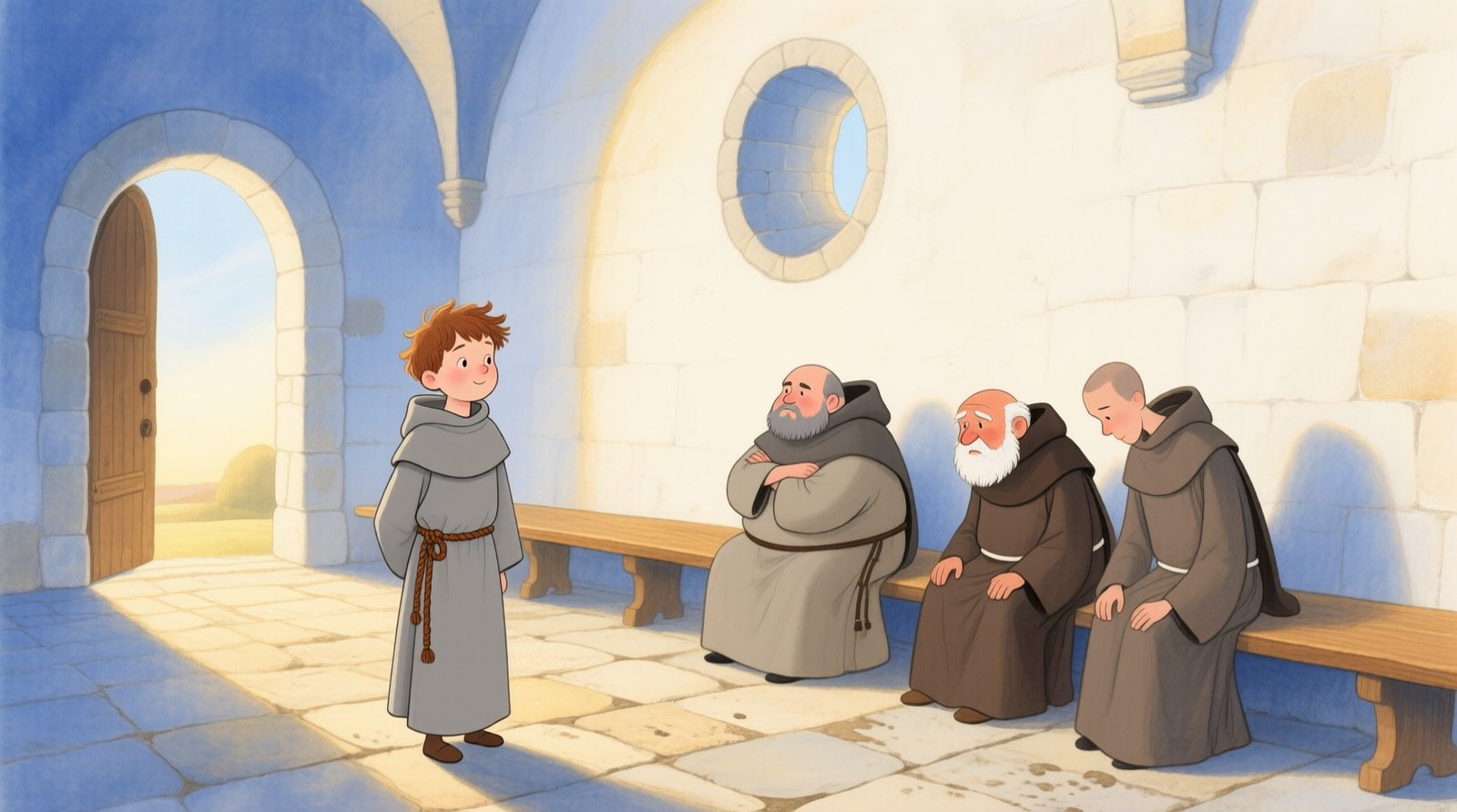
Soon, however, Benedict discovered the problem: those monks wanted a holy abbot, but they did not want a holy life. He set times for prayer, fasting, work, and silence, and the monks began complaining about everything, finding their new abbot far too strict. Benedict reminded them that they were there to serve God, not themselves. But they would not accept it. Their anger grew and grew, until they decided to get rid of him.
The Attempted Murder
The wicked monks made a terrible plan: to poison Benedict. They mixed poison into the wine and, at mealtime, brought him the cup. Benedict, as was his custom, raised his hand to bless the wine before drinking. And at the moment he made the sign of the cross, the cup shattered into a thousand pieces, as if struck by a stone, and the poisoned wine spilled onto the floor.
Benedict looked at the monks and understood everything. He felt no anger — only sadness. He told them calmly that he had warned them from the beginning that his life would not suit theirs, and that God had revealed their wicked plan. Then he asked them to find themselves another abbot, and returned in peace to his cave. The monks were ashamed, but they did not change their ways.
The First True Disciples
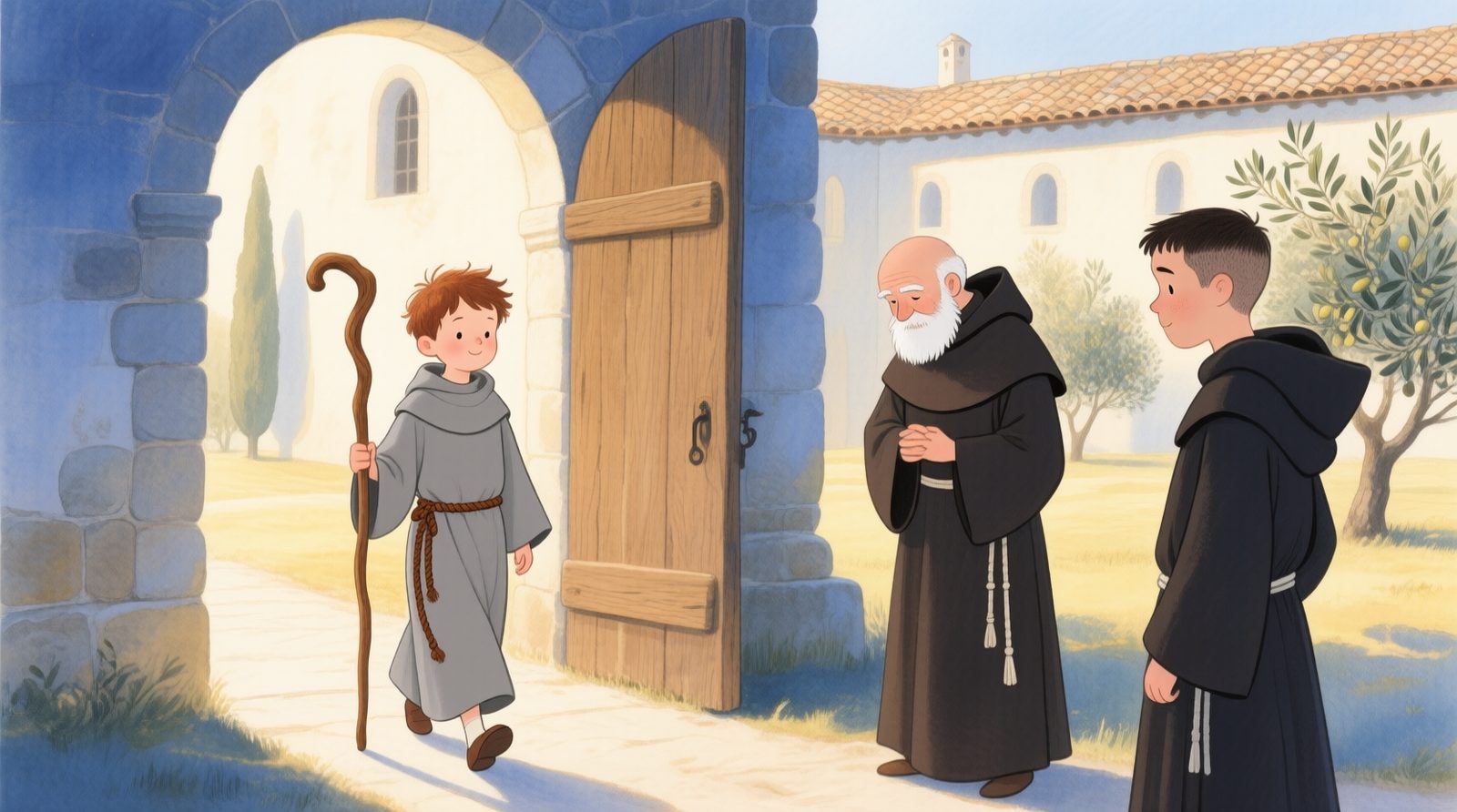
Back at his cave, Benedict was not alone for long. Sincere young men began to seek him out, wanting to learn from him how to serve God. This time it was different: these truly longed for holiness. Benedict welcomed them and began to form them, teaching them to pray, to work, and to live in community. Soon there were so many that he founded twelve small monasteries around Subiaco, each with twelve monks and a superior.
Reflection


