
After receiving the stigmata in 1918, Padre Pio's life changed completely. Thousands of people came to see him, to touch him, to ask for his blessing, and San Giovanni Rotondo, the forgotten village, filled up with pilgrims. But Padre Pio wanted no fame at all. He wanted only to serve God. And he found his main ministry in a simple, hidden place: the confessional. There he would help to save millions of souls.
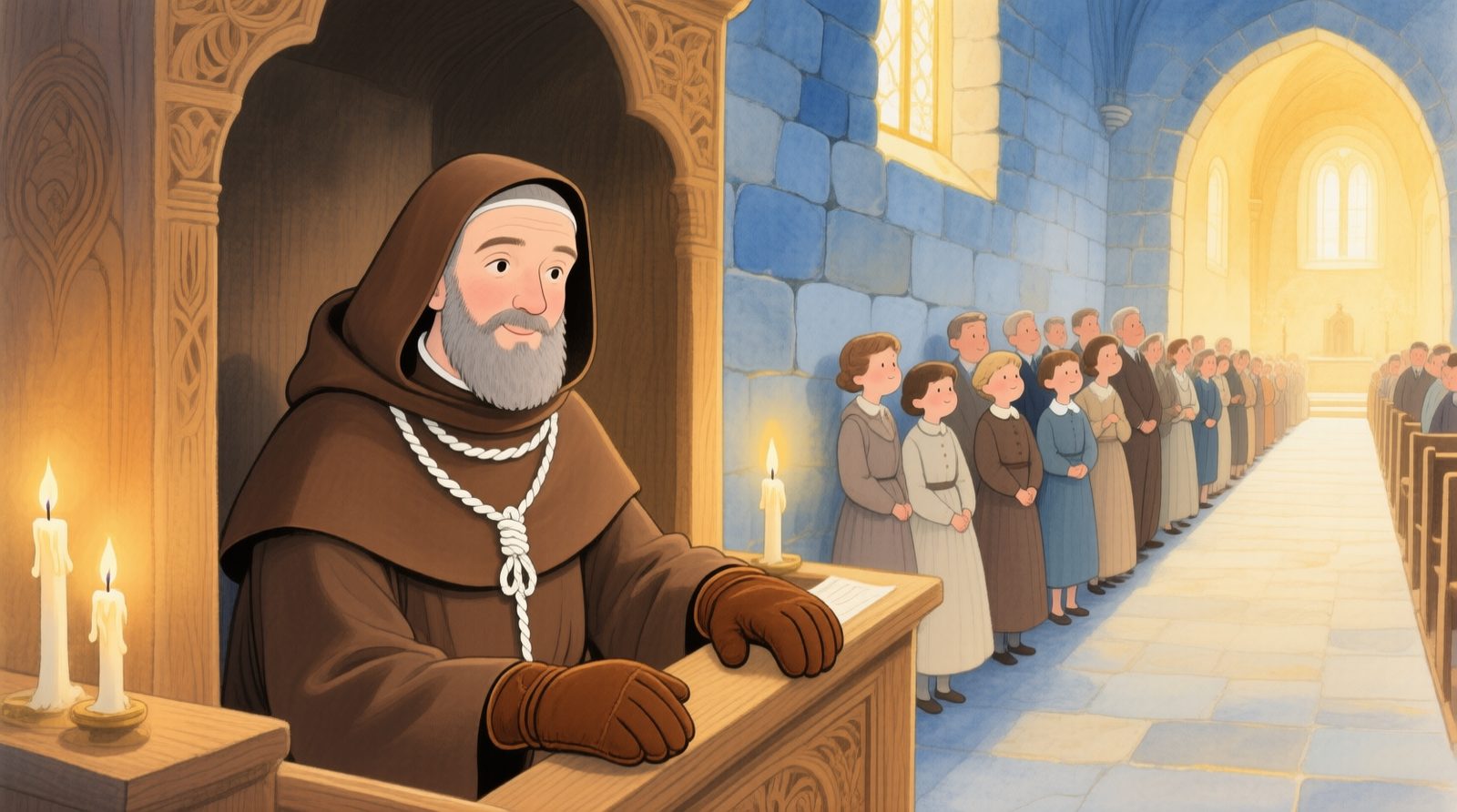
The Ministry of the Confessional
Padre Pio spent as many as nineteen hours a day hearing confessions. He began at five in the morning and stopped only near midnight, eating little and sleeping even less. People came first from all over Italy, then from all over Europe, then from the whole world. They formed enormous lines, and sometimes had to wait for days to confess to him. Why? Because Padre Pio could read hearts.
When someone tried to hide a sin, Padre Pio knew.
"You forgot to tell me about that sin," he would say, looking them in the eye.
The person would turn pale and ask how he knew.
"Jesus showed me. Confess everything, or come back another day."
Padre Pio could be stern when he had to be, and he would not accept a pretend confession. Sometimes he sent someone away, asking them to return when they were truly sorry. It looked like harshness, but it was love: he wanted each person's real salvation, not a make-believe one.
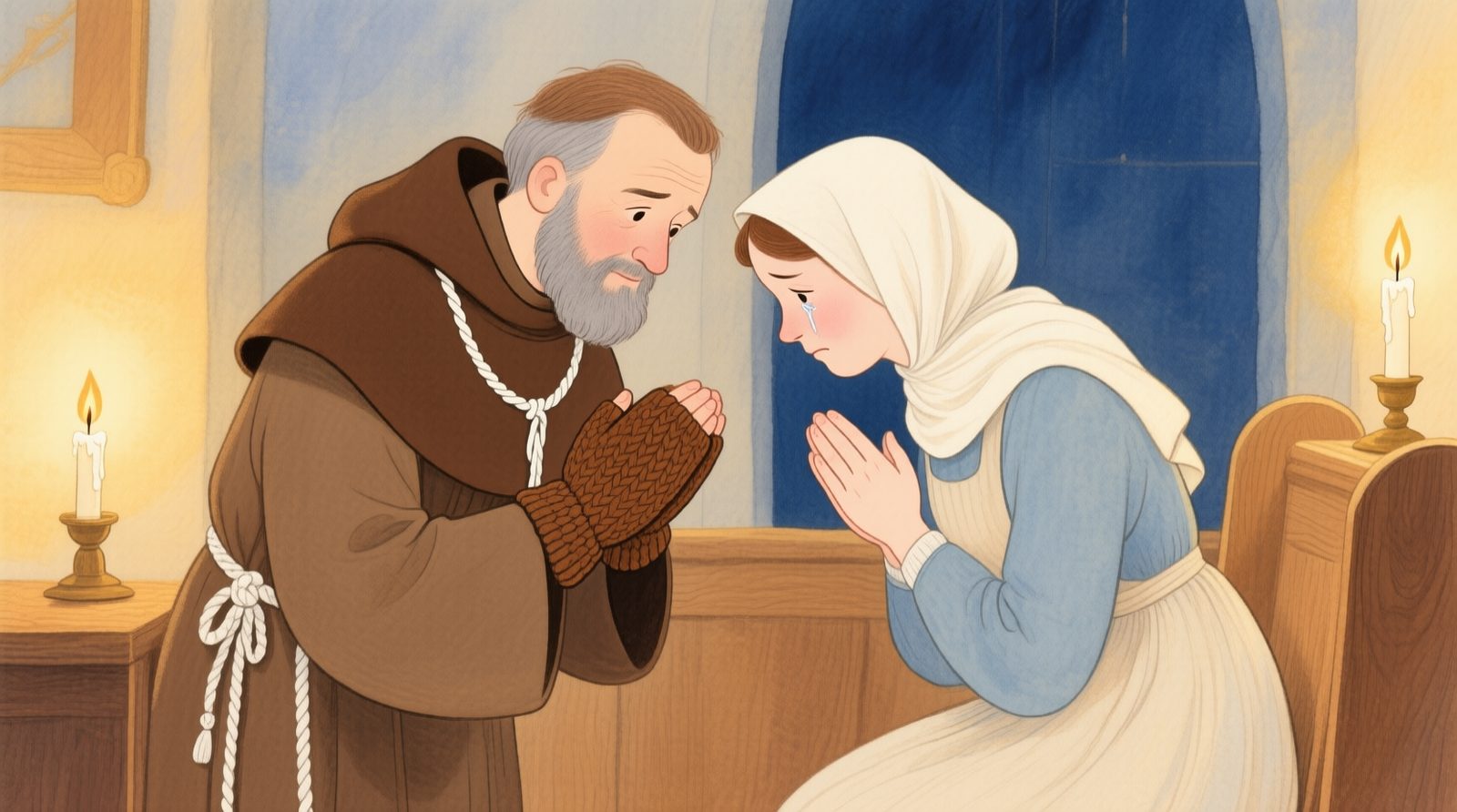
With those who were truly sorry, though, he was pure tenderness. He wept with them, embraced them, comforted them.
"God loves you. Never doubt it. Your sins are forgiven."
Many people left his confessional transformed. People without faith were converted, sinners left old vices behind, whole families were reconciled. Padre Pio's confessional was a place of quiet miracles.
Bilocation
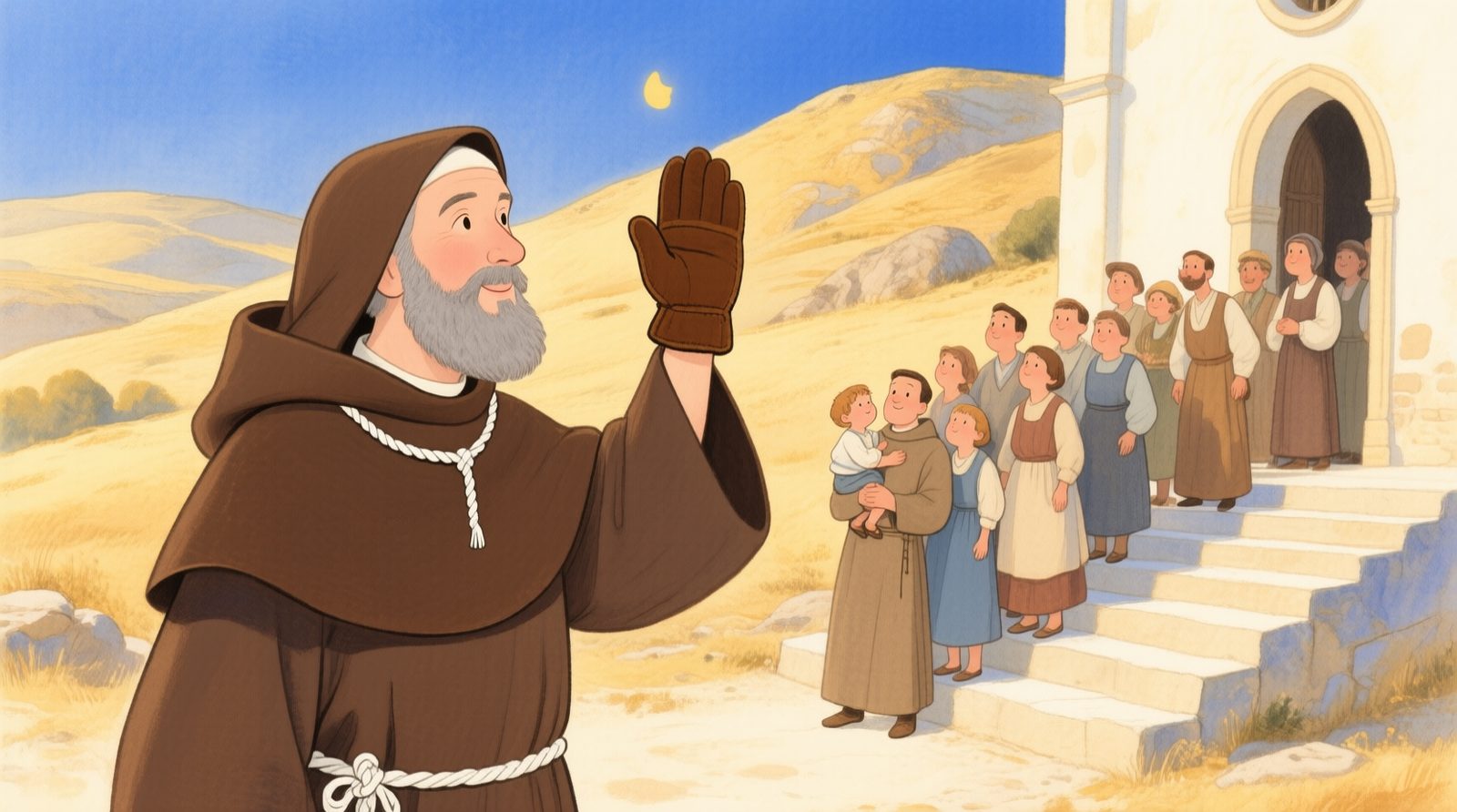
Padre Pio had an extremely rare gift: bilocation, which means being in two places at the same time. While his body was in San Giovanni Rotondo, Padre Pio would appear in other places, to comfort the dying, to convert sinners, and to help those in need. Hundreds of testimonies have been kept to this day.
One case became famous. During the Second World War, planes set out to bomb the region of San Giovanni Rotondo. Suddenly, the pilots saw in the sky a friar with his arms raised. They were so shaken that they could not release their bombs, and they returned to base without completing the mission. Years later, some of them visited San Giovanni Rotondo, saw Padre Pio, and recognized him at once: he was the friar they had seen in the sky. The whole town had been spared.
Another case: a woman in America was gravely ill, close to death. Suddenly, she saw a Capuchin friar come into her room. He blessed her, prayed over her, and she was healed. Years later, she traveled to Italy, saw Padre Pio, and recognized him.
"It's you. You came to my room, in New York."
Padre Pio only smiled.
"Yes, my daughter. Jesus sent me."
The Miracles of Healing
Through Padre Pio, God worked thousands of healings. The blind saw, the deaf heard, the paralyzed walked; illnesses the doctors called incurable simply disappeared. Padre Pio disliked attention and tried to hide it all, but it was impossible: the people told their stories and bore witness.
One extraordinary case was that of Gemma di Giorgi, a girl who was born without pupils in her eyes. She was completely blind, and the doctors were certain: without pupils, seeing was impossible. Her grandmother brought her to Padre Pio when Gemma was seven. He placed his hands over the girl's eyes, prayed, and blessed her. Suddenly, Gemma cried out:
"Grandma, I can see! I can see!"
The doctors examined Gemma again and were left speechless: her eyes still had no pupils, yet she saw perfectly. It was impossible for science, and yet it was real. Gemma grew up, married, had children, and saw clearly all her life. It is one of Padre Pio's best documented miracles.
The Mystical Perfume
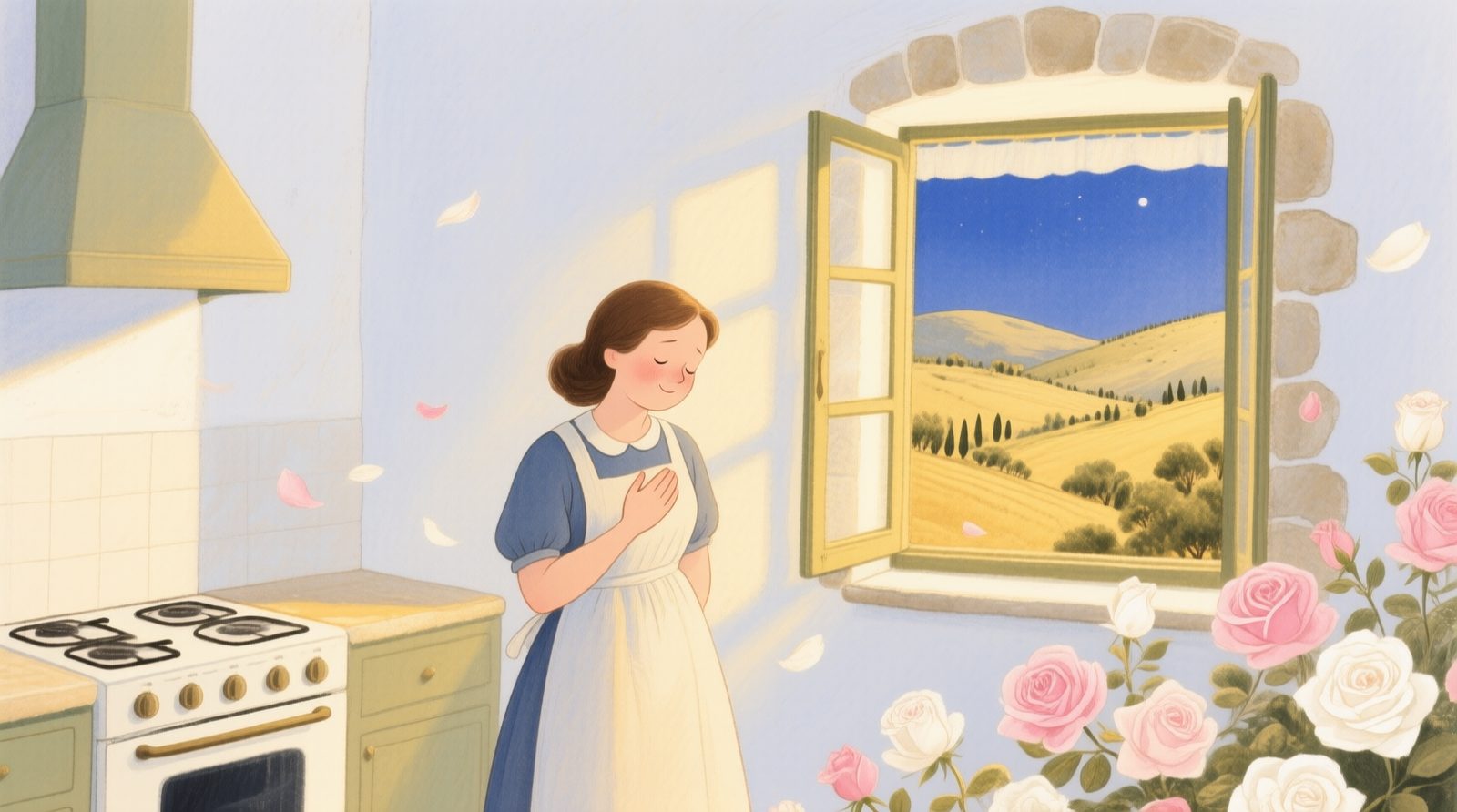
There was yet another phenomenon in Padre Pio's life: the mystical perfume. Sometimes, even miles away, people would suddenly smell a perfume of roses or violets. It was a sign that Padre Pio was spiritually near, praying for them.
Many people told the same story: they were in trouble, at a hard moment, and suddenly they smelled roses and understood that Padre Pio was praying for them. That perfume was a quiet way of saying that no one was alone. And the reports continue to this day, even after his death, from people all over the world.
The Persecution
Not everything was easy for Padre Pio. He suffered a painful trial that came from within the Church itself. Some priests and bishops doubted him and said the whole thing might be fraud or invention. Strict investigations followed, with doctors, theologians, and inspectors.
In 1923, the Vatican took harsh measures. Padre Pio was forbidden to celebrate Mass in public, to hear confessions, to show the stigmata, and to speak with pilgrims. It was like a death in life: they had taken from him the very ministry that was his reason for living. But he obeyed. He did not complain, did not defend himself, and would let no one fight on his behalf. He only prayed, repeating that God's will be done.
The faithful were outraged and said it was an injustice against a saint. Padre Pio calmed them:
"The Church is right to be careful. Always obey the Church."
It was a rare humility: to suffer an injustice and still defend those who judged him. After two years, the Vatican recognized that Padre Pio was sincere. In 1925, his ministry was given back to him, and he returned to the confessional, never to stop again.
The Home for the Relief of Suffering
Padre Pio had a dream: to build a modern hospital for the poor.
"The poor deserve the best doctors and the best treatments," he would say.
He began raising funds and asking for donations. It was a gigantic project that needed millions, but he trusted in God's Providence.
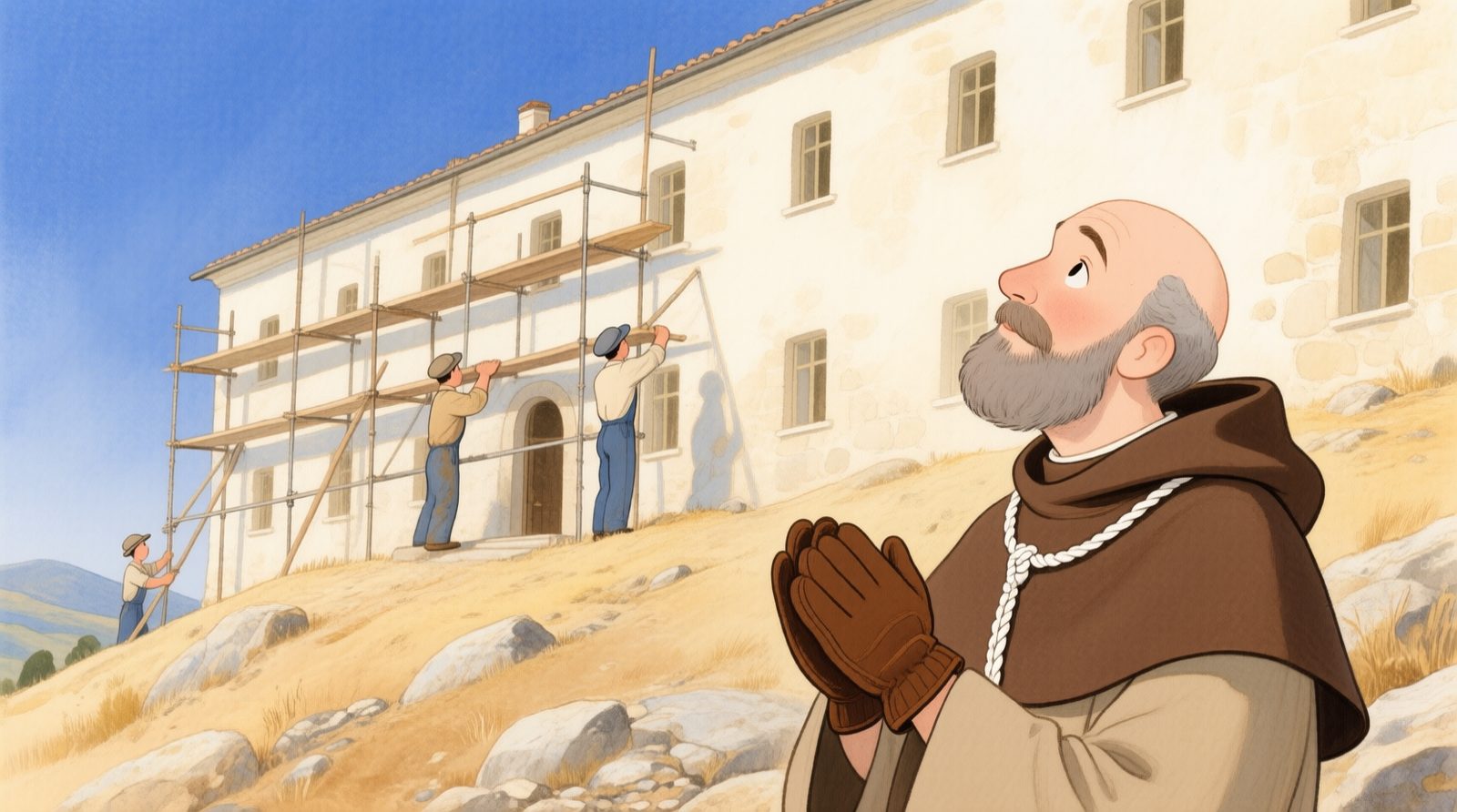
In 1956, he opened the Home for the Relief of Suffering: an ultramodern hospital with hundreds of beds, first-rate equipment, excellent doctors, and free treatment for the poor. How did a poor friar manage to build such a thing? With donations that arrived from all over the world, often in ways no one could quite explain.
Today, the Home for the Relief of Suffering is one of the best hospitals in Italy. It cares for thousands of patients, carries out advanced medical research, and keeps Padre Pio's mission alive: to treat every sick person with love and dignity.
The Prayer Groups
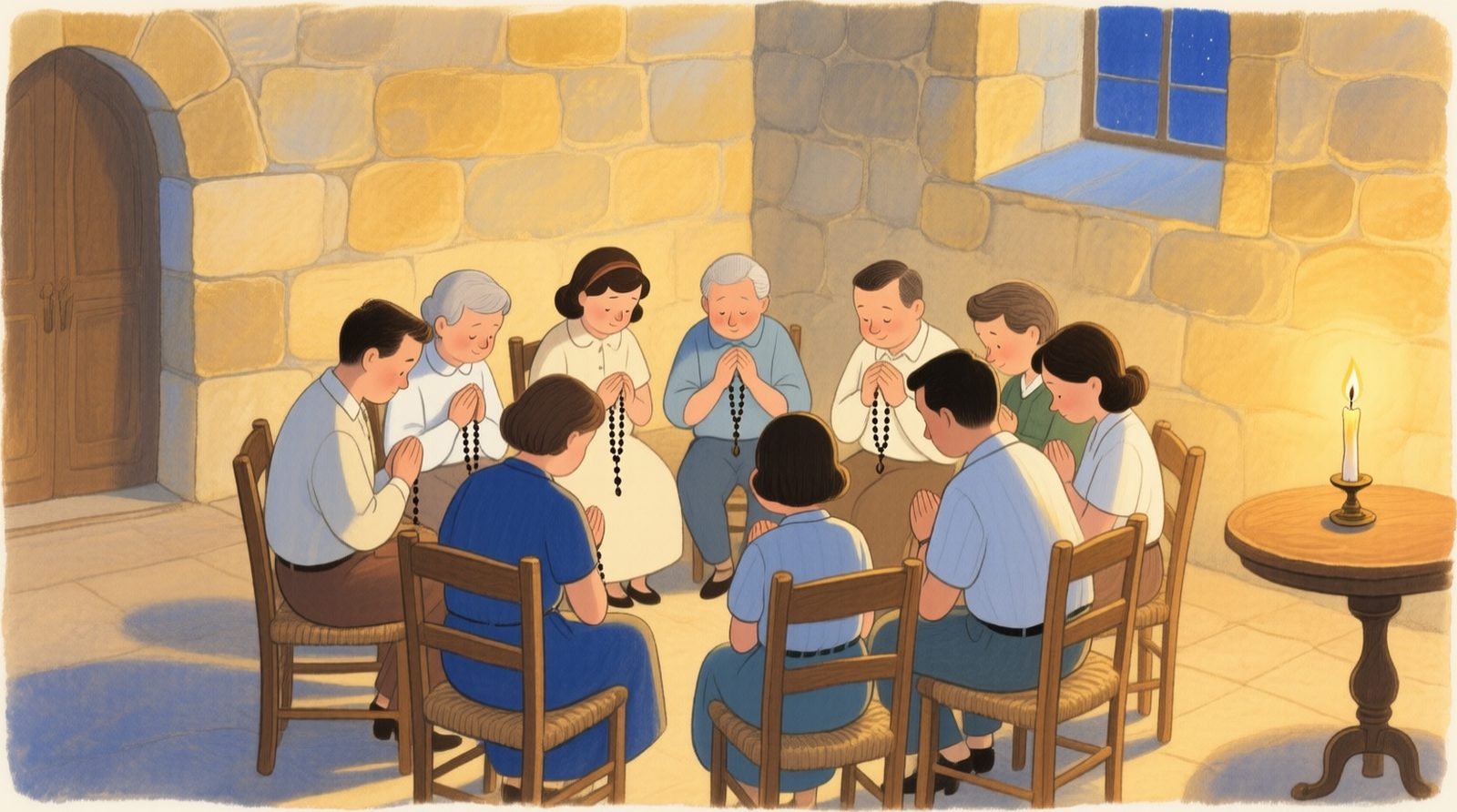
Padre Pio also founded the Prayer Groups: small groups of people who gather to pray together, especially the rosary, the Way of the Cross, and adoration. Today there are thousands of these groups scattered across the world, with millions of members.
The Last Years
In his last years, Padre Pio was old and tired. He was over eighty, but he went on hearing confessions, even when sick, even in pain.
"As long as there is one soul to save, I will continue," he said.
He celebrated Mass every day, always in ecstasy, always living the Passion of Jesus.
The Death
On September 22, 1968, Padre Pio celebrated Mass for the last time. It was a special date: fifty years to the day since he had received the stigmata, and thousands of people were present. He was weak, but radiant. After Mass, he blessed everyone and said slowly:
"My children, we shall see one another in Paradise."
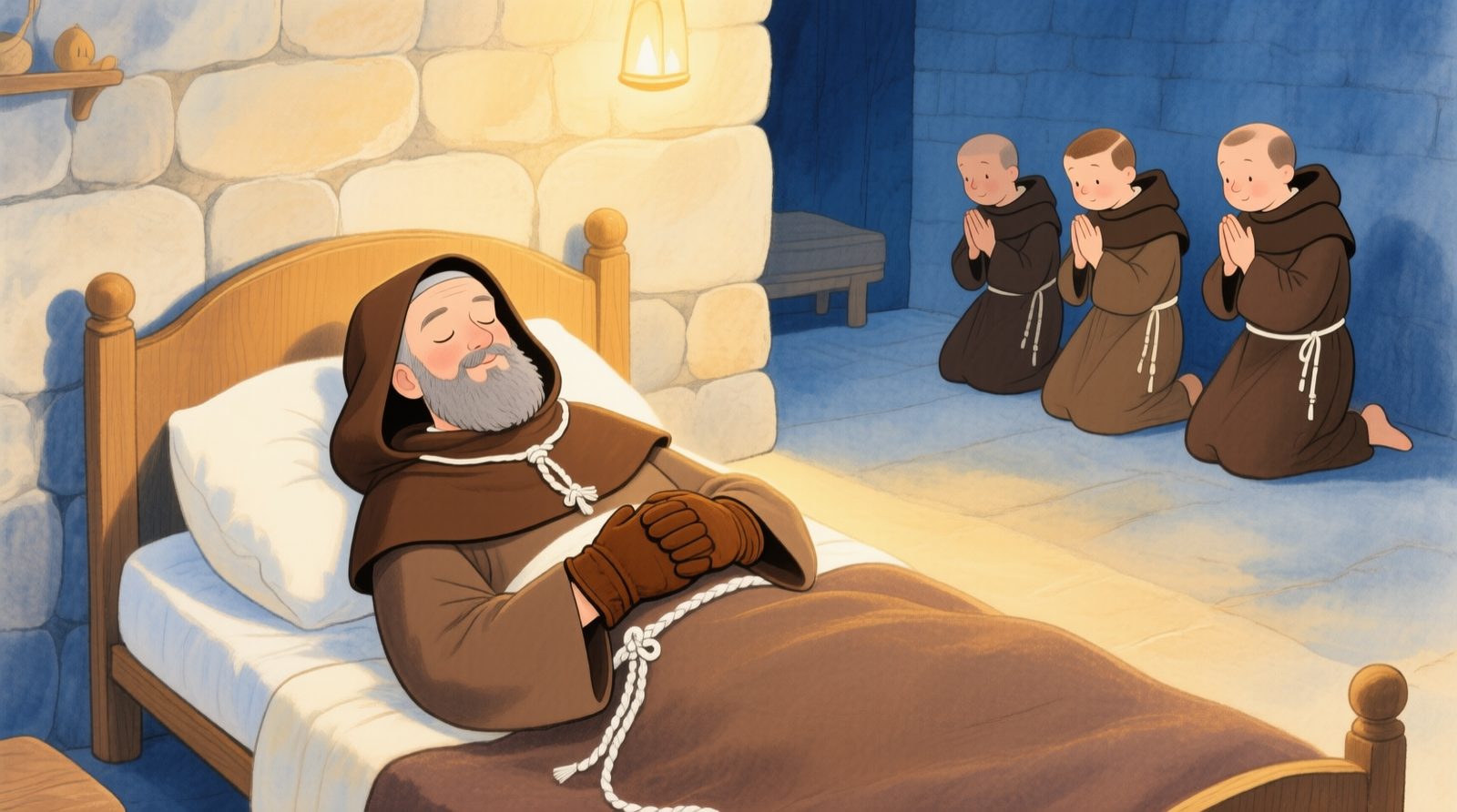
In the small hours of September 23, Padre Pio grew ill. The friars came and prayed with him while he softly repeated the names of Jesus and Mary. At half past two in the morning, Padre Pio died in peace, at the age of eighty-one, after fifty years of carrying the stigmata. And at the moment of his death, something extraordinary happened: the wounds disappeared. The wounds that had bled for half a century closed, and his hands, feet, and side were perfect, without a single mark.
Why did the wounds disappear? Years earlier, Padre Pio had asked God that when he died, the marks would be taken away, so that he would draw no attention. Even in death, he wanted to be humble. And God granted his request.
The Funeral
The funeral was immense: around one hundred thousand people came to San Giovanni Rotondo. Many wept for the man they had called their father. But there was also a serene joy in the midst of the sorrow, because everyone knew they had gained a powerful intercessor in Heaven. His body lay in state, and thousands filed past it to pray.
Beatification and Canonization
On May 2, 1999, thirty-one years after his death, Pope John Paul II — who had met Padre Pio in person — beatified him before thousands of faithful in Rome, calling him a witness of the suffering Christ.
Three years later, on June 16, 2002, the same Pope canonized him: Saint Pio of Pietrelcina. In Saint Peter's Square, some three hundred thousand people celebrated together, in one of the largest canonizations in history. The poor boy who saw angels was now a saint of the whole Church.
Saint Padre Pio Today
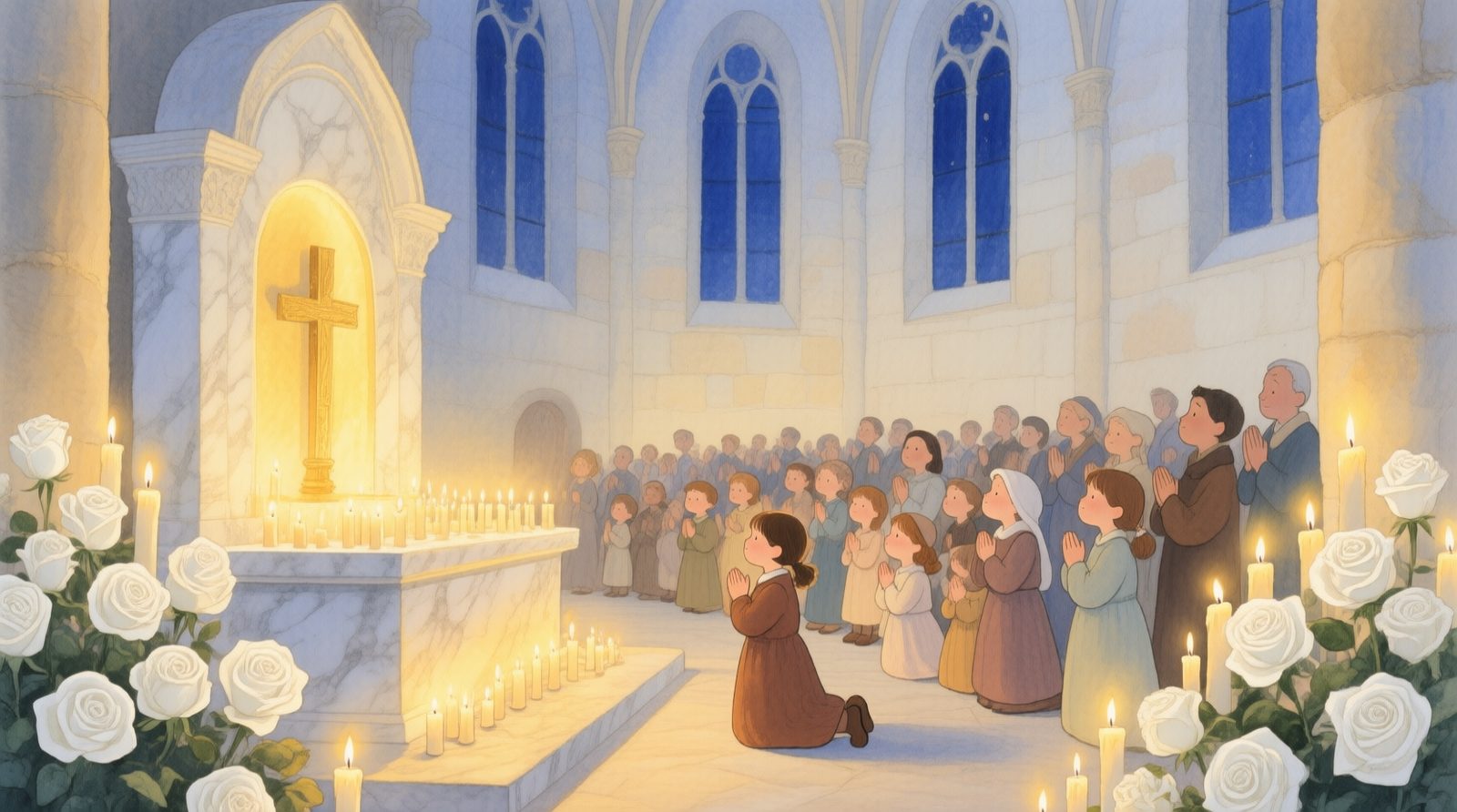
Today, Saint Padre Pio is one of the most beloved saints in the world. His feast, on September 23, is celebrated everywhere, and San Giovanni Rotondo receives around eight million pilgrims a year — it is one of the most visited shrines in Italy. His body rests in a glass case, before which thousands pray every day.
The Legacy of Saint Padre Pio
What did Saint Padre Pio leave us? He left his love for the confessional, where he welcomed millions of people; his union with the crucified Christ, lived in the stigmata for fifty years; his obedience to the Church even in the hardest hours; the charity that built a hospital for the poor and spread prayer groups across the world; and a deep humility that hid his own gifts and refused all glory.
He also left simple sayings that millions of people still repeat. The most famous is: "Pray, hope, and don't worry." He liked to say that prayer is the best weapon we have, that the devil is afraid of souls who pray, and that the confessional was the place where he worked for the salvation of souls.
Moral of the Story


