
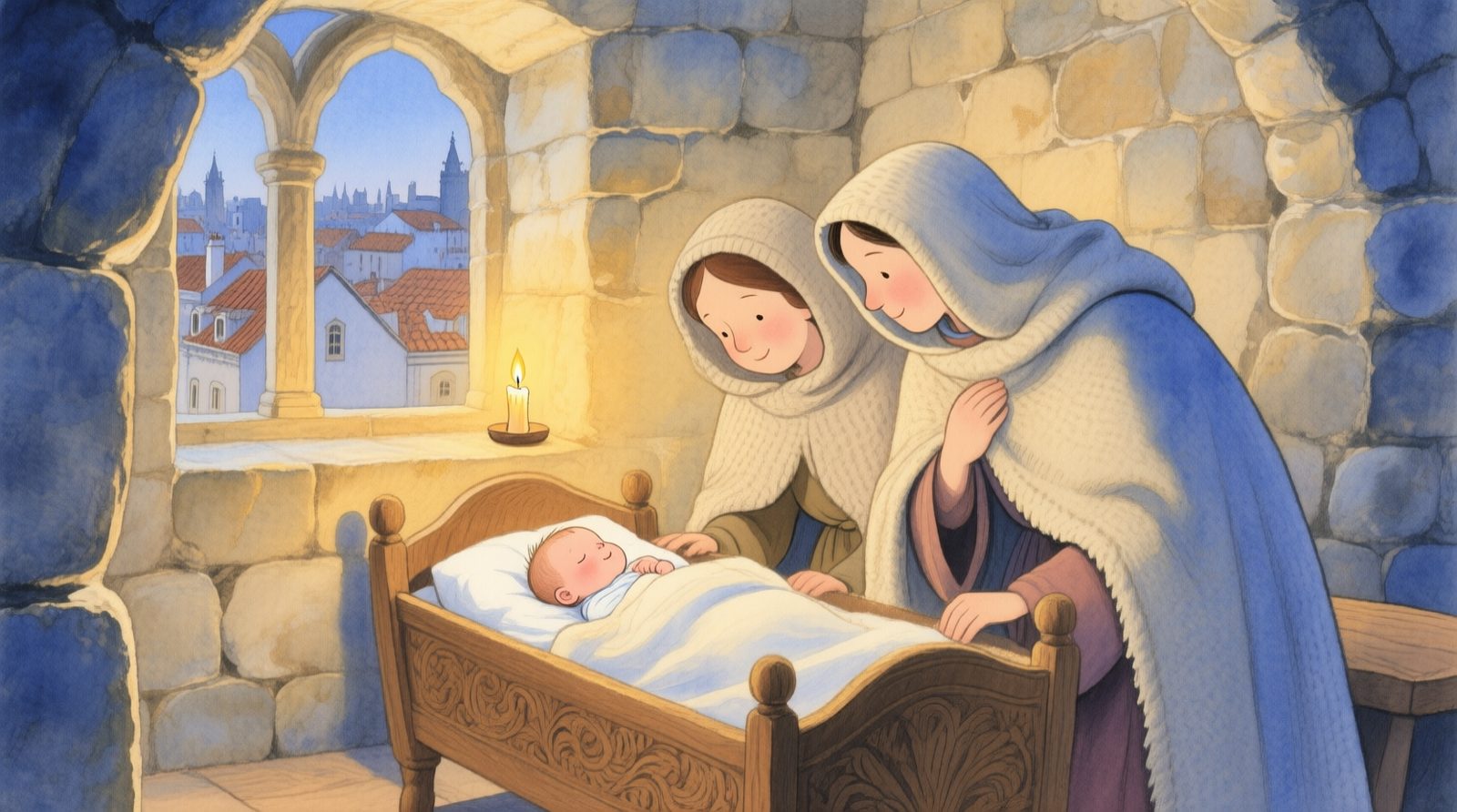
On August 15, 1195, in Lisbon, Portugal, a boy named Fernando was born. His parents were wealthy nobles who lived in a palace, and Fernando had everything a boy could want: a fine education, comfort, and a bright future ahead of him. But God had other plans for him. That boy would become Saint Anthony of Padua, one of the most beloved saints in the whole world.
The Noble Boy
Fernando grew up in Lisbon, close to the Sé, the city's cathedral. He was a clever, studious, and very devout boy. While the other noble boys played at sword-fighting, Fernando loved to go to the cathedral to pray, and he would stay there for hours.
"Fernando, come and play," his friends would call.
"In a moment. First I need to talk with Jesus," he would answer.
At fifteen, Fernando made a decision that left his family astonished: he wanted to become a friar. His parents were horrified and tried to talk him out of it, reminding him that he was a noble and could have position, wealth, and power. But Fernando's mind was made up. The riches of the world did not interest him; he wanted to serve God. He entered the monastery of the Canons Regular of Saint Augustine and traded the palace for a small cell, banquets for fasting, luxury for poverty.
The Years of Study
In the monastery, Fernando threw himself into his studies. He studied the Bible, theology, philosophy, and the great teachers of the Church. He had an amazing memory: he could read a book once and never forget it. In time, he came to know the whole Bible by heart, and by the age of twenty he knew more than many of his teachers.
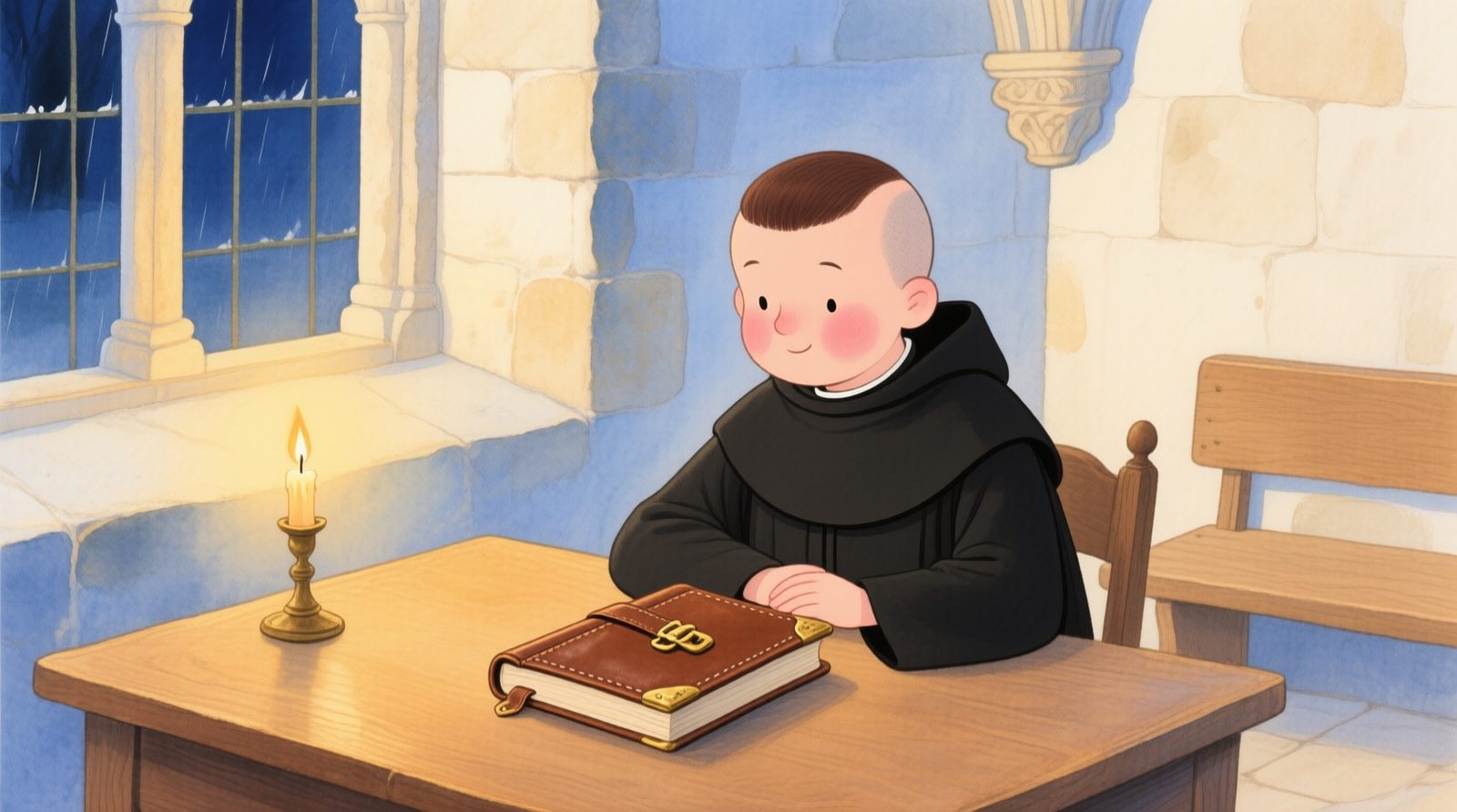
But Fernando was not one to boast. Quite the opposite: the more he learned, the humbler he became. He used to say that the more he knew, the more he realized how much he still did not know. He prayed for long hours, fasted, and did penance. He joined the wisdom of books with the holiness of life — and that is a rare thing, because many wise people fill up with pride. Fernando was wise and humble at the same time.
The Encounter with the Martyrs
In 1220, when Fernando was twenty-five, something happened that changed his life. Five Franciscan friars had gone as missionaries to Morocco, in North Africa, to preach the Gospel. There they were imprisoned and killed for their faith in Christ. They were the first Franciscan martyrs, and their bodies were brought back to Portugal.
Fernando saw the bodies of the martyrs and was deeply moved. Those friars had been about his own age, and they had given their lives for Christ. And he — what was he doing? He was safe in the monastery, studying, comfortable. He began to wonder whether God really wanted him there, or was calling him to go further — to preach, to suffer, perhaps even to die for Him. That day, a seed was planted in Fernando's heart.
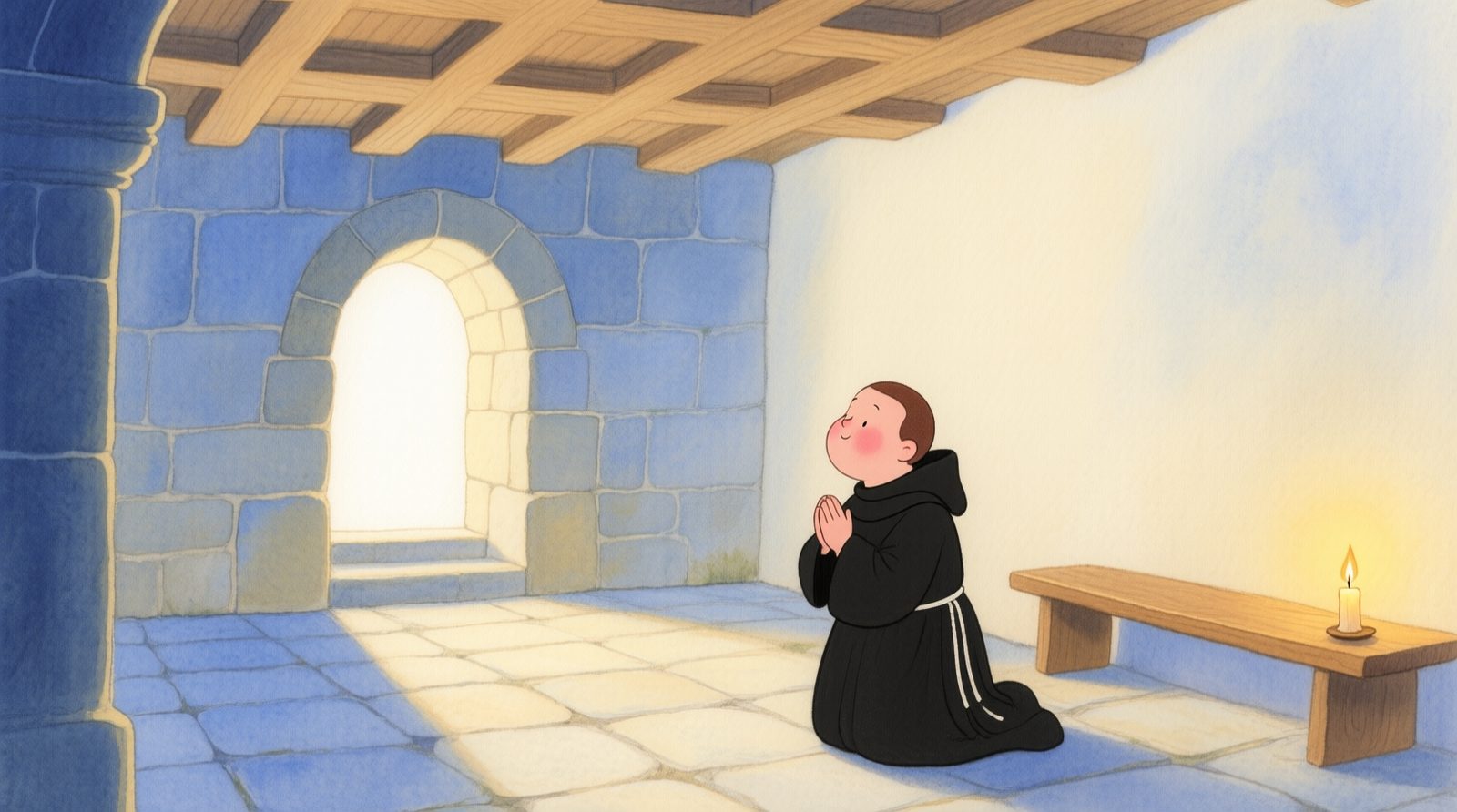
The Decision to Become a Franciscan
Not long after, Fernando met some Franciscan friars passing through Coimbra, and he was deeply impressed. They were poor, joyful, and simple, and they lived the Gospel to the letter. Saint Francis of Assisi had founded their order only a few years before, and everything about it was new and full of life. Fernando felt in his heart that this was what he wanted: total poverty, to follow Jesus completely.
In 1220, at twenty-five, Fernando left the Augustinians and joined the Franciscans. He received a new name: Friar Anthony, out of devotion to Saint Anthony the Great, the famous hermit of the desert. And he soon made a request to his superiors: he wanted to go to Morocco, to preach the Gospel and, if God willed it, to die a martyr like those five friars. The superiors agreed, and Friar Anthony set sail for Morocco.
The Mission That Failed
Friar Anthony arrived in Morocco full of enthusiasm, ready to preach. But almost as soon as he landed, he fell gravely ill. His fever burned high, and he could barely stand. The friars cared for him for weeks, but Anthony did not get better. At last they decided he had to return to Portugal to recover his health.
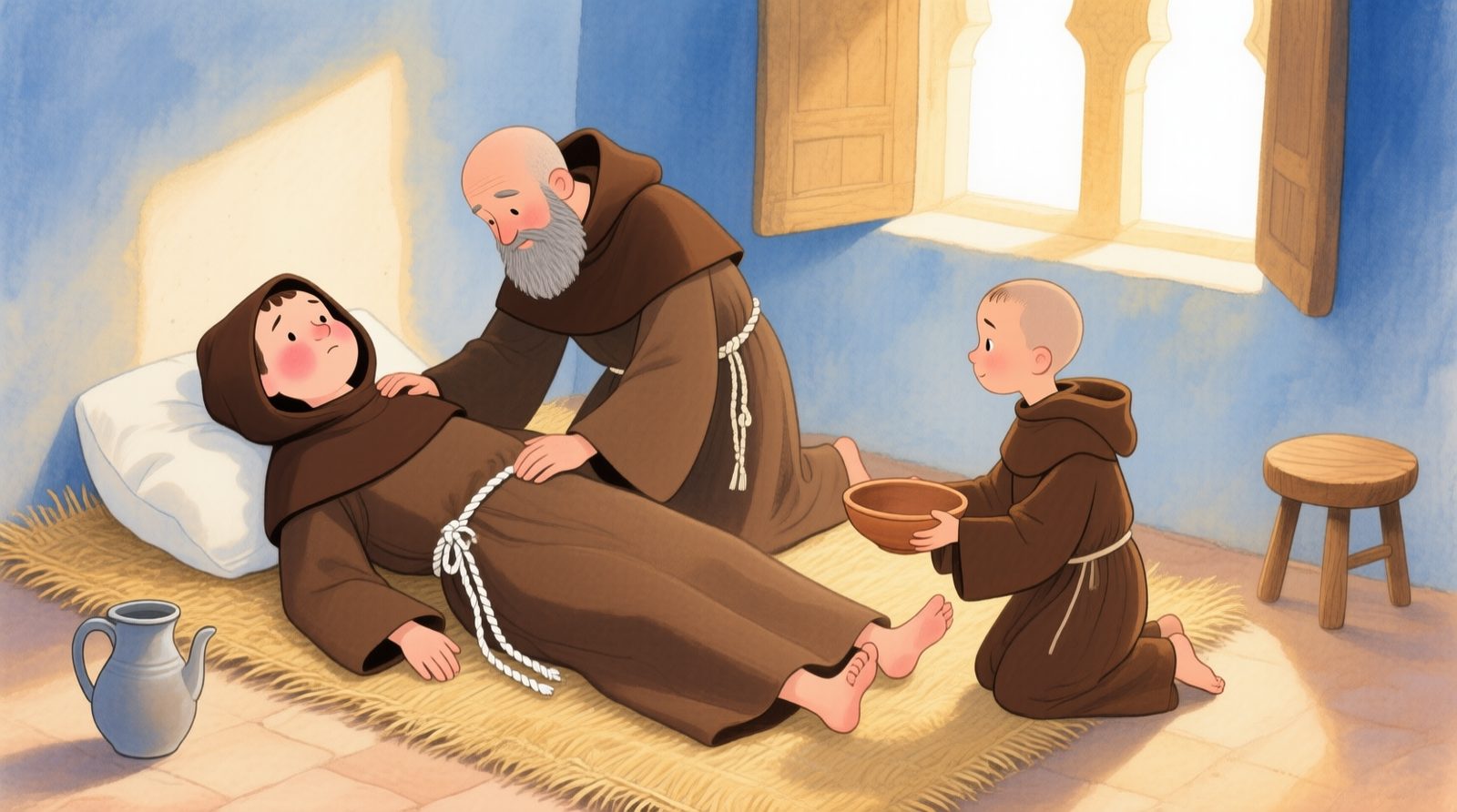
Friar Anthony was heartbroken. He had gone there to be a martyr, and he had not even managed to preach. He felt like a failure. He boarded the ship home disappointed, not knowing that God had very different plans for him. Sometimes we think we have failed, when really God is guiding us toward something greater. Anthony's "failure" was, in truth, the beginning of an extraordinary mission.
The Storm
During the voyage home, a terrible storm swept over the sea. The ship was blown off course, and instead of reaching Portugal, it landed in Sicily, an island of Italy. Friar Anthony stepped off the ship completely lost: he knew no one, had no money, and was still sick. But he went on trusting in God.
The Hidden Life
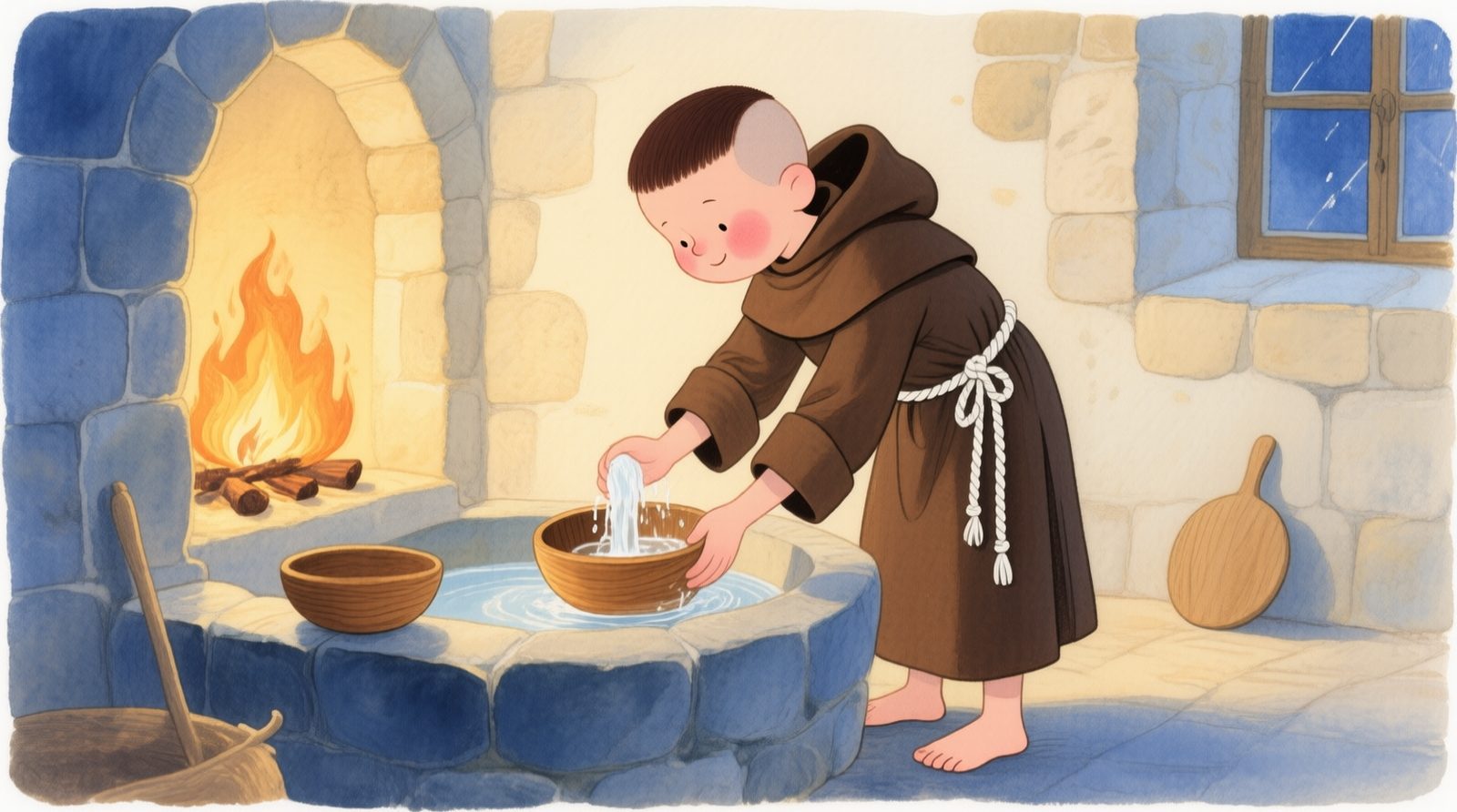
Friar Anthony joined the Franciscans at a small convent in Italy and asked for the simplest work: cooking, cleaning, washing dishes. No one there knew that this quiet friar knew the Bible by heart and could teach theology. And he told no one. He chose to remain humble and hidden, working, praying, and serving. He spent months like that — and he was happy in that simple life.
The Discovery of the Gift
In 1222, there was an ordination of priests in the town of Forlì, with many Franciscan and Dominican friars present. A sermon had been planned, but at the last moment the appointed preacher could not speak. The superiors looked around anxiously, searching for someone to take his place. No one was prepared, and everyone hesitated. Then all eyes turned to Friar Anthony.
"You go up, Friar Anthony. Preach something."
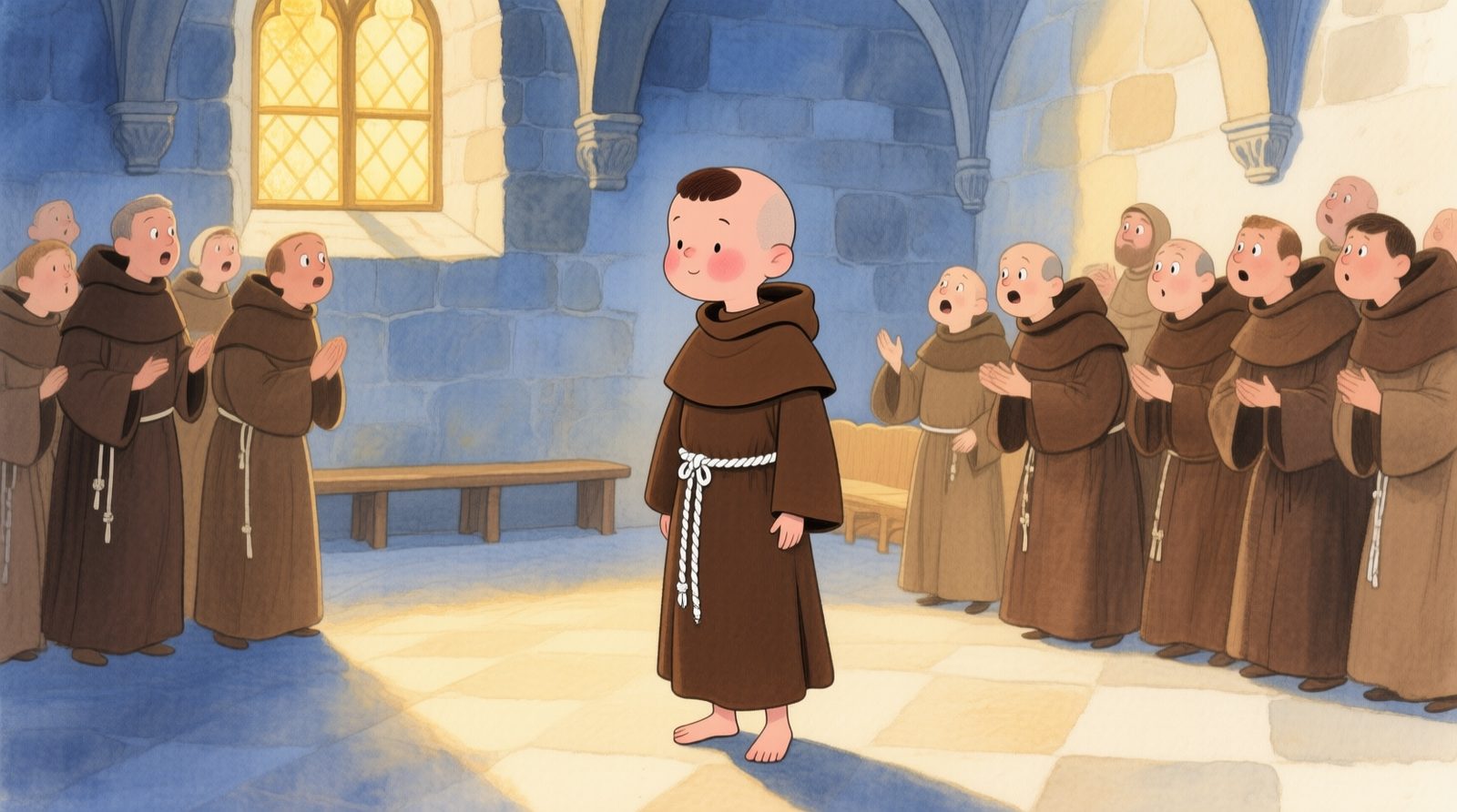
Friar Anthony hesitated, saying he was not prepared, but they told him to say whatever the Holy Spirit inspired. So he climbed into the pulpit and began to speak. And what happened left everyone amazed. The words flowed like a river: he quoted the Bible from memory, explained everything with depth, and touched every heart. People were weeping before the sermon was over.
When the sermon ended, everyone wanted to know who this friar was. The superior asked where he had learned all that, and Anthony answered humbly that he had studied a little before becoming a Franciscan. A little? He was one of the greatest scholars anyone had ever seen. The news spread quickly: the humble friar who washed dishes in the kitchen was, in truth, an extraordinary sage.
The Traveling Preacher
Word of the sermon reached Saint Francis of Assisi himself, who was still alive. He wrote Friar Anthony a letter saying that he approved of his teaching and preaching, on one condition: that his studies never put out the spirit of prayer and humility in him. Friar Anthony obeyed, and he began to preach throughout Italy.
Friar Anthony traveled on foot, from town to town, preaching in squares, churches, and streets. Thousands of people came to hear him. His sermons were like fire: he explained the Bible clearly, pointed out what was wrong, and called everyone to conversion. But he did it all with love. He never humiliated anyone — he lifted people up.
The Sermon to the Fish
One day, in the city of Rimini, Friar Anthony went to preach, but the heretics — people who denied truths of the faith — shut the church doors and refused to hear him. Friar Anthony took no offense. He walked down to the shore and began to preach... to the fish.
"Since men will not hear the Word of God, then you fish of the sea shall hear it."
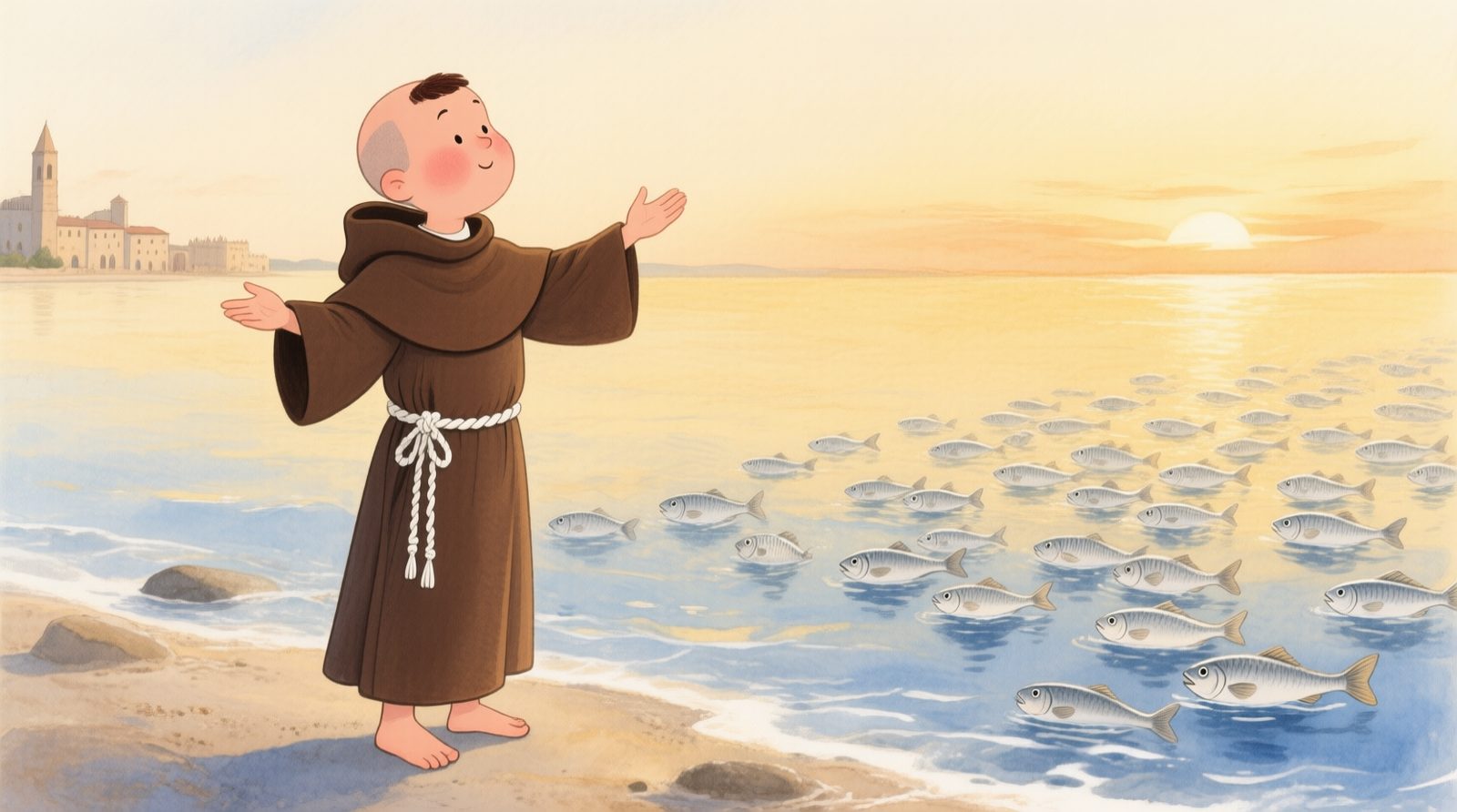
And then an extraordinary miracle happened. The fish began to appear. They poked their little heads out of the water and stayed still, attentive, as if listening to every word. The small ones in front, the middle-sized ones behind them, the big ones at the back, all lined up in rows, listening to the sermon. From the city, people saw it and were astonished.
The people ran down to the shore, crying out that it was a miracle, that even the fish obeyed this friar. The heretics were ashamed: if the fish would listen to the Word of God, who were they to close their ears? Many were converted that very day, and the sermon to the fish became one of the most famous episodes in the life of Saint Anthony.
Defending the Faith
Friar Anthony became known for defending the faith against heresies. In those days there was a group called the Cathars, or Albigensians, who denied fundamental truths: they said the material world was evil and that Jesus had not truly become man. This confused and misled many people, and Friar Anthony stood up to them with wisdom.
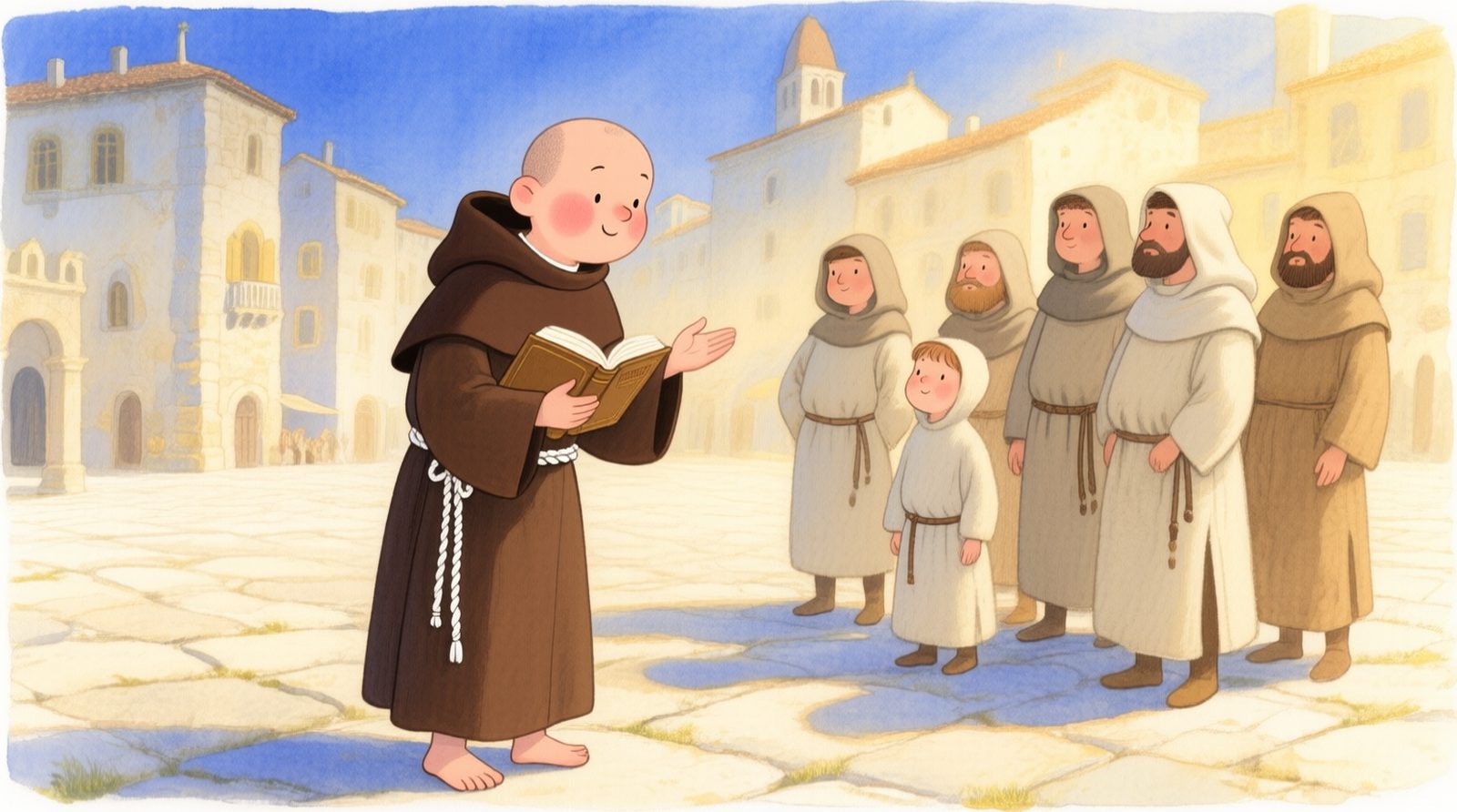
He never used violence or harsh words. He used reason, the Bible, and love. He explained patiently, answered every objection, and showed the truth so clearly that many heretics ended up converting. People said it was impossible to beat him in a debate, because he simply knew too much — and he spoke with a love that disarmed everyone. Friar Anthony proved that truth wins when it is spoken with charity.
His Fame Grows
Friar Anthony's fame spread throughout Europe. People spoke of a Portuguese Franciscan who preached like no one else, worked miracles, and moved whole crowds. When he arrived in a town, the bells would ring and everyone dropped what they were doing to go and hear him. Sometimes he preached in the open air to tens of thousands of people, because no church was big enough to hold them all.
But fame did not change him. He remained humble, poor, and simple. He slept on the floor, ate little, prayed for long hours, and wore the same old, patched habit. When people praised him, he answered that the credit was not his, but the Holy Spirit's. Inside, he was still the same Friar Anthony who had once washed dishes, hidden away in a convent kitchen.
Reflection


