
In 1381, in Roccaporena, a small village near Cascia, in Italy, a long-awaited baby girl was born. Her parents named her Margherita, which means Margaret, but the whole world would come to know her by an affectionate nickname: Rita. Her parents were already old and had prayed for years for a child. God gave them Rita, their only daughter, and they loved her dearly.
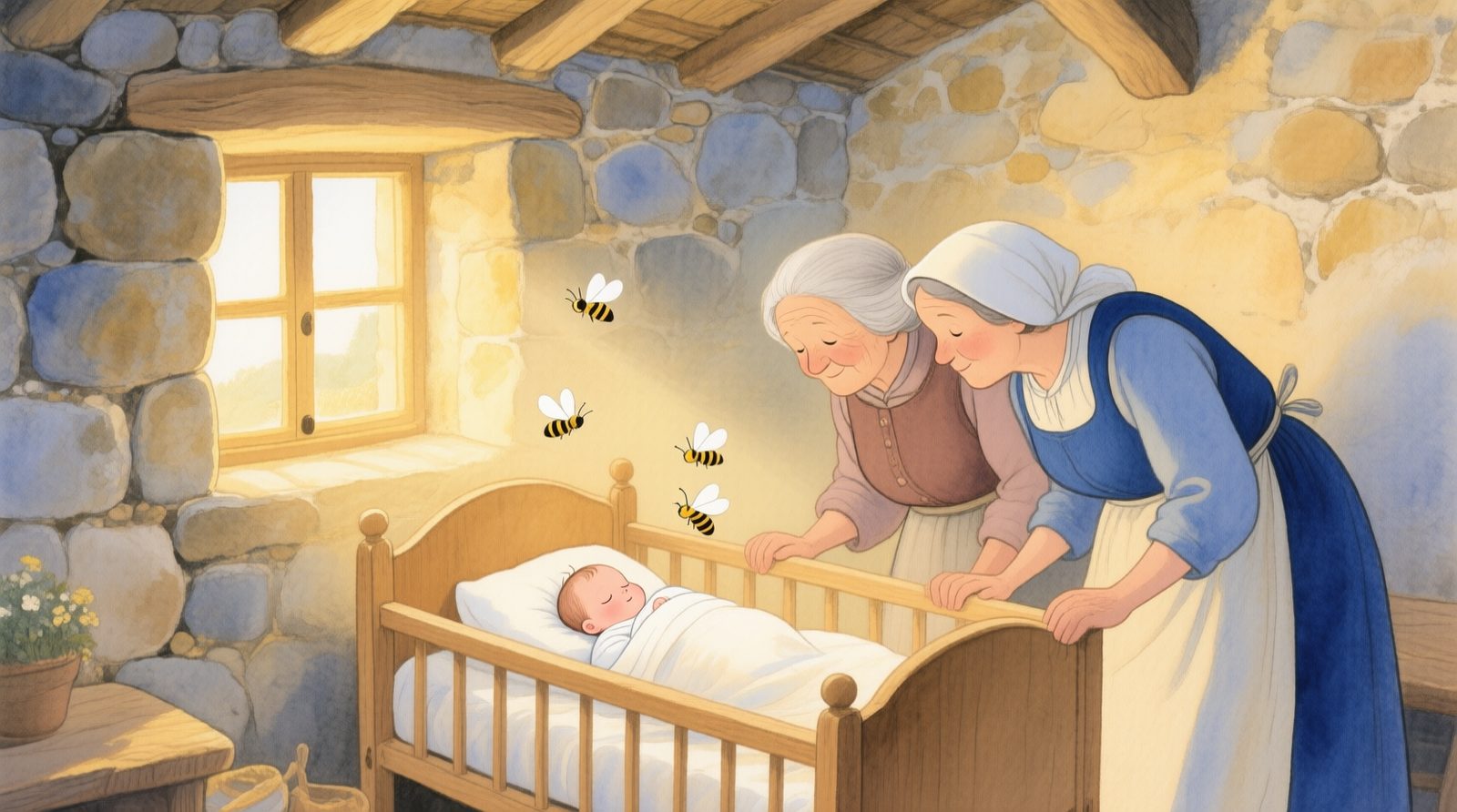
People say that when she was still a baby, white bees flew around her cradle. They went in and out of her little mouth without stinging her even once. The villagers saw it as a sign: Rita would be as sweet as honey.
The Girl Who Wanted to Be a Nun
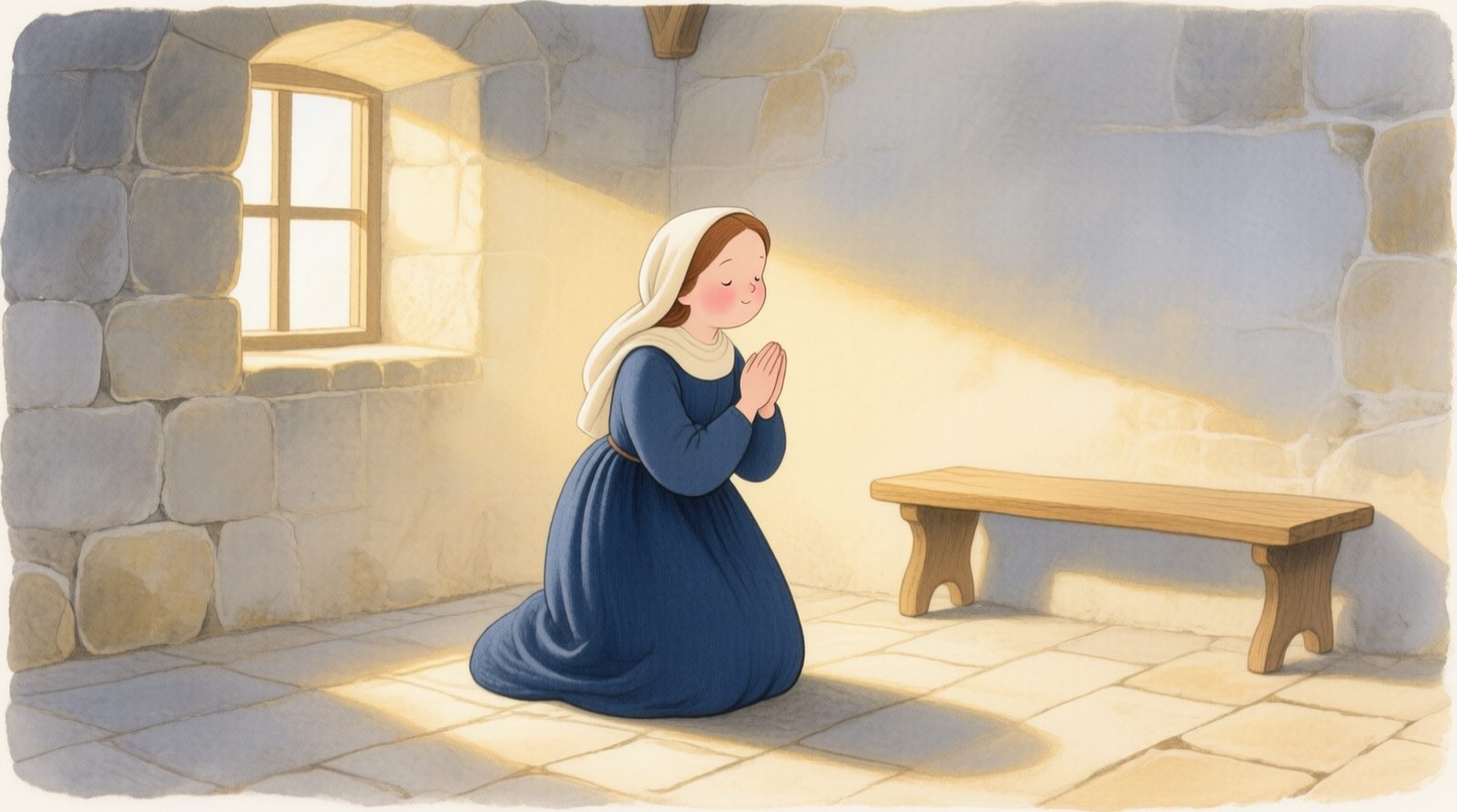
From the time she was little, Rita loved to pray. She went to church, helped the poor of the village, and felt her heart full of God. When she was about twelve, she told her parents what she carried inside her:
"I want to be a nun. I want to give my whole life to Jesus."
Her parents were startled by her request.
"No, my daughter. You are our only child. You must marry and give us grandchildren."
Rita tried every way she knew to change their minds, but she could not.
The Forced Marriage
When Rita turned eighteen, her parents arranged a marriage for her. The groom's name was Paolo Mancini. He was rich and handsome, but he had a violent temper and quarreled with everyone. With a tight knot in her heart, Rita pleaded:
"Father, Mother, I do not want to marry him."
But in those days, children obeyed their parents without arguing. With a heavy heart, Rita accepted.
Eighteen Years of Suffering
The marriage was very hard. Paolo shouted, made threats, and sometimes struck her. He drank too much and was always fighting with the neighbors. Rita suffered in silence, but she never answered hatred with hatred. She prayed, offered her pain to God, and treated Paolo with patience and kindness, hoping that one day his heart would soften.
Rita and Paolo had two sons, Giangiacomo and Paolo Maria. Rita loved them deeply, but she was always worried. The boys were growing up watching their father fight, and they were learning to settle everything with their fists too.
"When I grow up, I will avenge my father on his enemies," they would say.
Rita prayed quietly:
"Jesus, do not let my sons become violent like their father."
As the years passed, something happened that no one expected. Rita's gentleness slowly touched Paolo's heart, the way water slowly wears down stone. He began to wonder why she was so good to him when he treated her so badly. One day, Paolo was truly sorry. He asked Rita's forgiveness, stopped drinking and fighting, and became a better man. It was a conversion, the fruit of many years of prayer and love.
Paolo's Murder
Just when everything seemed to be getting better, tragedy came. In 1416, Paolo was murdered by old enemies, men who had nursed a grudge from fights long past. Rita was left a widow at thirty-six. And there was a still deeper sorrow: her sons, now teenagers, swore revenge.
"We will kill the men who murdered our father," the two of them promised.
Rita was heartbroken, not so much over being a widow as over her sons. If they killed someone, it would stain their souls forever. She prayed day and night, and in the anguish of her time and her grief, she made a prayer that astonishes people to this day: she asked God to take her sons to Heaven before they could become murderers.
"Lord," she said, "I would rather my sons die innocent than live with blood on their hands."
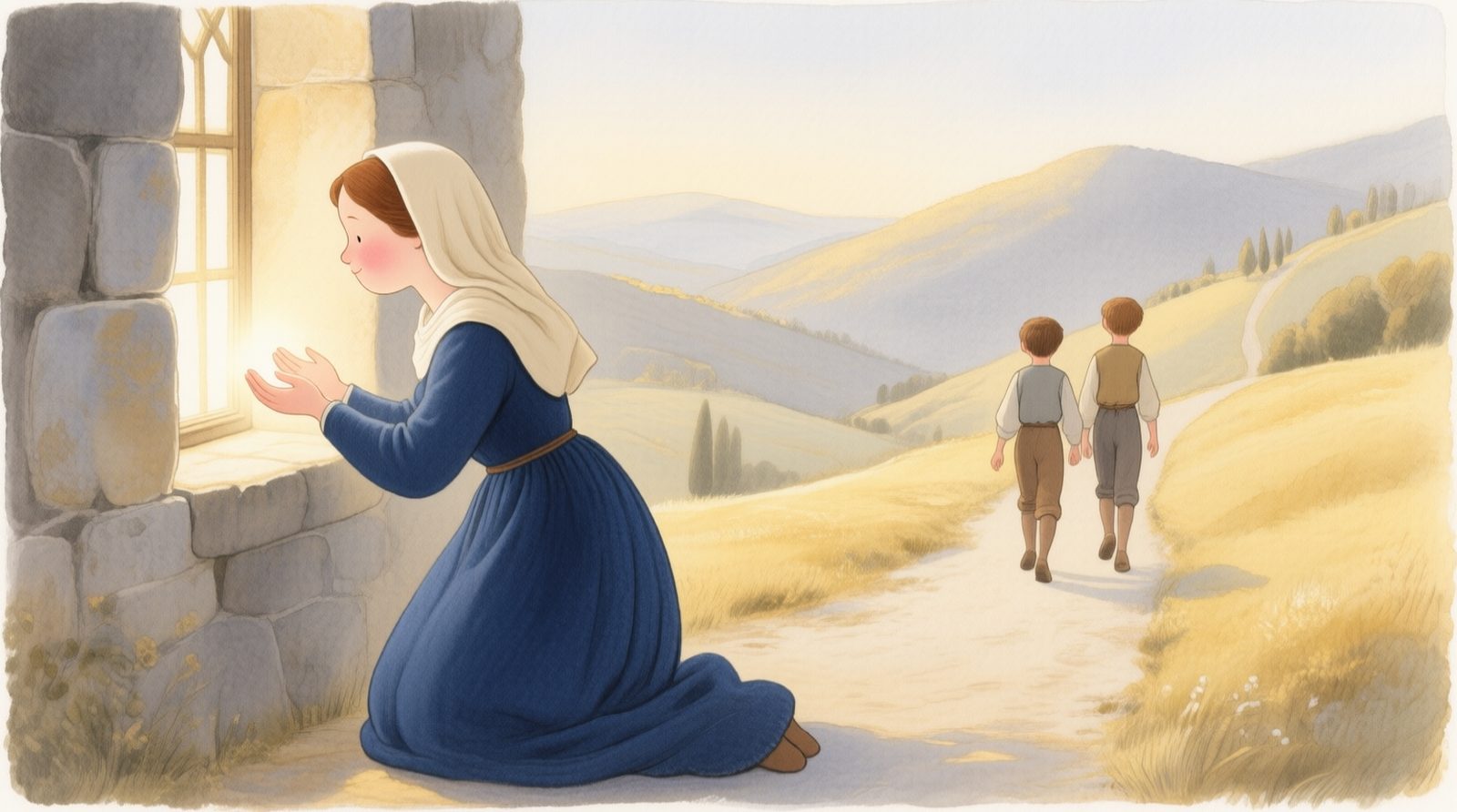
The following year, in 1417, both boys fell gravely ill, perhaps with dysentery. Rita nursed them tenderly, day after day, and gently prepared their hearts.
"Forgive the men who killed your father," she asked them. "Do not hold on to hatred."
Her sons listened to their mother. Before they died, they said softly:
"Mother, we forgive them. We do not want revenge anymore."
The two boys passed away in peace, with clean hearts. Rita wept and wept, as any mother would. But in the middle of her tears, she thanked God, because her boys had died with hearts free of hatred.
Entering the Convent
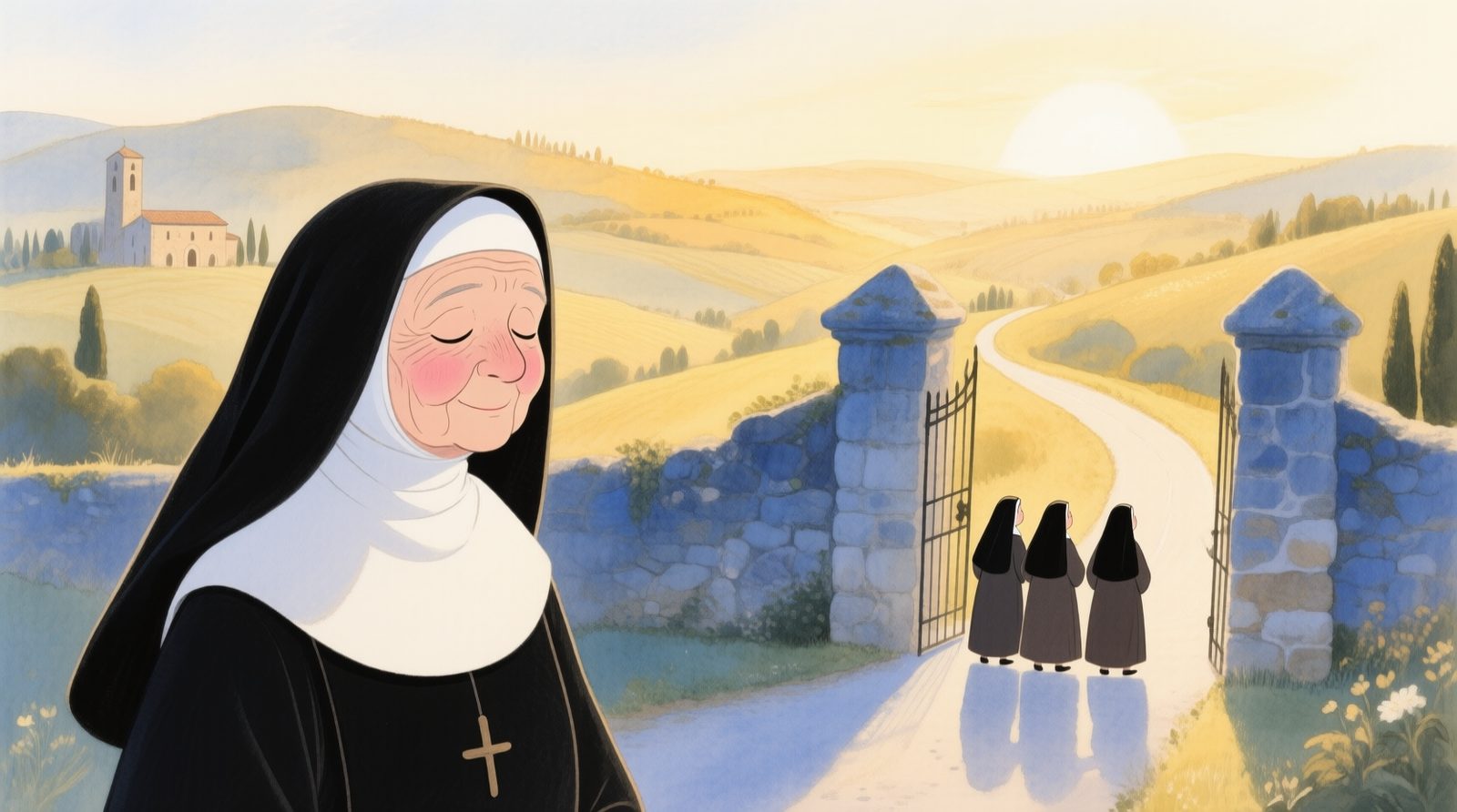
Rita was alone now, a widow with no children. She remembered the dream she had kept since she was a girl: to become a nun. She asked to enter the convent of the Augustinian sisters in Cascia, but the nuns refused her. In those days, the convent received only unmarried young women. And there was another reason, an even more serious one: Paolo's family and the family of his murderers were at war, and the sisters feared that the feud would follow Rita through the convent doors. Rita asked once, twice, three times, and the answer was always no.
Rita did not give up, but she understood what she had to do first. She went to her husband's family and begged them to pardon the men who had killed Paolo, and she went to the other family too, asking for peace. She prayed, she talked, she waited. And the impossible happened: the two enemy families were reconciled and made peace. Only then did the way to the convent open before her.
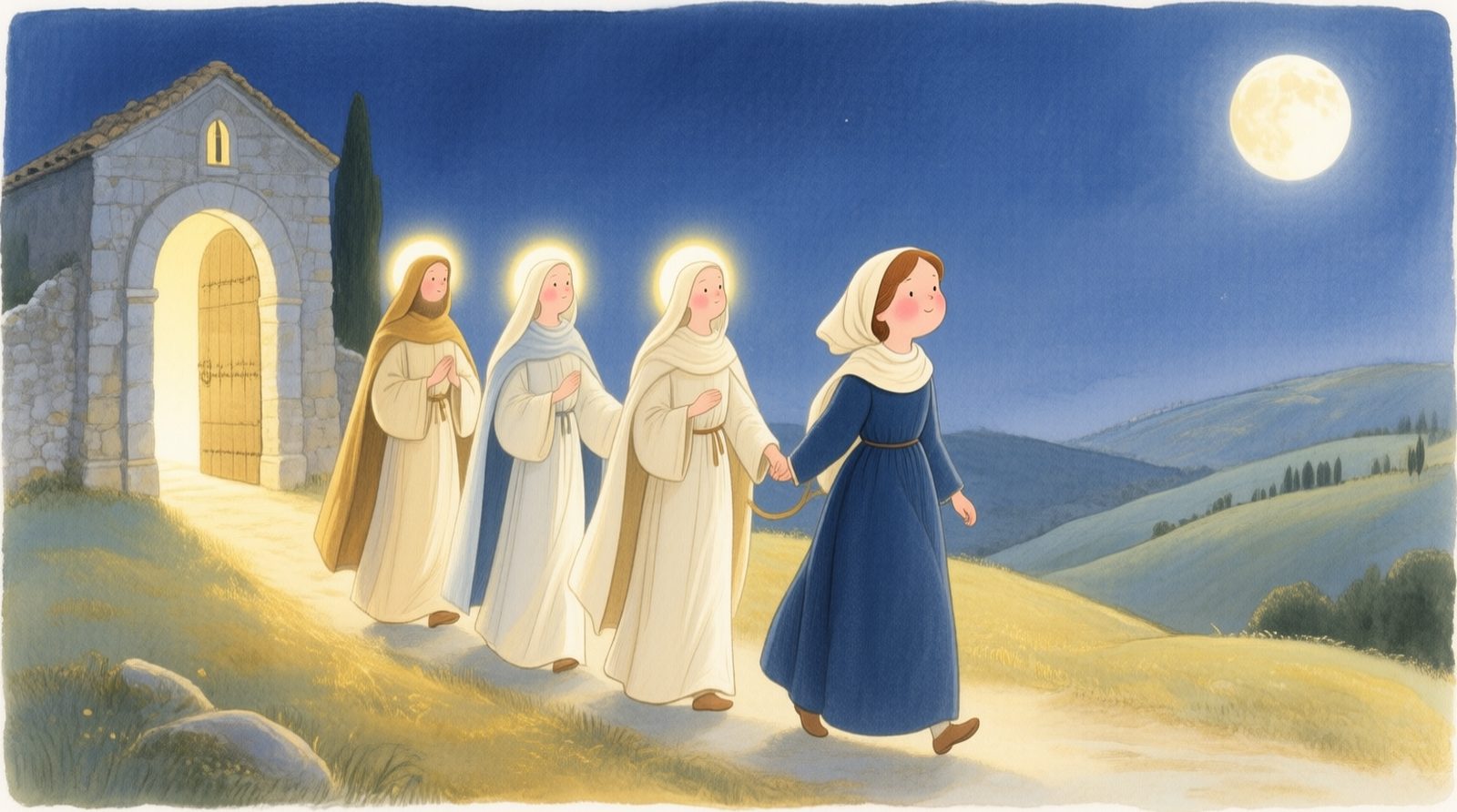
It is told that one night, while Rita was praying, Saint John the Baptist, Saint Augustine, and Saint Nicholas of Tolentino appeared to her and led her to the convent. In the morning, the nuns found her praying in the chapel, though every door was still locked.
"How did you get in? Everything was shut," they asked in amazement.
Rita told them what had happened. The sisters understood that this was God's will, and they welcomed her. At thirty-six, Rita finally fulfilled her childhood dream.
Life in the Convent
In the convent, Rita lived with great fervor. She prayed for hours, fasted, and obeyed in everything. Once, the superior wanted to test her obedience and ordered:
"Rita, water that dry stump every day."
It was a dead piece of wood that could never sprout again. But Rita obeyed without a single question, and she watered that dry stick faithfully, day after day, for months.
And then a miracle happened. The dry stump sprouted, grew, and became a lush grapevine, heavy with fruit. That vine still exists in Cascia today and is called Saint Rita's Vine, a living reminder that God honors those who trust and obey.
The Thorn in Her Forehead
In 1442, on a Good Friday, Rita was meditating before the crucifix, thinking about the sufferings of Jesus.
"Jesus, I want to share in Your Passion," she prayed. "I want to suffer with You."
Suddenly, a thorn from the crown of Jesus came loose and pierced Rita's forehead.
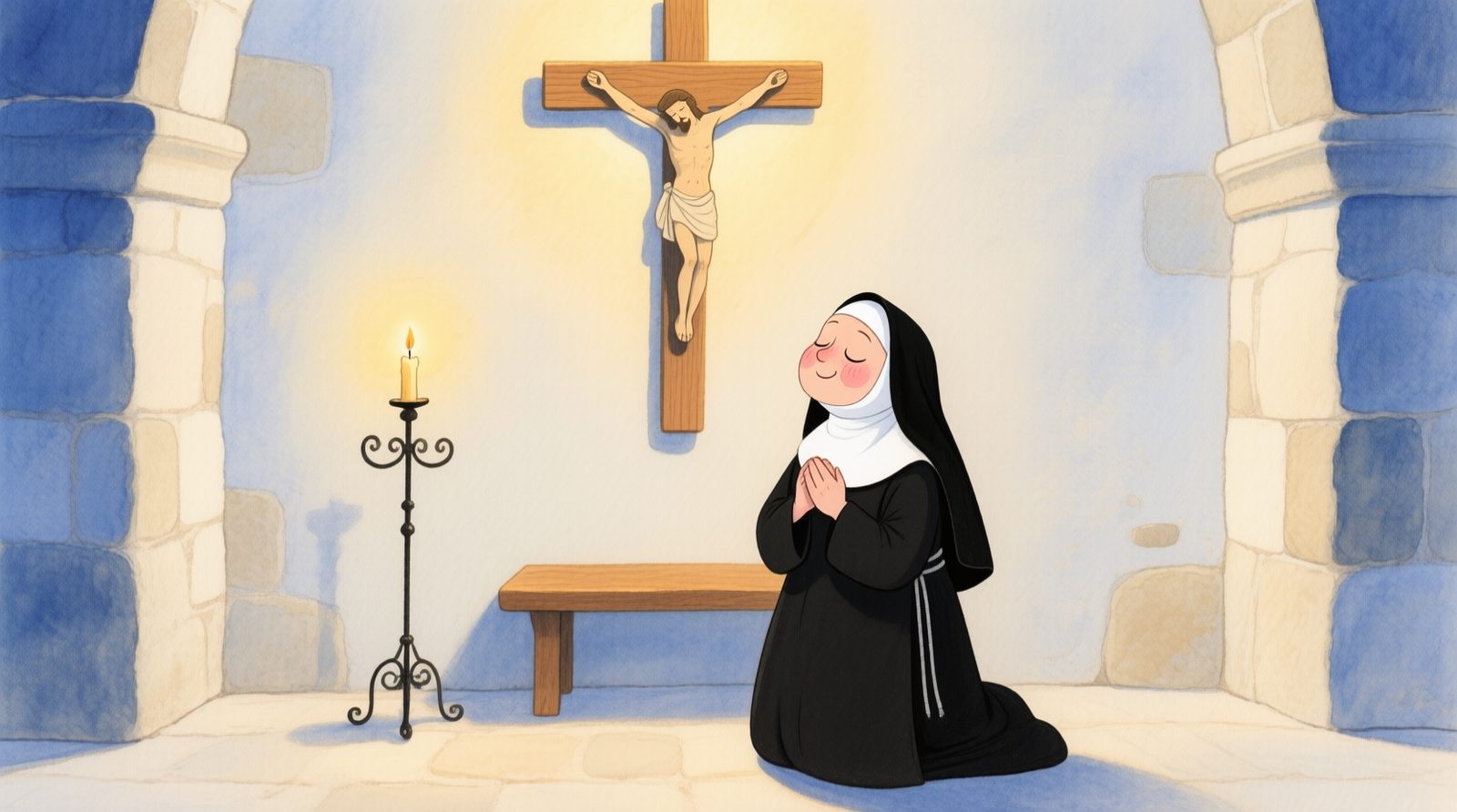
The pain was great, but Rita also felt a deep joy, because she was sharing in the Passion of Jesus. The wound never healed. Worse still, it gave off a smell so strong that Rita had to live in a separate cell, away from the other nuns. She spent fifteen years that way, alone, suffering in silence. She offered it all to God, for love of Jesus and for sinners, without complaining. She lived united to Christ crucified.
The Journey to Rome
In 1450, there was a great Jubilee in Rome, and all the nuns of the convent wanted to go. Rita believed she could not, because of the wound and its smell. But the sisters urged her to pray for that grace. Rita prayed: if it was God's will, she would go.
And the wound disappeared for a time. The smell was gone, her forehead was clean, and Rita was able to walk to Rome, see the Pope, and visit the basilicas with her sisters. When she returned to Cascia, the wound returned as well. Rita understood that God wanted her this way, united to His cross, and she accepted it with a peaceful heart.
The Rose in Winter
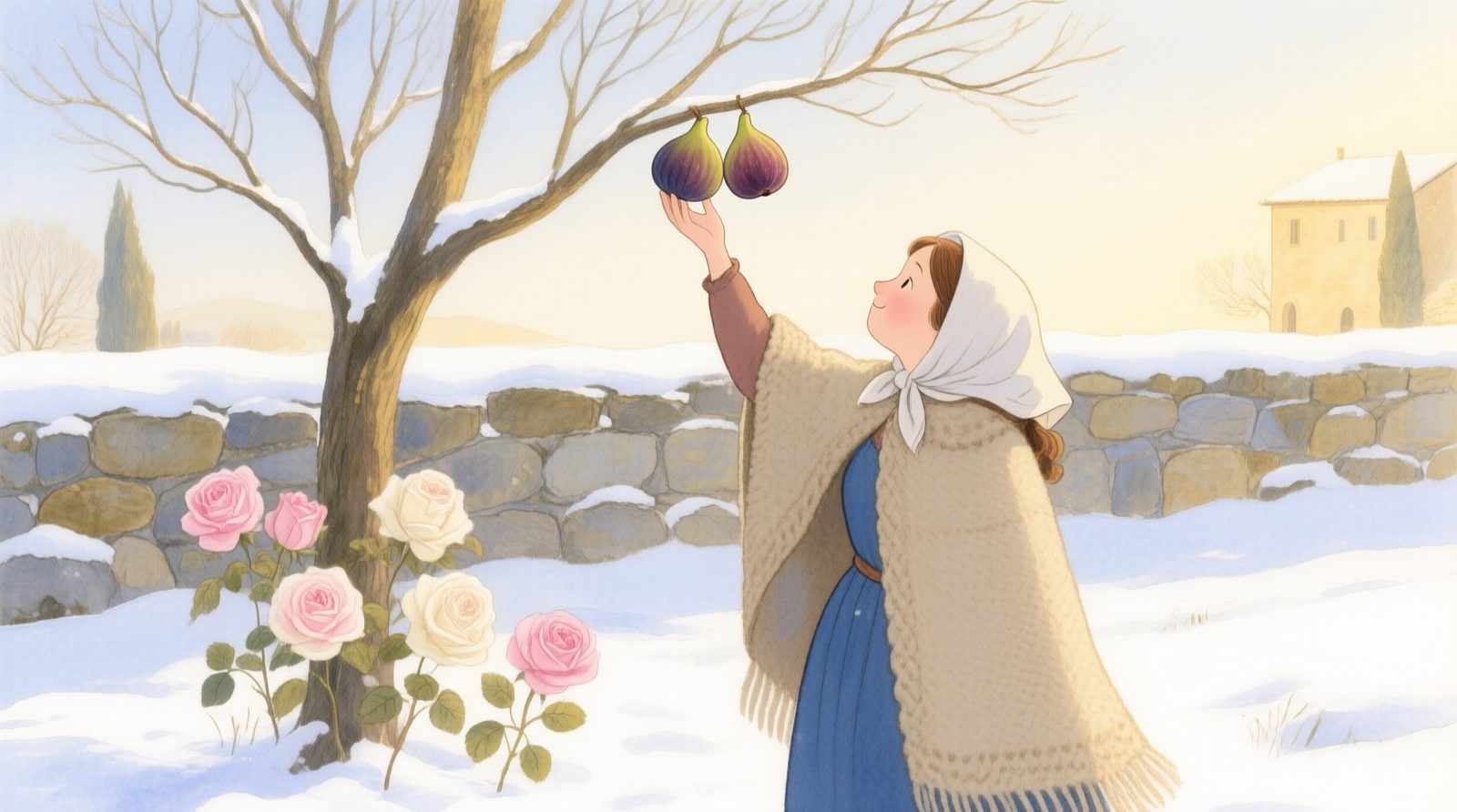
In the winter of 1453, Rita was old and very ill, kept to her bed and growing weaker every day. A cousin came to visit her and asked if she could bring her anything. Rita, with hardly any strength left, murmured:
"A rose from the garden of my house in Roccaporena..."
The cousin did not understand. It was the middle of winter, everything was covered in snow, and there was not a rose to be found anywhere.
Even so, the cousin went to Rita's house and looked at the garden. Snow everywhere, not a single flower. But then she saw something that made her stop: in the middle of the snow, a red rose, lovely and fragrant, had bloomed. She picked it carefully and brought it to Rita, who smiled and thanked Jesus.
The cousin asked if she wanted anything else.
"Two figs from the fig tree," Rita said.
That too seemed impossible, in the depths of winter. But the cousin went back to the garden, and there they were: two ripe figs on the leafless fig tree. She brought them back, and Rita ate them with gratitude. Because of this miracle, Saint Rita is shown to this day with the rose and the thorn.
Rita's Death
On May 22, 1457, Rita died in peace at seventy-six years old. She had lived a long life, full of suffering, but full of joy too, and of closeness to God. The nuns gathered around her bed and saw that her face was serene.
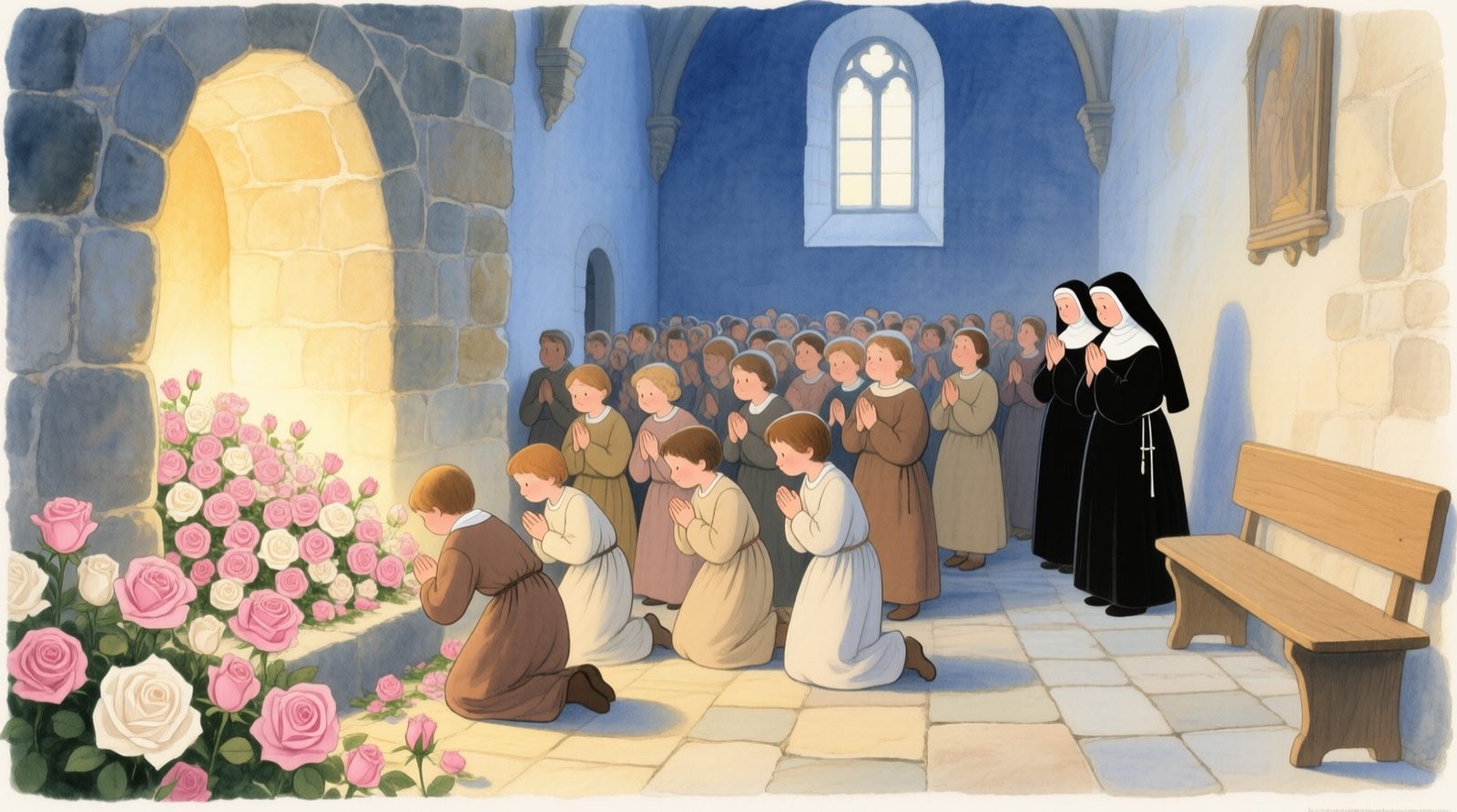
In that moment, something extraordinary happened. The wound on her forehead closed, Rita's face became beautiful and bright, and a perfume of roses filled the whole convent. Everyone smelled it, and everyone understood: it was a sign from Heaven.
Rita's body was laid out, and crowds came to see her and to pray. Her body did not decay: it remains incorrupt to this day, more than five hundred and sixty years later, in a glass case in Cascia, visited by millions of pilgrims.
Beatification and Canonization
Rita was beatified in 1626 by Pope Urban VIII, and canonized on May 24, 1900, by Pope Leo XIII. She became Saint Rita of Cascia, patroness of impossible causes — because her life was full of things that seemed impossible and came true all the same: the violent husband whose heart was changed, the enemy families who made peace, the dry stump that sprouted, the rose that bloomed in the snow.
Saint Rita Today
Today, Saint Rita is one of the most beloved saints in the world, especially in Brazil. On May 22, her feast day, the faithful fill the churches, bringing roses and asking for graces that seem impossible. And Saint Rita, from Heaven, intercedes for them all.
Prayer to Saint Rita
Glorious Saint Rita, faithful wife, devoted mother, holy widow, and fervent nun. You suffered greatly, but you never stopped trusting in God, and God worked wonders through you. Intercede for me in this cause that seems impossible, for with God nothing is impossible. Saint Rita, pray for us. Amen.
Reflection


