
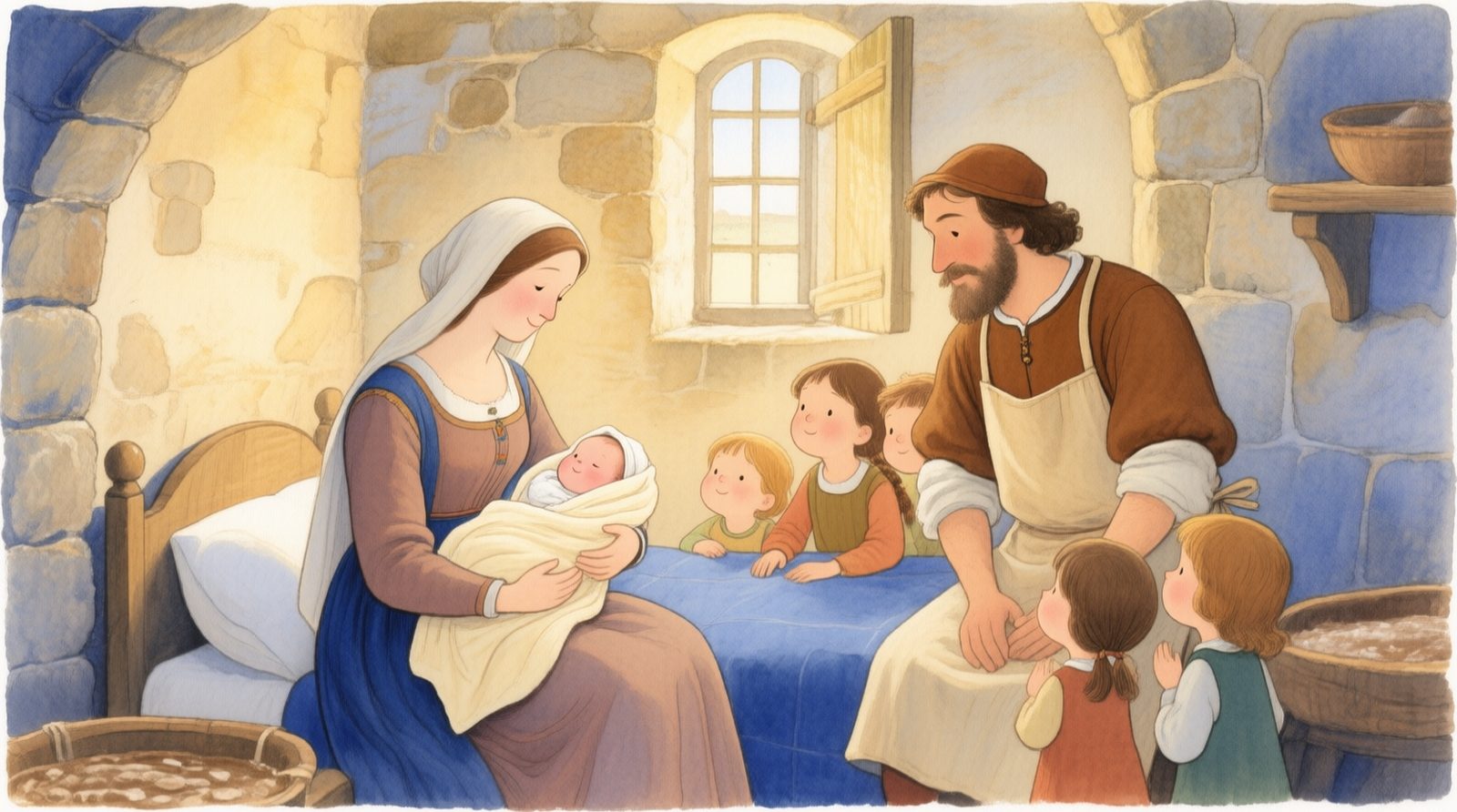
On March 25, 1347, in Siena, in Italy, a baby girl was born, and her parents named her Caterina — Catherine. She was the twenty-fourth child of a dyer and his wife, in an enormous family of twenty-five children. Her father, Jacopo, dyed cloth, and her mother, Lapa, helped with the work. Catherine was born a twin, but her little sister died while still very small. No one imagined that this girl would change the Church and the world.
The Vision at Six Years Old
When Catherine was only six, something extraordinary happened. She was walking down the street with an older brother when suddenly she stopped and stood gazing up at the sky. There she saw Jesus Christ, seated on a glorious throne, dressed like a Pope, with Saint Peter, Saint Paul, and Saint John beside Him. Jesus looked at her, smiled, and blessed her.
Catherine stood still, entranced, unable to look away. Her brother called her, tugged at her hand, but she did not hear him. When the vision finally faded, Catherine came back to herself and cried, because she wished it had never ended.
"What did you see?" her brother asked.
"I saw Jesus," she answered, simply.
From that day on, Catherine was never the same.

The Vow of Virginity
At seven, Catherine made a decision astonishing for a child: in secret, she made a vow of virginity.
"Jesus, I promise never to marry. I want to be Yours alone."
From then on, she lived differently. While the other girls played with dolls, Catherine looked for hidden corners where she could pray, and she fasted and did small penances, all in silence.
The Pressure to Marry
When she was twelve, sorrow came: her sister Bonaventura, who was married and loved teaching Catherine how to dress up and look pretty, died. After that, the family began to press her. They said she was old enough to marry and that they would find her a good husband — in those days, girls married very young. But Catherine refused:
"I will not marry. I am promised to Christ."
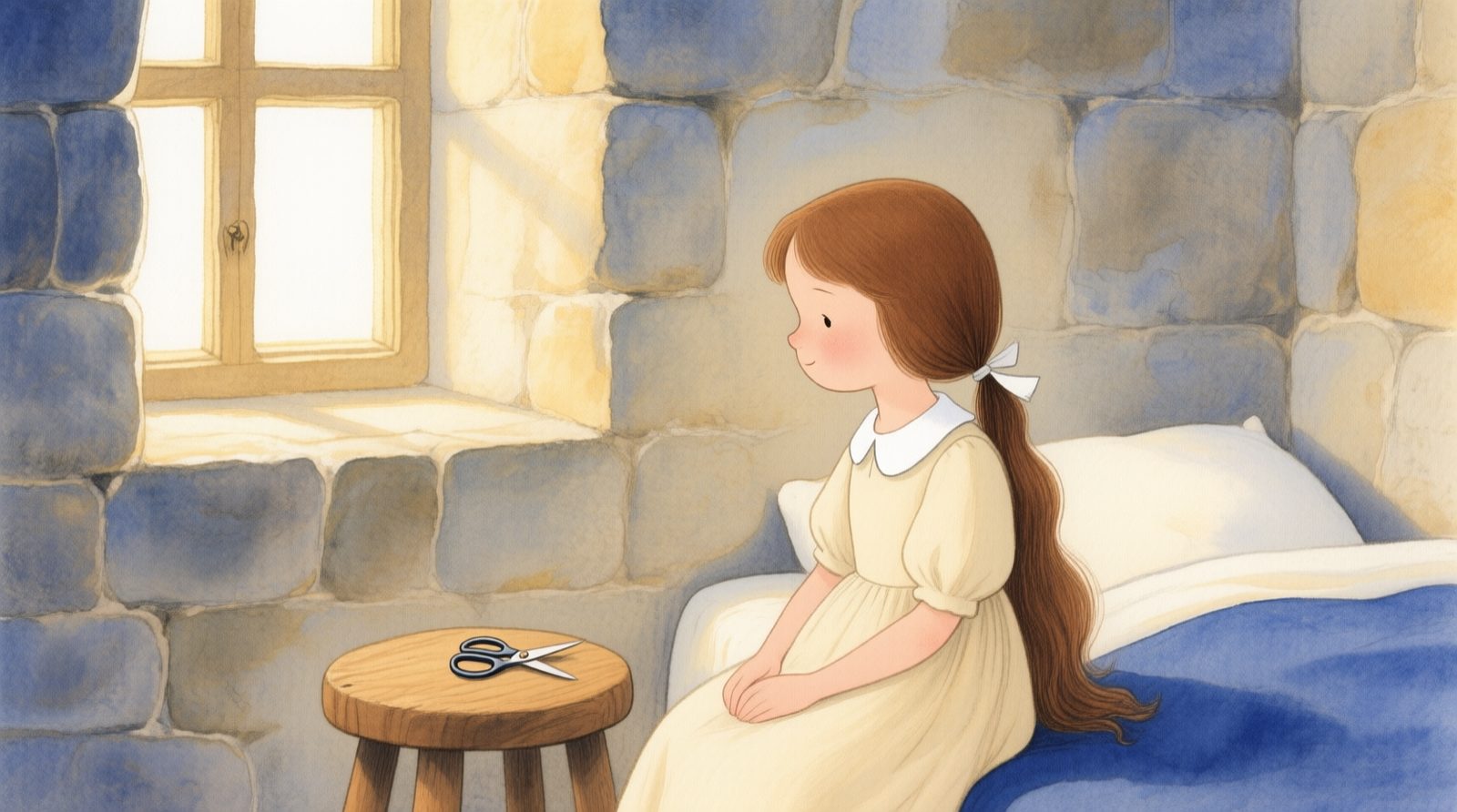
Her parents would not accept her refusal. They made her dress up and comb her long hair, and they went looking for suitors. Catherine suffered, but she resisted. Until at last she did something radical: she cut off all her hair. In those days, hair was the great symbol of a young woman's beauty, and without it the suitors wanted her no more.
Her parents were furious. As punishment, they took away her room and made her work as a servant in her own house, saying that if she would not marry, then she would work. Catherine obeyed humbly. She worked, she served, and she went on praying, turning the kitchen into a monastery and the house into a convent.
"I can make a cell inside myself," she would say. "Wherever I am, I am with Jesus."
Her Father's Vision
At last, God Himself stepped in. One day, Catherine's father saw a white dove, symbol of the Holy Spirit, resting over his daughter's head while she prayed. He was so struck that he called his wife:
"Lapa, we cannot force her any longer. God has chosen her."
They gave Catherine her room back and let her live as she wished. At fifteen, she turned her own bedroom into a hermit's cell.
Three Years of Solitude
From fifteen to eighteen, Catherine lived almost without leaving her room. She prayed for hours, slept very little, ate almost nothing, and did hard penances. Why such severity? Because she wanted total union with Christ and longed to share in His sufferings.
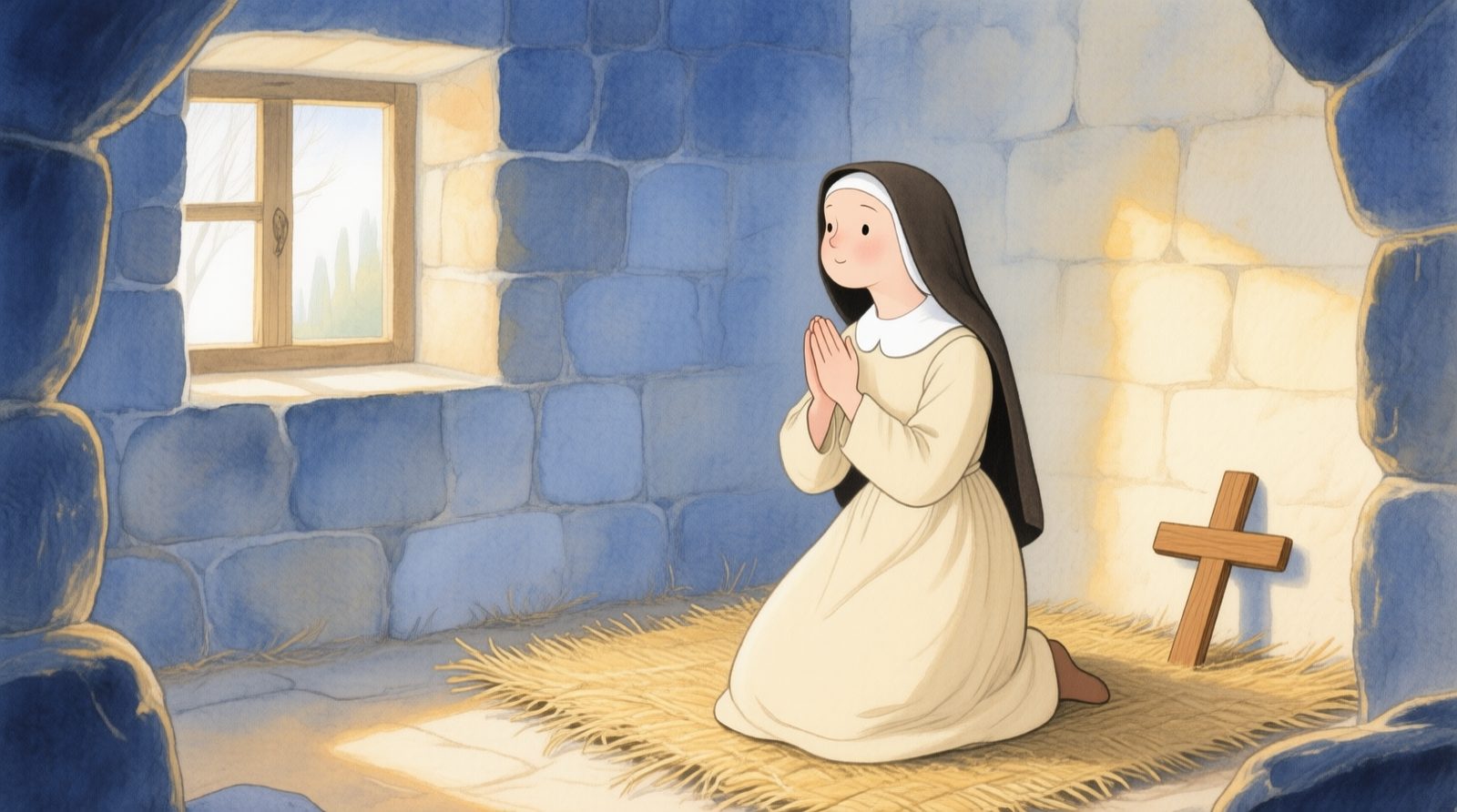
During those three years, Catherine lived through extraordinary mystical experiences: frequent visions of Jesus, of Mary, and of the saints, long conversations in which Jesus taught her, terrible temptations from the devil, which she overcame through prayer, and trials that purified her. It was like a school of holiness, in which God was quietly preparing her for a very great mission.
The Mystical Marriage
In 1367, when Catherine was twenty, came the most extraordinary moment yet. It was Shrove Tuesday, the last day before Lent, and all of Siena was out in the streets celebrating Carnival. Catherine, however, was in her room, praying. Suddenly, Jesus appeared to her, together with Our Lady, Saint John the Evangelist, Saint Paul, and Saint Dominic.
Jesus looked at Catherine with immense love and said:
"Catherine, you promised to be my bride. Now I come to wed you."
Our Lady took Catherine's hand and placed it in the hand of Jesus. And Jesus put on her finger a ring of gold with a diamond at its center — a ring Catherine would see for the rest of her life, though it was invisible to everyone else.
"I, your Creator and Savior, wed you in faith," Jesus said. "Keep that faith unbroken until you come to Me in Heaven."
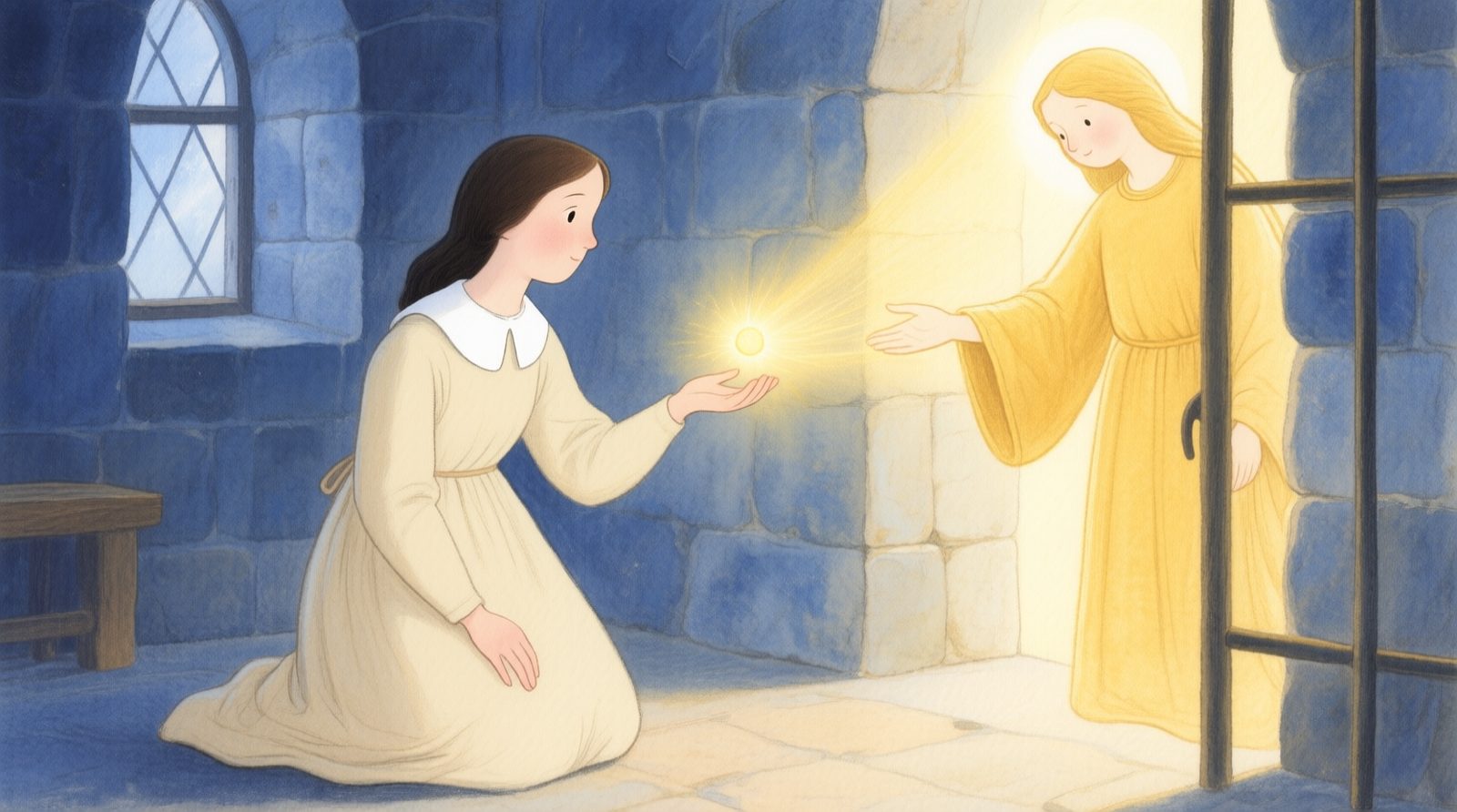
Catherine was filled with joy. She was the mystical bride of Christ, united to Him forever. The ring, which only she could see, was a constant reminder. She never felt alone again: Jesus was her Bridegroom, her companion, her everything.
Leaving the Room
After the mystical marriage, Jesus gave Catherine an order:
"Now, go out. Go and serve your brothers and sisters."
Catherine was confused and said she wanted to stay there with Him forever. Jesus explained:
"You serve me by serving others. To love God and to love your neighbor cannot be separated. Leave your room, and go to the sick, the poor, the sinners."
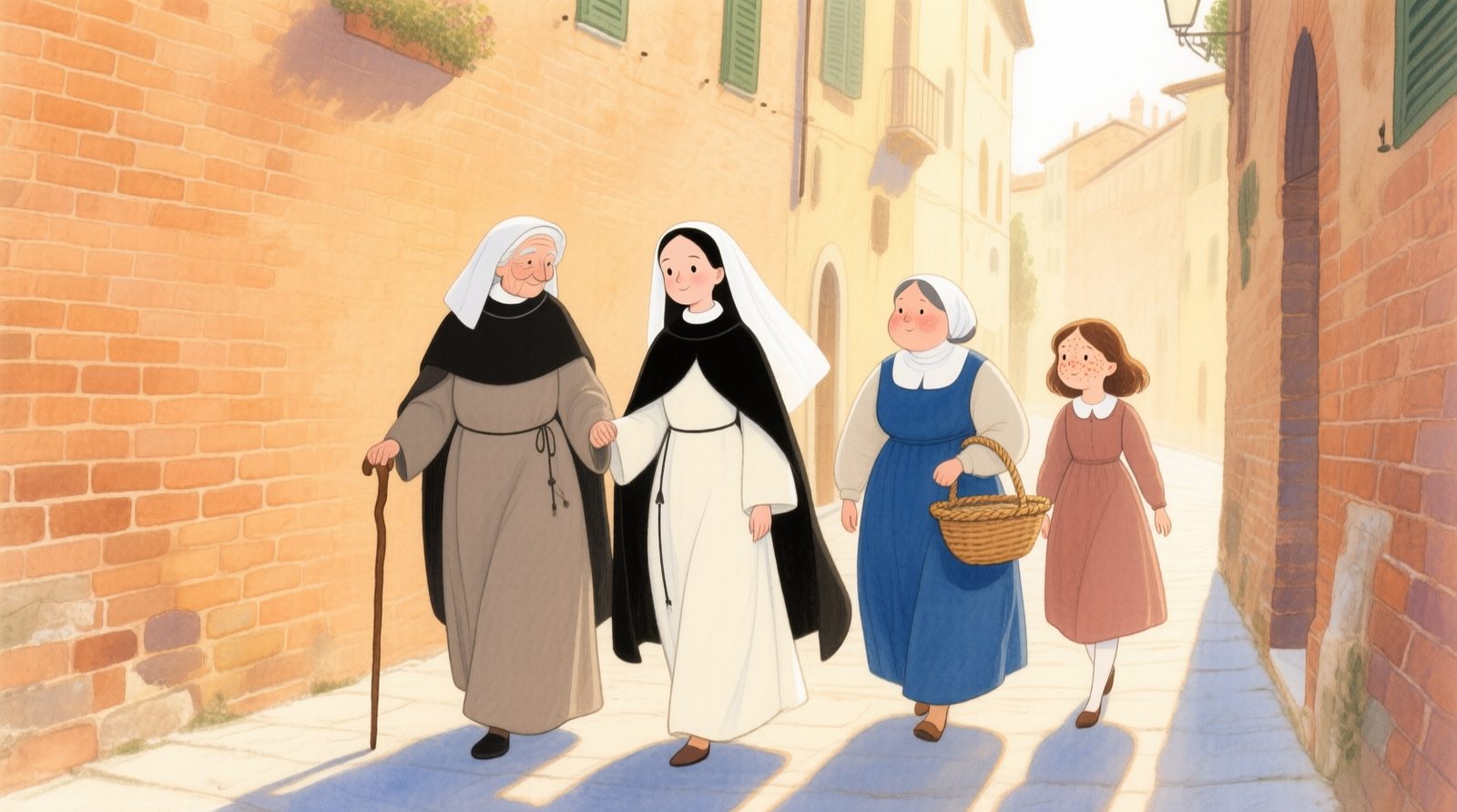
Catherine obeyed. She left her room and went back into the world — not to live an ordinary life, but to serve. She joined the Mantellate, the Dominican third order for laywomen: women who lived in the world but followed the rule of Saint Dominic, wore a black and white habit, and served the poor and the sick.
Serving the Sick
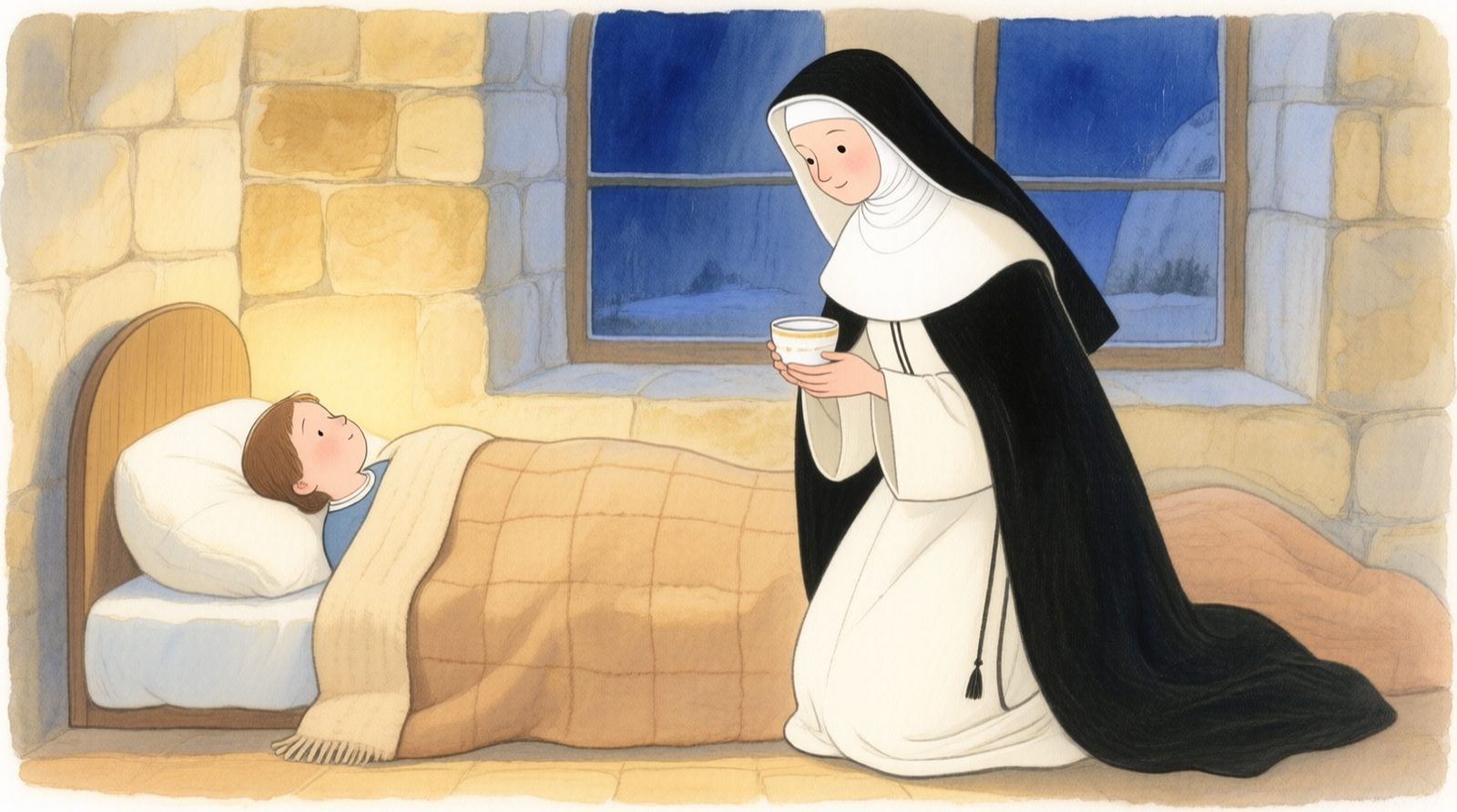
Catherine began to serve in the hospitals of Siena, choosing precisely the hardest cases: the lepers, those with terrible sores, the dying, the ones nobody wanted to care for. She washed their wounds, cleaned them, fed them, without disgust and without fear, with a love that amazed everyone. Once, she was caring for a very difficult leper, an ungrateful woman who complained constantly and insulted her.
One day, the woman even spat at Catherine. Catherine did not lose her temper: she calmly wiped herself clean and went on serving, as if nothing had happened. The woman was astonished and asked why Catherine put up with her.
"Because I see Jesus in you," she answered. "To serve you is to serve Him."
The woman was converted, asked forgiveness, and died in peace. That was Catherine's way: while she cared for bodies, she transformed souls.
The Disciples
Catherine's reputation for holiness spread, and people began to seek her out to ask for prayers, advice, and spiritual guidance — priests, nobles, and ordinary folk. A group formed around her, which came to be known as "La Bella Brigata," the Beautiful Brigade: disciples, followers, and spiritual friends.
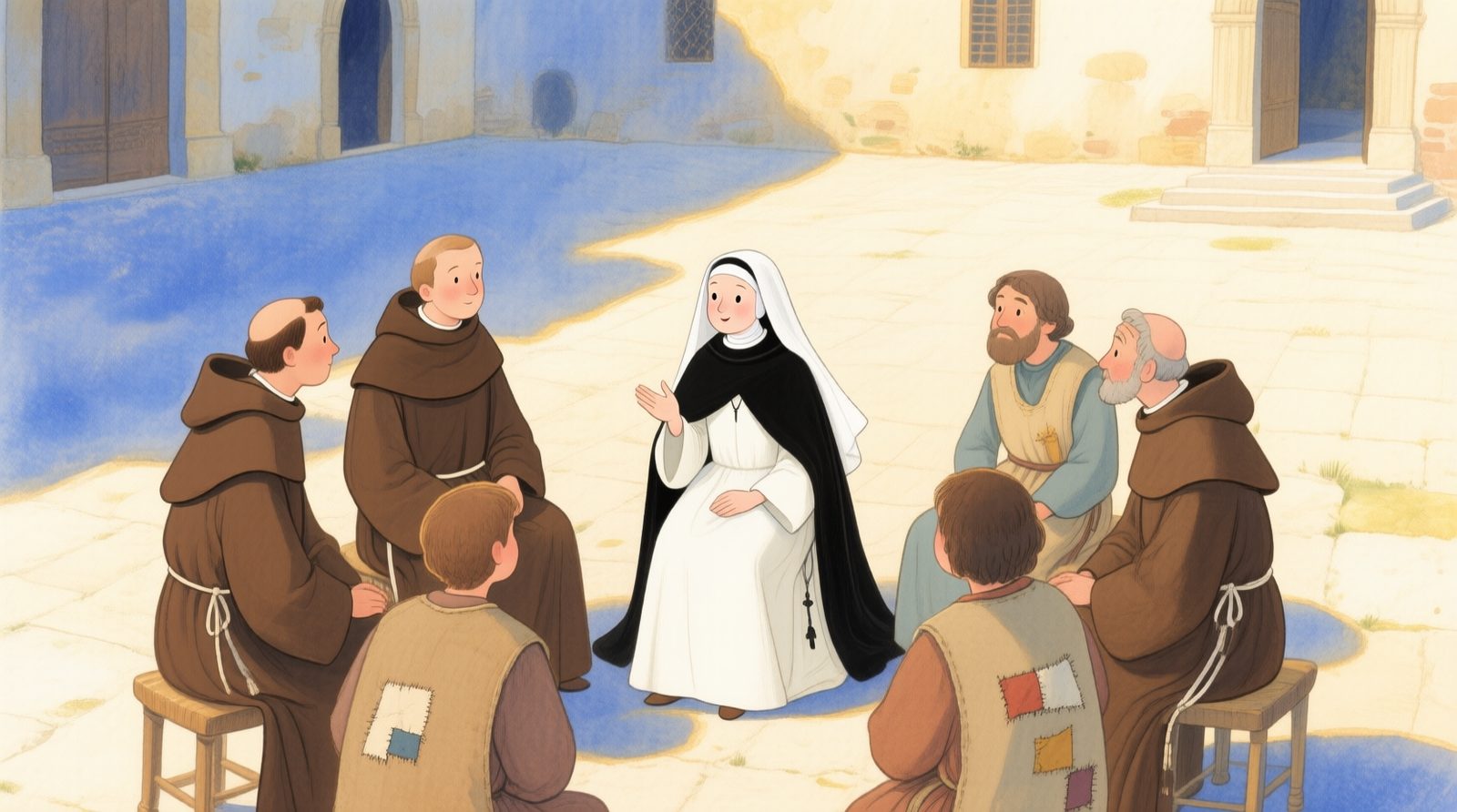
Among them was Raymond of Capua, a Dominican friar and wise theologian, who became Catherine's confessor and secretary and later wrote her biography. Since Catherine had never learned to write, she dictated, and Raymond and other disciples wrote things down. There were hundreds of letters, to popes, kings, bishops, and sinners.
The Black Plague in Siena
In 1374, the terrible Black Plague reached Siena. It was a horrifying disease that killed thousands: people died in the streets, the hospitals overflowed, and doctors, priests, and whole families fled the city. But Catherine stayed. She and her disciples cared for the sick day and night, without stopping and without fear.
Catherine took on the gravest cases, the ones no one would touch. She washed them, fed them, comforted them. Many died in her arms, but they did not die alone: she prepared them gently, brought someone to hear their confessions, and gave them hope, speaking softly of the Heaven that awaited them. Dozens of the people she accompanied were converted before they passed away. Catherine saved bodies when she could — and she always cared for souls.
The Invisible Stigmata
In 1375, Catherine was praying in a church in Pisa when she had an extraordinary vision. The crucified Jesus appeared before her, and from His five wounds — hands, feet, and side — came five rays of light, which struck Catherine's hands, feet, and side. She felt an immense pain, as if she were being pierced through, and she fainted.
When she awoke, there was no wound to be seen, but the pain was real and constant. They were invisible stigmata. Catherine had asked Jesus that the marks should not appear:
"Lord, I do not want them to be seen. I want to remain hidden."
Jesus granted it. The pain stayed with her, but the marks became visible only after her death.
Moral of the Story


