
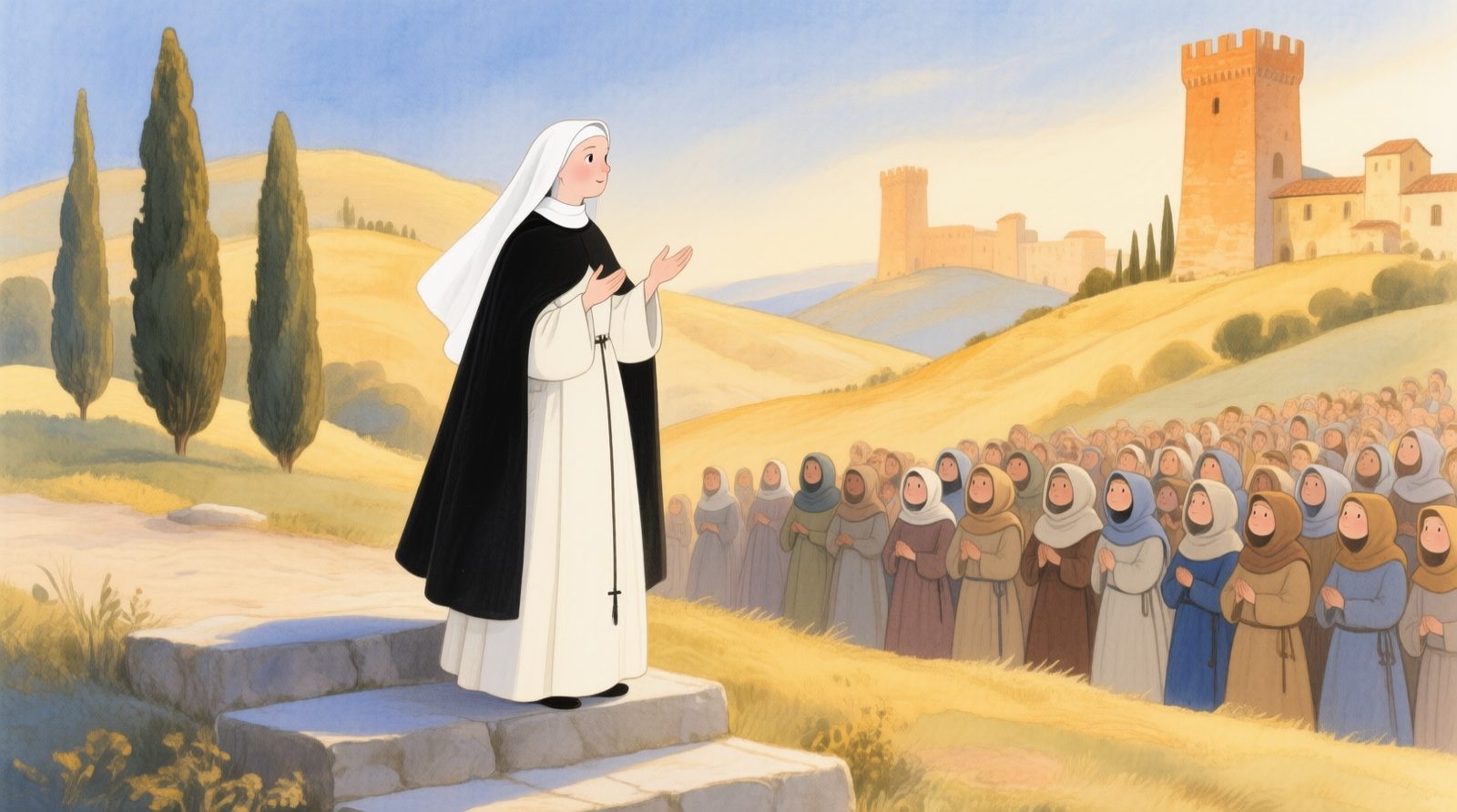
After receiving the invisible stigmata in 1375, Catherine threw herself into her work more than ever. She no longer stayed only in Siena: she traveled through Italy, preaching — yes, a woman preaching in the fourteenth century, something revolutionary. She converted sinners, made peace between feuding families, advised bishops, corrected priests, and counseled kings. And above all, she found the courage to speak hard truths to the Pope himself.
The Captivity of Avignon
In Catherine's time, the Church was living through a deep crisis: the Pope was not in Rome. Ever since 1309, when Pope Clement V moved to Avignon, in France, saying that Rome had become too dangerous, the popes had stayed there. Almost seventy years had passed, and seven popes in a row had governed the Church from Avignon, far from the tomb of Saint Peter.
This caused an enormous scandal. Rome was the see of Saint Peter, the heart of Christendom, and the Pope was supposed to be there. Many people said the popes had become prisoners of the French, and that Avignon was luxurious, worldly, and corrupt. The Church suffered division and confusion. And it was then that Catherine — a laywoman of twenty-eight — decided to do something.
The Letters to the Pope
Catherine began writing letters to Pope Gregory XI. Bold, direct letters, with no beating around the bush. She asked him to return to Rome, where he belonged; to leave the luxury of Avignon and return to simplicity; to be brave, to make reforms, to correct abuses, and to purify the Church.
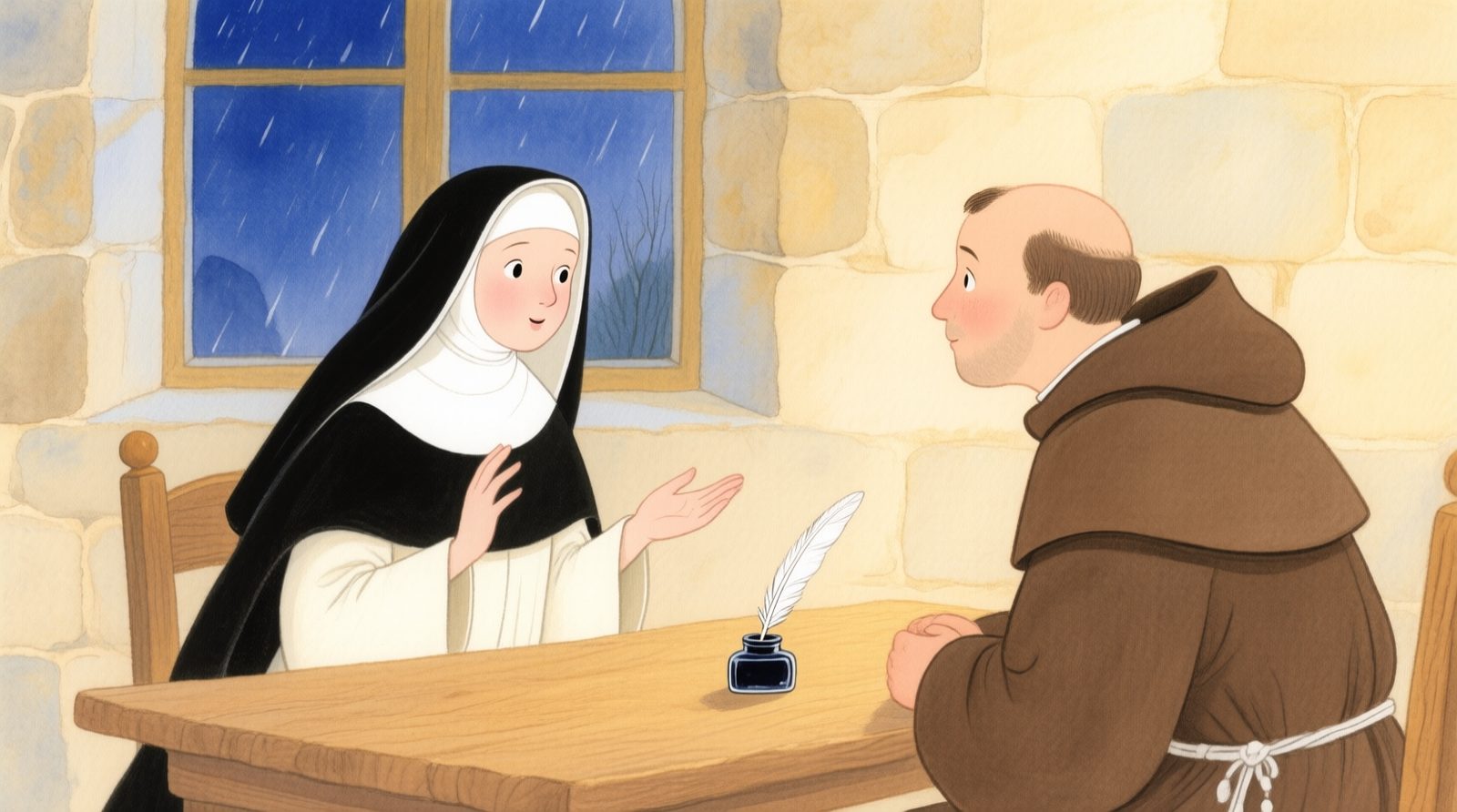
Imagine: a laywoman with no schooling, writing to the Pope like that. Many people were shocked and asked who she thought she was. But Catherine did not mind, because she was not seeking glory for herself: she sought the glory of God and the good of the Church.
"If I stay silent out of fear, I betray the truth," she said. "I speak because God commands me to speak."
The Meeting with the Pope
In 1376, something extraordinary happened: Pope Gregory XI summoned Catherine to Avignon, because he wanted to meet her in person. She traveled with several disciples — it was the first time she had ever left Italy — and arrived at the luxurious papal palace.
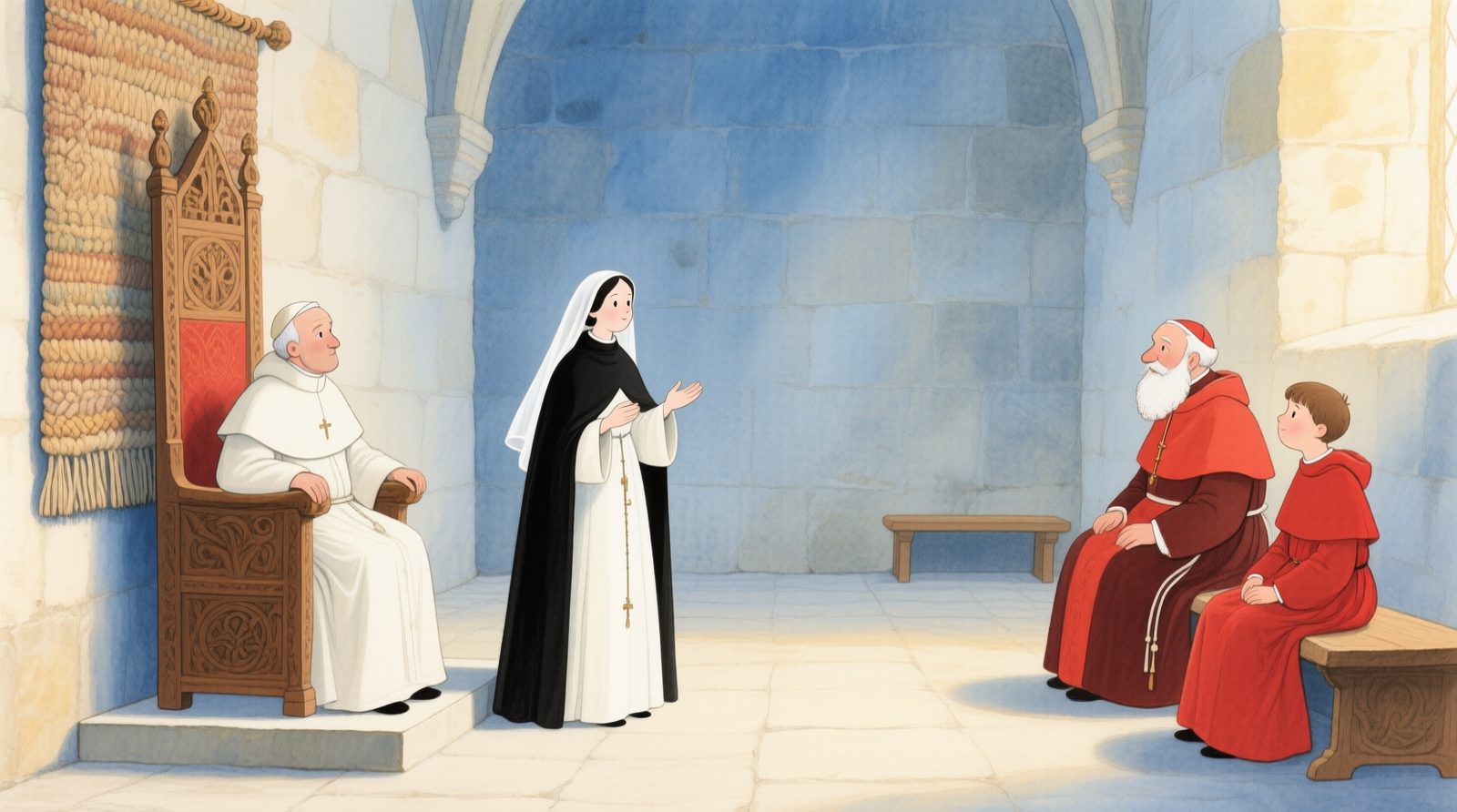
The meeting impressed everyone. On one side, Catherine, a simple Dominican laywoman; on the other, the leader of Christendom, surrounded by cardinals and nobles. Catherine was not intimidated. She knelt and kissed the Pope's feet — and then looked him in the eye and spoke truths no one else dared to say.
"Holy Father, God has revealed to me that you made a secret vow to return to Rome," she said. "Keep your vow. Go back. The Church needs it. Do not fear the dangers, for God will protect you."
It was true: the Pope had made that vow and had never told a soul. He was deeply shaken. How could Catherine know, unless God Himself had revealed it?
The Pope Returns to Rome
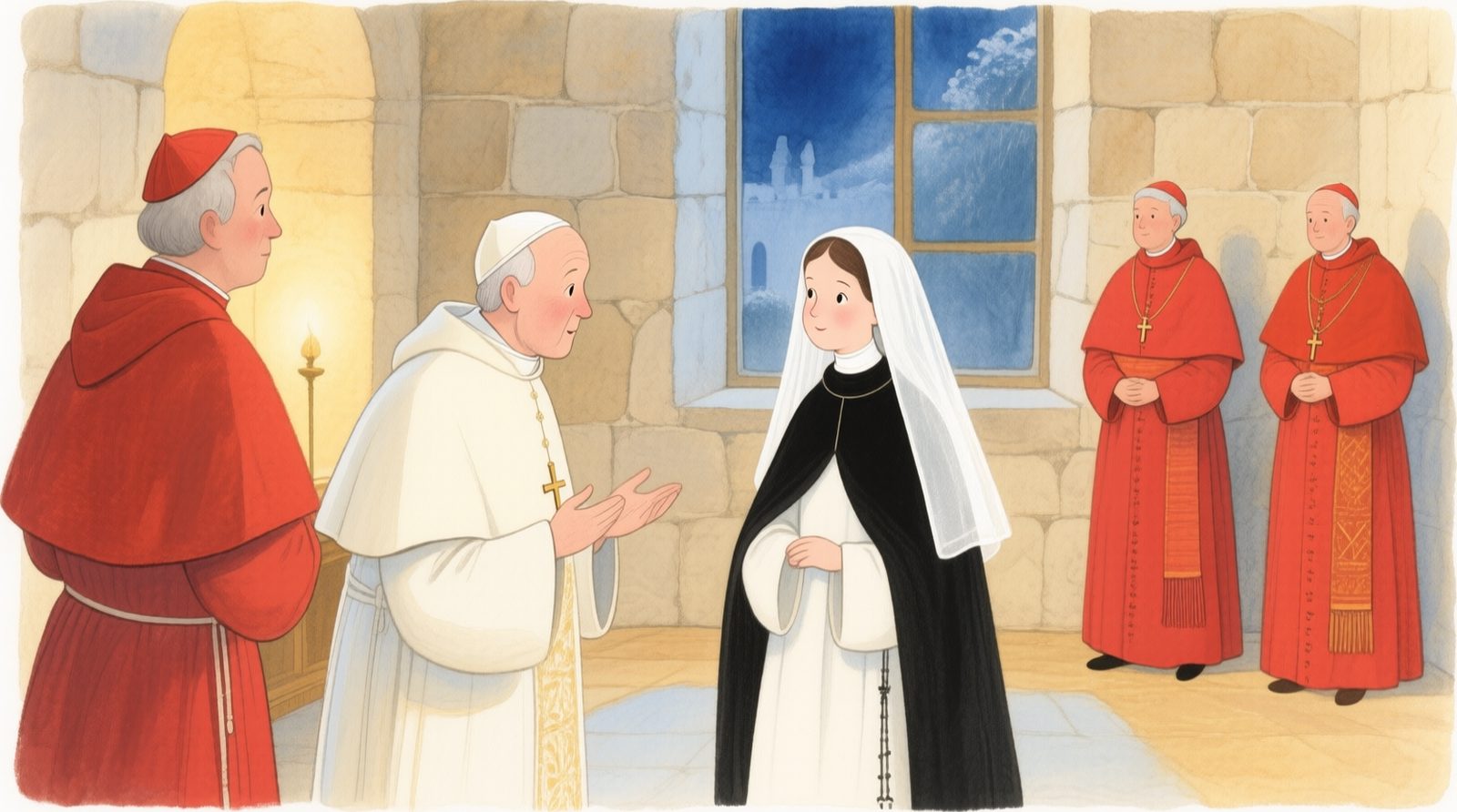
After months of prayer and Catherine's insistence, the Pope made up his mind. On September 13, 1376, he left Avignon and set out for Rome. Everyone was astonished, and the French cardinals protested that it was far too dangerous. But the Pope stood firm: Catherine was right, and God was calling him back.
On January 17, 1377, after nearly seventy years, the Pope entered Rome. The crowds celebrated, the bells rang, and the whole city rejoiced. And everyone knew that Catherine had been the key instrument of it all: a laywoman of twenty-nine had accomplished what cardinals and kings could not.
The Great Schism
In 1378, Pope Gregory XI died, and the cardinals elected a new Pope, Urban VI. But then a terrible problem arose: the French cardinals refused to accept him and elected another pope in Avignon, Clement VII. Now there were two men claiming to be Pope, one in Rome and one in Avignon. It was the Great Western Schism, a division that split Europe in two and plunged the Church into confusion.
Catherine suffered immensely and worked without rest for unity: she wrote letters, traveled, counseled, prayed. She defended Urban VI, the Pope in Rome, as the legitimate one, but she did not fail to correct his faults as well.
"Holy Father, you are the true Pope," she would say. "But your harshness drives people away. Be firm, and be charitable too."
"The Dialogue"
It was during this turbulent time that Catherine composed her extraordinary work: "The Dialogue", also called the "Book of Divine Providence". It is a long conversation between her and God the Father, which Catherine dictated in ecstasy while her secretaries wrote it down.
"The Dialogue" is a masterpiece of mystical theology. It speaks of God's providence, of discernment, obedience, and prayer, and gives us the famous image of Christ as the bridge joining earth to Heaven. It is a deep, beautiful, inspired book, which became a classic of Christian spirituality and is studied to this day.
Catherine's Words
Catherine left sayings that have crossed the centuries. The most famous is: "Be who God meant you to be, and you will set the world on fire." She also said that nothing great is done without much suffering, that we cannot have love for God without love for our neighbor, and she summed up her humility in a mysterious, beautiful sentence spoken to God: "I am she who is not; You are He who is."
The Last Months in Rome
In November 1379, at the request of Pope Urban VI, Catherine moved to Rome to work for the unity of the Church. But she was exhausted. Years of fasting, travel, work, and suffering had worn her body out. Even so, she went on praying, writing, and serving.
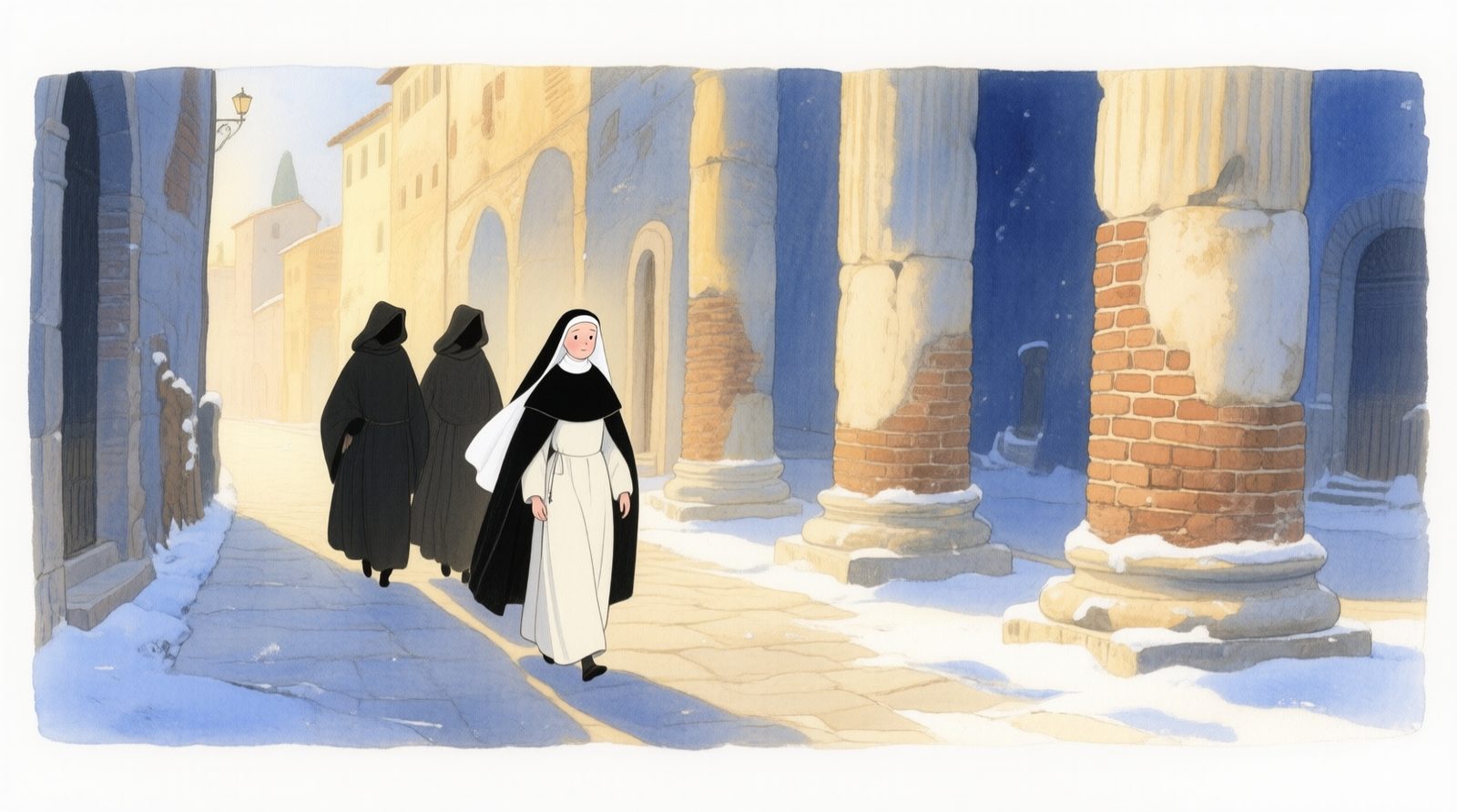
In January 1380, while she was praying in Saint Peter's Basilica, Catherine suddenly felt an enormous weight, as if the whole church were collapsing onto her shoulders. It was a mystical vision: she was carrying the weight of the Church. She collapsed, was carried home, and remained partly paralyzed, no longer able to walk.
In her final months, Catherine suffered greatly. She was in terrible pain and could no longer eat, only drink water. But she did not complain. She offered everything, saying she wanted to suffer for the Church, for sinners, and for the Pope.
"I give my life," she said. "If my death brings peace to the Church, I accept it."
The Death
On April 29, 1380, Catherine came to the end. She was only thirty-three, the same age as Jesus. She was surrounded by her disciples and spiritual friends. She asked forgiveness for her failings, blessed them all, and gave her last counsels in a voice already very faint.
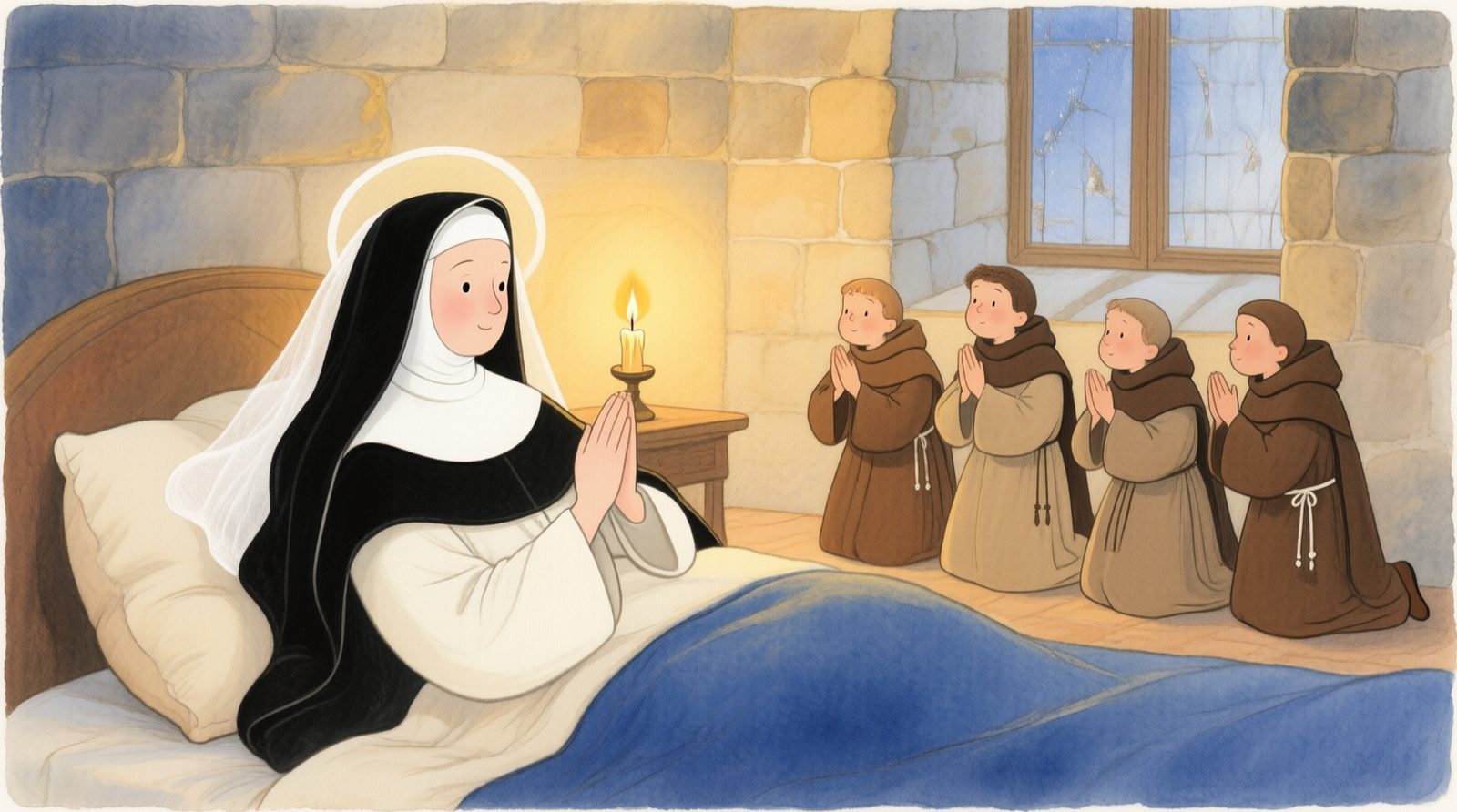
Her last words were the same as Jesus' on the cross:
"Father, into your hands I commend my spirit."
And she kept whispering, softly, "Blood... Blood...", thinking of the Blood of Christ that saves. At noon, the same hour when Jesus hung dying, Catherine died in peace. She lived a short life, but she lived every day of it intensely.
After her death, something extraordinary happened: the stigmata, invisible during her life, became visible. Everyone could see the marks on her hands, her feet, and her side. And her body did not decay: it remained incorrupt, giving off a gentle perfume.
The Funeral
The funeral was immense, and all of Rome wept for the saint they called their mother. But amid the tears there was gratitude too, because everyone knew they had gained a powerful intercessor in Heaven. Catherine's body was buried in Rome and later moved to the Church of Santa Maria sopra Minerva, where it remains to this day, in a beautiful reliquary.
Canonization
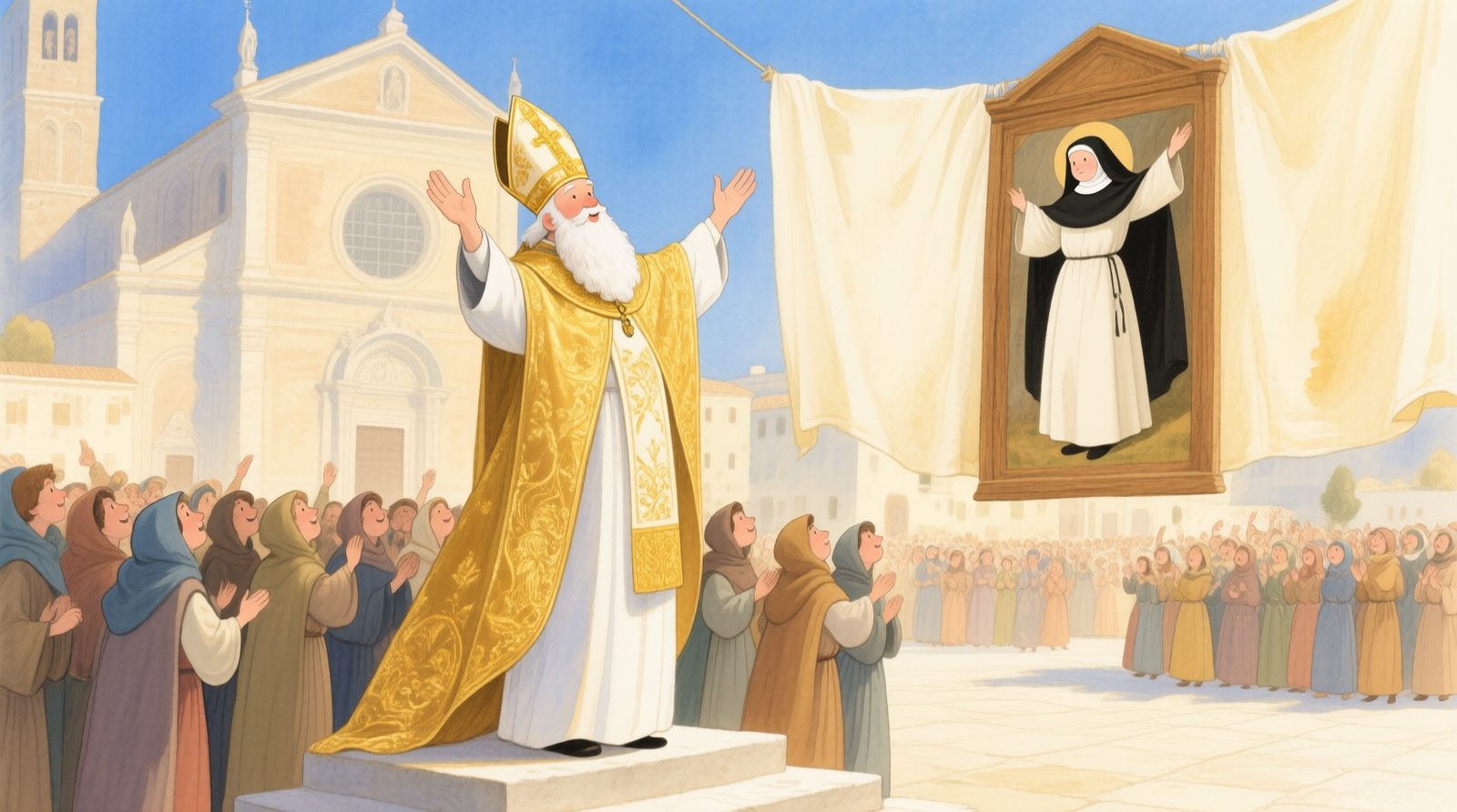
In 1461, eighty-one years after her death, Pope Pius II canonized Catherine. Siena and Rome celebrated together: the laywoman who changed the Church was now, officially, Saint Catherine of Siena.
Patroness of Italy
In 1939, Pope Pius XII declared Saint Catherine Patroness of Italy, alongside Saint Francis of Assisi. It was a beautiful recognition: the woman who had worked so hard for peace in Italy became the patroness of the nation.
Doctor of the Church
On October 4, 1970, Pope Paul VI declared Saint Catherine a Doctor of the Church — one of the first women in history to receive that title, together with Saint Teresa of Avila, proclaimed the same year. Doctor of the Church means that her teachings are so precious that the whole Church should study them.
It was an incredible recognition. Catherine, a laywoman without schooling, became a teacher of the universal Church. Her life proves that God does not look at titles, but at hearts: what matters is not gender, education, or position, but being available to God.
The Legacy, and Siena Today
Saint Catherine left an immense legacy: the holy boldness of one who corrects out of love, mystical union with God, "The Dialogue" and hundreds of letters, her service to lepers and the dying, and the historic feat of bringing the Pope back to Rome. Today, Siena honors its most famous daughter: the house where Catherine was born has become a shrine, the room where she had her visions is now a chapel, and thousands of people visit them every year. All over the world, churches, schools, and hospitals bear her name.
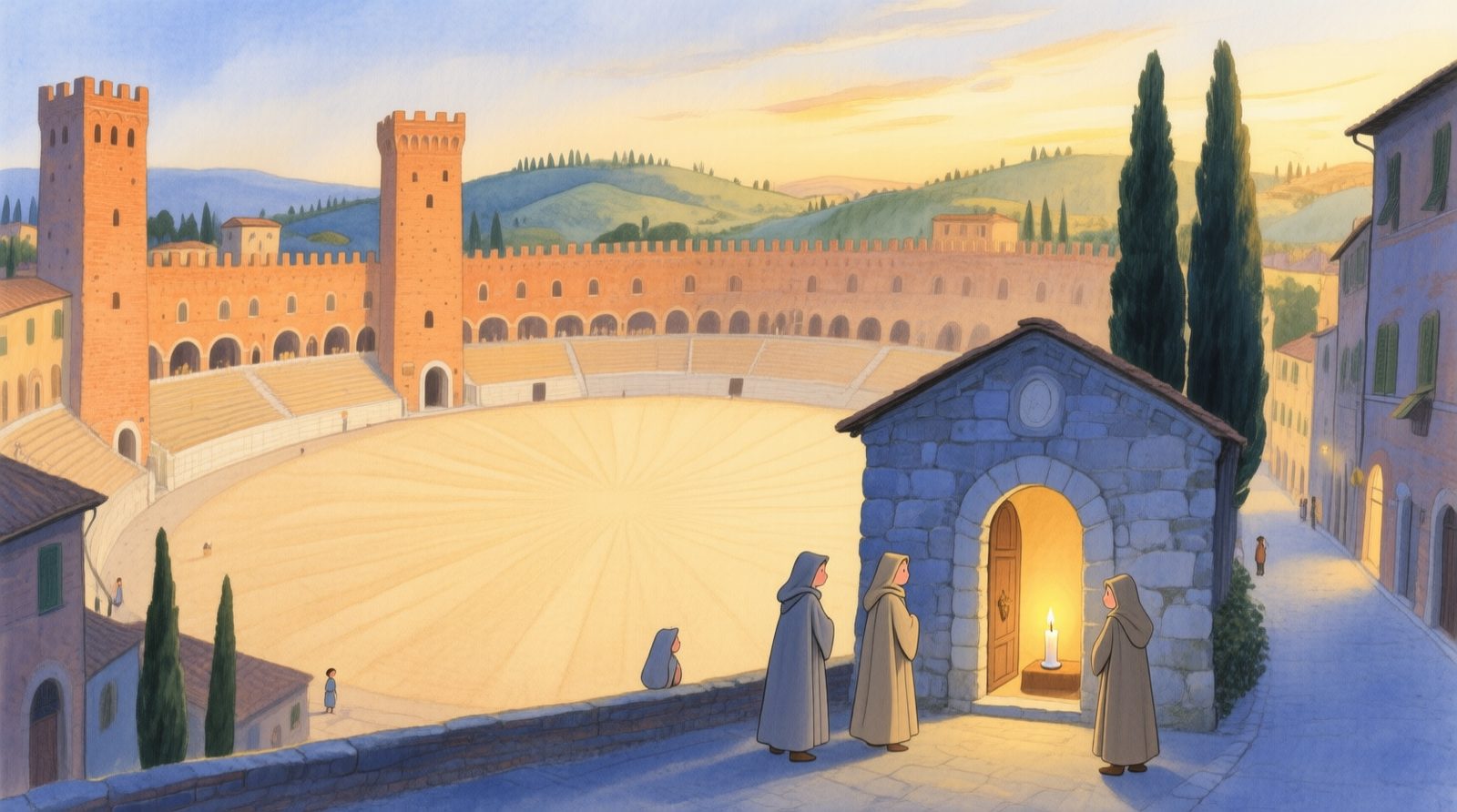
Catherine's teachings remain timely: the Church must always renew itself, its leaders should be holy, laypeople and women have an essential role, correcting with love is the duty of those who love, and to serve the poor is to serve Christ Himself.
And her most famous saying sums it all up: "Be who God meant you to be, and you will set the world on fire." Catherine was exactly who God meant her to be. She never became a nun, but a laywoman; she never studied, but she was wise; she was neither rich nor powerful, yet she changed Rome, the Church, and the world — because she gave God her whole yes.
Moral of the Story


