
After the coronation of Charles VII, the mission the voices had given Joan was complete. Free Orléans and crown the king: she had done both in just four months, at seventeen years old. But Charles asked her to stay, saying he still needed her, and Joan, always obedient, went on fighting. Something, however, had changed. The victories no longer came so easily.
The Attack on Paris
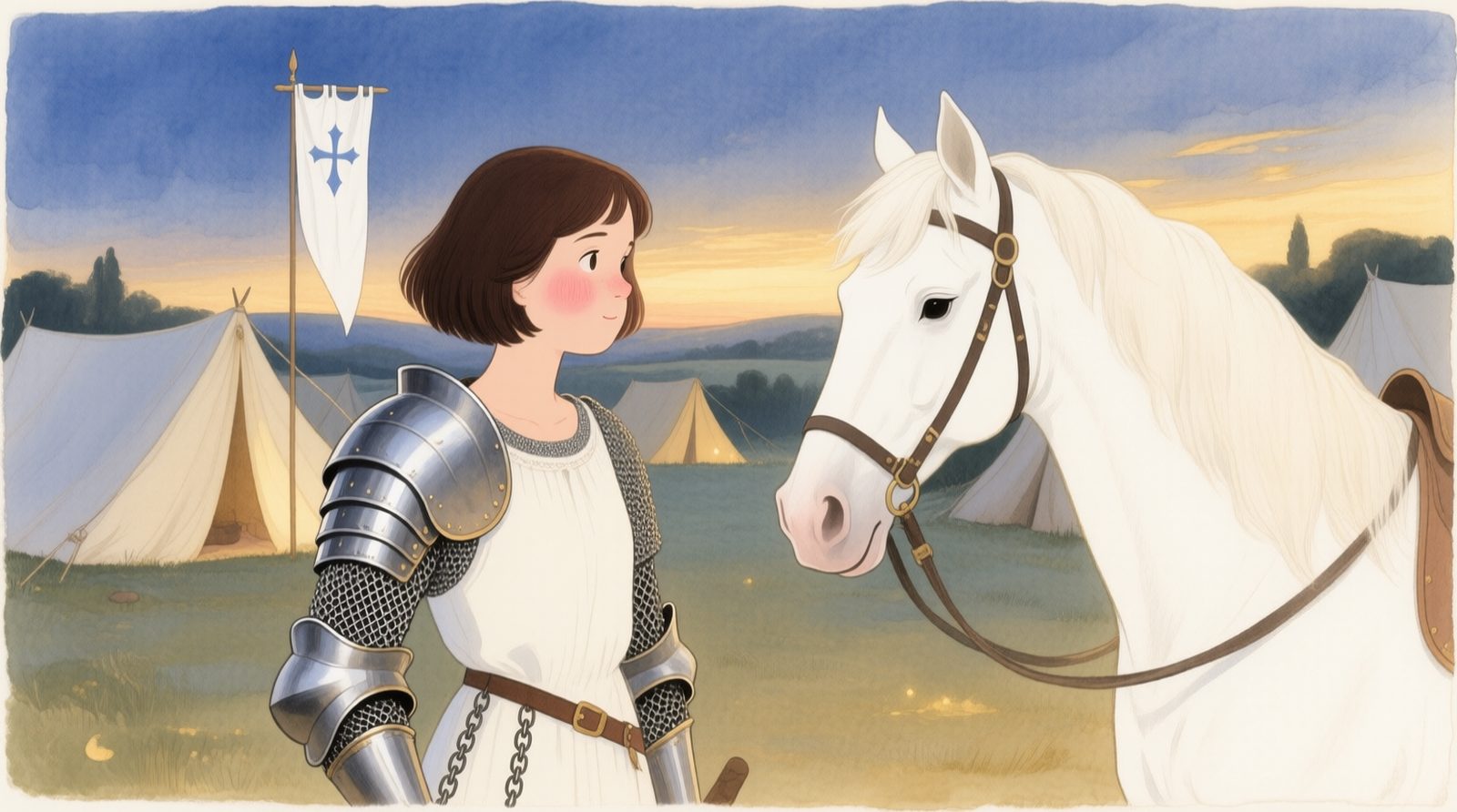
In September 1429, Joan wanted to attack Paris, which was in English hands. Charles VII hesitated, preferring to negotiate, but in the end he allowed the attack. This time, though, the army failed. Joan was wounded in the leg by an arrow and had to retreat. It was her first defeat. And the voices had already warned her, in secret, that she would not last much more than a year.
May 23, 1430: The Capture
In the spring of 1430, Joan was defending the city of Compiègne. During a battle, the Burgundians — Frenchmen allied with the English — surrounded her. Joan fought bravely and tried to escape, but she was pulled from her horse and captured. She was only eighteen. The Burgundians took her away as their prisoner, and the gates closed behind her.
Sold to the English
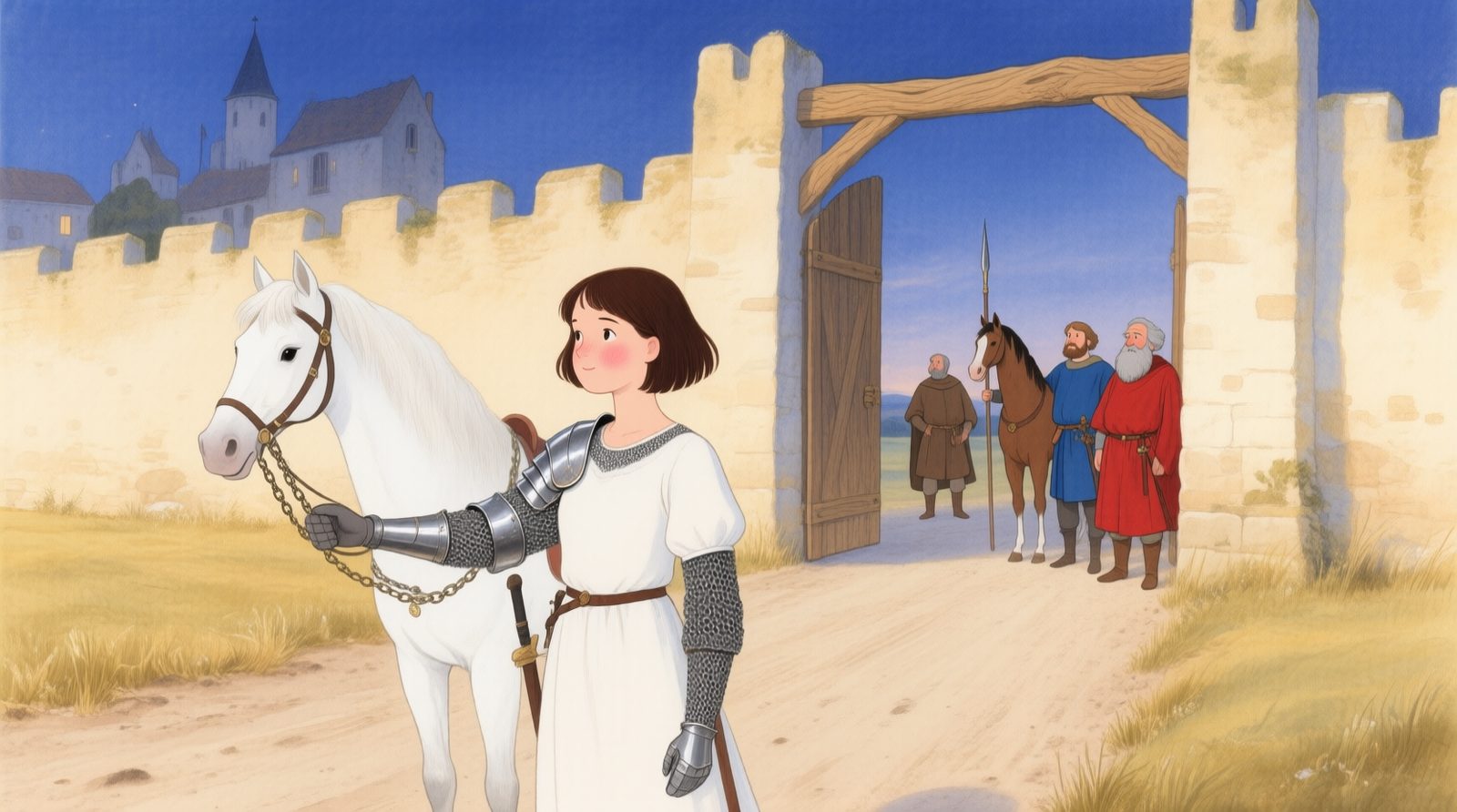
The Burgundians sold Joan to the English for ten thousand coins, as if she were merchandise. And Charles VII, the king she had crowned, did nothing to save her. He offered no ransom, made no negotiation, made no attempt to free her. It was a bitter betrayal, and Joan felt abandoned by men. But she did not abandon God. In prison, she kept praying and trusting.
The English took her to Rouen, in Normandy, and locked her in a tower. They chained her feet and set guards over her day and night, as if she were a dangerous criminal. Joan was alone, with no friends or family near. God was all she had left. And God was enough.
The Unjust Trial
The English wanted to destroy Joan's good name. If they could prove she was a witch or a heretic, then her victories would seem to be the devil's work — and Charles VII, a king crowned by a witch, would be no true king at all. So they set up a religious trial, led by Bishop Pierre Cauchon, a Frenchman in the service of the English, and gathered dozens of theologians and judges.
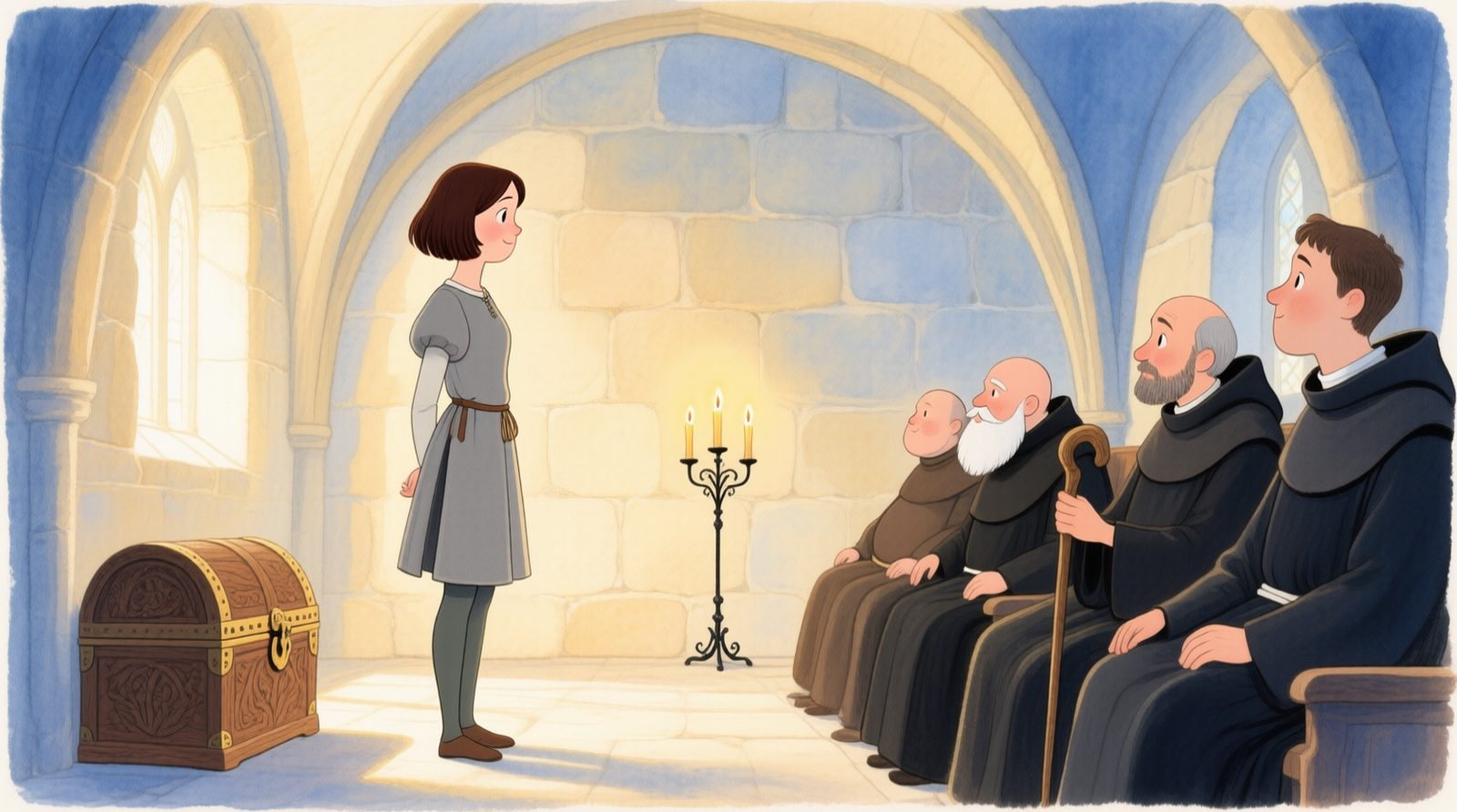
The trial began on February 21, 1431. Joan was nineteen, standing alone before dozens of learned men, with no lawyer to defend her. They asked complicated questions, true theological traps, hoping she would contradict herself. But Joan, who had never studied, answered with a wisdom that astonished everyone.
"Are you in a state of grace?" they asked one day. It was a trick question: either answer could condemn her.
"If I am not, may God put me there," Joan replied. "And if I am, may God keep me there."
The judges were left speechless.
The Men's Clothing
One of the main charges against her was a strange one: Joan wore men's clothing, and the judges said this was against God's law. Joan calmly explained that she wore it for protection. In prison, surrounded by male guards at every hour, those clothes were her defense. But the judges refused to listen and insisted it was a grave sin.
May 24: The "Abjuration"
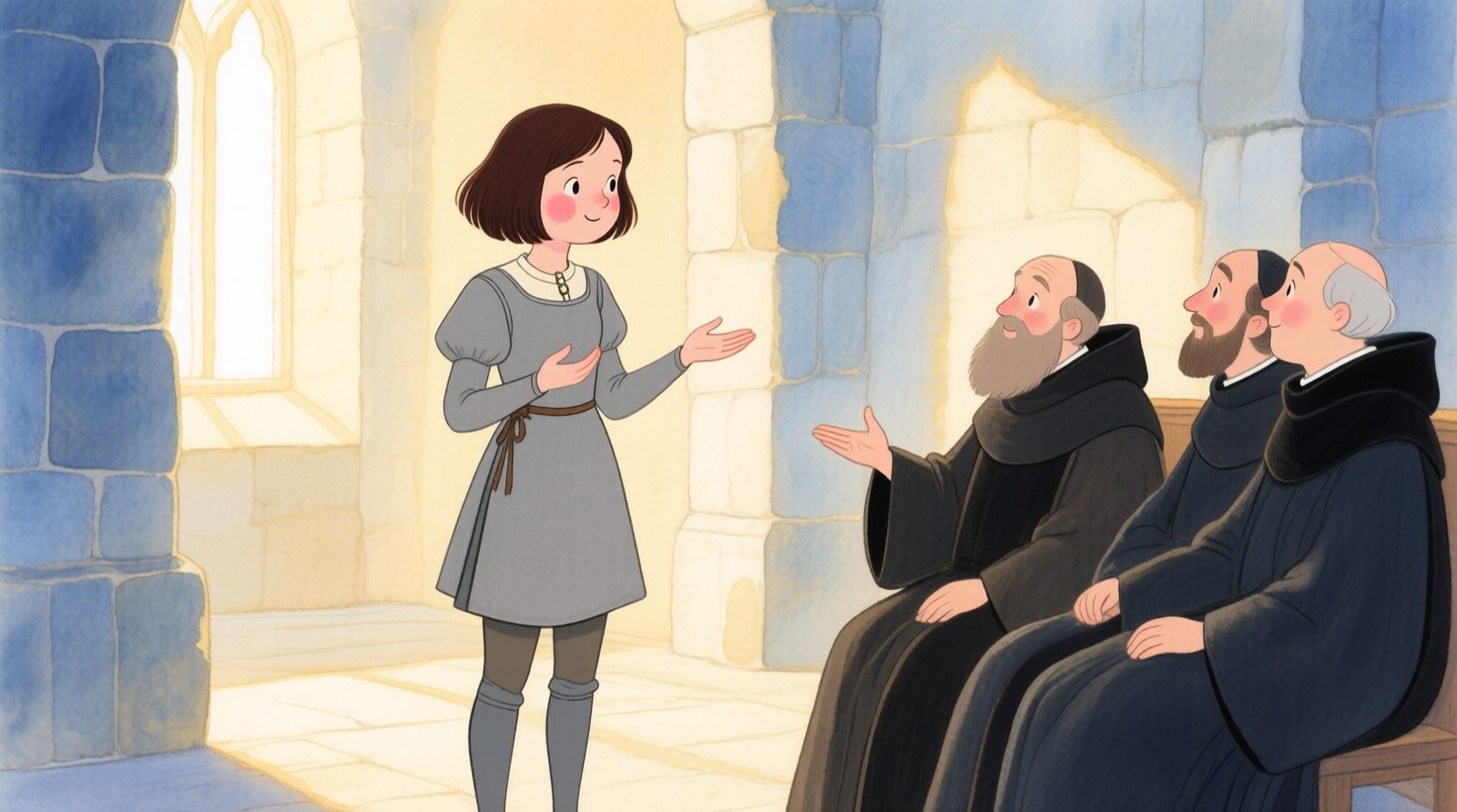
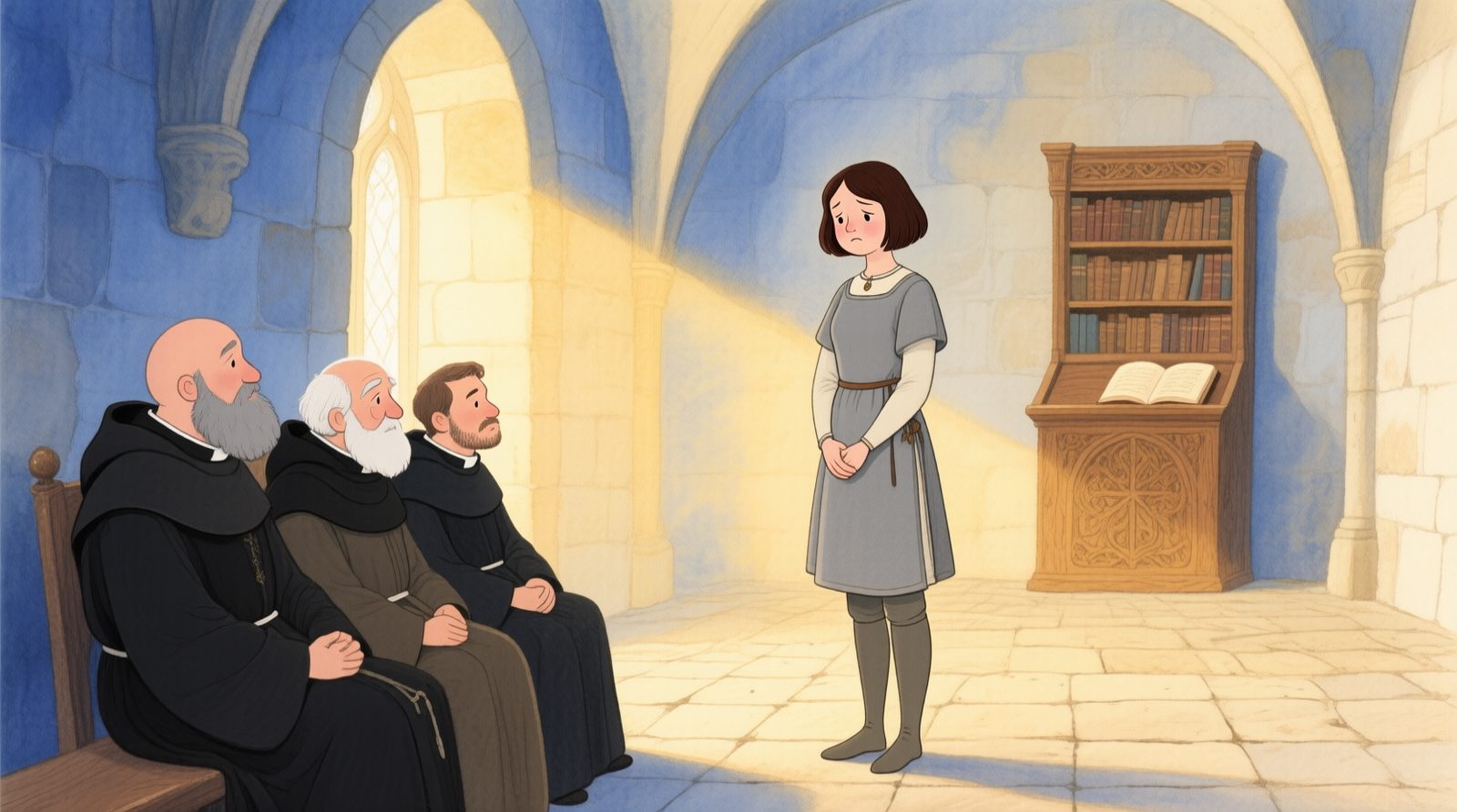
After months of harsh interrogation, Joan was exhausted. They threatened her with torture and with the stake, and promised that if she admitted she had been wrong, she would be given a gentler prison. Joan, young and frightened, signed a document she could not read. They told her it was a confession of error and a promise never again to wear men's clothing. She did not know it was a trap.
Instead of a gentler prison, they kept Joan in chains. And during the night, they took away her women's clothes, leaving only men's clothing in her cell. When she woke, Joan had no choice: she put on what was there. At once the judges accused her of breaking her promise and declared her a relapsed heretic. It had all been arranged. They only wanted an excuse to condemn her to death.
The Death Sentence
On May 30, 1431, Joan was brought before the judges for the last time, and Cauchon read the sentence: Joan was declared a heretic and would be burned at the stake. Joan wept — not from fear, but from sorrow, because they told her the Church was condemning her, when in truth it was a corrupted court that condemned her. She cried out to the King of France, naming the injustice done to her. But Charles was far away, and he did nothing.
May 30, 1431: The Martyrdom
That same morning, they led Joan to the market square of Rouen, where the wood for the fire was already piled high. A crowd came to watch — some with hatred, many with compassion. Joan was nineteen years old. She had lived so little, and done so much. Before climbing up, she asked for a cross. An English soldier, moved with pity, bound two pieces of wood together and handed her a simple cross. Joan kissed it and pressed it to her heart.
They tied Joan to the post. A kind priest, Friar Martin Ladvenu, stayed near her, holding a crucifix up high so that she could look upon Jesus until the end. Then the fire was lit. The flames rose slowly, and the smoke wrapped around Joan. And through it all, her voice rose, clear, repeating a single name:
"Jesus! Jesus! Jesus!"
It was her last word. The name of Jesus.
The witnesses of that day told of extraordinary things. An English soldier swore he had seen a white dove rise out of the flames and fly toward heaven. The executioner, who had put many condemned prisoners to death, walked away weeping, saying they were lost, for they had burned a saint. Even Bishop Cauchon lived out his remaining years full of fear. Joan's ashes were thrown into the river Seine, so they could never become relics. But no one could erase her memory.

1456: The Rehabilitation
Twenty-five years after Joan's death, Charles VII finally acted. Ashamed, he asked for the case to be reviewed, and the Pope authorized a new trial. Hundreds of witnesses were heard, every document was examined, and the truth came to light: the first trial had been a fraud from beginning to end. On July 7, 1456, Joan was declared innocent and recognized as a martyr. Her name was cleared, and her honor restored.
1909: Beatification
Over the centuries, Joan's fame only grew. France saw her as a national heroine, and the Church studied her life with care. In 1909, Pope Pius X declared her blessed, in a great celebration that filled all of France with joy. The peasant girl from Domrémy was now Blessed Joan of Arc, the Maid of Orléans.
May 16, 1920: Canonization
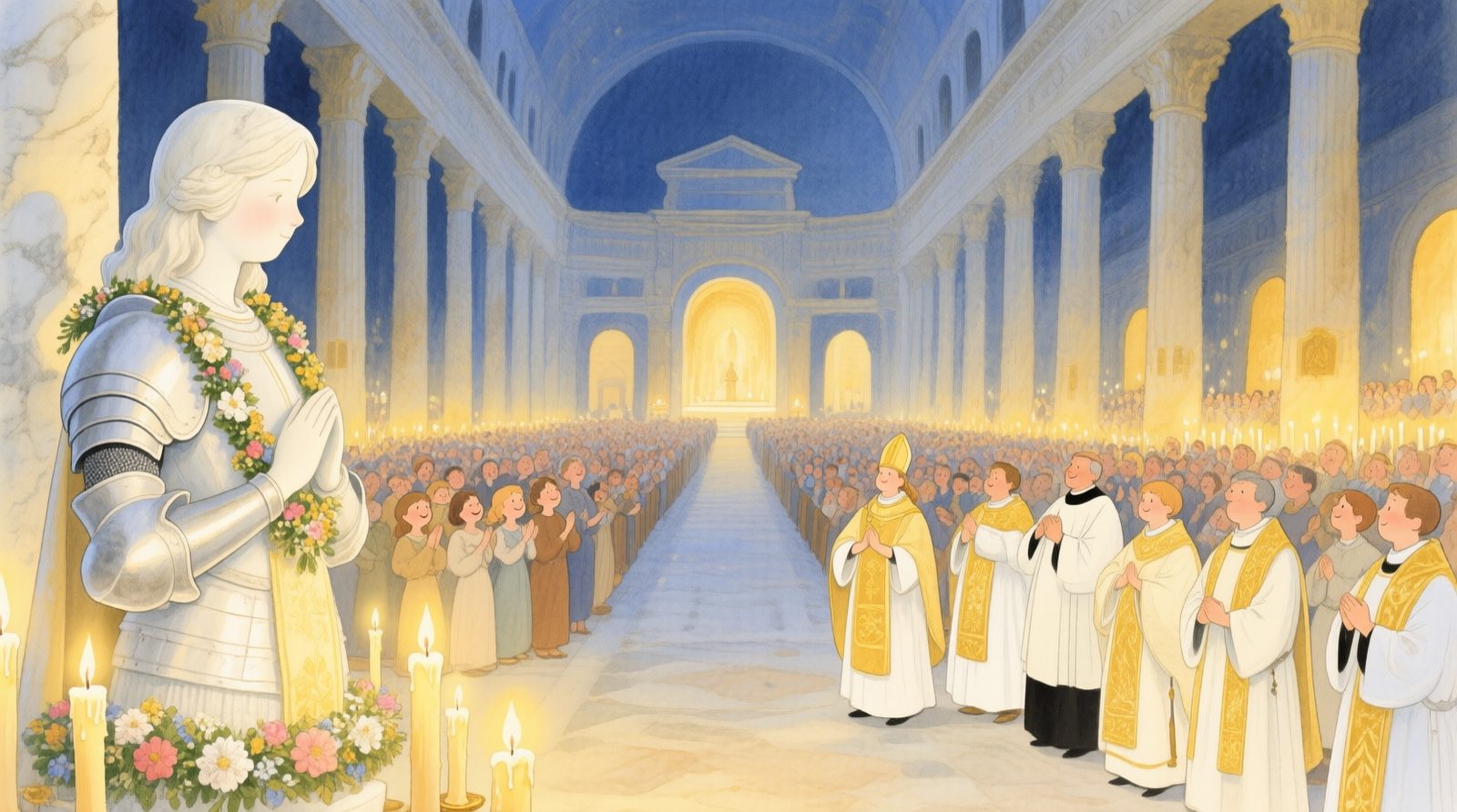
In 1920, nearly five hundred years after her death, the thing that had seemed impossible on that sad day in Rouen came to pass. In Saint Peter's Basilica in Rome, before thousands of faithful from all over France, Pope Benedict XV canonized Joan. The peasant girl who had died in the flames at nineteen was now Saint Joan of Arc, a saint of the whole Church.
Patroness of France
In 1922, Pope Pius XI declared Saint Joan of Arc a secondary patroness of France. Her feast is celebrated on May 30, the day of her martyrdom. Churches are dedicated to her and statues of her stand all over France; the little house where she was born, in Domrémy, is now a museum, and Rouen, where she died, keeps a church in her honor. Saint Joan is today one of the most beloved saints in the world.
The Legacy of Saint Joan of Arc
What Saint Joan left us is a rare and complete example. She had the courage to face armies and tribunals, and she obeyed God even when everything seemed like madness. She kept her heart pure in the middle of war camps and held her faith firm even within the flames. In victory, she gave all the glory to God; in suffering, she did not curse her enemies. She loved her homeland enough to give her life for it, and she would say, serenely, that she feared nothing, because God was with her.
Saint Joan Today
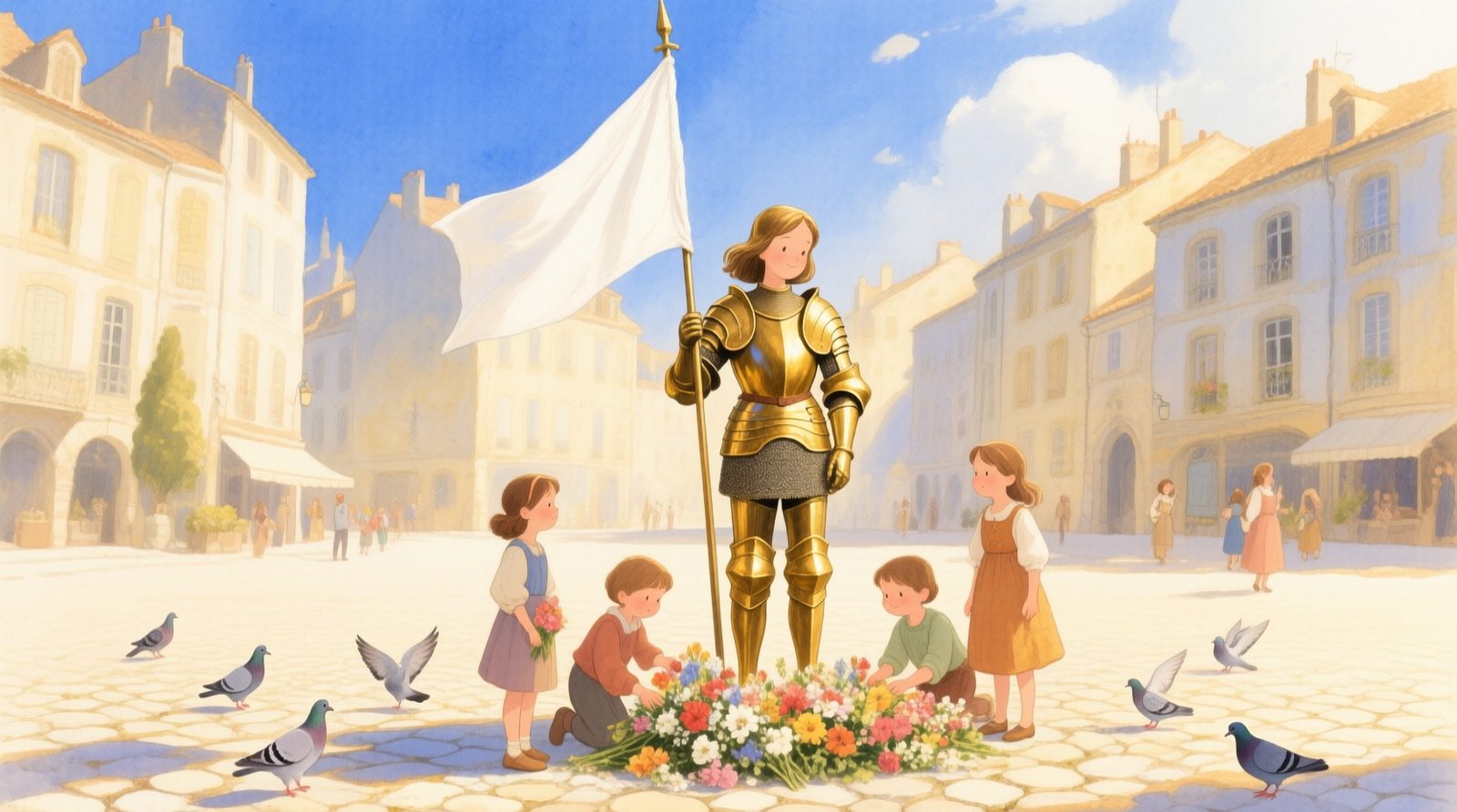
Even now, Saint Joan of Arc goes on inspiring the most different kinds of people. Soldiers call on her as their protector, young people admire her example of courage, and Christians around the world venerate her as a martyr. Her life shows something simple: God does not choose the famous or the powerful — He chooses those who trust and obey.
The Last Words
It is worth remembering: Joan was only nineteen when she died. At that young age, she had already freed a city, crowned a king, and faced down armies. And she faced her own death with a courage that put many grown men to shame. Her last words were the name of Jesus, repeated three times — the name that had carried her through her whole life, and carried her home to heaven.
Reflection


