
The twelve small monasteries Benedict had founded at Subiaco were flourishing, and hundreds of monks came to seek God under his guidance. But not everyone was pleased. An envious priest named Florentius could not bear to see so many people flocking to Benedict, and he tried to destroy him in various ways — even with poison, and with temptations set against the monks. Benedict realized that, for everyone's good, it was time to move on once more.
Monte Cassino
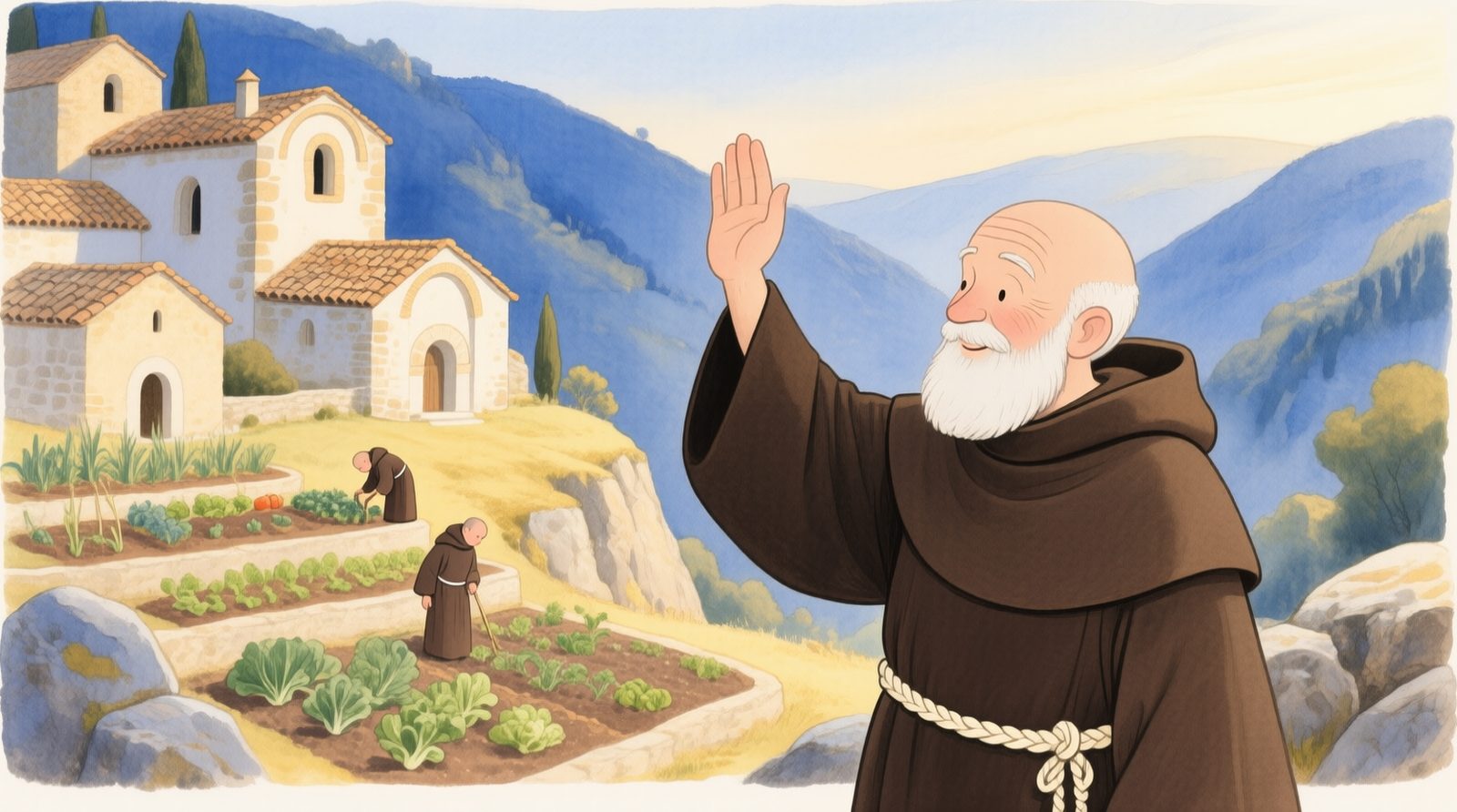
Around the year 529, when Benedict was nearly fifty, God called him to a new mission: to climb Monte Cassino, a high mountain in central Italy, between Rome and Naples. At its summit stood an old pagan temple dedicated to Apollo, where the people of the region still held their rituals. Benedict climbed the mountain with a few faithful disciples.
The first thing Benedict did was tear down the altar of Apollo and cut down the grove consecrated to the idols. In the same place, he built two Christian chapels, one dedicated to Saint John the Baptist and the other to Saint Martin of Tours. Then he began raising the Monastery of Monte Cassino, which would become the most important monastery in the history of the West. Where once there had been a center of paganism, a beacon of Christian faith was lit.
The Rule of Saint Benedict
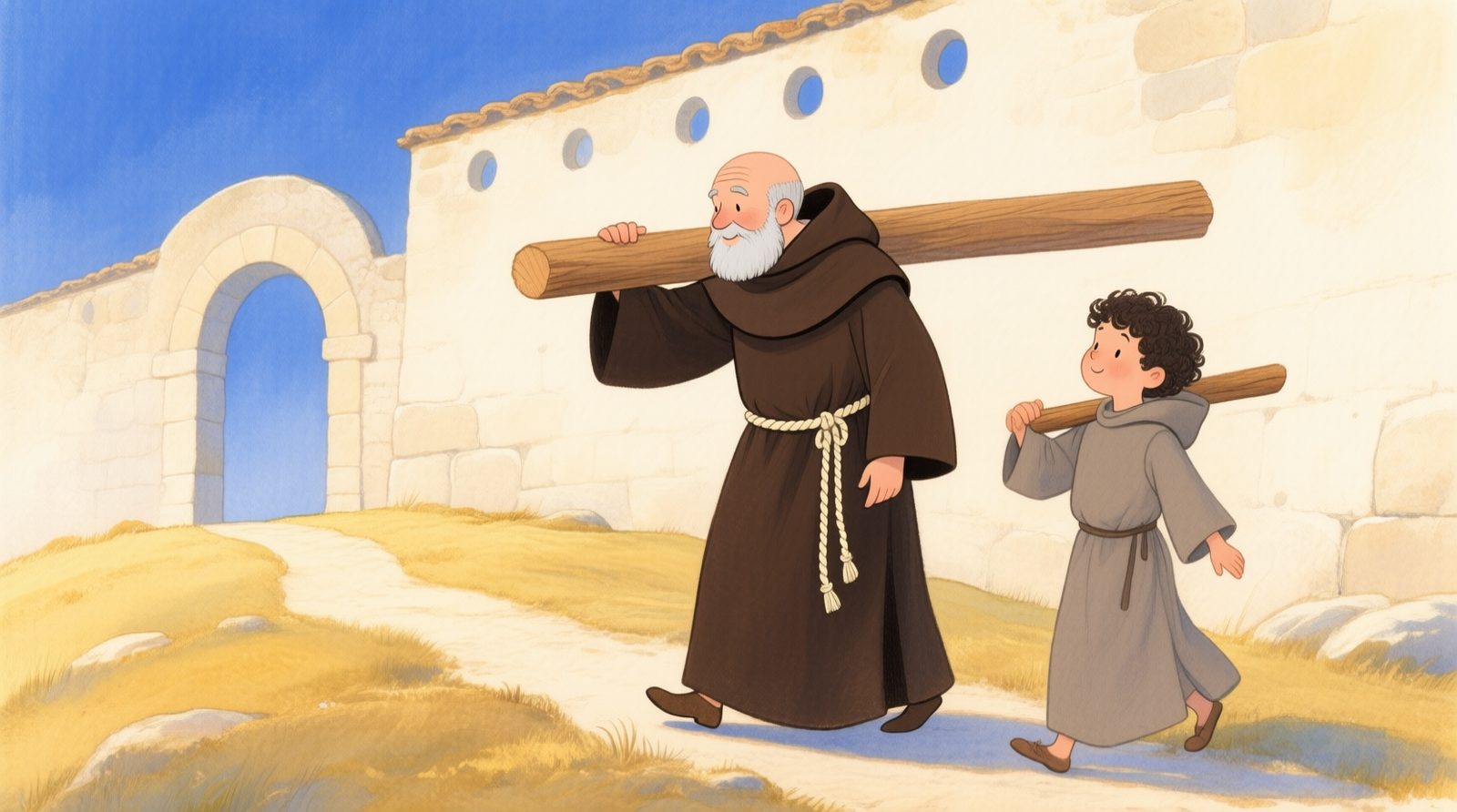
While the monastery was rising, Benedict was writing something that would change the world: the Rule of Saint Benedict, a small book teaching how to live the life of a monk. It was not the first monastic rule, but it was balanced, wise, practical, and deeply spiritual like no other. In seventy-three short chapters, Benedict cared for every detail of life in community. And the heart of it all fit into three words: Ora et Labora — Pray and Work.
Under the Rule, the monk's day was divided between prayer, work, and rest, each thing in its proper hour. The monks prayed the psalms several times a day, worked with their hands and minds with no room for laziness, and had due time to eat and sleep. It was a careful balance: neither exaggerated harshness, which crushes, nor slackness, which corrupts. Benedict himself wrote that he wished to establish "nothing harsh, nothing burdensome."
Principles of the Rule
Some principles of the Rule became famous. Stability: the monk does not hop from monastery to monastery, but puts down roots in one place. Obedience: he obeys the abbot as he would obey Christ. Ongoing conversion: every day, one small step further along the path of holiness. Moderation: no extremes — eat enough, sleep enough, work enough. And hospitality, perhaps the most beautiful of all: every visitor is to be received as if Christ Himself were knocking at the door.
Miracles at Monte Cassino
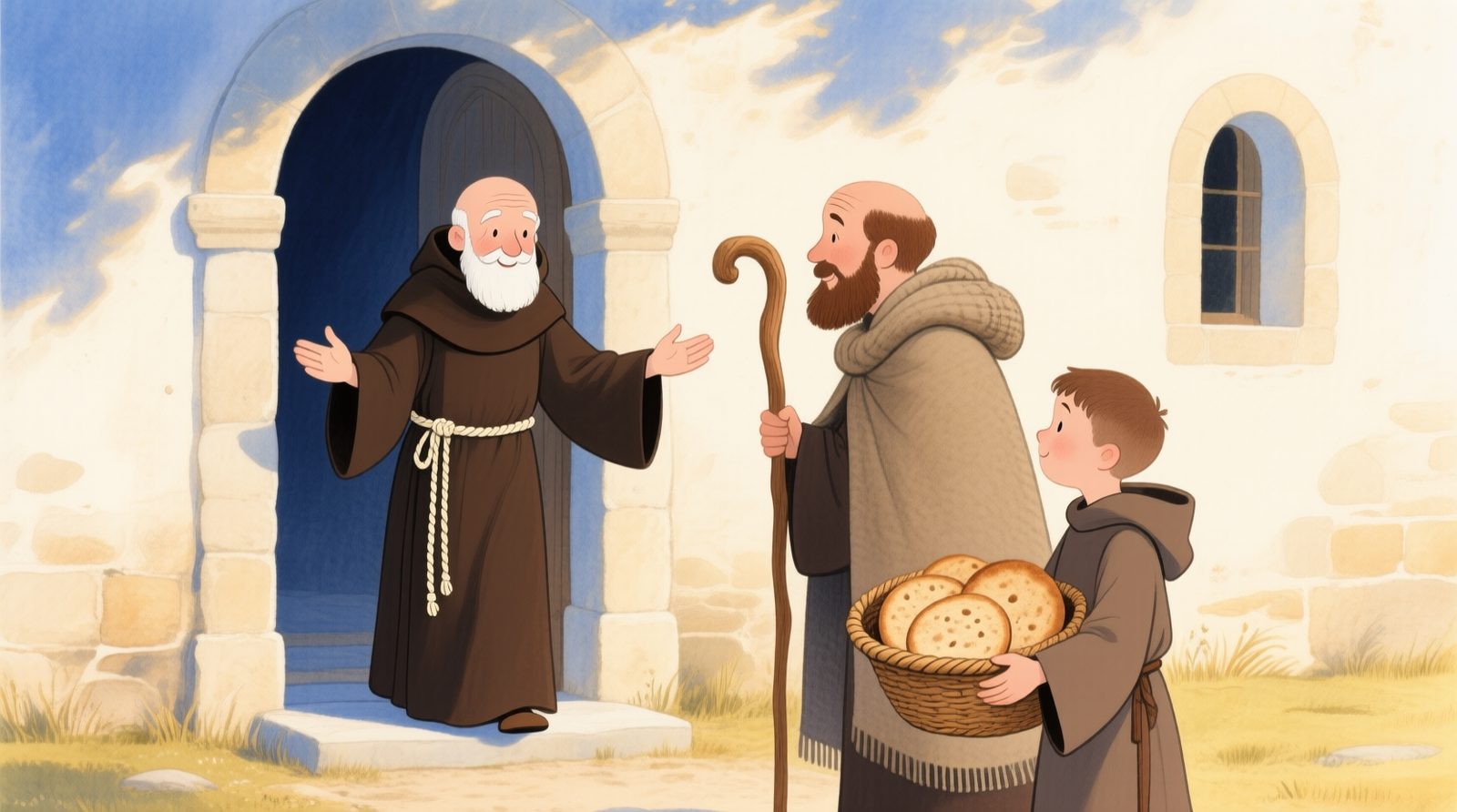
While he built and organized, Benedict went on working miracles. One day, a poor man came asking for help: he owed money, and if he could not pay, he would be made a slave. Benedict had no money at all, but he was moved with compassion and gave himself to prayer. And, mysteriously, gold coins appeared — enough to pay the debt and set the man free.
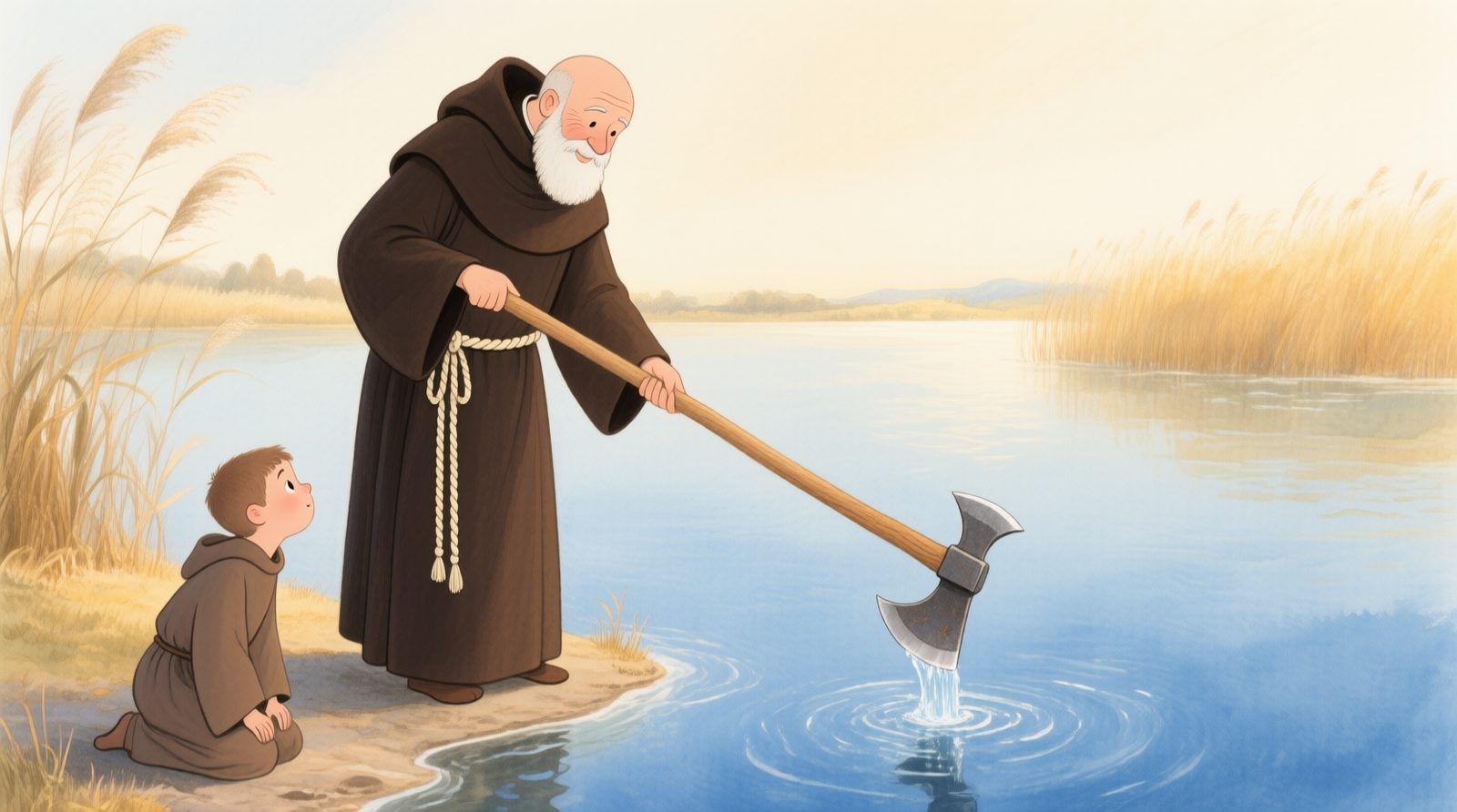
Another time, a young monk went to clear brush at the edge of a lake, and the iron head of his axe slipped off the handle and sank into the water. The monk was heartbroken, for the tool was borrowed. Benedict came, took the wooden handle, dipped its tip into the water, and prayed. The iron rose up from the bottom and fitted itself back onto the handle, exactly as had happened with the prophet Elisha in the Old Testament.
There was also the day when the boy Placid, one of the youngest monks, went to fetch water from the lake, slipped and fell in, and the current began to carry him away. Benedict, who was in the monastery far off, saw it all in a vision and cried out to the monk Maurus to run, for Placid was drowning. Maurus ran, went straight out onto the lake — and only realized afterward, when he returned to the shore with the boy in his arms, that he had walked on top of the water as if it were solid ground.
Totila, the Barbarian King
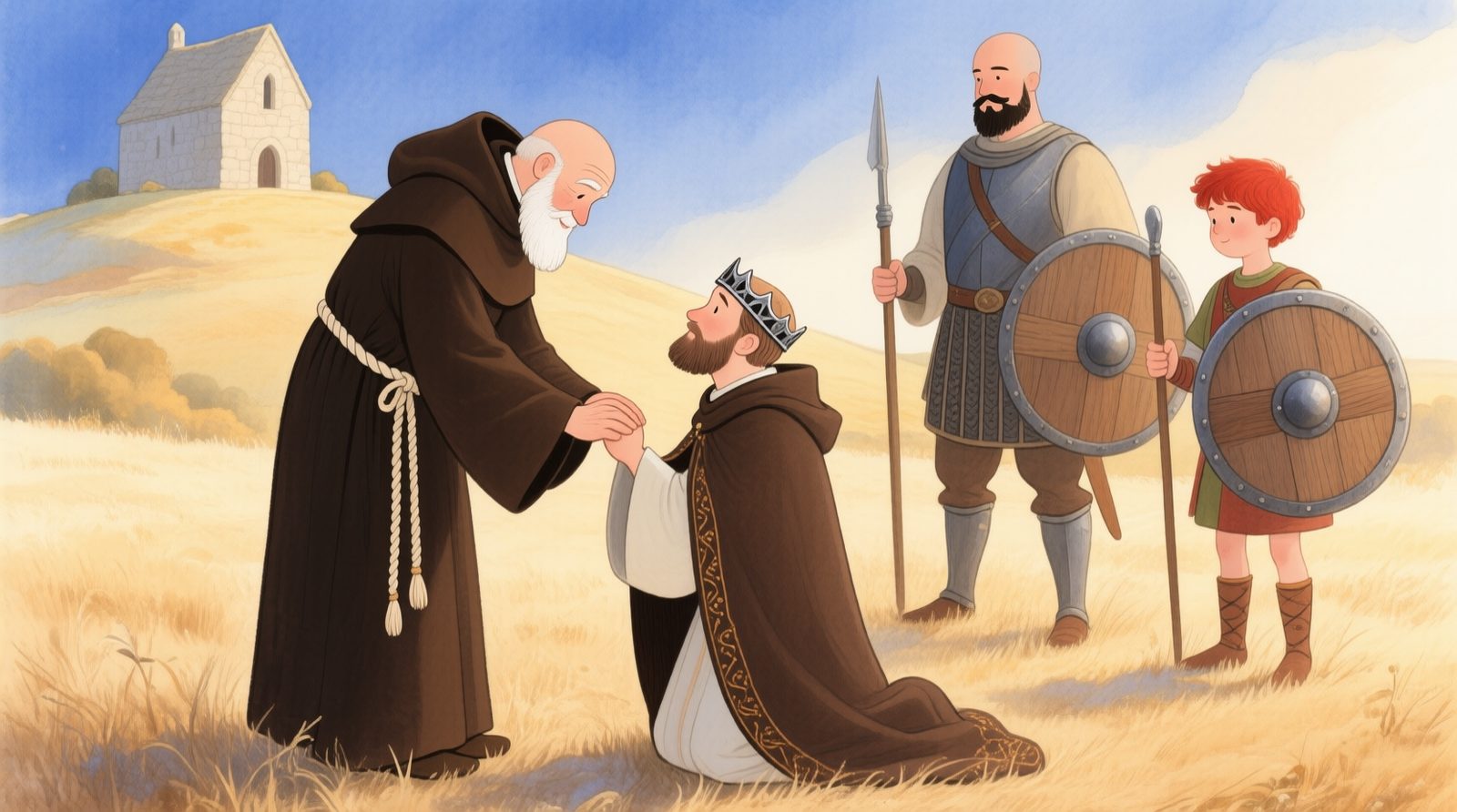
In 542, the barbarian king Totila was advancing through Italy, conquering and destroying. He heard that Benedict was a prophet and decided to test him: he sent a servant dressed in the royal robes, pretending to be the king. When the servant arrived at Monte Cassino, Benedict did not even need to come near. From a distance, he told him to take off those robes, for they were not his. The servant went back ashamed and told Totila everything.
Deeply impressed, Totila came in person and, on seeing Benedict, fell prostrate on the ground, full of fear. Benedict raised him up and rebuked him firmly, ordering him to stop his cruelties. Then he prophesied: Totila would enter Rome, reign nine years, and then die. And it happened exactly so, word for word. They say that from that day on, the barbarian king became less cruel.
Saint Scholastica
Do you remember Scholastica, Benedict's twin sister? She too had consecrated herself to God and lived in a convent near Monte Cassino. Once a year, the two of them met in a little house between the two monasteries to talk about God. In 543, they had their last meeting.
After supper and a long conversation about the things of heaven, Benedict said it was getting late and he had to return to the monastery. But Scholastica felt in her heart that this was the last time they would see each other, and she begged him to stay, so they could spend the night speaking of God. Benedict refused: his own rule did not allow him to sleep outside the monastery. Then Scholastica folded her hands upon the table, bowed her head, and prayed in silence.
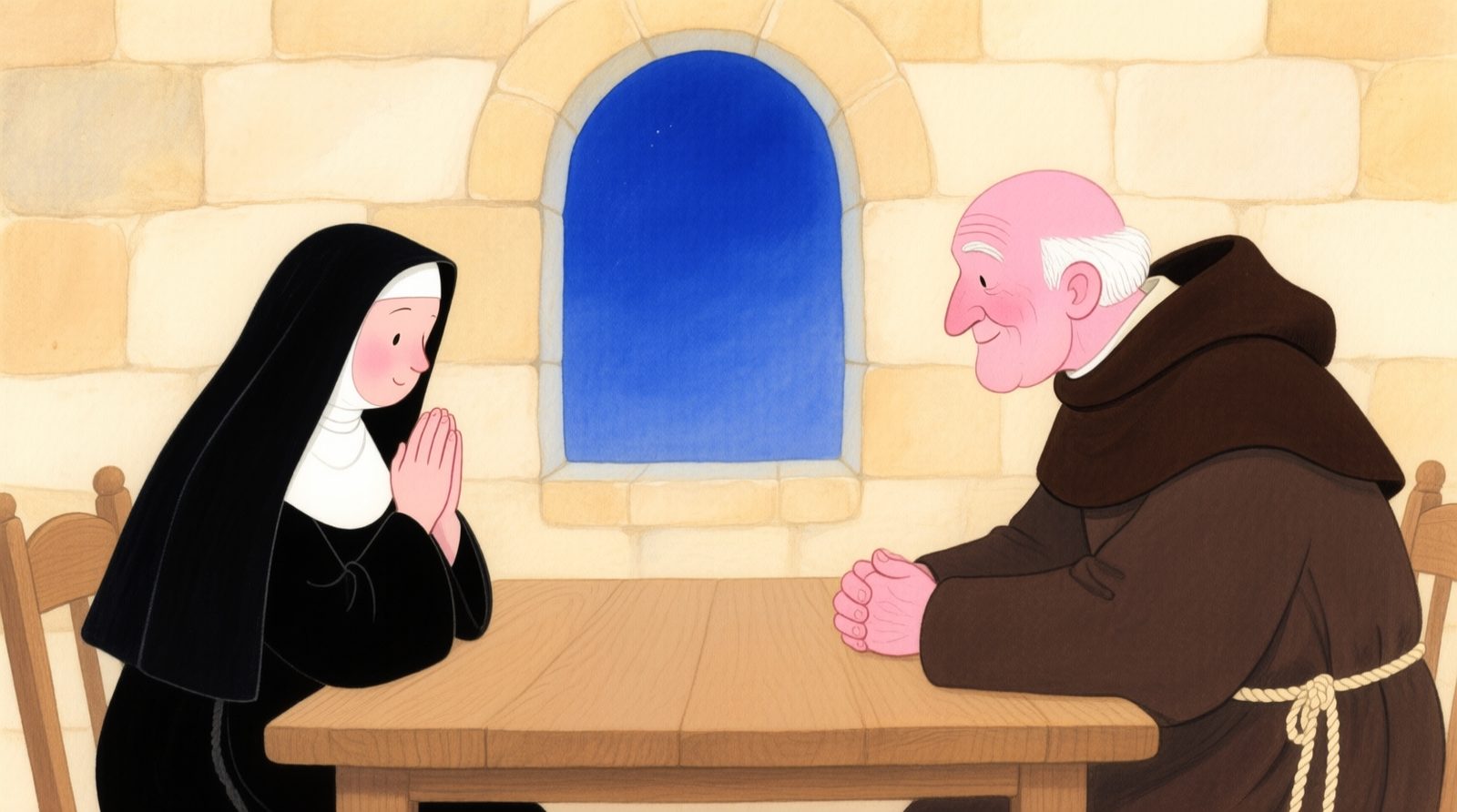
The instant she finished her prayer, a tremendous storm broke from the sky, with thunder, lightning, and torrential rain. It was impossible to take a single step outside that little house. Benedict looked at his sister, understanding everything.
"God forgive you, sister. What have you done?"
"I asked you, and you would not listen to me," Scholastica replied, smiling. "I asked God, and He listened."
Benedict ended up laughing too, and he stayed. They spent the whole night talking about the life of heaven.
Three days later, Benedict was praying in his cell when he lifted his eyes and saw the soul of Scholastica rising to heaven in the form of a white dove, shining, on her way to God. Benedict wept — but with joy, because his sister was in heaven. He sent for her body and buried it in the tomb he had prepared for himself. The two whom life had separated would not be separated in death.
March 21, 547: The Death of Benedict
A few months later, Benedict himself fell ill. Knowing he was going to die, he had his tomb opened six days beforehand. On March 21, he asked to be carried to the chapel, where he received the Body of Christ for the last time. Then, supported by his disciples, he stood upright, raised his arms toward heaven and, praying like that, standing, he gave his soul to God. He was about sixty-seven years old.
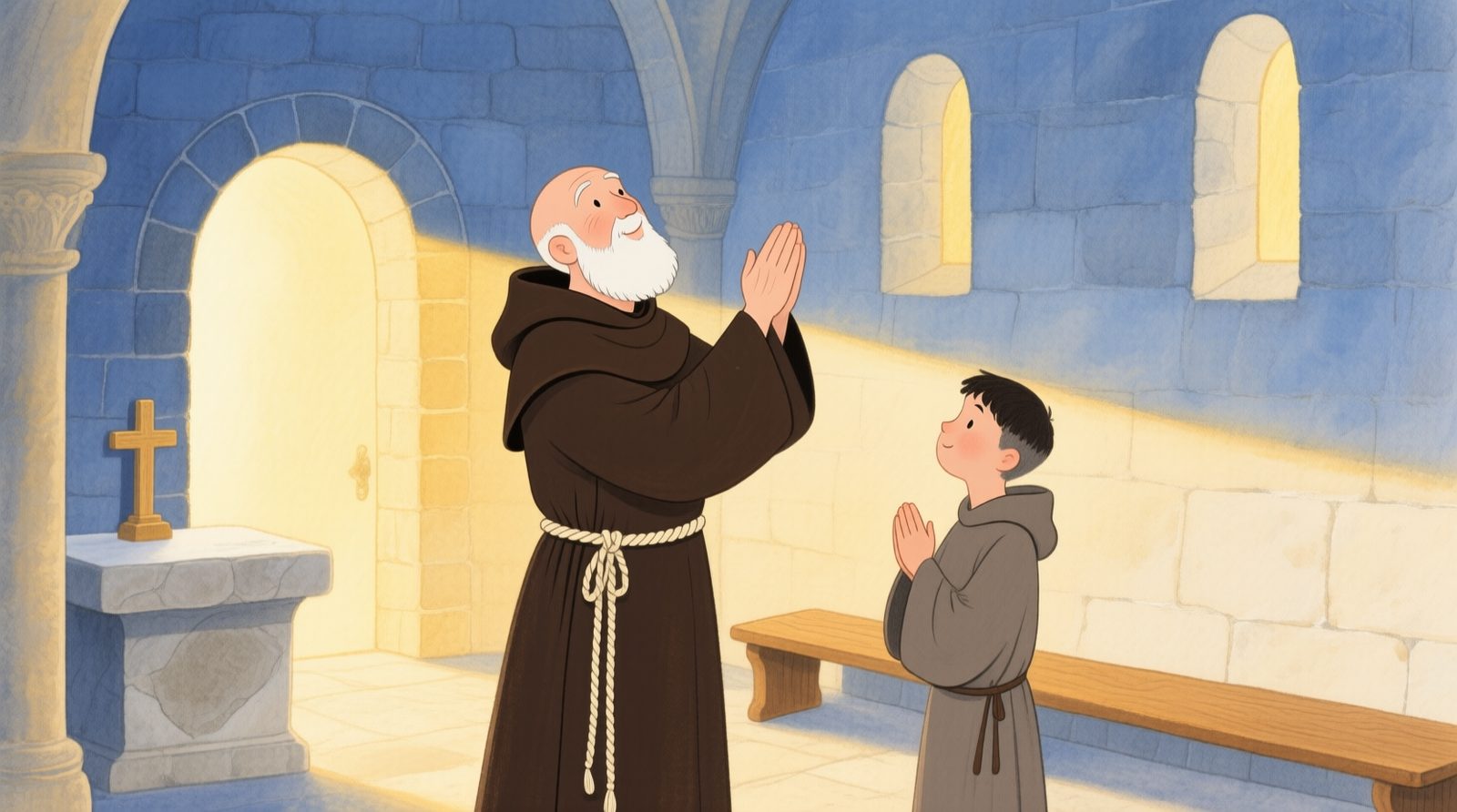
That day, two monks, in different places, had the very same vision. They saw a path leading from Benedict's room up to heaven, covered with precious carpets and lit by rows of torches. And a man of shining appearance told them that this was the path by which Benedict, the beloved of God, had gone up to heaven.
The Legacy of Saint Benedict
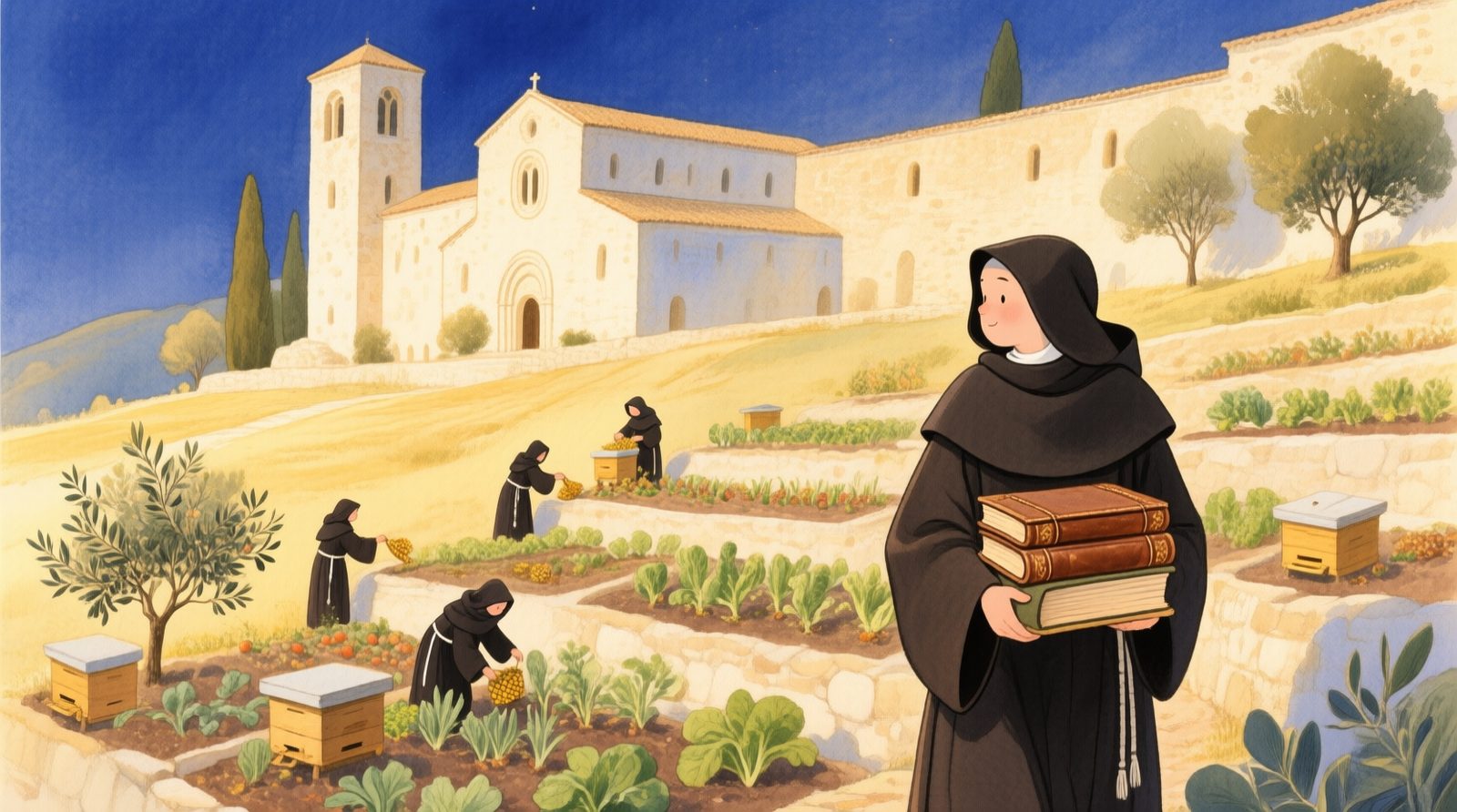
The legacy of Saint Benedict is hard to measure. His Rule has guided thousands of monasteries across fifteen hundred years, and Monte Cassino became a great center of faith and culture for the West. Benedictine monks copied and preserved precious books, developed farming, taught music and art, and kept the light of learning burning through very dark times. And the motto "Ora et Labora" taught everyone that holiness is not extremism, but wisdom and balance.
In 1964, Pope Paul VI proclaimed Saint Benedict Patron of Europe, recognizing that without him and his monks, Christian Europe would not have existed as we know it. The Benedictine Order is alive to this day, with monasteries all over the world following the Rule, and the Medal of Saint Benedict is one of the most beloved among Catholics, a sign of God's protection against evil.
Destruction and Rebuilding
Monte Cassino was destroyed several times throughout history: by the Lombards in 577, by the Saracens in 883, by an earthquake in 1349, and, most terribly, by bombing in the Second World War, in 1944. But it was always rebuilt. Today the monastery stands once more, and Benedictine monks live and pray there, carrying on the mission Benedict began fifteen hundred years ago.
Reflection


