
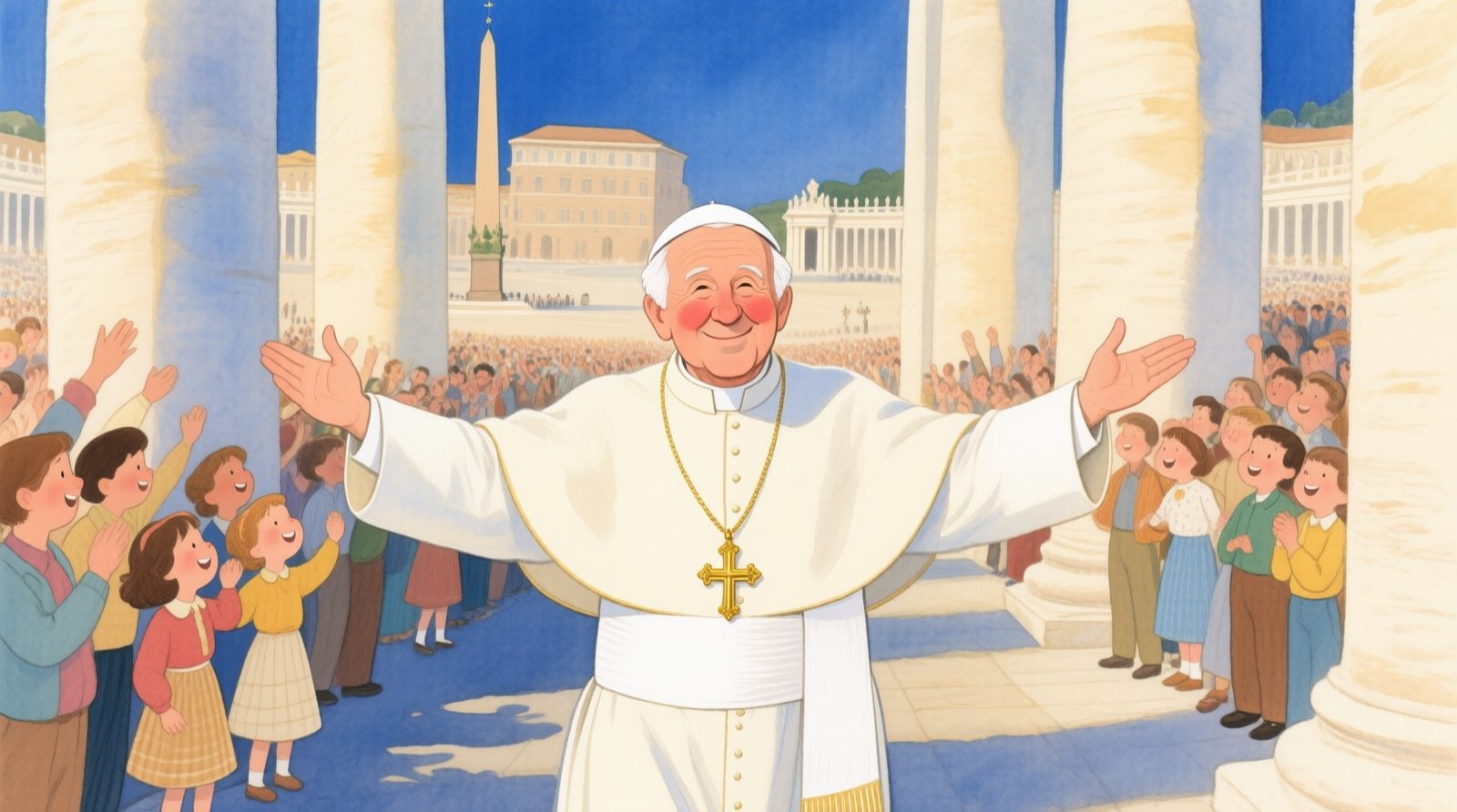
John Paul II began his papacy with extraordinary energy. He was fifty-eight years old — young for a Pope — athletic and full of life, and he soon showed that he would be unlike any Pope before him. His call to the world was clear: "Do not be afraid. Open the doors to Christ." And he opened doors himself, almost literally: he left the Vatican and went out to meet the world, becoming the first great pilgrim Pope in history.
The Traveling Pope
In January 1979, only three months after his election, John Paul II made his first journey, to Mexico. It was like a festival: millions of people came out to see the Pope who spoke Spanish, who embraced people, who smiled. And that was only the beginning. Over twenty-seven years as Pope, John Paul II made one hundred and four international journeys and visited one hundred and twenty-nine countries, more than any other leader in history. All together, he traveled more than 1.2 million kilometers — enough to go to the Moon three times.
The Return to Poland
In June 1979, John Paul II made the most important journey of all: he went back to Poland. The communist regime did not want the visit — it feared the visit — but it could not say no to the Pope. For nine days John Paul II traveled across the country, and millions of people came to see him, nearly half the population, as if the whole nation had poured into the streets.
The Pope spoke with courage. He told the people that they were not orphans, that they had dignity, that they were children of God. People wept as they listened, because for the first time in decades they felt hope.
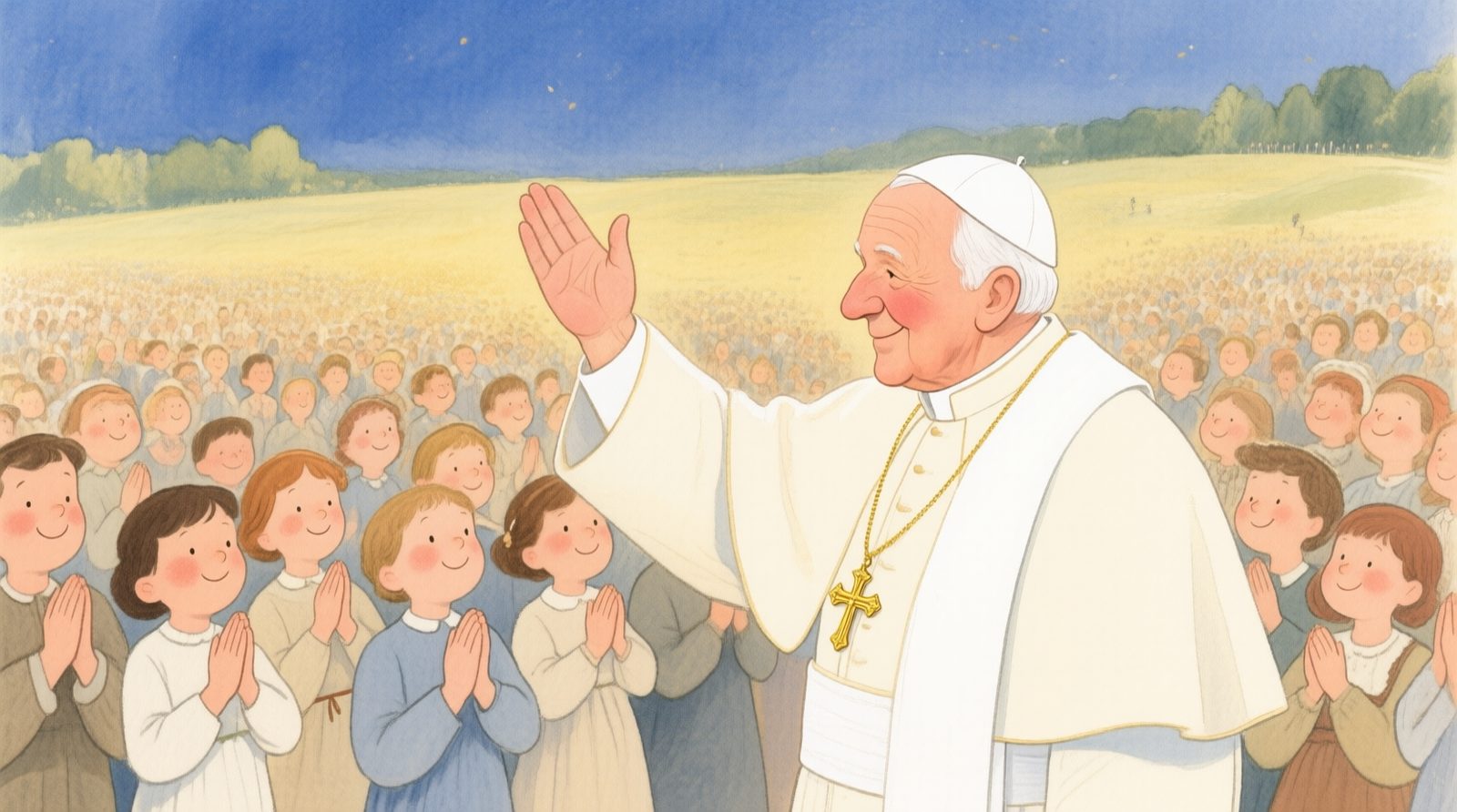
That visit changed everything. The Poles looked around and realized they were many, they were strong, they did not need to be so afraid. A year later the Solidarity movement was born, a workers' union that challenged the communist government, and the Pope quietly supported it, counseling and encouraging its leaders. Within ten years, communism fell in Poland, and then across all of Eastern Europe. Historians agree that John Paul II played a crucial part in that change. He won without weapons — with truth, courage, and faith.
May 13, 1981: The Assassination Attempt
On May 13, 1981 — the anniversary of Our Lady's first apparition at Fatima — John Paul II was crossing Saint Peter's Square, blessing the pilgrims. Suddenly, shots rang out. A Turkish man named Mehmet Ali Agca had fired at the Pope. John Paul II fell, gravely wounded in the abdomen, and as they rushed him to the hospital he kept murmuring softly: "Mary... Mary..." He lost a great deal of blood. For a few hours, the whole world held its breath.
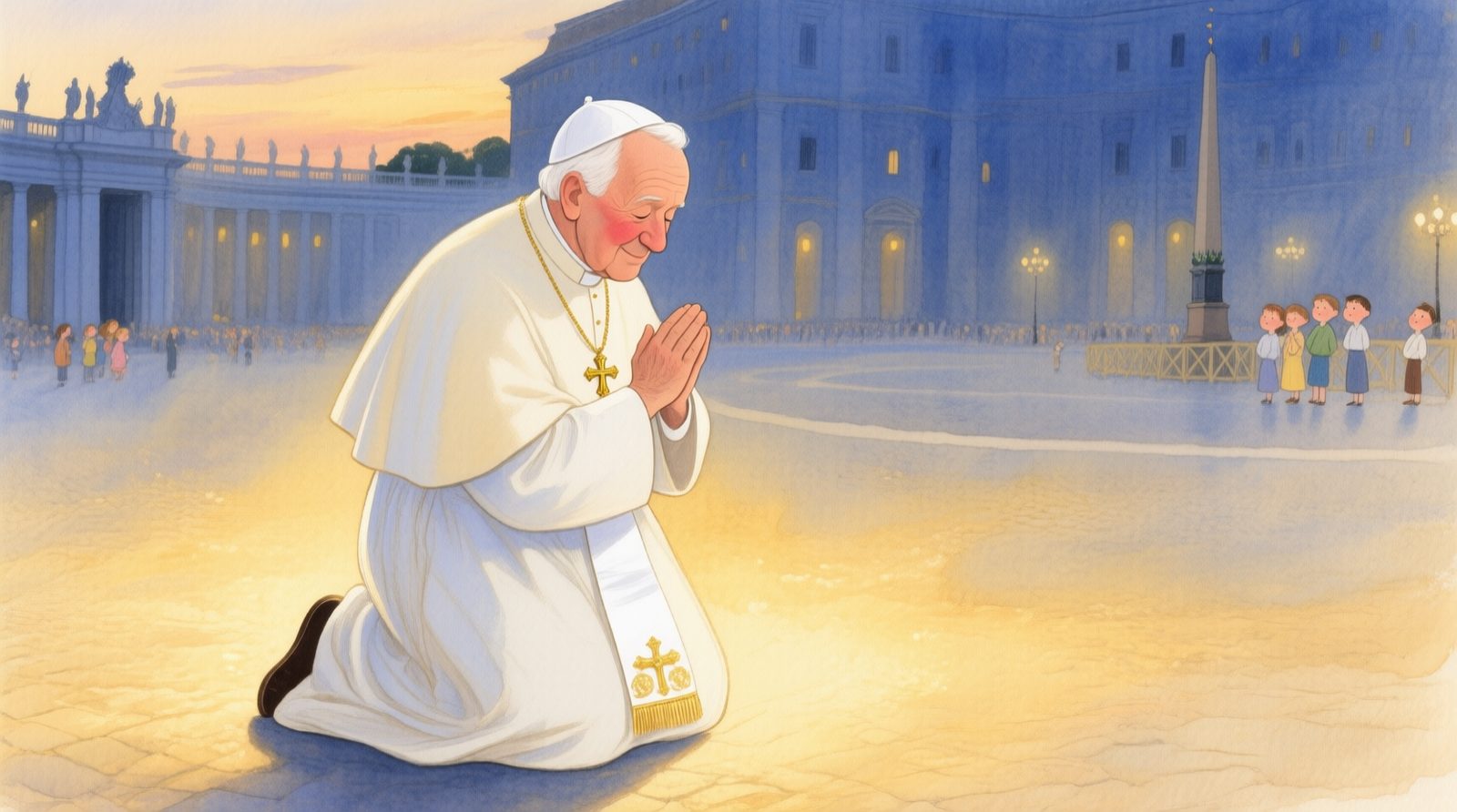
The doctors operated on him for five hours, and afterward they said it was hard to explain how he had survived: the bullet had passed within millimeters of his vital organs. John Paul II had his own explanation. He believed Our Lady of Fatima had saved him. He later said: "It was a mother's hand that guided the bullet's path."
After he recovered, the Pope went to the Shrine of Fatima to thank Our Lady in person. And the bullet that nearly killed him was set into the crown of the statue of Our Lady of Fatima, where it remains to this day.
An Extraordinary Forgiveness
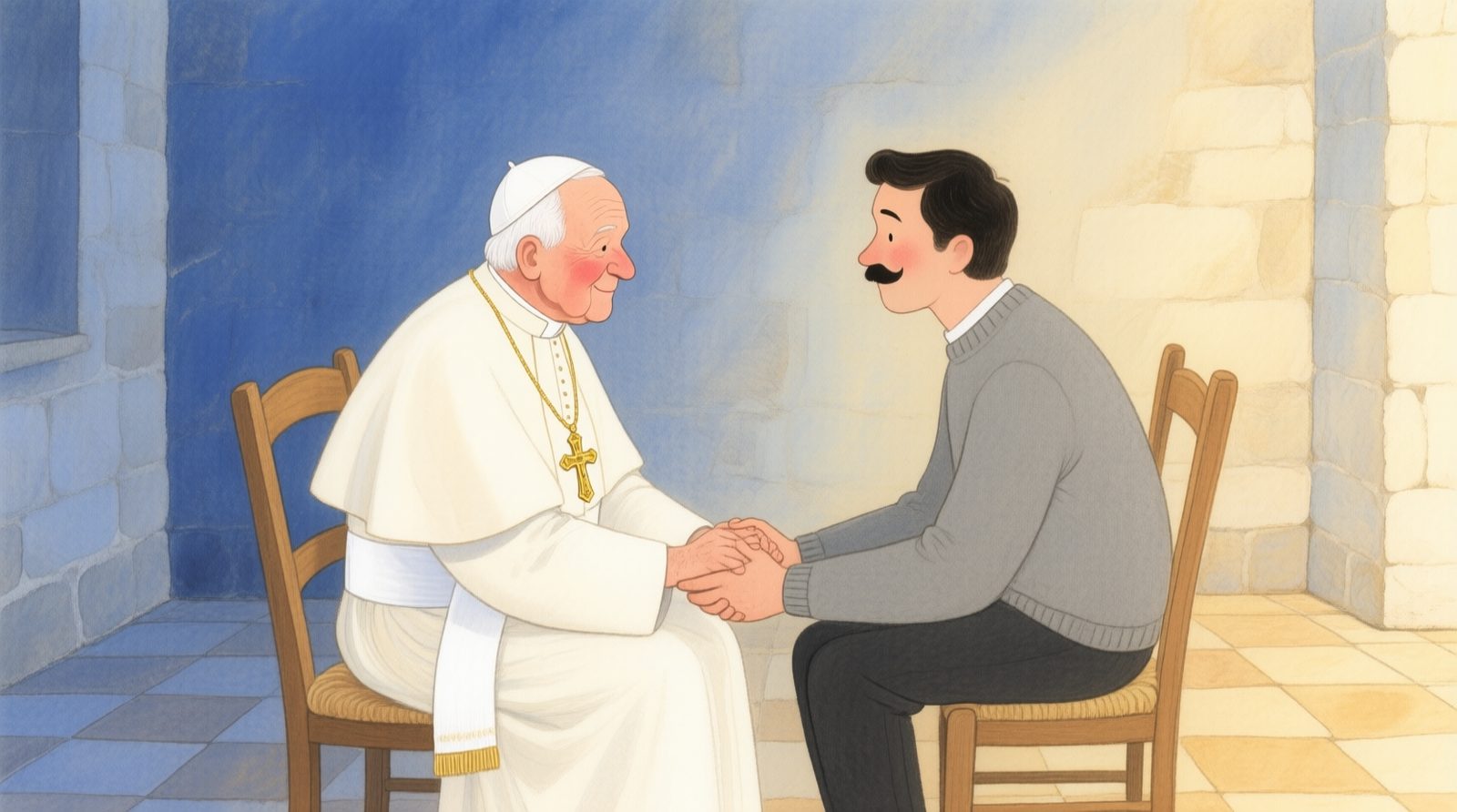
But the story does not end there. In 1983, John Paul II did something that astonished the world: he visited Agca in prison. The Pope entered the cell of the man who had tried to kill him, sat down beside him, and the two spoke alone for twenty minutes. No one knows exactly what they said. But everyone understood what it meant: John Paul II had forgiven his attacker.
Agca was amazed and wanted to know why the Pope would forgive him. John Paul II answered simply that Jesus teaches us to forgive, and that Mary had saved his life precisely so that he could bear witness to forgiveness.
World Youth Days
In 1985, John Paul II created something new in the Church: World Youth Day, an enormous gathering of young Catholics from all over the world with the Pope. The first great international gathering took place in Buenos Aires, Argentina, in 1987. Then came Santiago de Compostela, Częstochowa, Denver, Manila — where about four million people gathered — Paris, Rome, Toronto, and many other cities.
John Paul II loved young people, and they loved him back. He would tell them:
"You are the future of the Church. No — you are the present of the Church!"
Deep Teachings
John Paul II was not only a charismatic Pope: he was also a great thinker. He wrote fourteen encyclicals — letters to the faithful on important themes such as human work, truth and freedom, the dignity of life, and the mission of the Church. One of the most famous is Evangelium Vitae, the Gospel of Life, defending human life from conception to natural death.
He also devoted one hundred and twenty-nine catecheses to what is called the Theology of the Body, a profound teaching on love, the body, and the family. John Paul II taught that the human body is not an object but a temple of the Holy Spirit, and that love is a sacred gift from God.
Dialogue Between Religions
John Paul II also reached out to other religions. In 1986, he invited religious leaders from all over the world to pray for peace in Assisi, the city of Saint Francis. It was the first time in history that Christians, Jews, Muslims, Buddhists, and Hindus had gathered in such a way. The Pope visited synagogues and mosques and spoke with everyone respectfully, without ever hiding his own faith: for him, Jesus Christ is the one Savior. He showed that it is possible to talk with others without giving up the truth, and to respect others without betraying one's own faith.
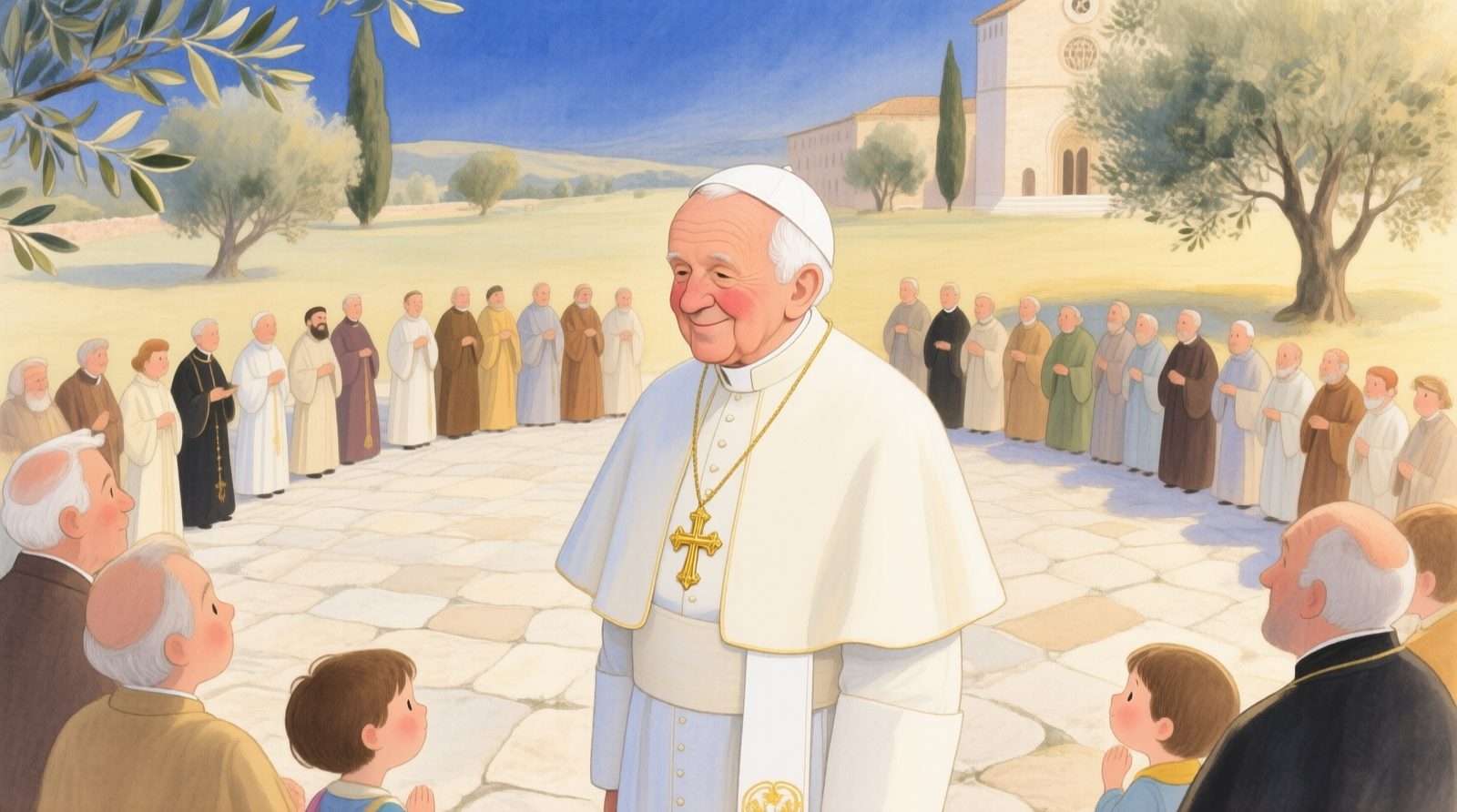
The Great Jubilee of the Year 2000
The year 2000 was special for John Paul II: the Great Jubilee, two thousand years since the birth of Christ. He prepared for that year with great care, hoping it would be a time of conversion and renewal for the whole Church. He opened the Holy Door in Saint Peter's Basilica — a symbol of Christ, who is the Door — and millions of pilgrims came to Rome. John Paul II, now eighty years old and already ill, celebrated it all with serene joy.
The Years of Suffering
In his final years, John Paul II became gravely ill. He had Parkinson's disease, which causes trembling and makes movement difficult. He grew more and more bent; his hands shook; speaking became hard. Many people begged him to resign and rest — he had done enough, they said. But John Paul II kept working, traveling, and teaching as long as his strength allowed. He explained it in a few words: Christ did not come down from the Cross, and neither would he.
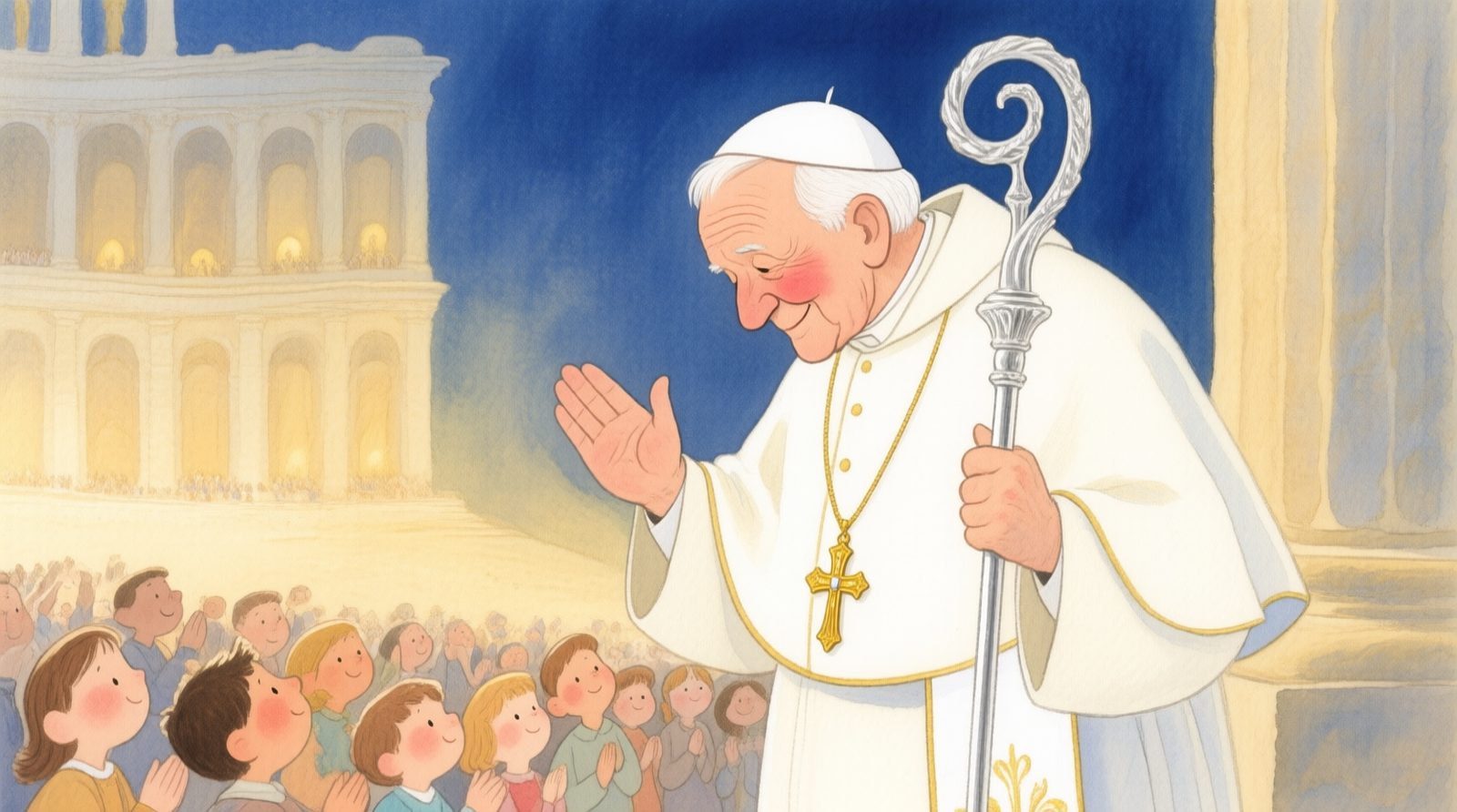
John Paul II offered his suffering to God. He said that suffering, united to Christ, is never useless. And his frail presence preached a silent, powerful homily: human life has dignity until its very last moment. The elderly, the sick, and people with disabilities looked at that bent Pope and felt understood. At the end of his life, he taught more with his silence than with a thousand speeches.
April 2, 2005: "Let Me Go to the Father's House"
On Saturday, April 2, 2005, John Paul II was dying. He lay in his rooms in the Vatican, surrounded by his closest companions. Outside, all day long, crowds filled Saint Peter's Square to pray for him. Young people, families, the elderly — thousands kept vigil in silence.
At 9:37 that evening, John Paul II died. His last words were spoken in Polish, almost in a whisper: "Pozwólcie mi odejść do domu Ojca" — let me go to the Father's house.
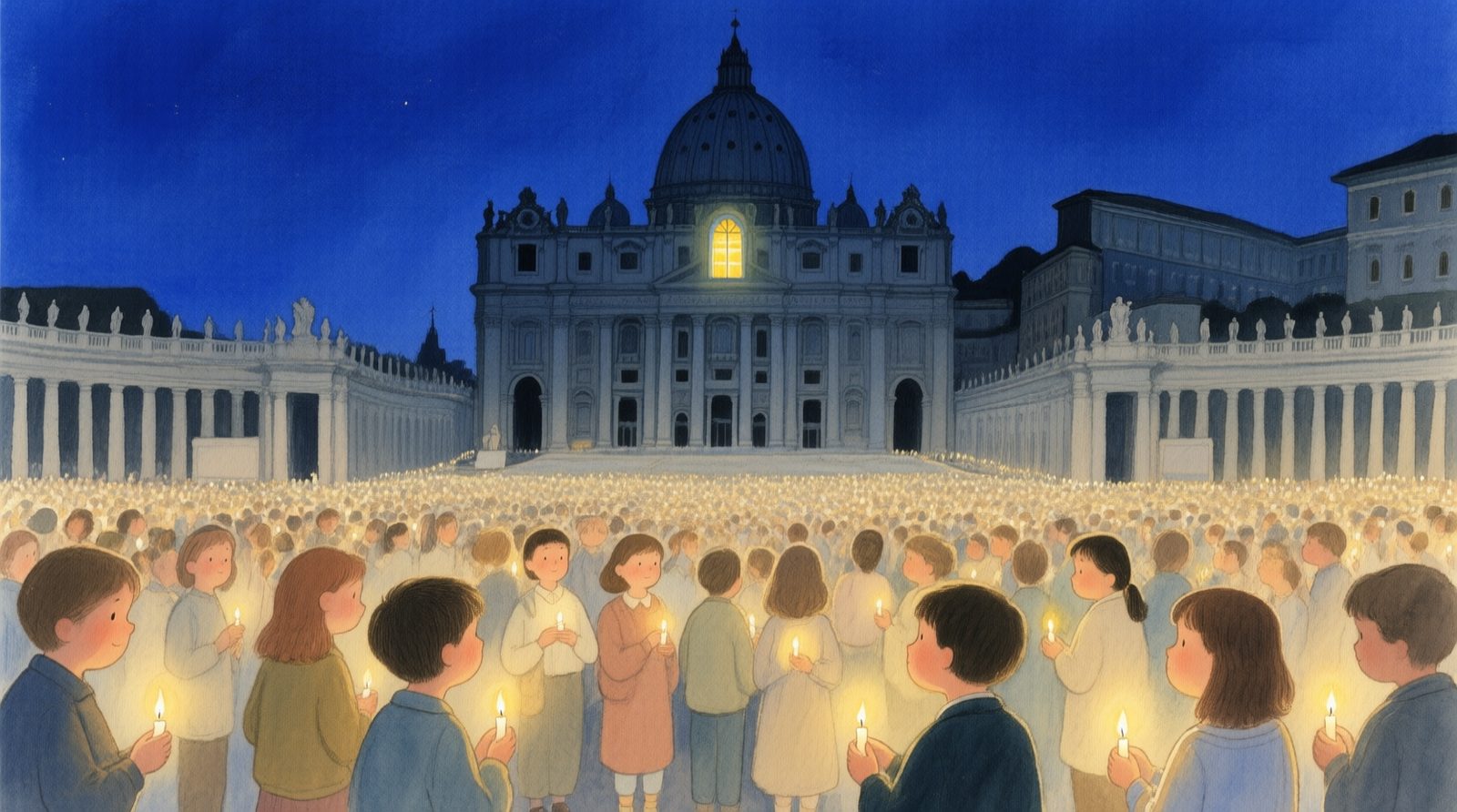
When his death was announced, the crowd in the square began to applaud. It was not joy: it was gratitude. They were applauding a life well lived, a mission completed, weeping and clapping at the same time. Soon, banners appeared bearing two words: Santo subito, meaning "a saint, right away." Deep in their hearts, the people knew that this Pope was a saint.
The Funeral and the Legacy
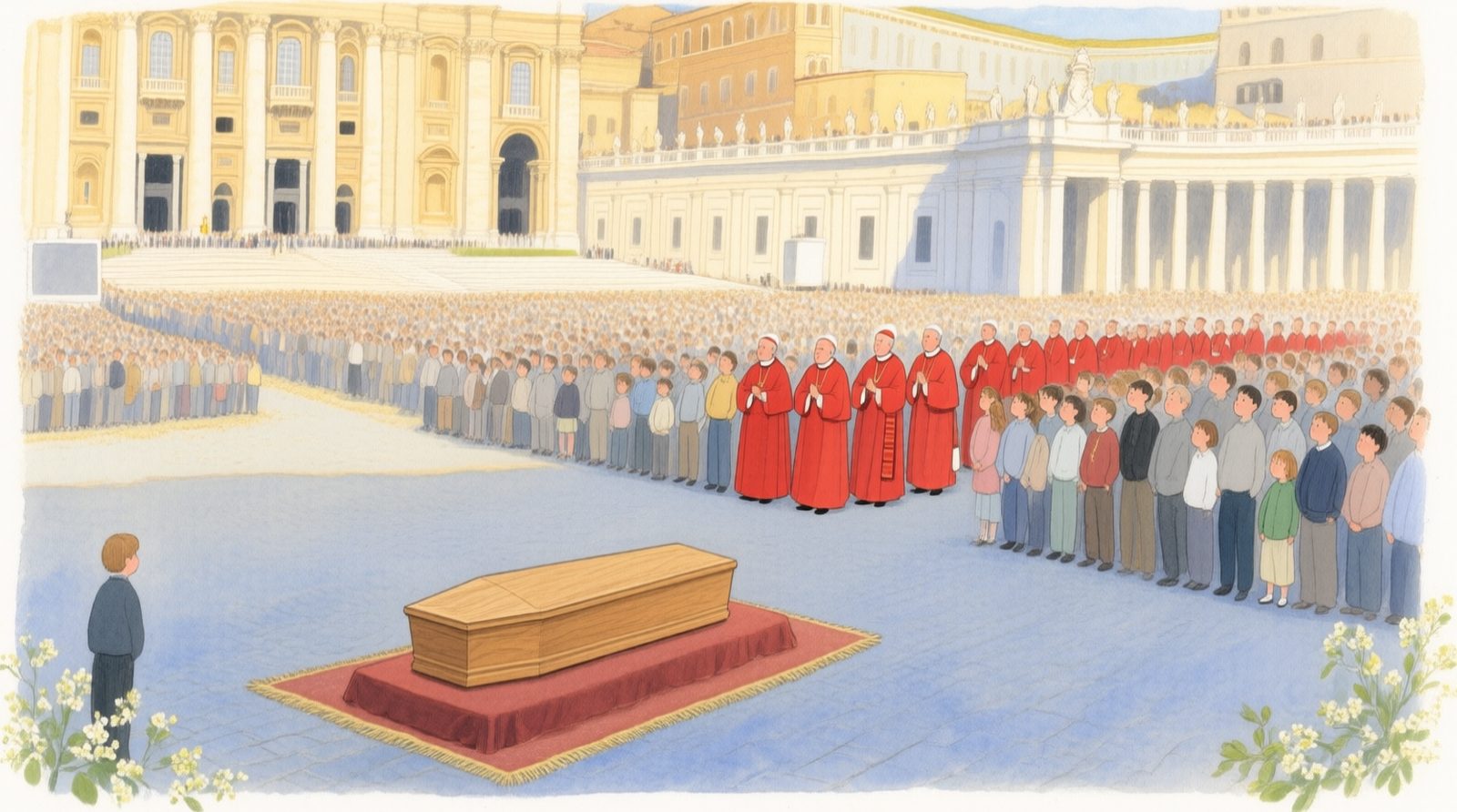
The funeral of John Paul II was one of the largest in history. About four million people came to Rome, along with two hundred heads of state — kings, presidents, and prime ministers — and the ceremony was broadcast to the whole world. Before Saint Peter's Square, some waited a full day in line to say goodbye. Rich and poor, Catholics and non-Catholics, everyone felt the same thing: the world had lost a giant.
Canonization
In 2011, Pope Benedict XVI beatified John Paul II, only six years after his death — one of the fastest beatifications of modern times. And on April 27, 2014, Pope Francis canonized him. Karol Wojtyla was now Saint John Paul II. On that same day Saint John XXIII, the Pope who had convened the Second Vatican Council, was also canonized, and Saint Peter's Square filled once more to celebrate.
The Legacy of Saint John Paul II
What Saint John Paul II left the world cannot fit in a list, but the heart of it is easy to remember. He helped bring down communism with truth and courage, without firing a single shot. He visited one hundred and twenty-nine countries, carrying Christ to billions, and created World Youth Day, which still gathers great crowds of young people today. He publicly forgave the man who shot him, defended the dignity of life from beginning to end, taught about love and family in the Theology of the Body, and spoke with all religions without ever hiding his own faith. He lived and died giving everything to Christ. And he left each of us his most famous invitation: "Do not be afraid. Open wide the doors to Christ."
Moral of the Story


