
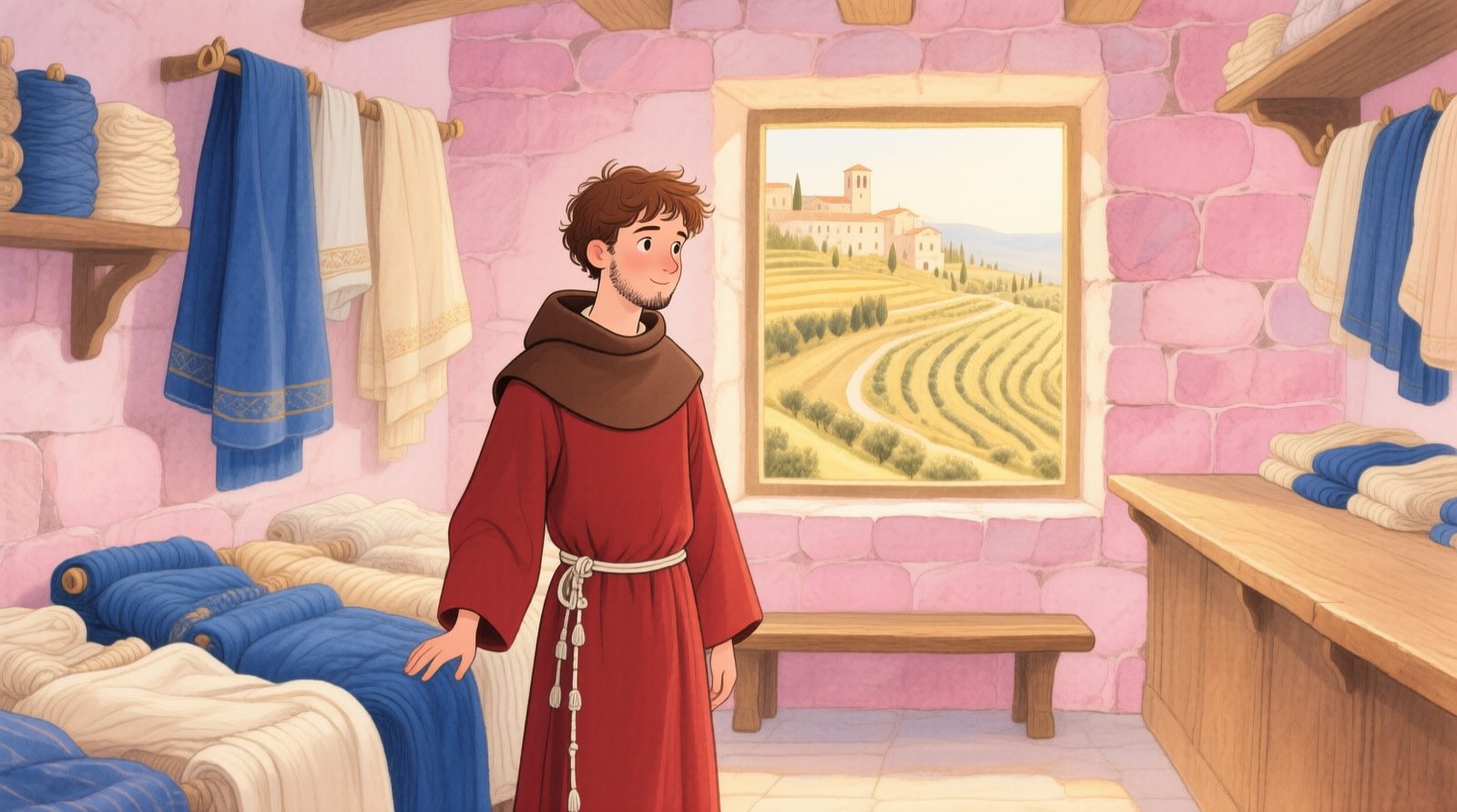
In 1181 or 1182, in the city of Assisi, in Italy, a boy was born and named Giovanni, which means John. His father, Pietro Bernardone, was a wealthy cloth merchant who did much of his trade in France, a country he loved. That is why he changed his son's name to Francesco — Francis. The boy grew up with the finest clothes, the best food and everything he could want, and he enjoyed that life very much.
The Prince of the Party
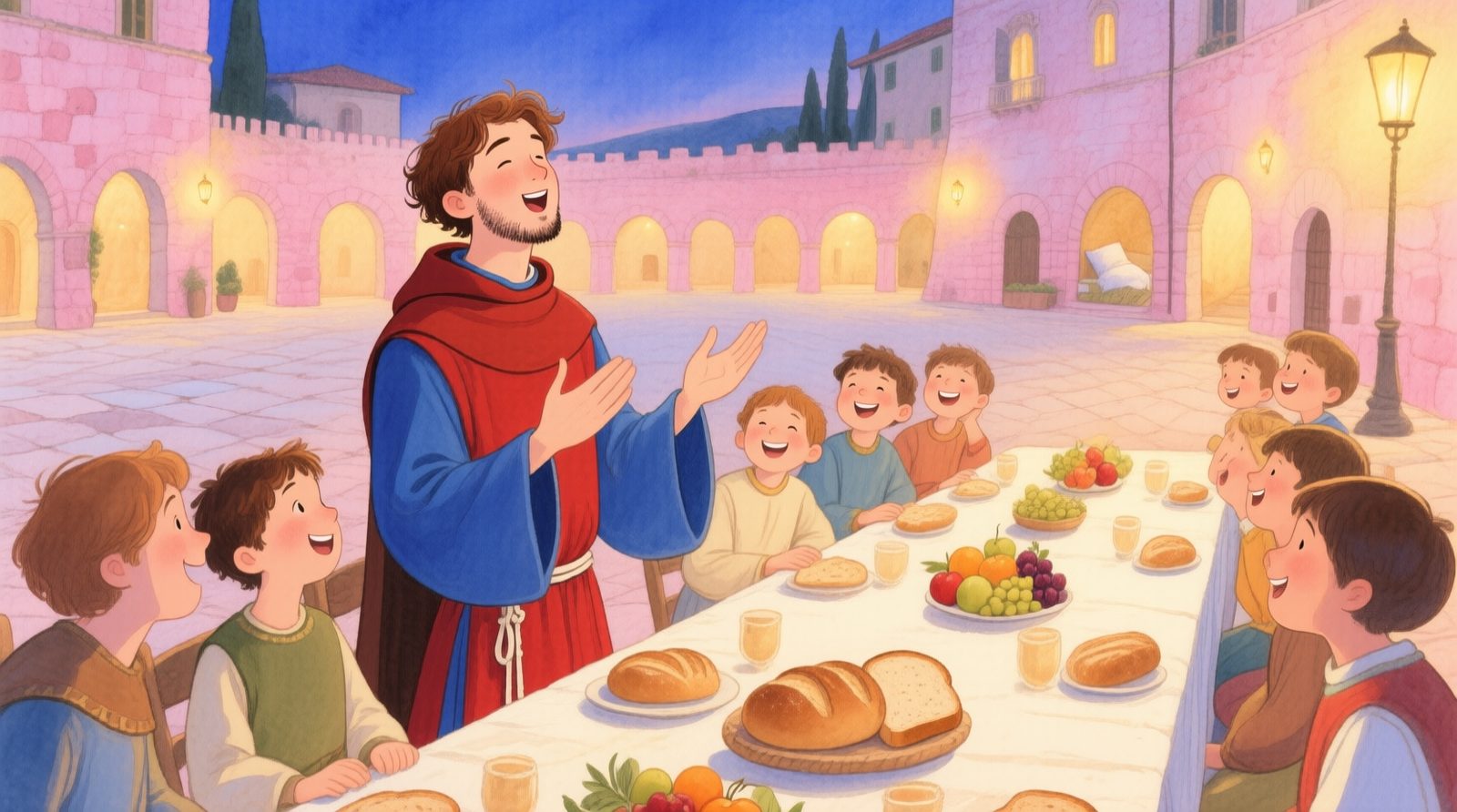
Francis was the most popular young man in Assisi. Cheerful and generous, he loved to sing and gather his friends around him, and he spent his father's money without a second thought, buying food and wine for everyone. His parties lasted all night, and his voice rang through the streets of the town. Everybody liked him and said he was the merriest and best-dressed young man in Assisi. But deep in his heart, Francis felt that something was missing.
The Dream of Knighthood
Francis had one great dream: to become a knight. In those days, knights were the heroes of every story, men who fought in battles and won glory. Francis pictured himself in shining armor, riding a white horse, coming home covered in fame. In 1202, when he was about twenty, his chance arrived: Assisi went to war against the neighboring city of Perugia. Francis enlisted, got himself an expensive suit of armor, and said goodbye to his friends with the words:
"I will come back a hero!"
Defeat and Prison
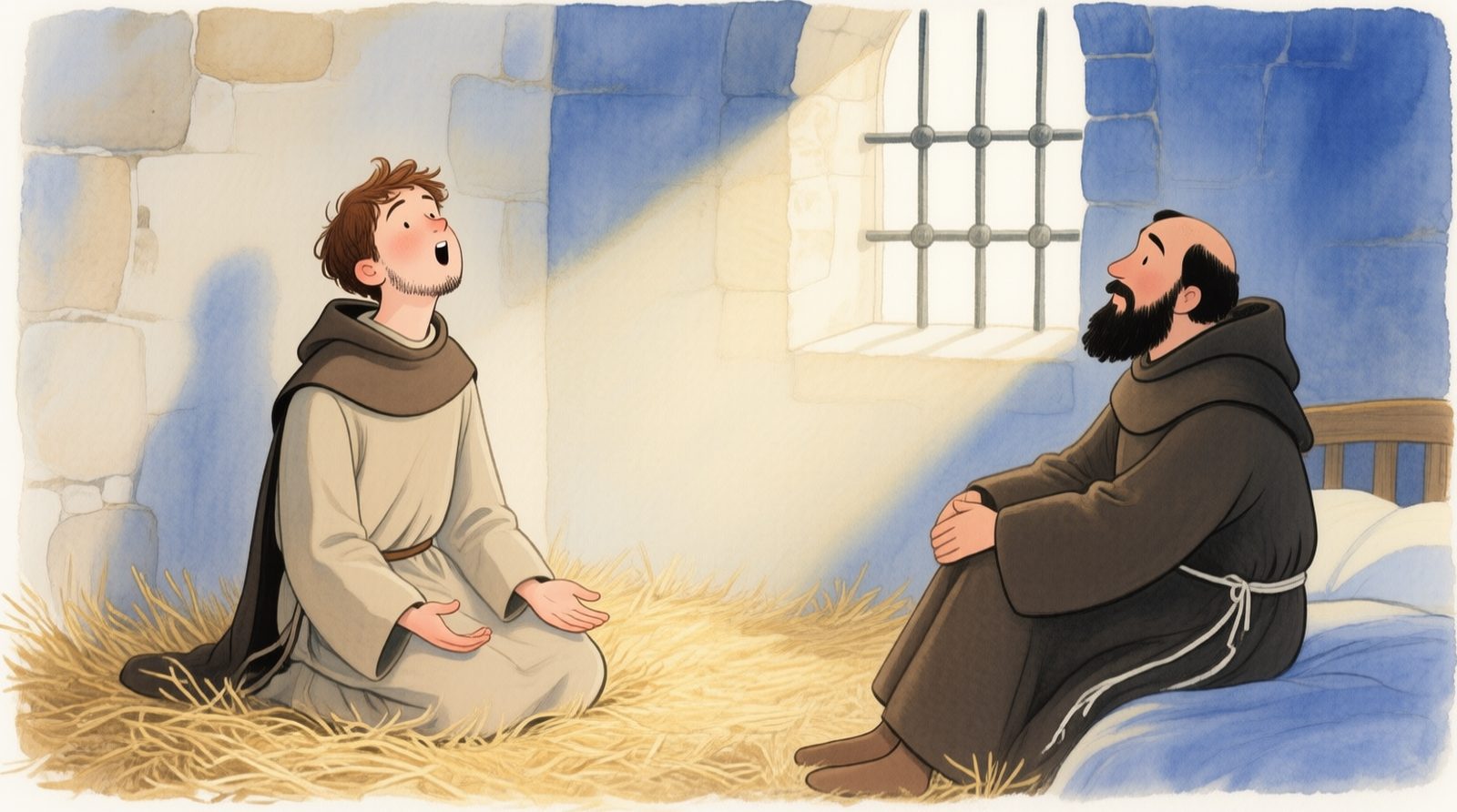
But the battle was a disaster. Assisi lost, and Francis was captured and taken to prison, where he spent more than a year in a dark, cold, filthy cell. The young man of the parties now lived behind bars. And yet something strange happened: Francis did not lose his joy. While the other prisoners wept and complained, he sang.
"Why are you so cheerful in a prison?" they asked.
"Because one day I will be the prince of a great kingdom," Francis would answer.
He did not know it yet, but he was speaking like a prophet.
The Illness
At last his family paid the ransom, and Francis came home. But he came home sick: prison had ruined his health, and he spent months in bed, weak and feverish. During that long illness he began to think about life as he never had before. What was wealth for? What were parties for? One day he was going to die — and then what? When he finally recovered, he was no longer the same.
The First Change
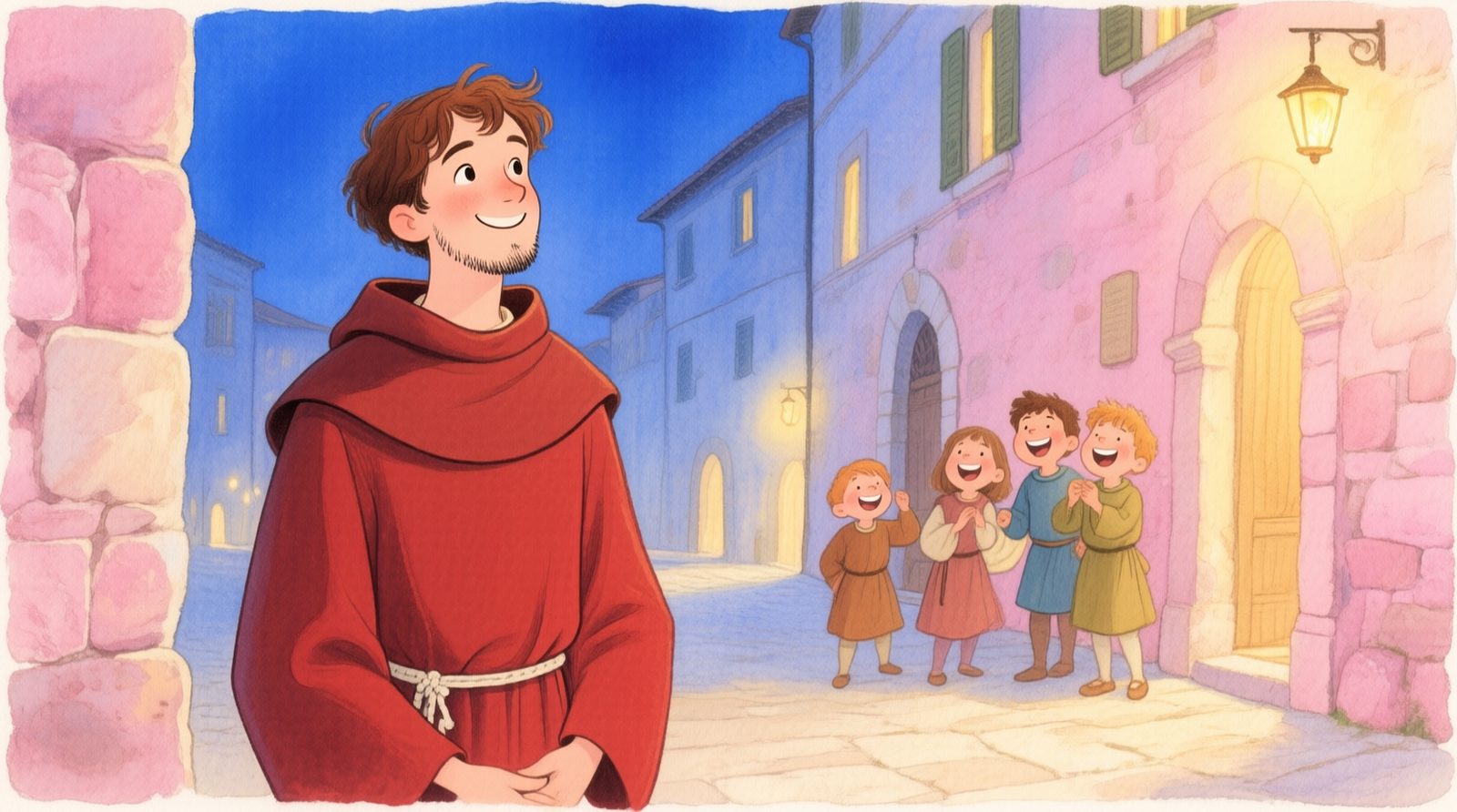
Francis tried to return to his old life, to the parties and the friends, but the fun no longer tasted the same. One night, in the middle of a party, he suddenly grew quiet, still, thoughtful.
"Francis, what happened?" his friends asked.
"I don't know... I was thinking," he answered, confused.
His friends laughed and wanted to know if he was in love.
"I am," Francis smiled. "In love with the most beautiful and noble bride in the world."
He was speaking of Lady Poverty, though he did not know it yet.
The Meeting with the Leper
One day, Francis was riding through the countryside when he saw, on the road ahead, something that filled him with fear: a leper. Leprosy was a terrible disease that disfigured the body, and in those days everyone fled from lepers, in disgust and in fear. Francis had always fled too.
But this time something different happened.
A voice spoke in Francis's heart: get down from your horse, go to him. Francis struggled with himself — he felt disgust, he felt fear — but the voice insisted. At last he obeyed. He climbed down from his horse, walked up to the leper, and did something no one expected: he embraced the man and kissed his wounds. The leper wept with emotion, because no one had ever embraced him.
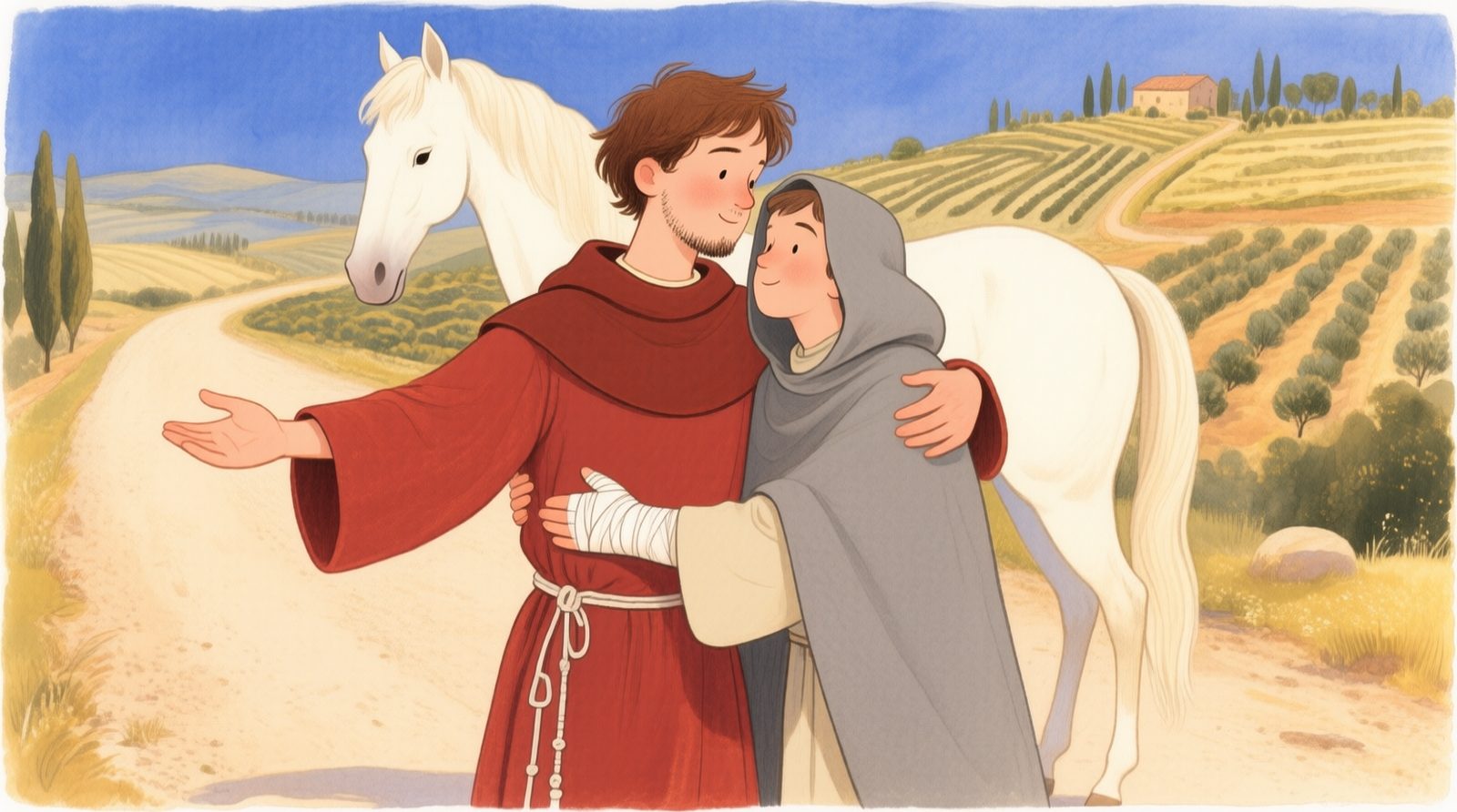
Francis got back on his horse and rode away. But when he looked over his shoulder, the leper had vanished, and he understood in his heart that he had embraced Jesus himself. From that day on, Francis visited the lepers: he brought them food, cleaned their wounds, embraced them one by one. His rich friends were horrified and asked if he had lost his mind. But Francis was happier than he had ever been.
The Church of San Damiano
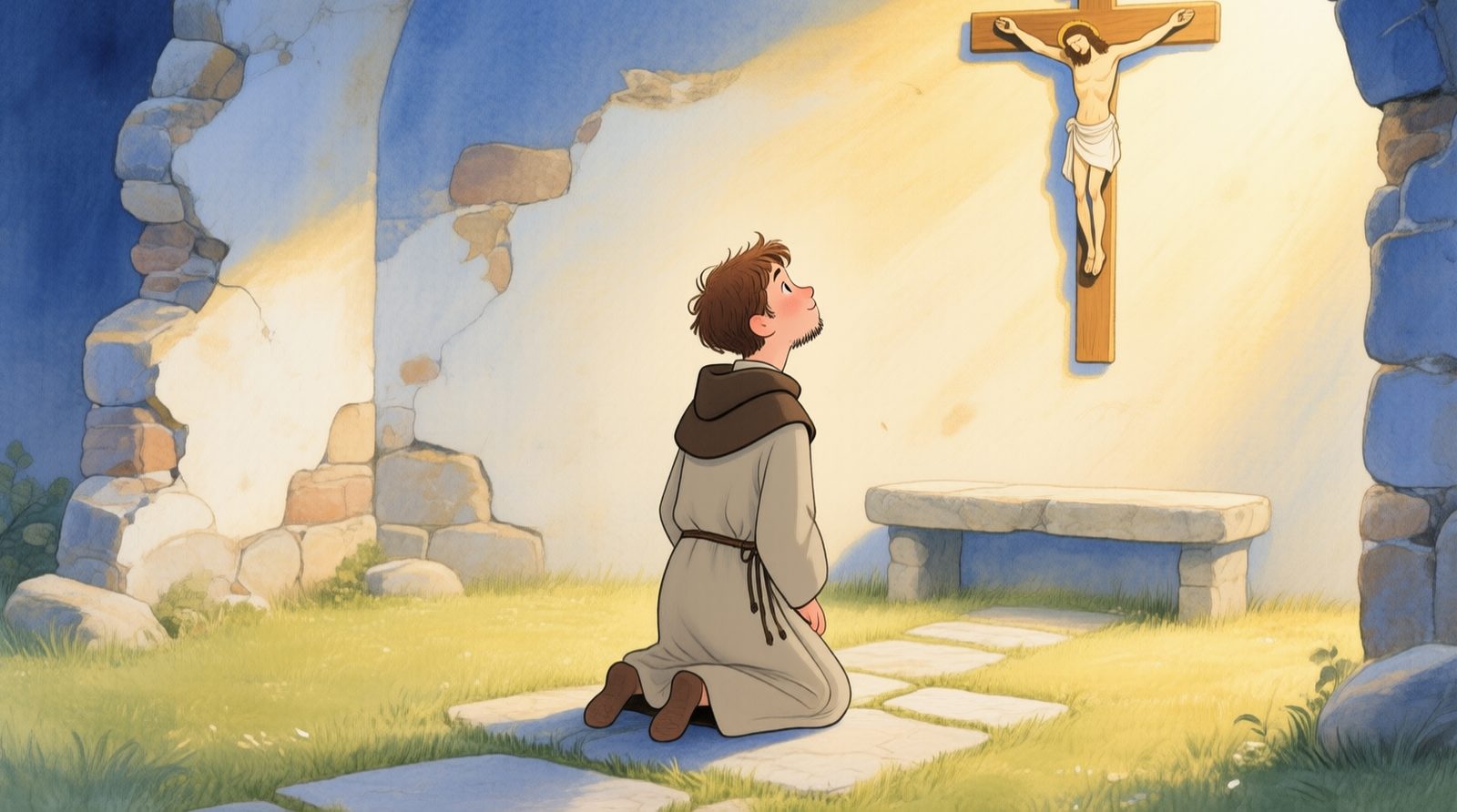
One day, Francis stepped into an old, abandoned little church called San Damiano, which was nearly falling to pieces. He knelt before the crucifix and prayed. Then, in the silence, he heard a voice coming from the Christ on the cross:
"Francis, go and repair my house, which is falling into ruins."
Francis was frightened and amazed at the same time. Jesus had spoken to him.
"Yes, Lord," he answered. "I will repair this church."
He did not yet understand that Jesus was not speaking only of that little chapel, but of the whole Church.
The Conflict with His Father
Francis decided to rebuild San Damiano, but he needed money for stones and materials. So he did something impulsive: he took expensive cloth from his father's shop, sold it all, and brought the money to the priest of San Damiano. The priest, however, was afraid, for he knew Pietro would be furious, and refused to accept it. And he was right. When Francis's father found out, he exploded with rage.
"You stole from me! You are shaming our family. What has happened to you?"
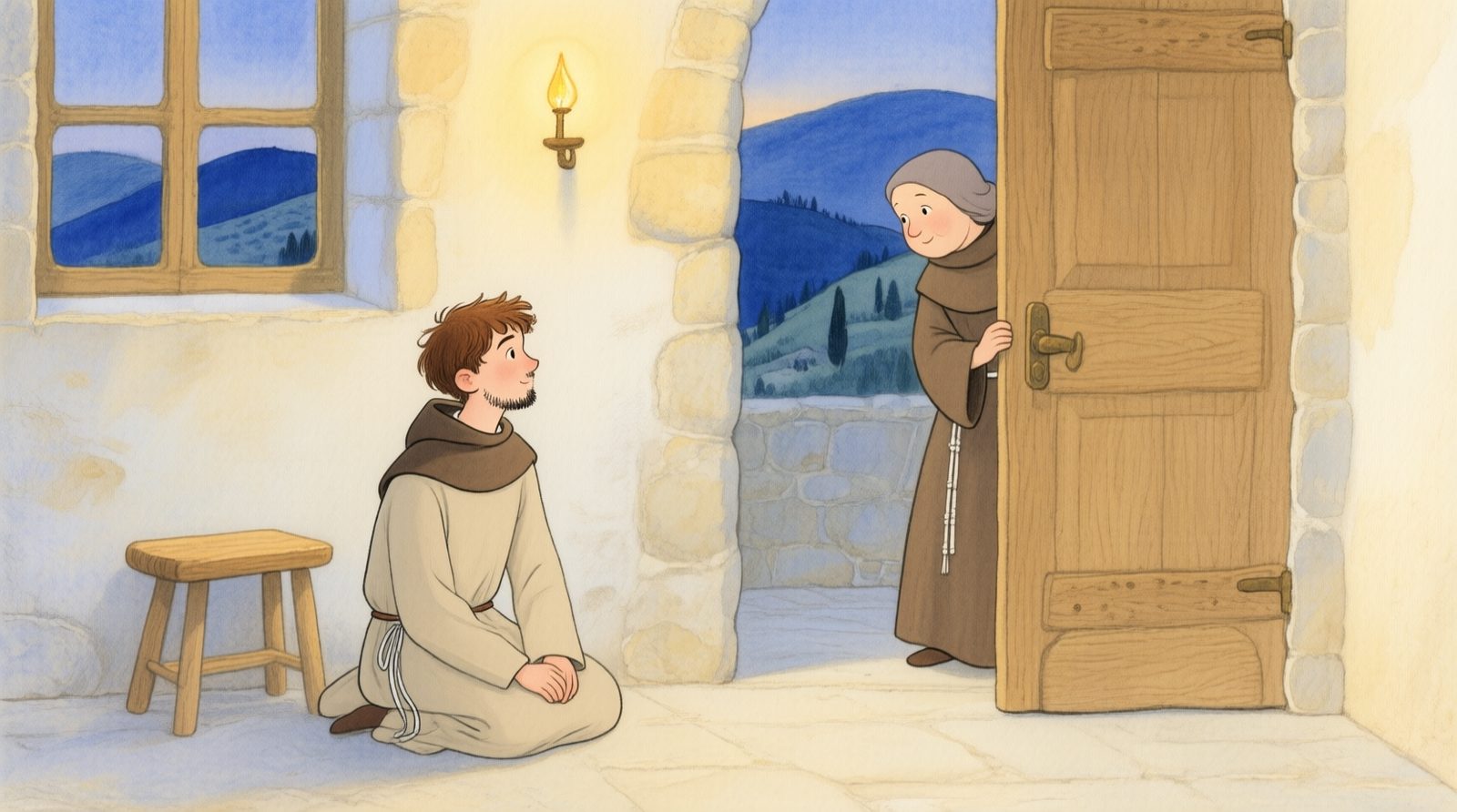
Francis tried to explain that Jesus had asked him to rebuild His house, but his father would not listen. He called his son a madman and locked him in a room of the house. When Pietro left on business, Francis's mother opened the door, and he fled to hide at San Damiano.
The Public Trial
Pietro would not accept losing either his son or his money. He brought Francis before the bishop of the city and, in the public square, crowded with people, he accused his own son, demanding his money back and his son's return home. The bishop, Guido, looked at Francis with compassion and said calmly:
"Francis, give your father back his money. Trust in God."
And then Francis did something no one expected.
The Total Renunciation
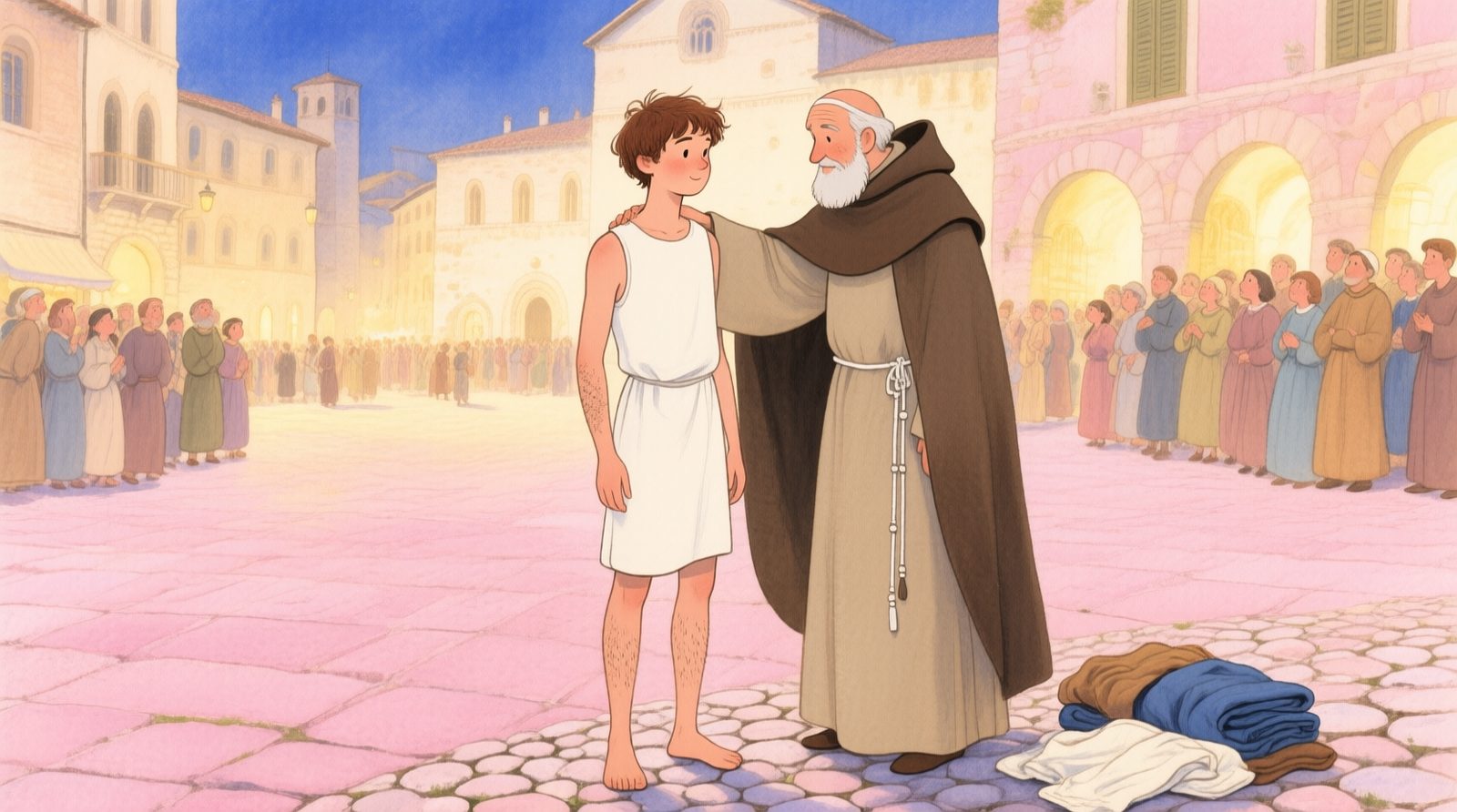
In front of everyone, Francis took off his clothes, every last piece, and laid them at his father's feet. Then he said, in a steady voice:
"Until now I have called Pietro Bernardone my father. From now on I can say freely: Our Father, who art in Heaven. To Him I entrust all my treasure and all my hope."
His father was left speechless, and so was the crowd. The bishop, deeply moved, wrapped Francis in his own cloak. Francis had nothing left — and, in some mysterious way, he had everything.
Francis left the city singing, wearing only a simple tunic someone had given him. He had no money, no house, nothing at all, and still he walked radiant with joy. On the road he met bandits who beat him and took the little he carried — and he went on singing.
"Who are you?" the bandits asked, bewildered.
"I am the herald of the Great King!" Francis answered cheerfully.
And he went on his way, praising God.
Moral of the Story


