
On January 6, 1412, in a small French village called Domrémy, a girl was born. Her name was Joan — Jeanne, in her own language. Her parents, Jacques and Isabelle, were poor, devout peasants with a small farm. Joan had four brothers and sisters, and their home was simple, hardworking, and Catholic.
In those days, France was caught in a terrible war against England, a war so long that it came to be called the Hundred Years' War. Soldiers swept through the countryside, looting and burning villages, and the people suffered greatly. Even so, Joan grew up peaceful and steady, praying often and helping her parents however she could.

1425: The Heavenly Voices
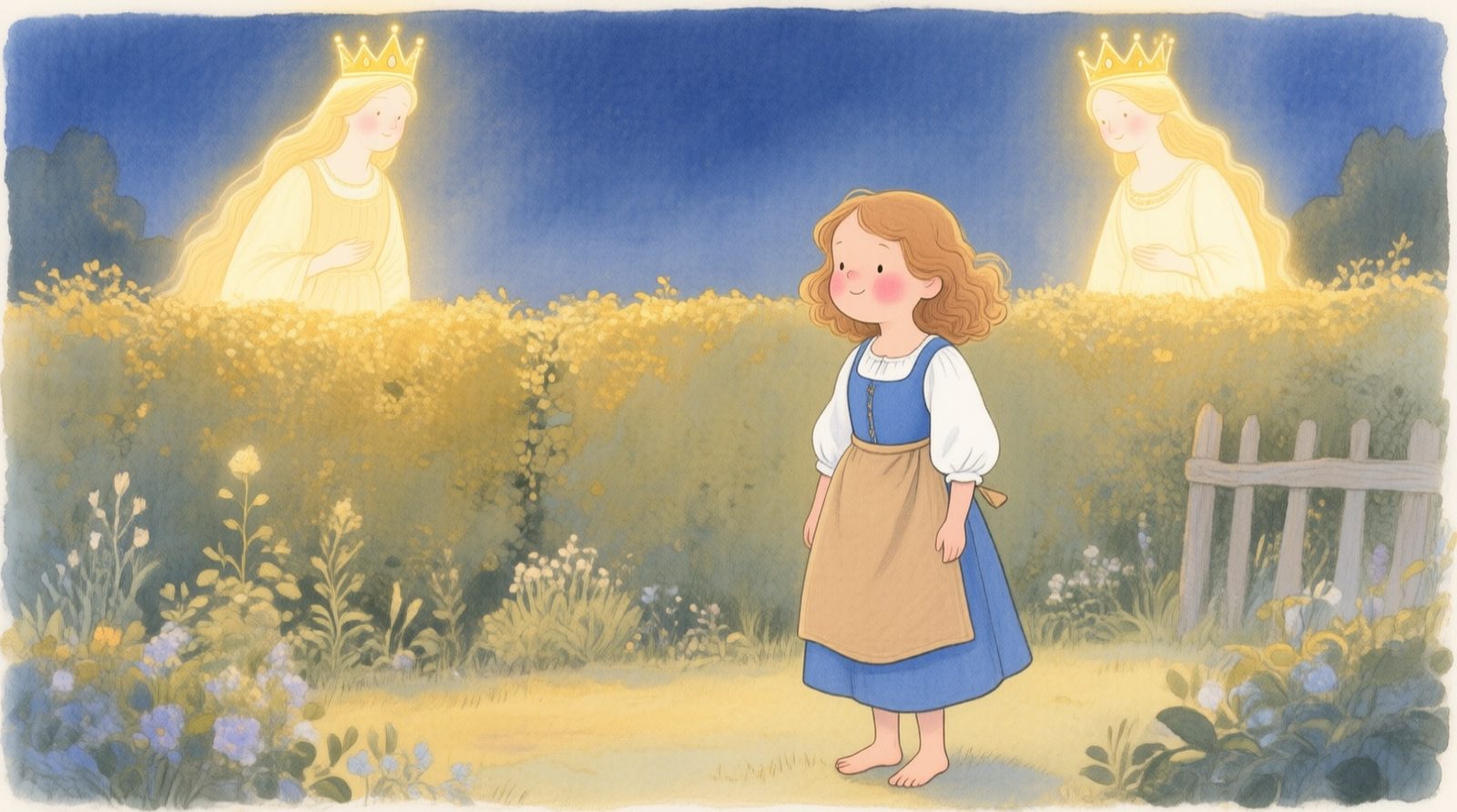
When Joan was thirteen years old, something extraordinary happened. It was summer, and she was in her father's garden around midday when she saw a bright light and heard a voice. The voice was gentle and, at the same time, full of strength.
"Joan, be good and devout. Go to church often."
Joan was frightened.
"Who are you?"
"I am the Archangel Saint Michael. God has sent me to you."
In the days and months that followed, the voices returned. It was not only Saint Michael: Saint Catherine of Alexandria and Saint Margaret of Antioch came too, surrounded by light, beautiful and crowned. At first they only gave gentle counsel: that Joan should pray, keep her heart pure, and trust in God. And Joan obeyed. She prayed even more, went to Mass every day, and made a vow to belong to God alone.
The Impossible Mission
When Joan was sixteen, the voices gave her a mission that seemed far too big for her.
"Joan, you must go to the Dauphin Charles, the prince of France. You must free him from his enemies and bring him to Reims, to be crowned king."
Joan could hardly breathe.
"Me? I am only a poor girl. I don't know how to fight. How can I do this?"
"God will be with you. Do not be afraid."
Joan wept, because the mission seemed impossible. But she knew, deep in her heart, that when God calls, one must obey.
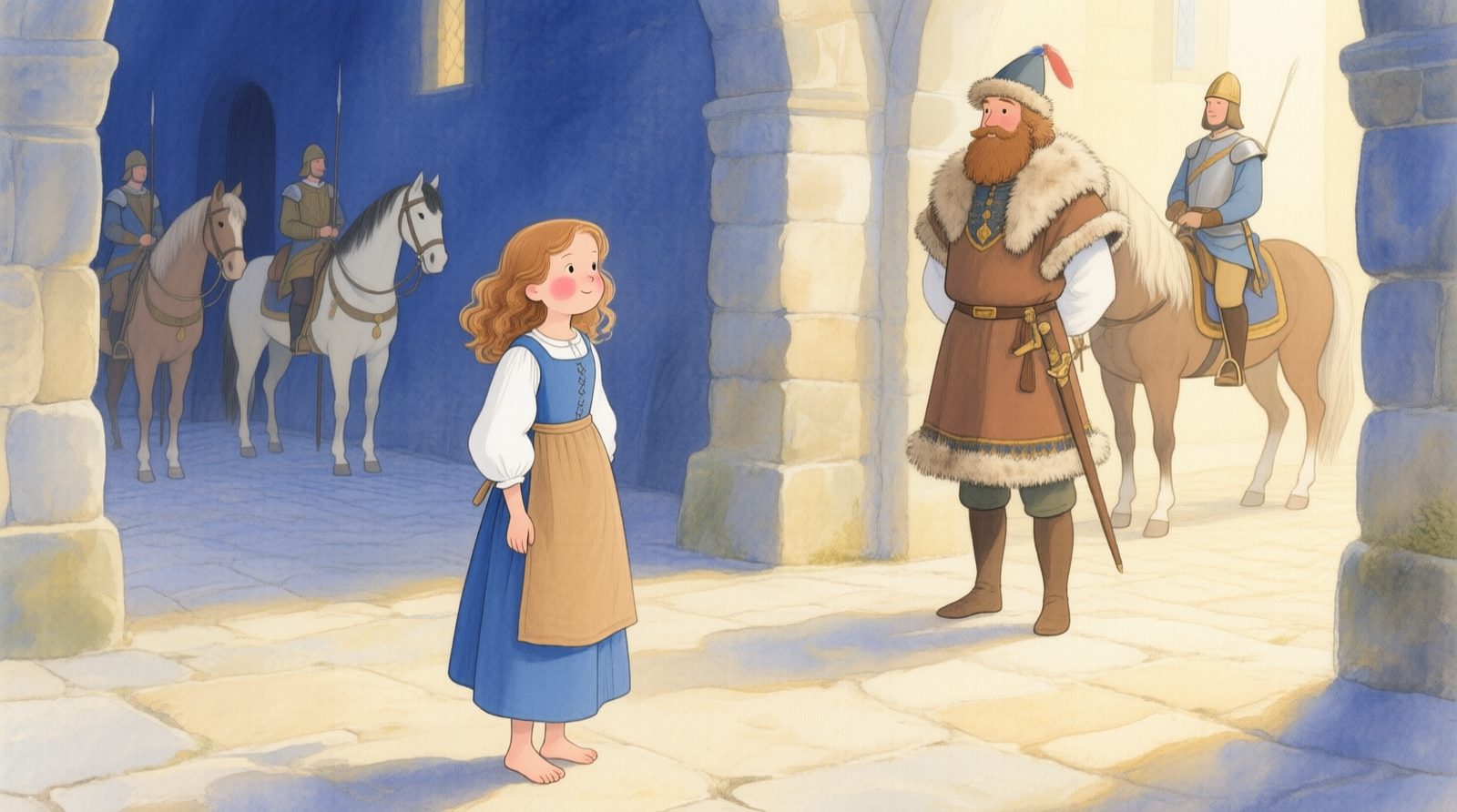
Joan went to the local captain, Robert de Baudricourt.
"Sir, God has sent me. I must reach the Dauphin Charles. I must save France."
Baudricourt laughed at her.
"You? A peasant girl? Go home, child."
Joan went home, but the voices insisted. She returned to Baudricourt once, and again, and yet again, until at last he gave in.
"Very well. I will give you an escort. But if you fail, it is on your head."
The Journey to the Dauphin
In February 1429, Joan was seventeen years old. She cut her hair short and dressed in men's clothing, to travel more safely, and set out with six men on a journey of nearly four hundred and fifty kilometers, straight through enemy territory. They rode for eleven days, sleeping little, crossing icy rivers, and slipping past soldiers. Joan showed no fear: she prayed the whole way. And so they arrived safe and sound at Chinon, where the Dauphin Charles was staying.
The Meeting with the Dauphin
Charles, the Dauphin, was a weak and hesitant prince, and France seemed all but lost. Paris was occupied, Orléans was under siege by the English, and little hope remained. Before receiving Joan, Charles decided to test her. He hid himself among his courtiers and placed another man on the throne. If she truly came from God, he thought, she would surely recognize him.
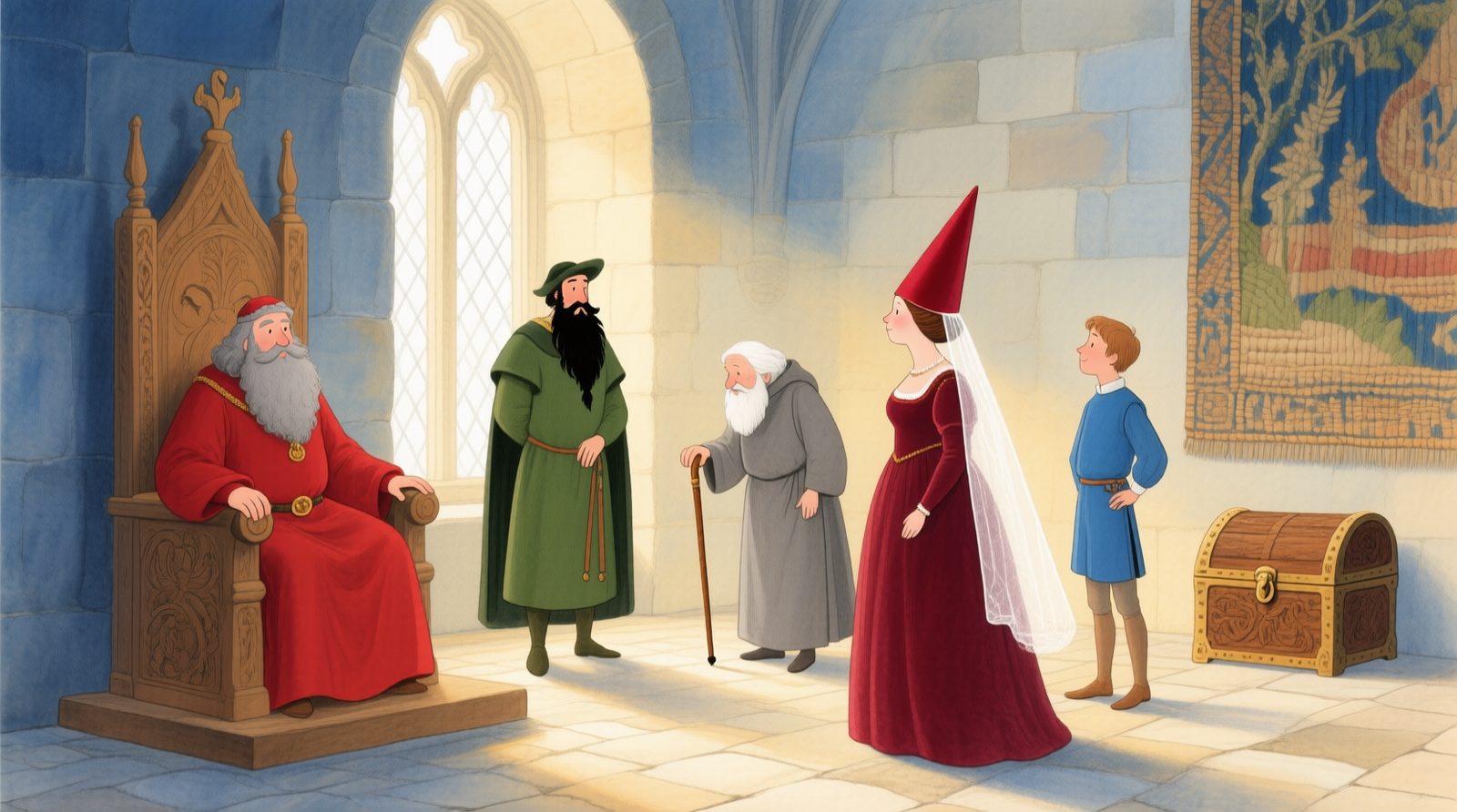
Joan entered the great hall, filled with richly dressed nobles. She had never seen the Dauphin and did not know his face. Yet she walked straight to Charles, hidden among the others, and knelt before him.
"Gentle Dauphin, God has sent me to help you."
Charles was astonished.
"How did you recognize me?"
"God showed me."
Later, speaking with him in private, Joan revealed things that only Charles knew: a secret prayer he had once made, doubts he had kept hidden in his heart. Then Charles was convinced that she truly came from God.
The Armor and the Sword
Even so, Charles had Joan examined by theologians. For three weeks they questioned her about everything, wanting to be sure that all of this came from God. Joan answered with simplicity and wisdom, and in the end they declared that they had found nothing evil in her. Charles decided to entrust her with an army.
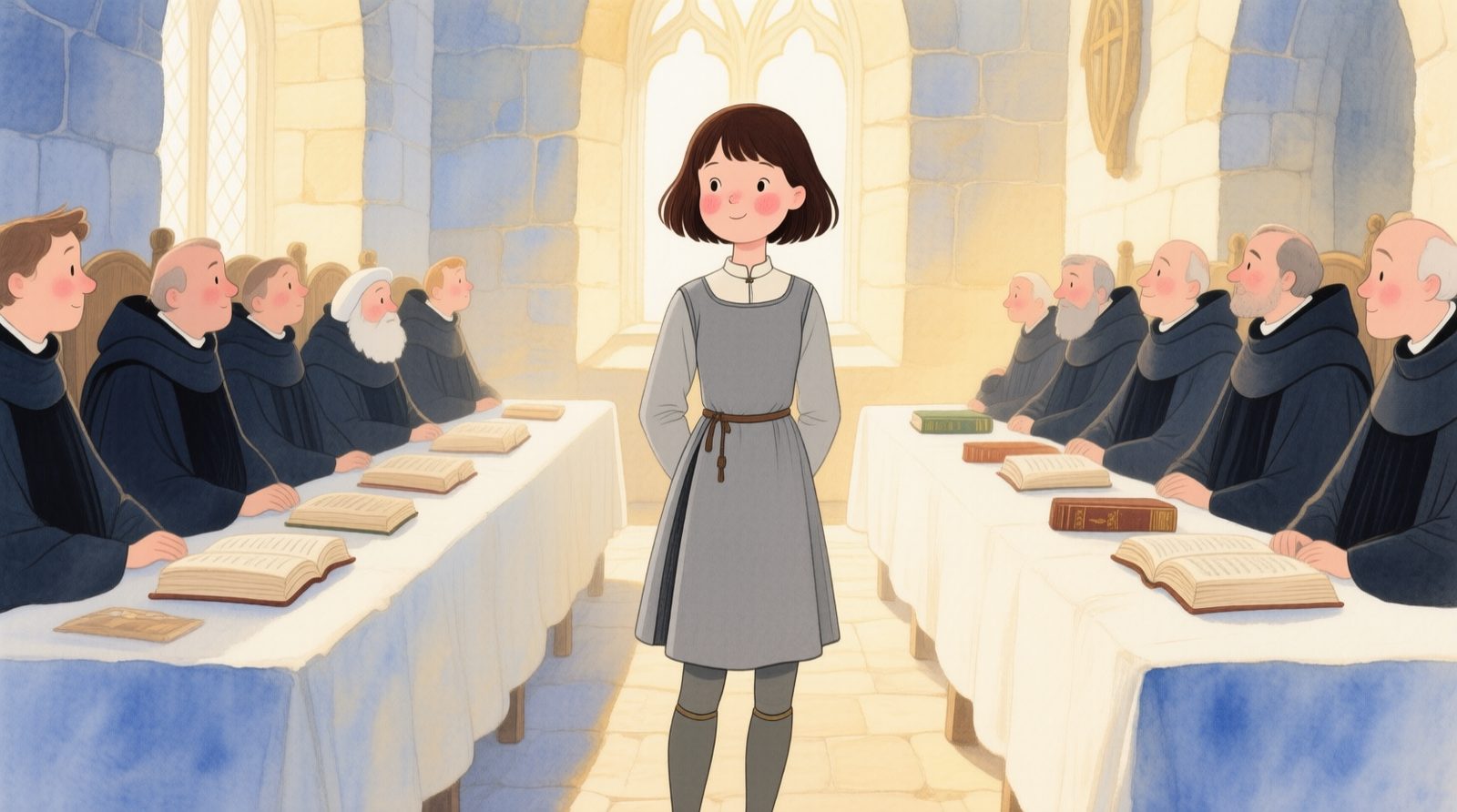
A full suit of armor was made for Joan, white and gleaming, like a knight's. And then she said a curious thing:
"There is a sword buried behind the altar of the church of Saint Catherine de Fierbois. Bring that sword to me."
No one knew of any sword in that place. But they went to look, and they found it exactly where Joan had said: an ancient sword with five crosses engraved on the blade. Joan received it like a gift from heaven.
The Banner
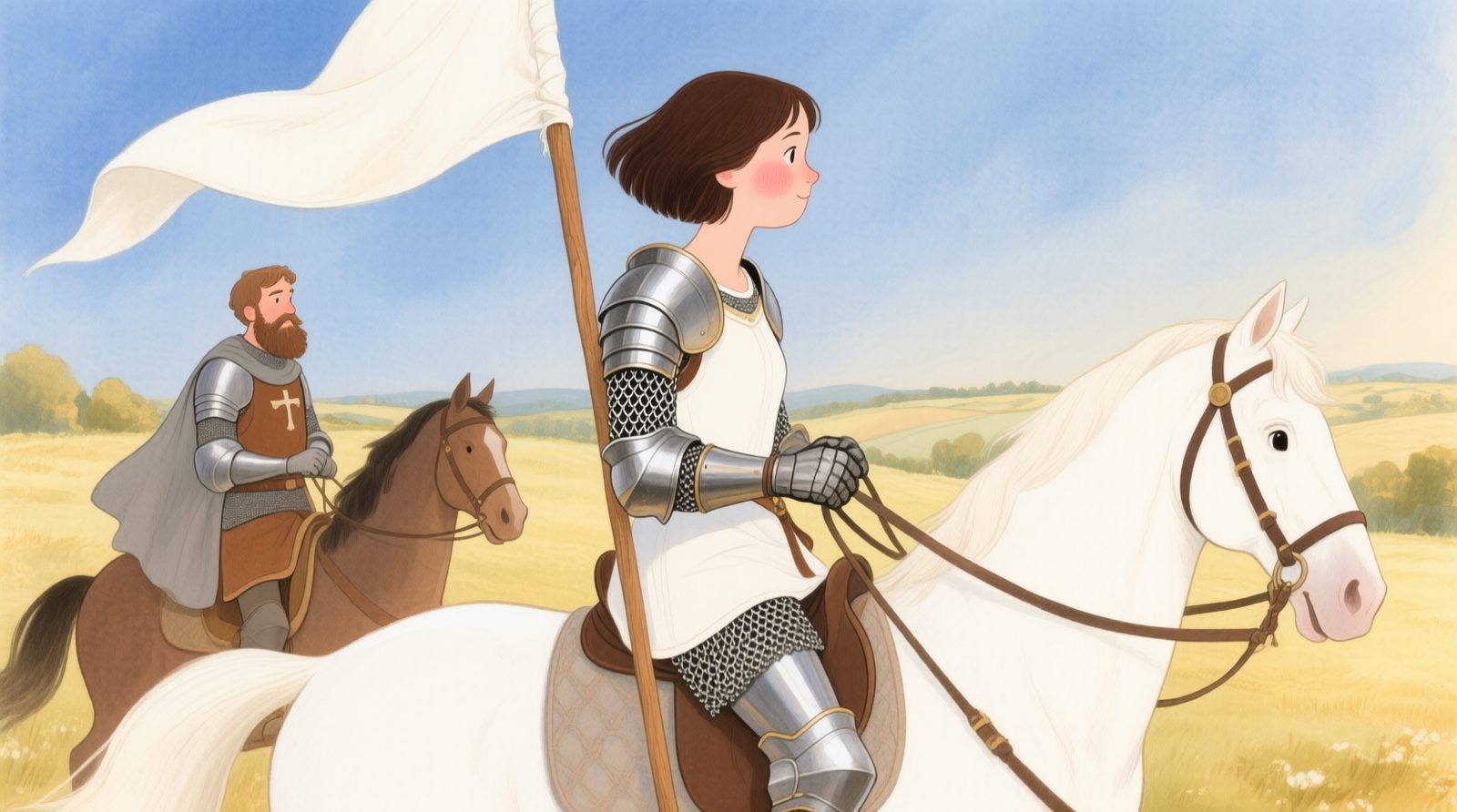
Joan, however, did not want to kill anyone. The voices told her to carry a banner and never to use her sword to harm. So she had a white banner made, with the images of Jesus and Mary and the words "Jesus, Mary" embroidered upon it.
"I love my banner forty times more than my sword," she used to say. "I carry it so that I may kill no one. I have never killed a man."

Orléans Under Siege
For months the city of Orléans had been surrounded by the English. If it fell, all of France would be lost. Joan told Charles that God had sent her to free Orléans, and in April 1429 she set out at the head of an army. She was only seventeen, commanding thousands of soldiers — and the soldiers loved her, certain that she was sent by God. Joan had them go to confession, pray, and give up their rough language, and little by little she turned an unruly army into a devout one.
The Liberation of Orléans
On April 29, Joan entered Orléans, and the people wept with joy at the sight of the Maid who had come to save them. In the days that followed, she attacked the English forts around the city. She fought bravely, climbed walls, and lifted her banner high. An arrow struck her in the shoulder, but she did not give up: she tended the wound and returned to her soldiers' side.
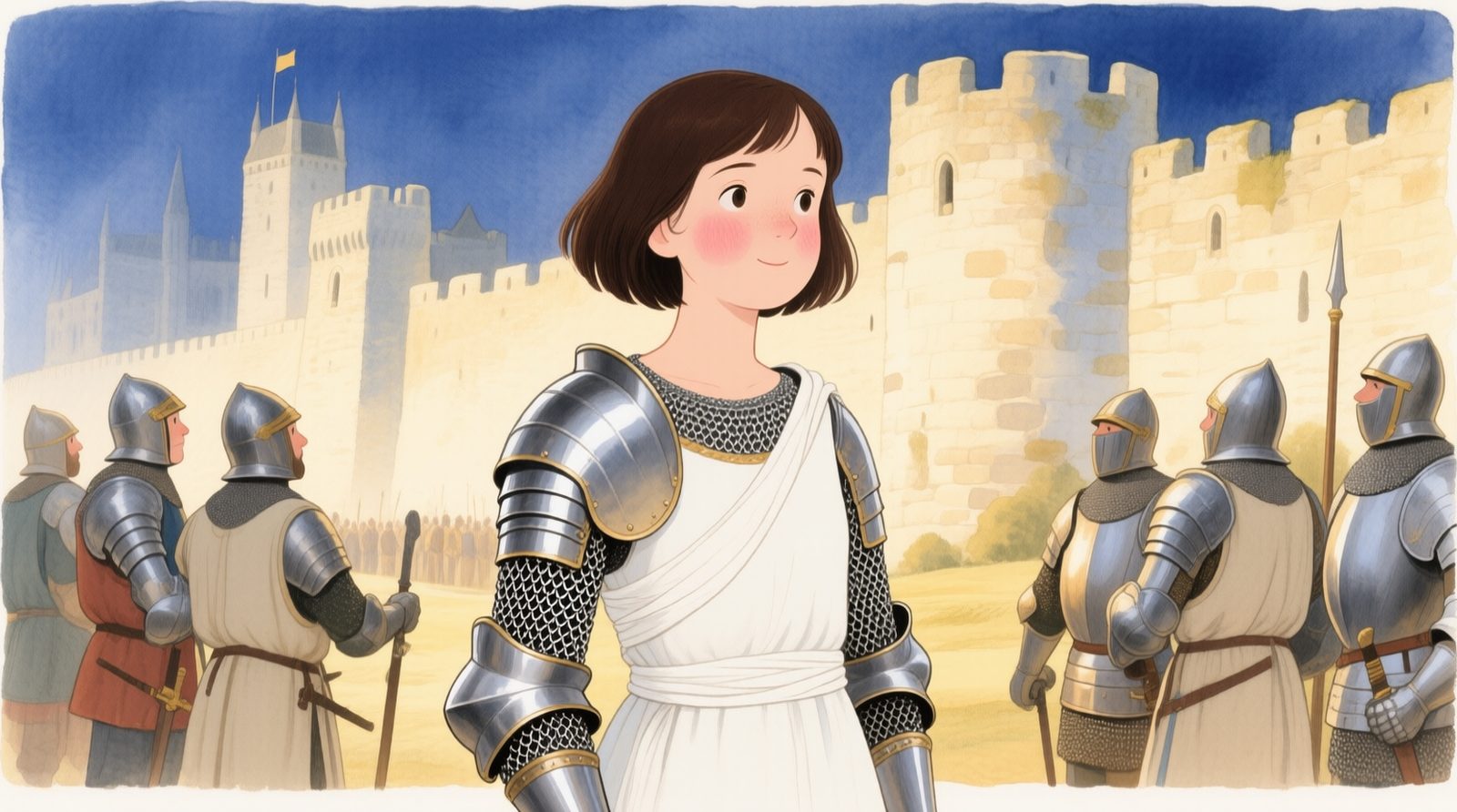
On May 8, 1429, just nine days after Joan's arrival, Orléans was free, and the English withdrew. It was a victory no one had believed possible. Through the streets, the people shouted:
"A miracle! The Maid has set us free!"
Joan knelt and wept, giving thanks to God. She did not boast, and she took no glory for herself. All of it, she said, belonged to God.
On to Reims
After Orléans, Joan won battle after battle: Jargeau, Meung, Beaugency, Patay. The English fled in fear and called her a witch, but Joan was no witch — she was a girl who prayed. In July, she told Charles it was time to go to Reims for his coronation. Reims lay deep in enemy territory, and the plan seemed like madness. But Joan insisted: that was where God wanted him crowned.
July 17, 1429: The Coronation
The journey to Reims became a procession of victories: cities opened their gates, and enemies fell back. On July 17, in the cathedral of Reims, Charles VII was crowned King of France. Joan stood there, holding her banner. When the crown was placed on Charles's head, she wept quietly. She had accomplished the mission God had given her: she had freed Orléans and crowned the king, all in just four months.
After the coronation, Joan asked the king if she could go home now, for the voices had told her that her mission was complete. But Charles asked her to stay, saying he still needed her. Joan, obedient as always, stayed. Yet deep in her heart, she sensed that the days ahead would be very different.
Reflection


