
In the third century, the Roman Empire persecuted Christians harshly. Being a Christian was a crime punished by death: believers were arrested, tortured, and killed, and it seemed that the faith might be wiped out. But God raised up brave men and women in those dark days. One of them was a young man named Sebastian.
The Secret Christian
Sebastian was born in Narbonne, in Gaul, today's France, and grew up in Milan, Italy. His family was Christian, but in secret, because revealing it meant death. Sebastian grew up strong, courageous, and intelligent. He loved Christ, and he also loved Rome.
And he had an idea that surprised everyone: he would become a Roman soldier.

A Christian, serving the very empire that persecuted Christians? It sounded dangerous, even foolish. But Sebastian had a wise plan. As a soldier, he would have access to the prisons and could help the imprisoned Christians: encourage them, strengthen them, keep them from denying the faith out of fear. It was a risky plan, but a brilliant one. Sebastian enlisted in the Roman army.
The Imperial Guard
Sebastian was an exceptional soldier: strong, brave, disciplined, loyal. He rose quickly through the ranks and achieved something remarkable: he entered the Praetorian Guard, the emperor's personal guard, where only the very best served. He became a captain, with direct access to Emperor Diocletian himself.
The emperor thought highly of Sebastian and trusted him completely. He never suspected that his captain was a Christian. And Sebastian used his position wisely. He visited the Christian prisoners, brought them food, water, and comfort, and whispered courage into their hearts.
"Don't give up," he would tell them quietly. "Christ is with you."
All of it in secret.
The Conversions
One day, Sebastian learned of two Christian brothers, Marcus and Marcellinus. They were in prison, sentenced to death, and they were wavering. Their family begged them, in tears, to deny Christ and save their lives, and the brothers were on the point of giving in.
Sebastian went to the prison and spoke to them with power and gentleness.
"Brothers, don't give up now. Life on this earth is brief, but Heaven is eternal. Christ died for you; it is worth being faithful to Him to the end."
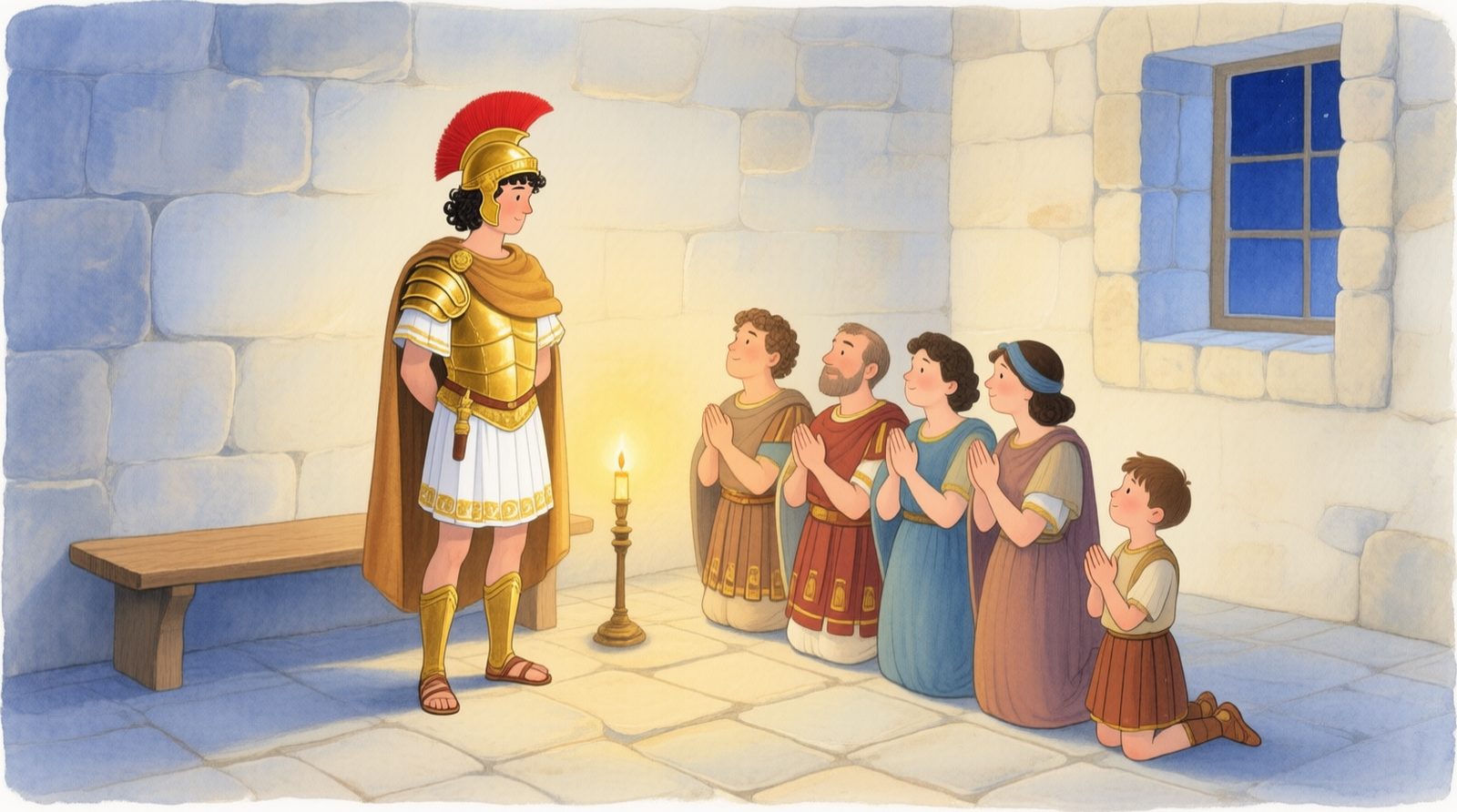
Sebastian's words carried a strength that seemed to come from above. Marcus and Marcellinus stood firm and chose not to deny Christ. They died as martyrs, faithful to the end. And something extraordinary happened around them: their courage touched everyone present. The brothers' parents were converted. The prison guard Nicostratus was converted, along with his wife Zoe. Officers and friends too — more than sixteen people came to believe in Christ through Sebastian's witness.
The Miracle of Zoe
Zoe, the wife of Nicostratus, carried an old sorrow: for six years she had been unable to speak. When she came to believe in Christ, she longed to praise God aloud and profess her faith, but her voice would not come.
Sebastian prayed for her and made the sign of the cross over her lips. And in that instant, Zoe was healed. She began to speak, and her first words were in praise of Jesus Christ. After six years of silence, her voice had returned. Everyone recognized a miracle, and it confirmed the truth of the faith.
The Denouncement
For years, Sebastian lived this double life: by day, he protected the emperor; in secret, he helped the Christians. He converted many Romans, strengthened many believers, saved many lives. But secrets do not last forever. Someone discovered the truth and denounced him to the emperor: Sebastian was a Christian, and he was helping the prisoners.
Before the Emperor
Sebastian was brought before Emperor Diocletian, who could hardly believe it. His faithful captain, the man he had trusted and promoted, a Christian? He felt betrayed.
Sebastian answered with calm courage.
"I never betrayed you, Emperor. I always served Rome loyally. But I serve a greater Lord: Jesus Christ. And I will never deny Him."
Diocletian's anger burned. He condemned Sebastian to a traitor's death: he would be tied to a post and shot with arrows, so that all would see what happened to those who betrayed Rome. Sebastian accepted the sentence with serenity, saying only that God's will be done. He was taken to a field, tied to a post, and the best archers were called — his own former companions.
The First Martyrdom
The order was given, and the arrows flew. One, then another, then dozens, piercing Sebastian's body. He bled, but he did not cry out. He prayed, entrusting his spirit to Jesus. At last his body sank down, and the archers left, certain that no one could survive so many arrows. Everyone believed Sebastian was dead.
But hours later, a Christian woman named Irene came to the place. She was the widow of the martyr Saint Castulus, and she wanted to take Sebastian's body and give it a worthy burial. When she drew near, she discovered something astonishing: Sebastian was alive. Weak, close to death, but alive.
Irene carried him carefully to her house. She removed the arrows, cleaned the wounds, applied ointments, prayed, and hoped. Other Christians came to help. And slowly, Sebastian recovered completely. His wounds healed and his strength returned. It was a gift from God.
Return and Final Martyrdom
What would Sebastian do now? Hide? Flee? Save his life? The Christians urged him to leave Rome; the emperor believed he was dead, and he could live in peace somewhere far away. But Sebastian refused.
"God saved me for a reason," he said. "I will go back and tell the emperor that Jesus is Lord."
Days later, Sebastian placed himself along the emperor's path. When Diocletian approached, Sebastian spoke out for all to hear: he was alive; God had saved him from the arrows; and he asked, once more, that the emperor stop persecuting the Christians, for the God they served was the true God.
Diocletian was stunned at first, seeing before him the man he thought dead. Then, seized with fury, he ordered that Sebastian be beaten to death, and that his body be thrown into the sewer, so that the Christians could not find it or honor him as a martyr.
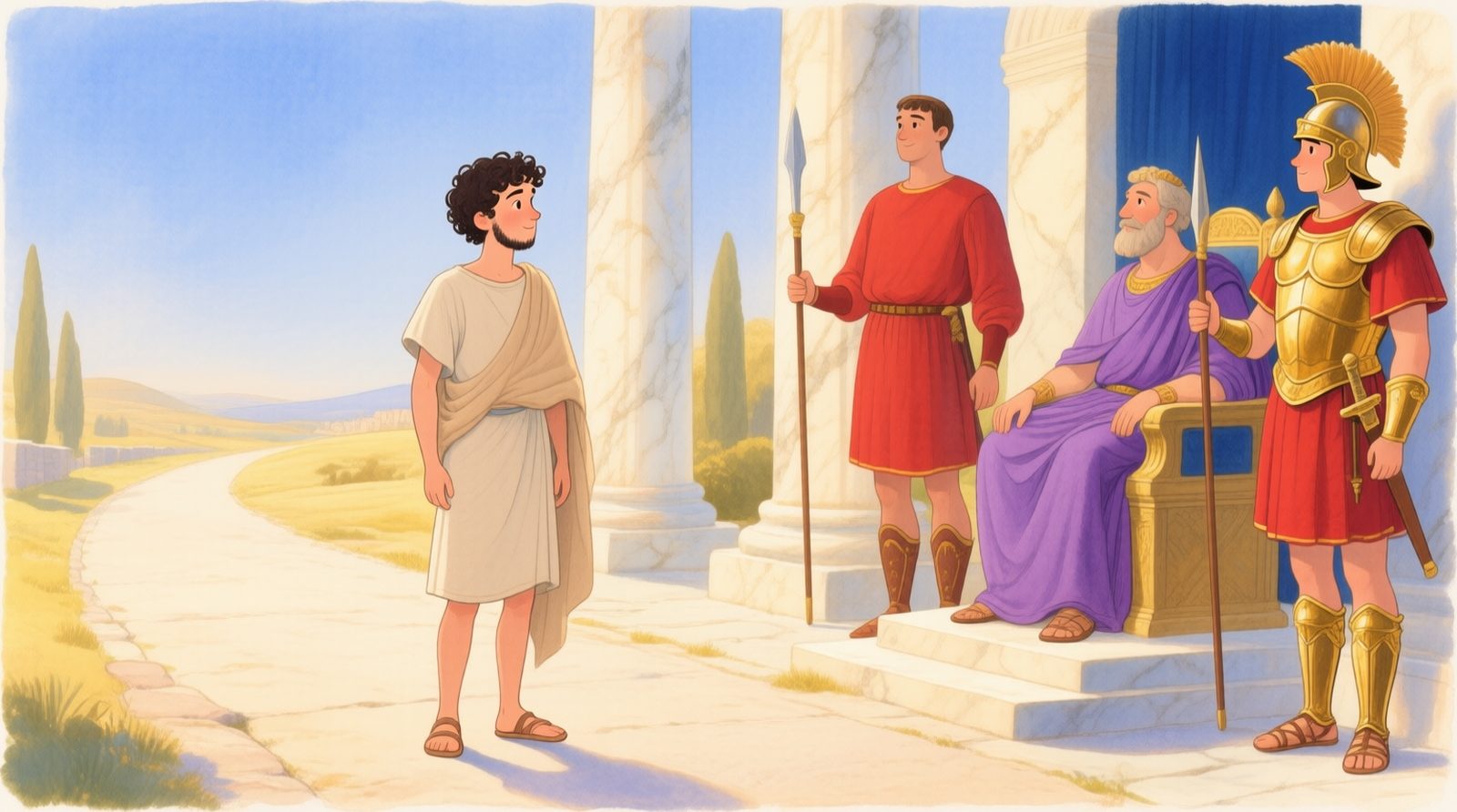
The soldiers carried out the order, and this time Sebastian did not survive. It was around the year 288, and he was about thirty years old. He died a martyr, faithful to Christ to his last breath.
They threw his body into the Cloaca Maxima, Rome's great sewer. But that very night, tradition tells us, Sebastian appeared in a dream to a Christian woman named Lucina and revealed where his body lay. Lucina went, found it, and buried it with honor in the catacombs, the underground cemeteries where the martyrs were laid to rest — the very place where the Basilica of Saint Sebastian would one day rise.
The Veneration
From the very beginning, Christians venerated Saint Sebastian. He became one of the most beloved martyrs of the Church: for his extraordinary courage, for his wisdom, for the wonder of surviving the arrows, and for his decision to return and face the emperor. His tomb became a place of pilgrimage, and many miracles, especially healings, were reported there.
In the Middle Ages, terrible plagues swept through Europe, killing millions of people and emptying whole cities. Christians prayed to Saint Sebastian for protection, because to them the arrows recalled the invisible blows of the disease, and Sebastian had survived the arrows. The people's faith tells that many places were spared. Since then, Sebastian has been the patron saint against plagues and epidemics.
Patronages
Saint Sebastian is the patron of soldiers, because he was an exemplary soldier; of athletes, for his strength and endurance; against plagues and epidemics; and even of archers, curiously enough. He is also the patron of the city of Rio de Janeiro, in Brazil, whose full name is São Sebastião do Rio de Janeiro. His feast is celebrated on January 20.
In Art
Saint Sebastian is one of the saints most often portrayed in Christian art. In thousands of paintings, sculptures, and stained-glass windows, he appears tied to a post or a tree, his body pierced by arrows, young and strong, his eyes lifted toward heaven with a serene expression despite the pain. Artists have always been drawn to that image, because it speaks of courage in suffering, of faith that overcomes pain, of the martyr who does not fear death.
Sebastian's Message for Today
Saint Sebastian still speaks to us. He used the place where he stood, the emperor's own guard, to do good in silence, with patience and wisdom. He helped the persecuted at the risk of his own life. He converted many, not only by his words but by the way he lived. And when God gave him a second chance at life, he used it not to hide, but to bear witness again.
Reflection


