
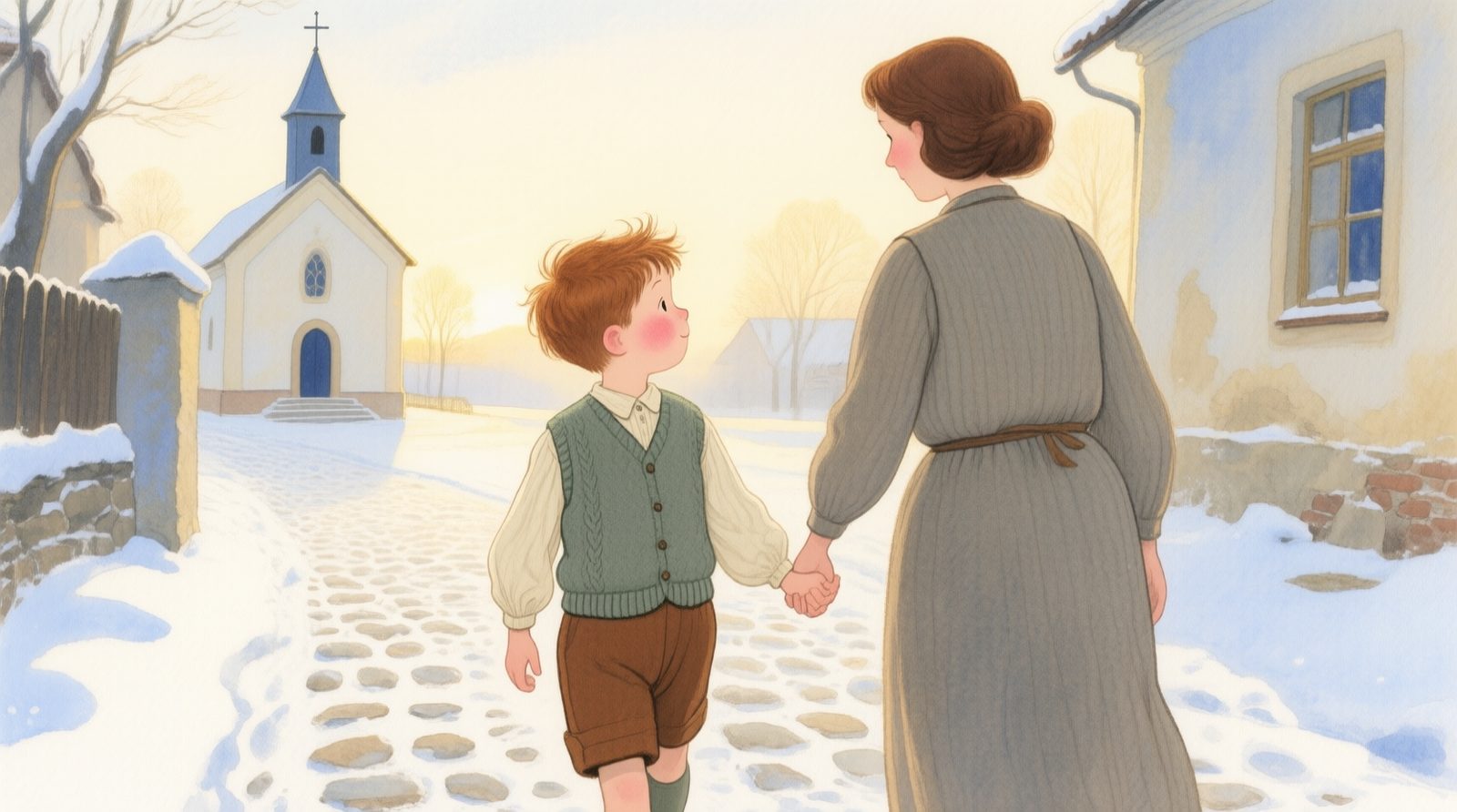
Karol Józef Wojtyla was born on May 18, 1920, in the small town of Wadowice, in Poland. He was the youngest son of Karol Wojtyla, a retired army officer, and Emilia Kaczorowska. He had an older brother, Edmund, who became a doctor, and a sister, Olga, who died before he was born. The family was simple but deeply Catholic, and his mother took little Karol to church every day. No one could have guessed, though, that sorrow would touch that boy's life very early.
The First Losses
Karol was only eight years old, almost nine, when his mother died of heart disease. It was a terrible grief for such a small boy, who loved her more than anything. Years later he would say, with longing: "I did not have enough time to be truly aware of what it means to have a mother."
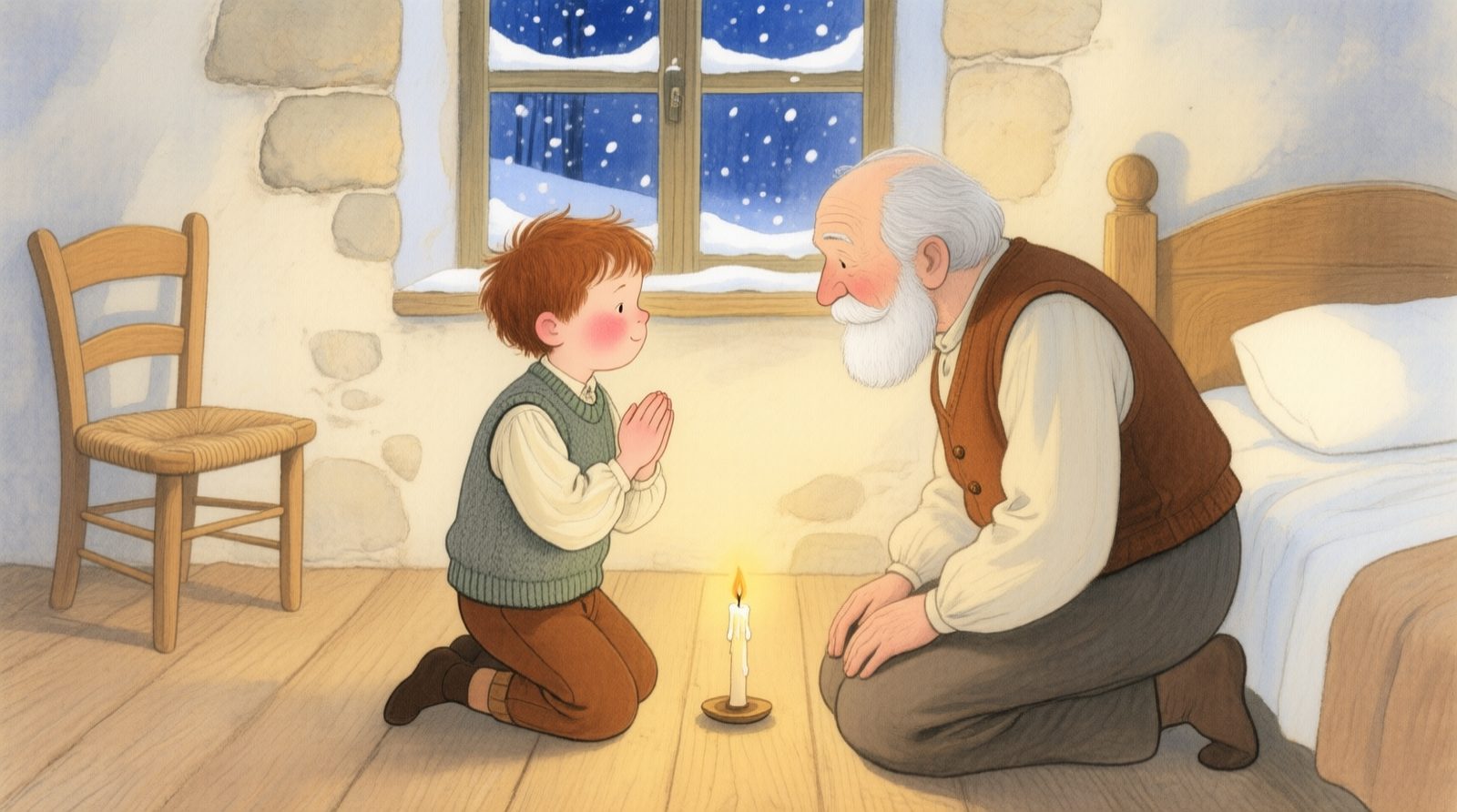
His father raised the children alone, and he did it with great love. Karol's father was a man of deep prayer. He rose early every morning to pray, and by his own quiet example he taught his son to love God above all things.
But the sorrows did not end there. When Karol was twelve, his brother Edmund, who was twenty-six, died of scarlet fever. Edmund was a doctor, and he caught the illness caring for his patients, refusing to abandon anyone. Now Karol had lost his brother as well as his mother, and he and his father were alone in the world.
Slowly, those deep sorrows shaped Karol's heart. He learned that life brings suffering, but that God is present even inside the suffering, holding our hand.
A Brilliant Young Man
Despite so many losses, Karol grew into a young man full of life. At school he was an excellent student, earning top marks in nearly every subject. And he was not only a scholar. He played soccer as a goalkeeper, swam, skied, and paddled canoes down rivers, for he believed a healthy body helps the soul stay healthy too. He also had a rare gift for languages, and over his lifetime he learned Latin, Greek, German, French, Italian, English, Spanish, and more.
But Karol's great passion was the theater. He loved to act, and he performed in plays at school and around town. His memory was extraordinary — he could learn whole plays by heart — and he took the stage with such conviction that many people were sure he would become a professional actor. He even considered it himself. God, however, had other plans for that young artist.
The Second World War
In 1939, Karol was nineteen and had just entered the Jagiellonian University in Krakow to study Polish literature. But on September 1, 1939, Nazi Germany invaded Poland, and the Second World War began. The Nazis closed the university, arrested professors, and forbade Poles to study. Hitler wanted to erase Poland's culture and turn its people into servants with no memory of who they were.
Karol was forced to work in a stone quarry. Every day he carried heavy stones and broke rock, under the burning sun in summer and the biting cold in winter. It was forced labor, humiliating and dangerous, and many men died there, from exhaustion or at the hands of the guards.
But Karol found a way to transform that suffering. He prayed while he worked, offered each hard day to God for his beloved Poland, and kept within himself a dignity that no one could take away.
The Secret Seminary
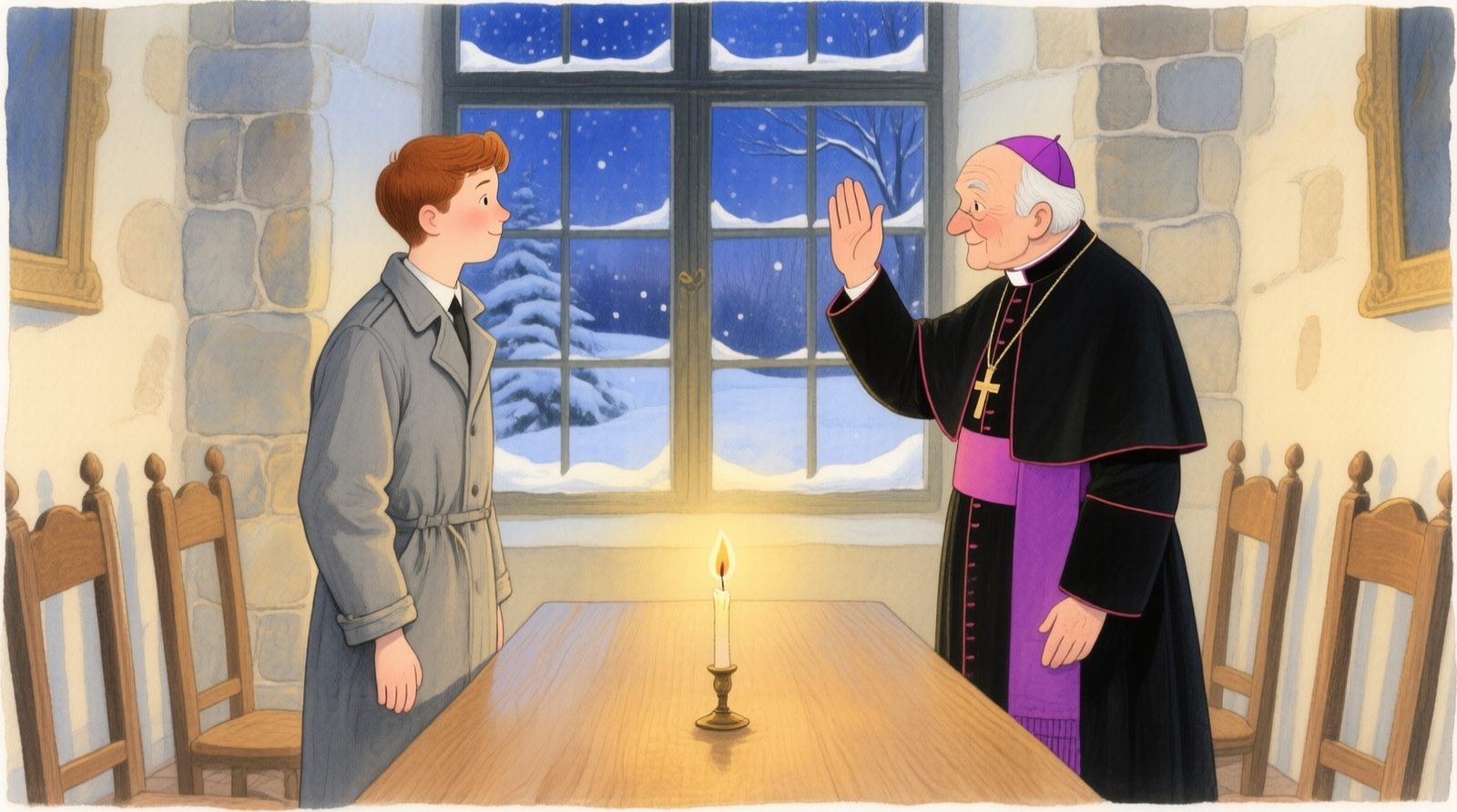
It was during those terrible years that Karol recognized his true calling: he wanted to become a priest. But the Nazis had closed the seminaries. They arrested priests and killed religious brothers and sisters. The answer came from a courageous man, the Archbishop of Krakow, Adam Sapieha, who went on training priests in secret, in a clandestine seminary.
Karol entered that hidden seminary in 1942, at twenty-two. He studied at night, attended secret classes, and read forbidden books in cellars. If he had been discovered, he could have been imprisoned or killed. But his faith was greater than his fear.
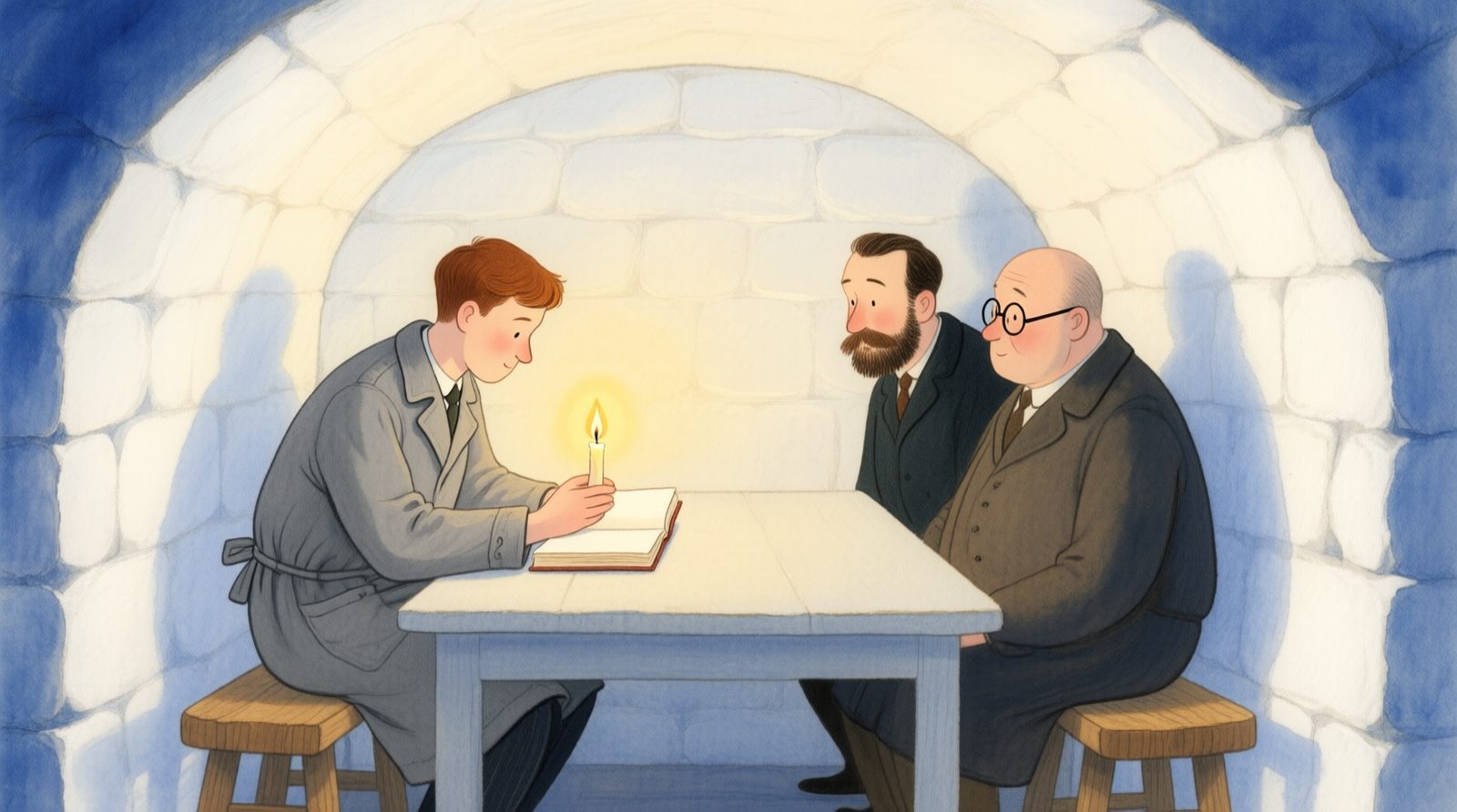
By day, so as not to raise suspicion, Karol kept working, now in a chemical factory. By night he studied theology and philosophy in secret, sleeping only a few hours. Even exhausted, he lived with a quiet joy, because he knew he was following God's will.
In 1944, the Nazis swept through Krakow, rounding up the young men of the city. Soldiers pounded on the door of the house where Karol was staying, but they did not find him. He managed to hide and slipped away. After that close call, the Archbishop sheltered Karol in the episcopal palace until the end of the war.
One More Loss
In 1941, while Karol was still working in the quarry, his father died of a heart attack. Karol was only twenty, and now he was completely alone. Father, mother, brother, sister — all of them were gone.
He came home and found his father already lifeless, kneeling beside the bed, as if he had died praying. Karol spent the whole night keeping watch over him, in prayer. Later he confessed: "I never felt so alone." But out of that deep sorrow grew an even deeper closeness with God. Karol understood that, from then on, God would be his family.
The War Ends
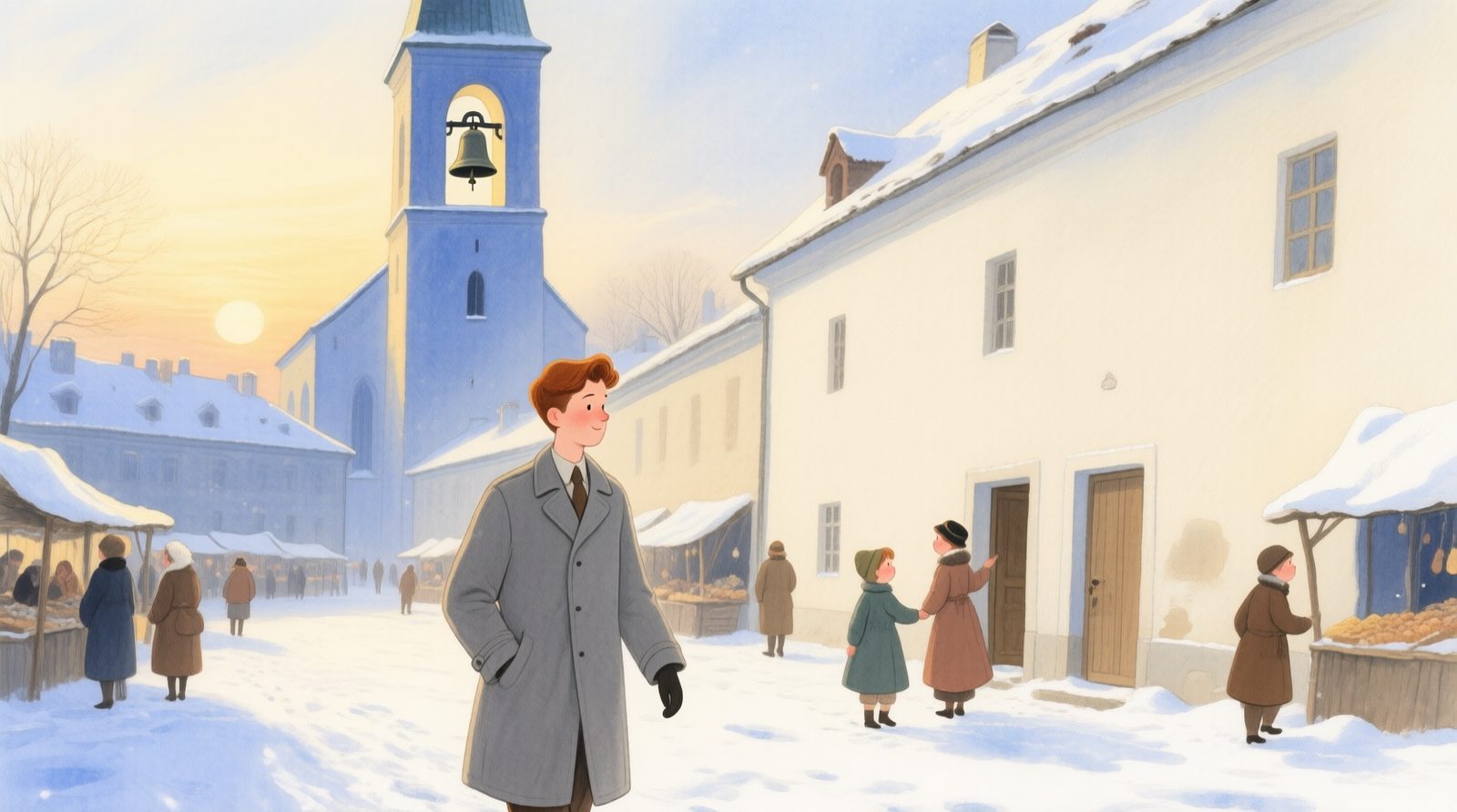
In January 1945, the Soviet army drove the Nazis out of Krakow. The war was ending, and Poland could breathe again. But the joy did not last long. The country passed from the hands of the Nazis into the hands of the communists. The Soviets occupied Poland and set up a government that would also persecute the Church, only in a different way. Even so, there was hope. The seminaries could reopen, and Karol could finally study in the light of day.
Ordination to the Priesthood
Karol finished his theology studies brilliantly. He studied day and night, read dozens of books, and filled notebooks with careful notes. Then the great day arrived. On November 1, 1946, the Feast of All Saints, Karol Wojtyla was ordained a priest, at twenty-six years old.
During the ceremony he lay face down on the floor while the Litany of the Saints was sung, a sign of total surrender to God. When the Archbishop laid his hands on his head, Karol felt in his heart that he now belonged entirely to Christ. He celebrated his first Mass in the crypt of Saint Leonard, in Wawel Cathedral, and there he prayed for the souls of his parents and his brother.
Father Karol
Soon after his ordination, Father Karol was sent to Rome for doctoral studies. He studied at the Pontifical University of Saint Thomas Aquinas, the Angelicum, and wrote his thesis on faith in the writings of Saint John of the Cross. He lived at the Belgian College, prayed for hours each day, and in his free moments visited the churches and catacombs of Rome. He fell in love with the Eternal City, with the history of the Church, with the martyrs and the Popes. In 1948 he defended his thesis with the highest honors.
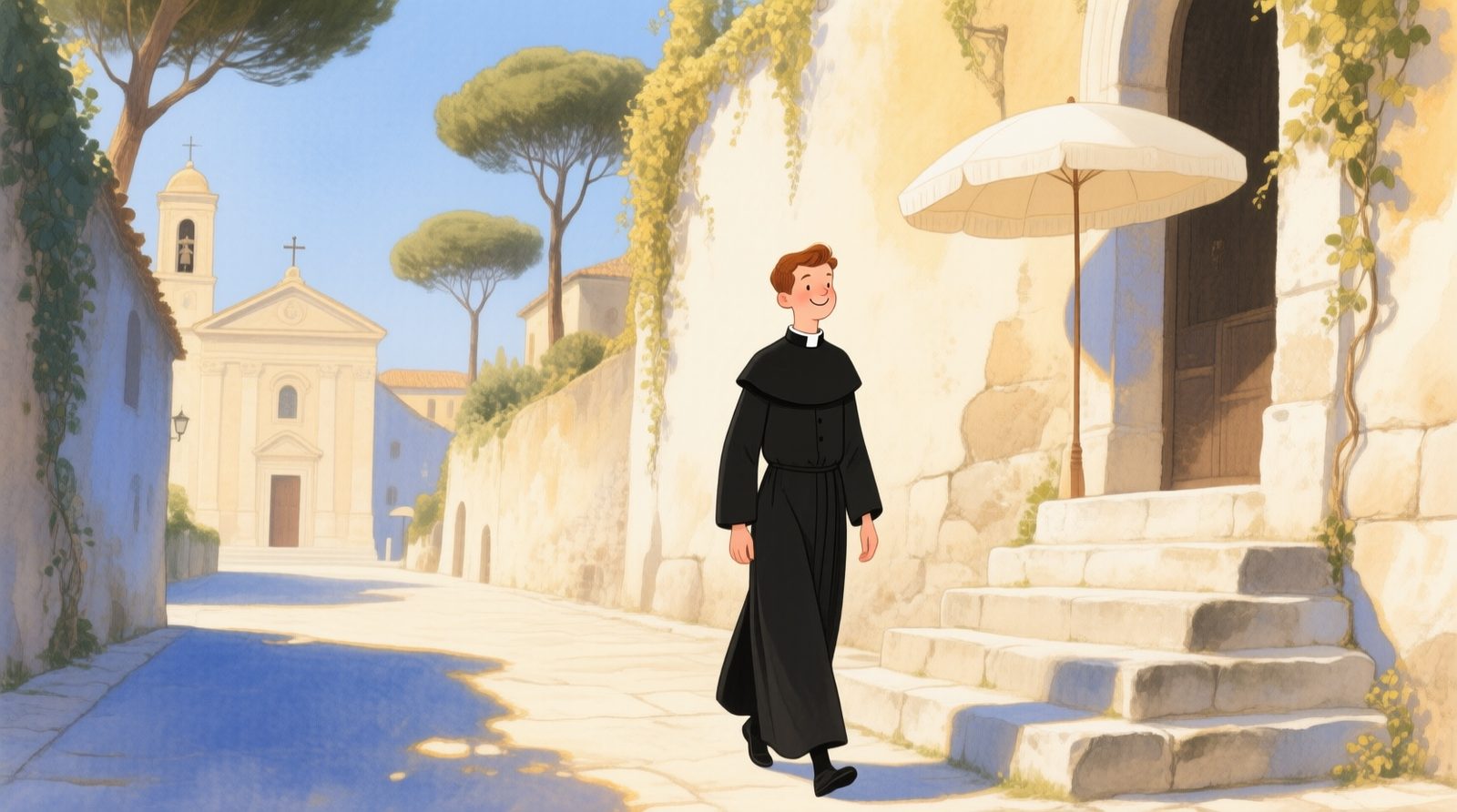
Back in Poland, Father Karol was appointed curate in Niegowić, a poor country village. There he learned to be a shepherd of souls: he visited the sick, taught catechism, and celebrated Mass. The farm families grew very fond of that young priest, humble, cheerful, always ready to help. Later he was transferred to Krakow, to Saint Florian's Parish. And it was there that his extraordinary work with young people began, as you will discover in the next part of this story.
Moral of the Story


