
On July 21, 1515, a boy named Filippo — Philip — was born in Florence, Italy. His family was not rich, but it was good and devout. From the time he was little, Philip was different: always cheerful, always smiling, always playing. His friends called him "good Pippo," because even as a prankster, he was never unkind. He was joyful — and he was good.

The Young Merchant
When he was eighteen, Philip went to live with a rich uncle who was a merchant. The uncle had no children and wanted to make Philip his heir.
"Work with me, Philip. One day all of this will be yours," he would say.
Philip could become wealthy and live comfortably, and he began working in his uncle's business. But something inside him kept saying that this path was not his, that God had other plans.
One day, while praying in a chapel, Philip asked God what He wanted of his life. And he felt it clearly in his heart: go to Rome, your mission is there. Philip did not understand it all, but he obeyed. He left his uncle's wealth, left everything, and set out for Rome with nothing but the clothes on his back. His family was shocked — he was going to be rich, and he was throwing it all away. Philip only smiled and said that true wealth is not in having, but in giving.

Rome in the Sixteenth Century
Philip arrived in Rome in 1533. The city was spiritually sick. There was much poverty, much crime, many people living badly — even among the clergy. Young men drifted through the streets with no guidance and no hope, and many priests cared more about power and money than about souls. Philip looked at it all and thought: Jesus, how much work there is to do. But he was not discouraged. He was determined.
A Life of Poverty
In Rome, Philip lived poorly. He tutored the sons of a family and, in exchange, received his meals and a tiny room. He had almost no money, but he was always cheerful. He spent hours studying philosophy and theology on his own, and above all, he spent hours praying. He would go to the catacombs, the ancient tombs of the Christian martyrs, and stay there all night in prayer. He said he wanted to know Jesus the way the martyrs had known Him.

Philip's Pentecost
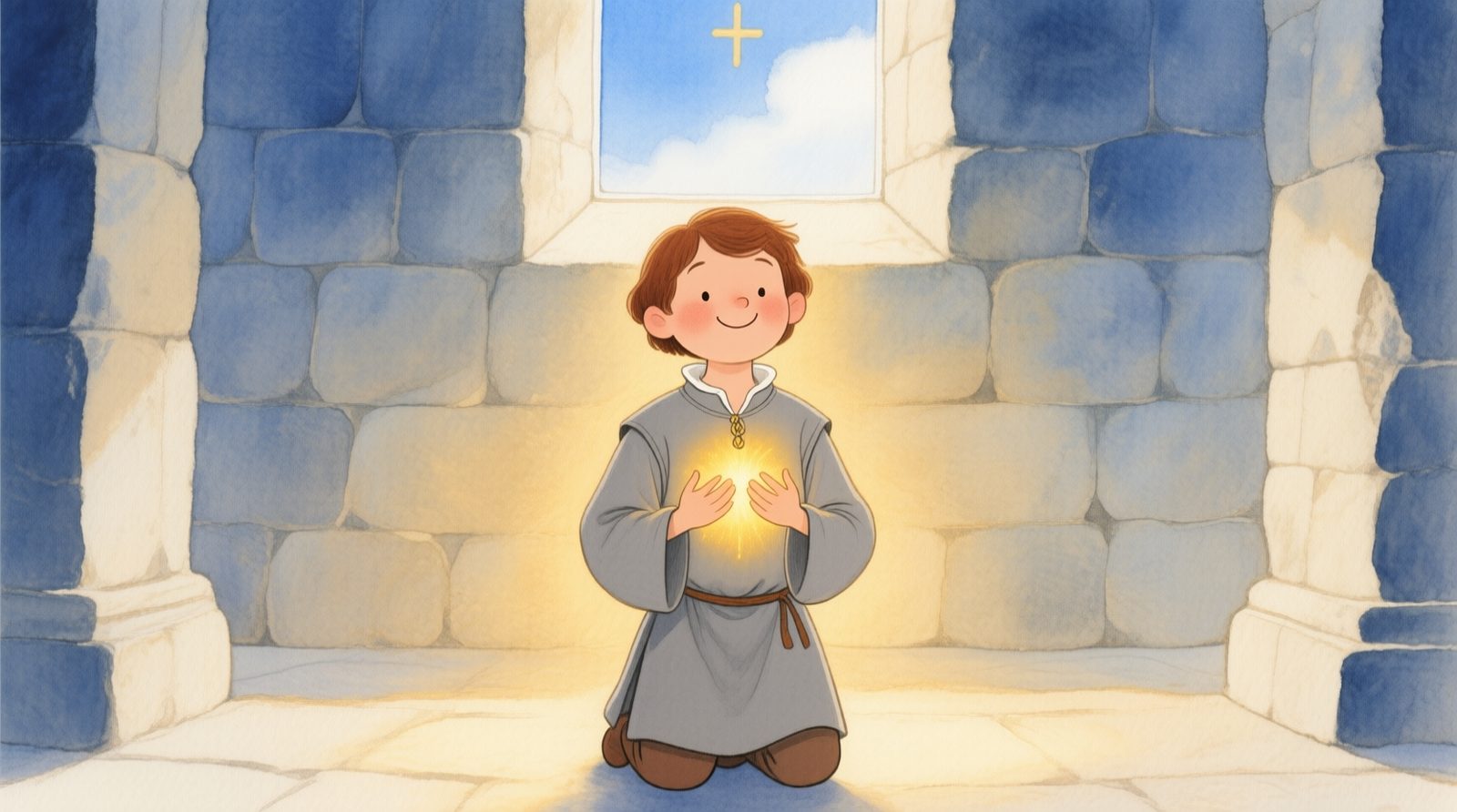
In 1544, on the eve of Pentecost, Philip was praying in the catacombs of Saint Sebastian, asking the Holy Spirit: come, fill me, use me. Suddenly, he felt something extraordinary. He saw a ball of fire come down from heaven and enter his chest. He felt an intense heat, a burning love for God, and his heart beat so hard it seemed about to leap from his chest. When he returned home, he noticed something in his own body: two of his ribs had arched outward.
Years later, doctors examined Philip and confirmed it: two ribs were bowed outward, as if they had made room for a heart that had grown. It was not an illness. From that day on, Philip felt a constant warmth in his chest and, when he prayed fervently, the heat grew so strong that he had to open his shirt even in winter. It was a visible sign of the love of God burning in his heart.
The Apostle of the Streets
In 1551, when he was already past thirty-five, Philip was ordained a priest. But he did not want to be an ordinary parish priest: he went out into the streets of Rome. He walked through the squares, the markets, the street corners, talking with everyone — especially with the young. He would see young men idle, lost, mixed up in bad things, and he would come up to them with a smile:
"Hello, friends. Would you like to hear a funny story?"
Philip won the young people over first with humor and joy. He told jokes, played games, laughed with them, and they liked this priest who was so different and so much fun. After earning their trust, he spoke to them about Jesus — but never in a heavy or boring way. He told them Jesus wanted to see them happy, that true joy came from Him. And many young men were converted, left their vices behind, and changed their lives.
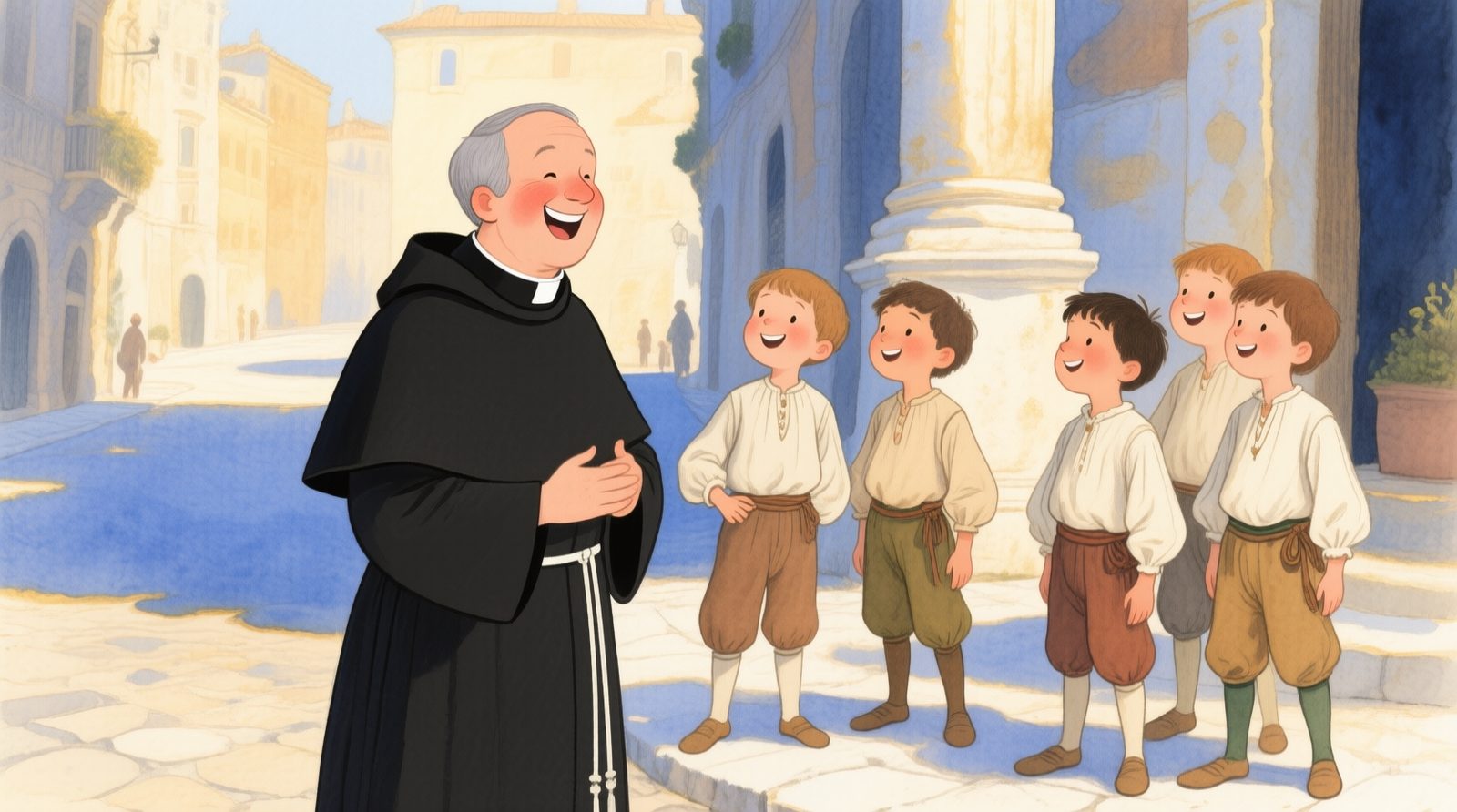
Philip had a way of teaching all his own, with sayings no one forgot: "A sad saint is a sorry saint." "The best way to serve God is to be cheerful." "The devil is afraid of joy." And he lived that way himself, always smiling, singing, joking. Sometimes he did silly things on purpose, just so people would not take him too seriously. Why? To kill his pride and stay humble.
The Roman Pilgrimages
Philip had another brilliant idea: pilgrimages through the churches of Rome. He gathered groups of young people and adults and visited the seven great basilicas of the city on foot. Along the way they sang hymns, prayed, talked. Philip made devotion feel alive and inviting — not a dull religiosity, but a joyful one. Thousands of people began to join those walks.
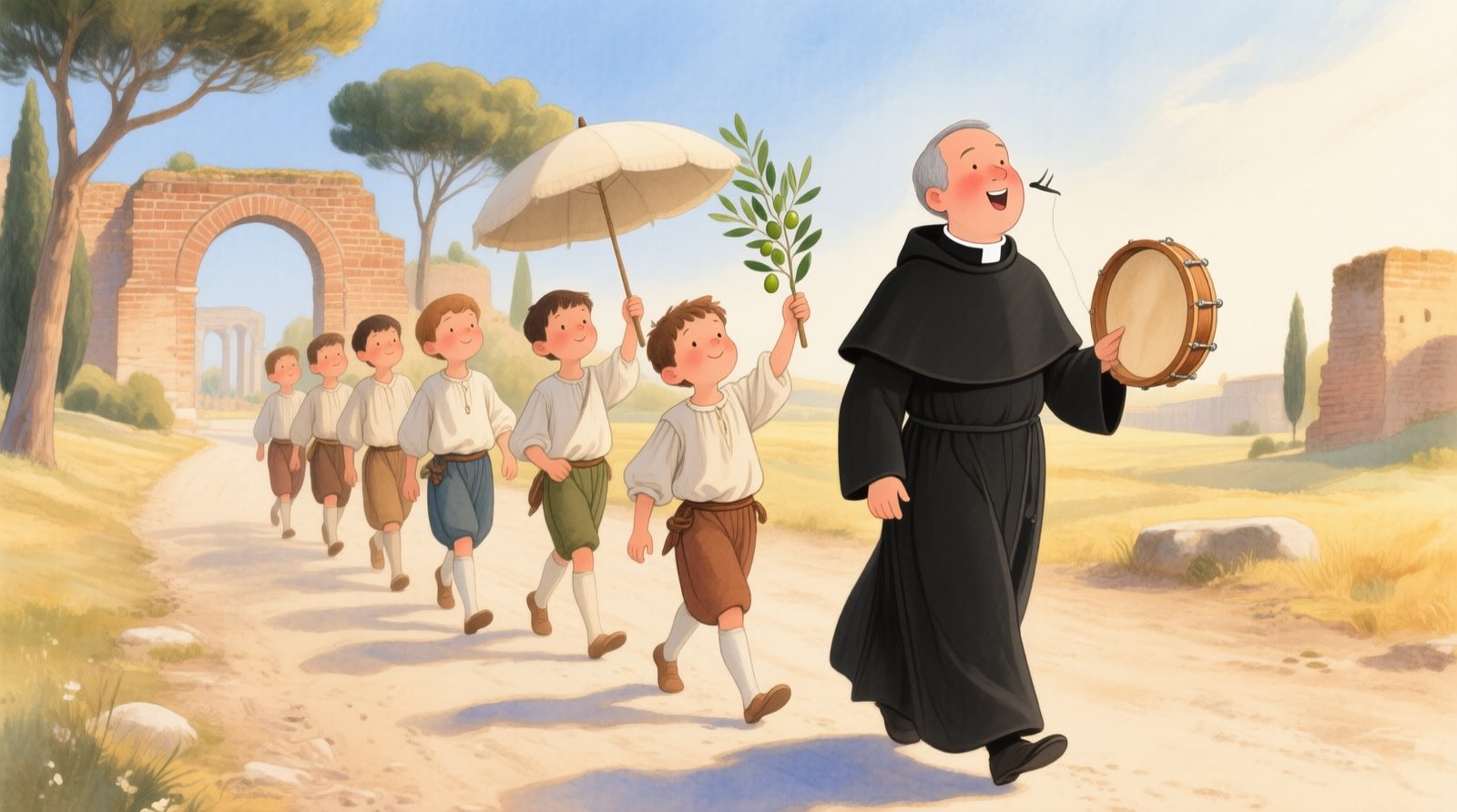
On the pilgrimages, Philip brought food and wine, and the group had picnics in the fields, with songs and games. Some people found it strange and asked whether all that was not too worldly for a priest.
"Jesus was accused of eating with sinners," Philip would reply. "I will do the same."
He understood that people need community, friendship and joy — and through those good things, he led them to Jesus.
The Oratory
Philip's groups kept growing, and soon they needed a place to meet. In 1551, Philip began holding informal gatherings in a hall above a church, and he gave them the name Oratory, which means a place of prayer. But it was not a stiff kind of prayer: there was music, conversation, discussion, talks. Young people came by the hundreds.
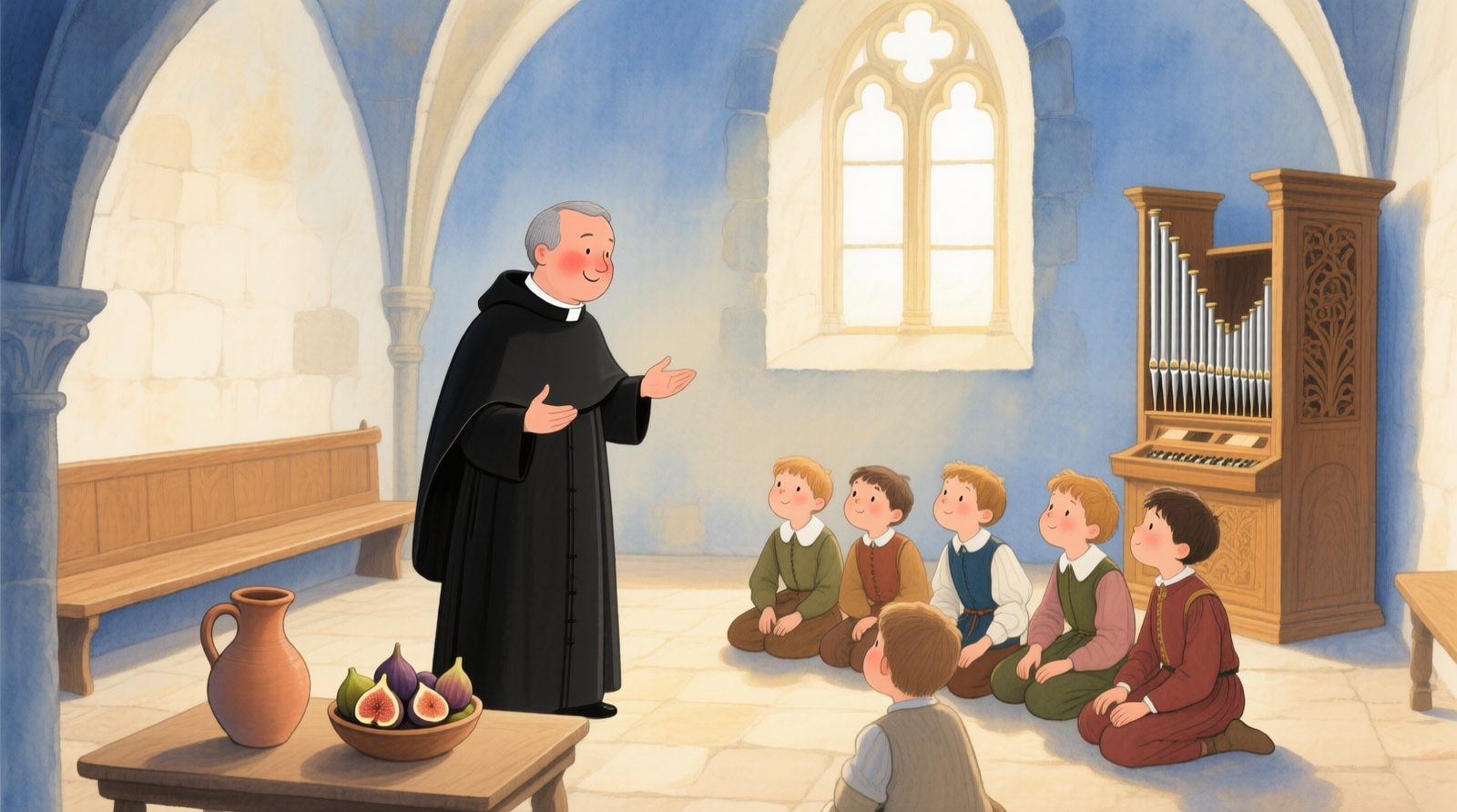
At the Oratory, Philip used music as a tool of evangelization. He commissioned special sacred music, and the young people sang praises to God together. Philip said that good music lifts the soul. He also encouraged conversation and debate, not just sermons: the young people could ask questions, argue, think. Faith, he said, does not need to be afraid of questions.
Opposition and Perseverance
Not everyone liked Philip. Some stricter priests criticized this priest who laughed too much and joked too much; they thought it was not dignified. Some even tried to close the Oratory, calling it disorder. But Philip did not lose heart. He kept smiling, kept working, and answered serenely:
"From the Gospels we know that Jesus wept. But surely He also laughed many times."
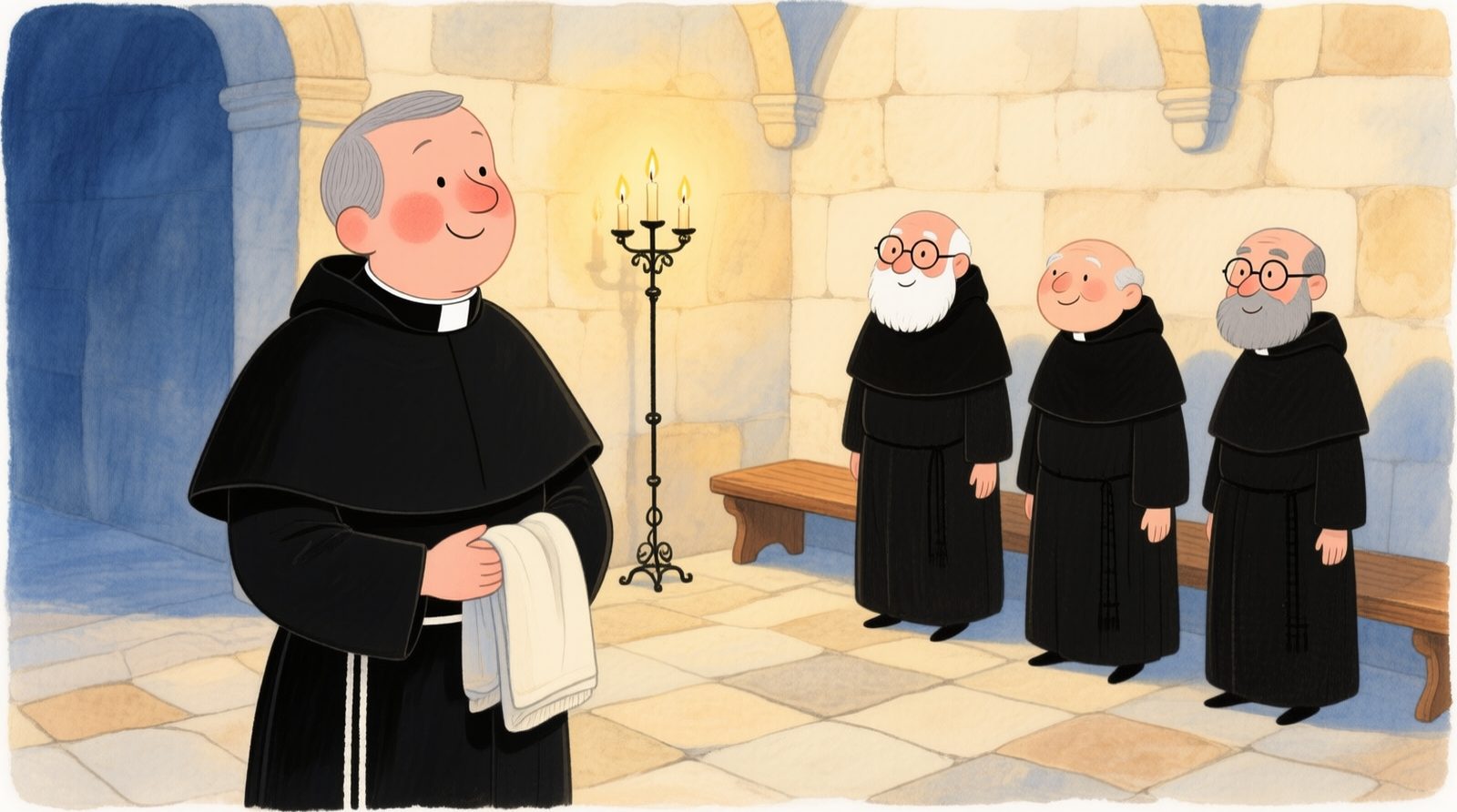
In time, the critics had to admit the truth: Philip's method worked. Hundreds of young men who had been lost were now serving God. There was less crime in the streets, more devotion, more charity. The Pope himself heard about Philip and went to visit him in person. He came away delighted and asked him to carry on, because Rome needed him.
Moral of the Story


